Skip to content

Himachal Pradesh Travel Guide: Regions, Hill Towns and High Valleys

Himachal Pradesh is the western Himalayan state between the plains of Punjab and the Tibet border. The main places to visit in Himachal Pradesh are Shimla and its hills, Manali and the Kullu valley, Dharamshala and McLeod Ganj, Bir Billing, Dalhousie and Chamba, and, by season, Lahaul, Spiti and Kinnaur. The hill towns are best from March to June and September to November.

By Experience My India Editorial Team · Reviewed by Experience My India Editorial Team · Updated 21 Oct 2026

See all 6 tours and experiences in Himachal Pradesh →

Government-approved operatorApproved by the Ministry of Tourism, Government of India

Places to visit in Himachal Pradesh
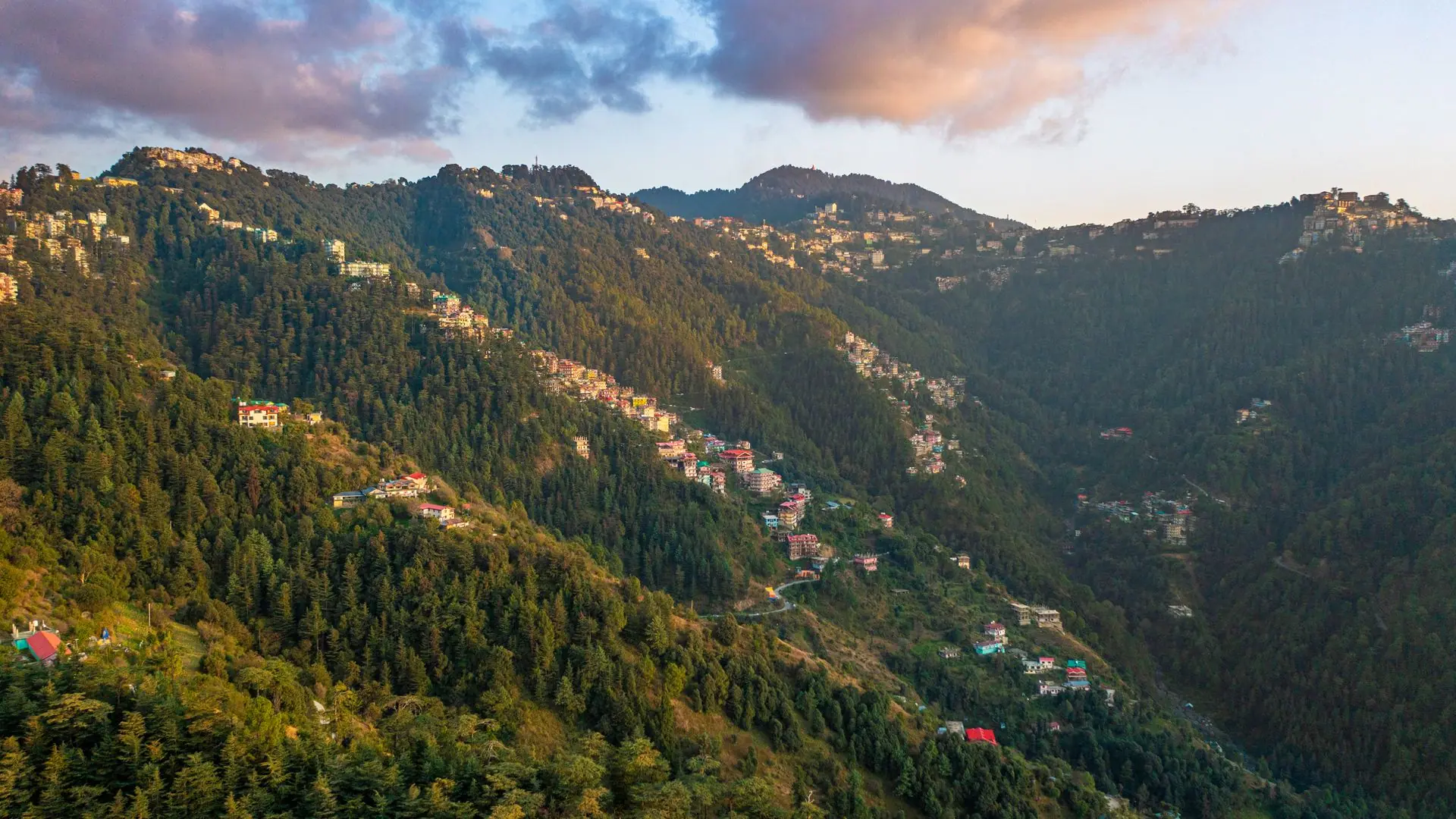
Himachal borders Tibet (China) to the east, Jammu and Kashmir to the north-west, Uttarakhand to the south-east and the plains of Punjab and Haryana to the west. Its sights fall into regions: the hill towns around Shimla, the Kullu and Kangra valleys, Chamba, and the high valleys of Lahaul, Spiti and Kinnaur, where the roads follow the seasons.

Shimla, Kufri, Chail and Kasauli

Shimla, the state capital, was the summer capital of British India, and the Ridge, the Mall, Christ Church and the Viceregal Lodge, where the talks over Partition were held, still define it. The Kalka–Shimla Railway, built between 1898 and 1903, is part of the Mountain Railways of India World Heritage Site. Kufri, with the Himalayan Nature Park, is a short drive out; Chail, 49 km away, has the summer palace the Maharaja of Patiala built; and Kasauli, at 1,951 m, looks down over the plains. Our Shimla travel guide covers them all.

Manali and the Kullu valley

Manali lies in the Beas valley at the head of the Kullu valley. Its 16th-century Hadimba temple stands among deodars, Old Manali and the hot spring at Vashisht are a walk from the market, and Solang Nullah, 13 km out, has a gondola, paragliding and, in winter, skiing. The Atal Tunnel has linked Manali with Lahaul all year since 2020, while the Rohtang Pass, 51 km away, opens in summer to vehicles with a permit. Kullu, 40 km down the valley, holds its week-long Dussehra in October. See our Manali travel guide.

Kasol, Manikaran and the Parvati valley

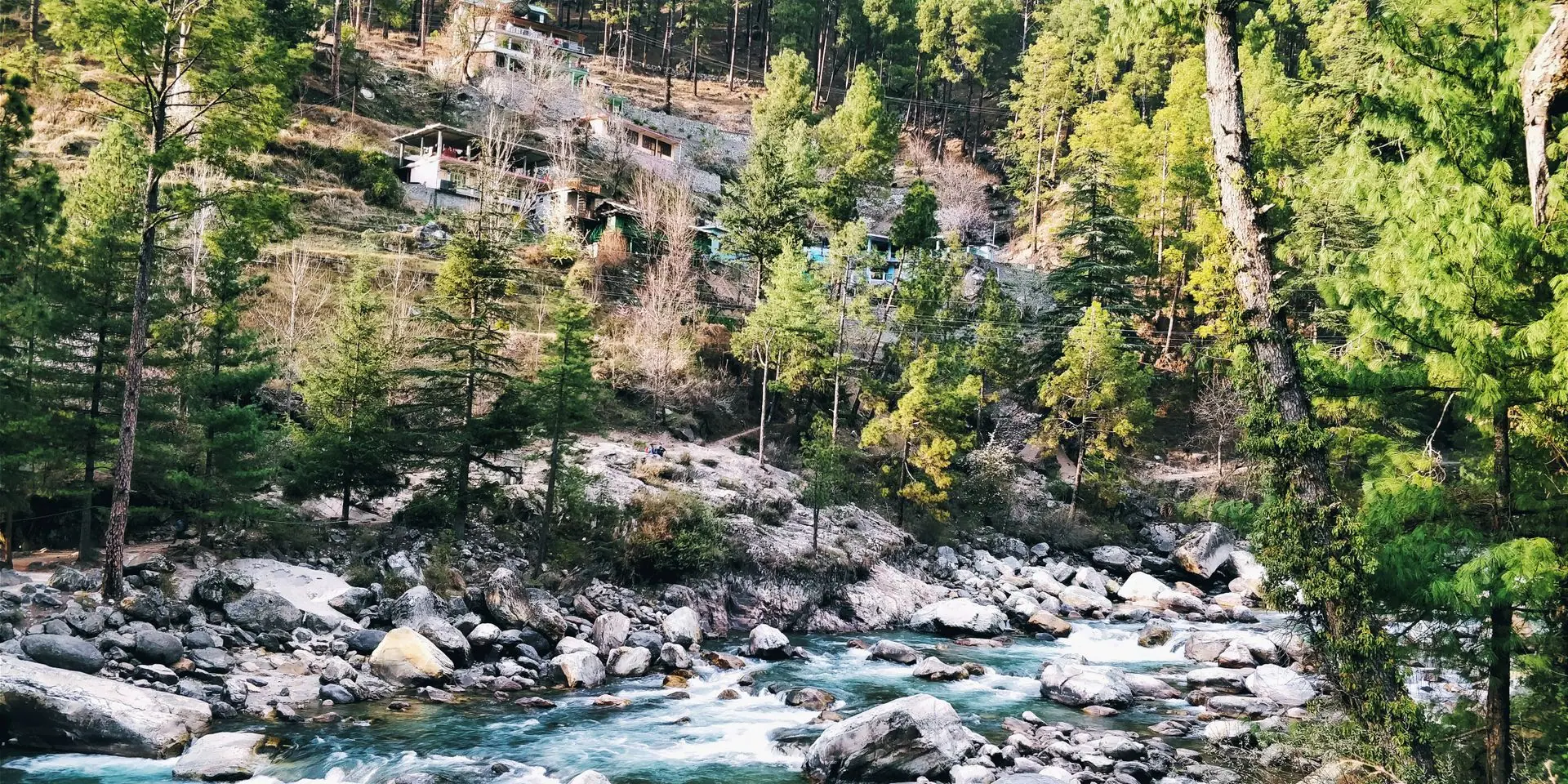
Along the Parvati river, Kasol has grown from a village into a hub of guesthouses, camps and hotels, divided by a bridge into old and new, and buses run to it regularly. At Manikaran, 45 km from Kullu, a gurdwara honours Guru Nanak Dev, who is said to have visited with five disciples, and its hot sulphur spring draws a large number of pilgrims every year. Our Kasol travel guide has the detail.

Great Himalayan National Park, Jalori and Shoja

Enclosed on three sides by the Greater Himalaya, the Great Himalayan National Park in Kullu district covers more than 1,000 sq km, from about 1,300 m to over 6,000 m, and has been a World Heritage Site since 2014. It shelters the Himalayan tahr, brown bear, snow leopard, western tragopan and monal, and has no roads or paved trails: it is for trekkers and campers. Nearby, Jalori Pass divides the Sutlej and Beas catchments and is closed by snow from December to March, and the hamlet of Shoja is the base for easy walks to the pass and Serolsar Lake.

Dharamshala and McLeod Ganj

Dharamshala lies under the Dhauladhar range in Kangra district. Its upper town, McLeod Ganj, at 2,082 m, is the seat of the Central Tibetan Administration, which moved here from Mussoorie in 1960. The Bhagsunag falls are an uphill walk from the Bhagsunag temple, and Triund, at 2,875 m and reached through oak and deodar forest from Dharamkot, is a moderate summer trek. Kangra airport at Gaggal is about 14 km away. Read our Dharamshala travel guide before you go.

Bir Billing, Palampur and Baijnath

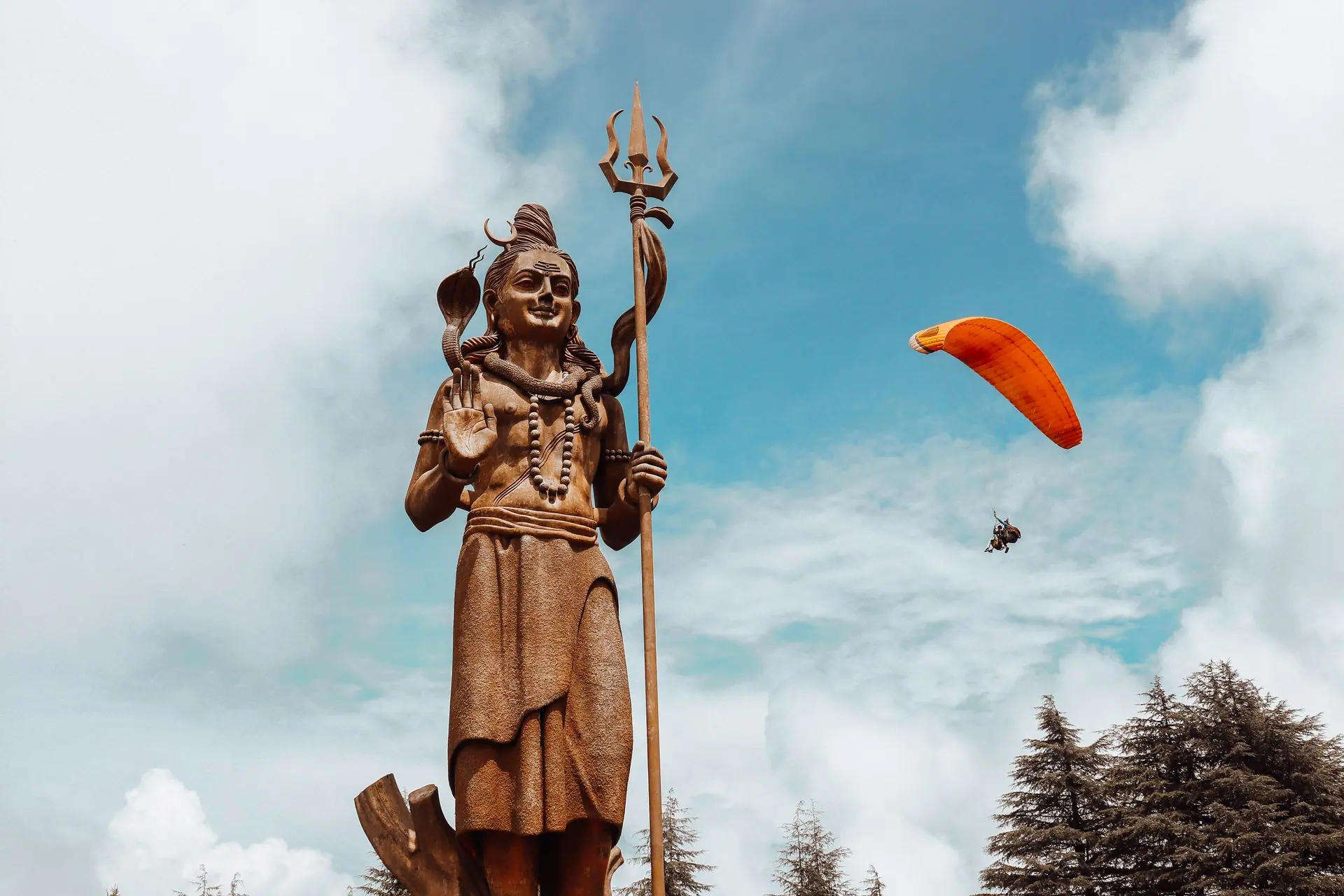
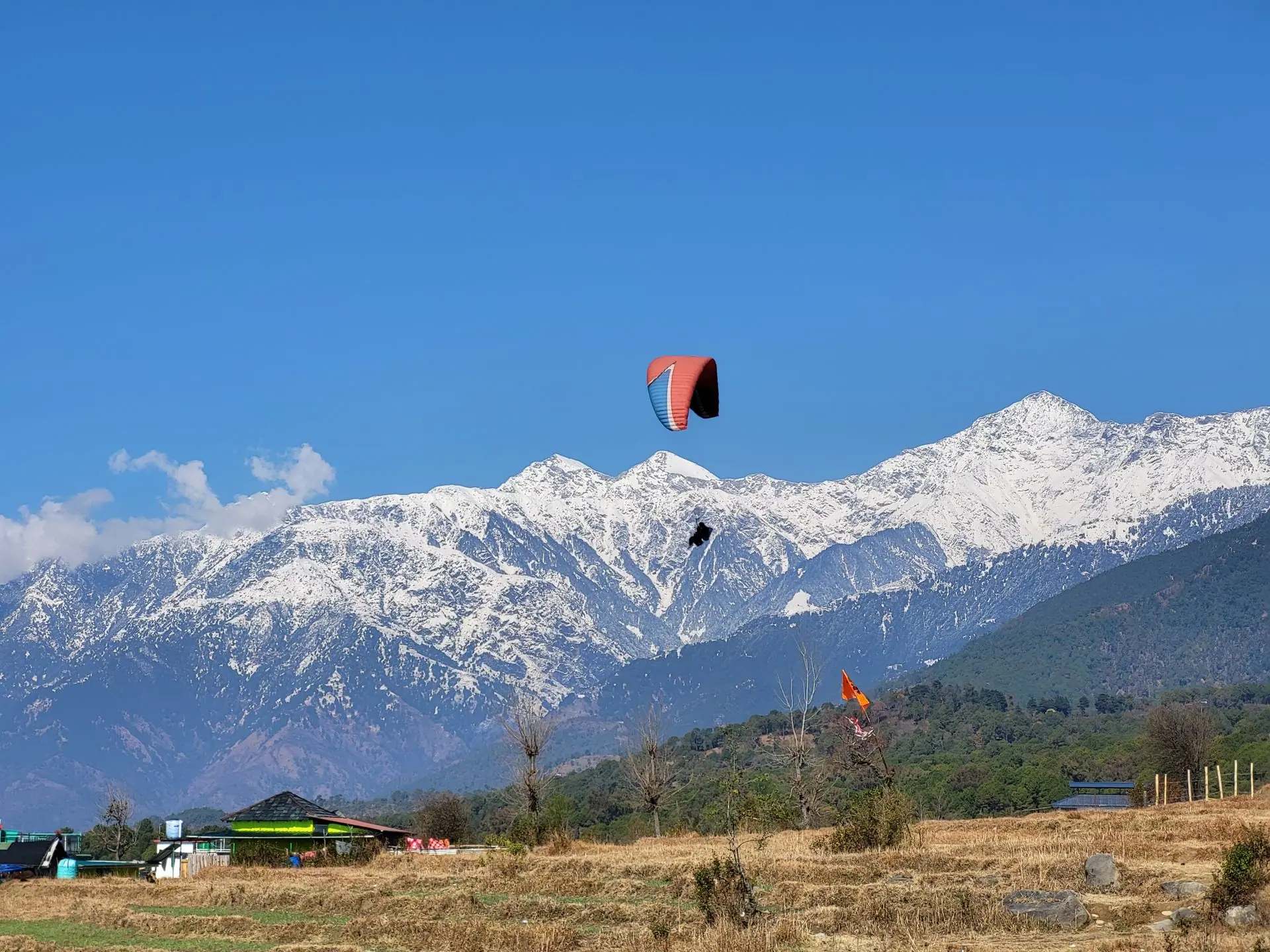
Paragliders take off from the ridge at Billing and land on the terraced fields of Bir, which the Kangra district calls the paragliding capital of India; Bir also has Buddhist monasteries and sells Tibetan handicrafts. Nearby Palampur is set among tea gardens, with Andretta, known for the Sardar Sobha Singh art gallery and Norah Richards' pottery, 13 km away. Baijnath's stone Shiva temple, rebuilt around 1204, is 16 km from Palampur. Our Bir Billing travel guide covers the flying and the safety rules.

Kangra Fort and the valley's temples

Kangra Fort, 3 km from Kangra town, was the stronghold of the Katoch rulers, once known as Nagarkot. The earthquake of 1905 left it badly damaged, and sculptures recovered from it are kept in a museum at the entrance. In the town, the Bajreshwari Devi temple was plundered by Mahmud of Ghazni around 1009 and rebuilt after the same earthquake. Jwalamukhi, 35 km from Kangra, worships a natural flame burning from the rock, and the Chamunda Devi temple stands on the Baner river, 15 km from Dharamshala. The valley also gave its name to the Kangra school of miniature painting.

Dalhousie, Khajjiar and Chamba

Dalhousie is a hill station of walks and churches, where Subhash Chandra Bose stayed for several months in 1937; St John's, its oldest church, was built in 1863. Khajjiar, between Dalhousie and Chamba, is a wide grassy clearing around a pond, ringed by cedar forest, with a 12th-century temple to Khajji Nag. Chamba, 54 km from Dalhousie on the Ravi, was founded in 920 AD; see its Lakshmi Narayan temple complex, the Bhuri Singh Museum and the Chaugan, where the Minjar fair is held in July or August. Our Dalhousie travel guide has more.

Lahaul: Sissu, Keylong, Trilokinath and Chandra Taal

The Atal Tunnel's north portal is near Sissu, in Lahaul, a valley greener than Spiti where the Chandra and Bhaga rivers meet at Tandi to form the Chenab. Keylong, on the Bhaga, is the district headquarters, and at Trilokinath, 53 km away, Hindus and Buddhists revere the same deity. Chandra Taal, the crescent-shaped "Lake of the Moon" north of the Kunzum Pass (4,590 m), is reached by a 14 km side road from Batal or a two-hour walk from the pass, and tented camps stand by it from June to October.

Spiti Valley

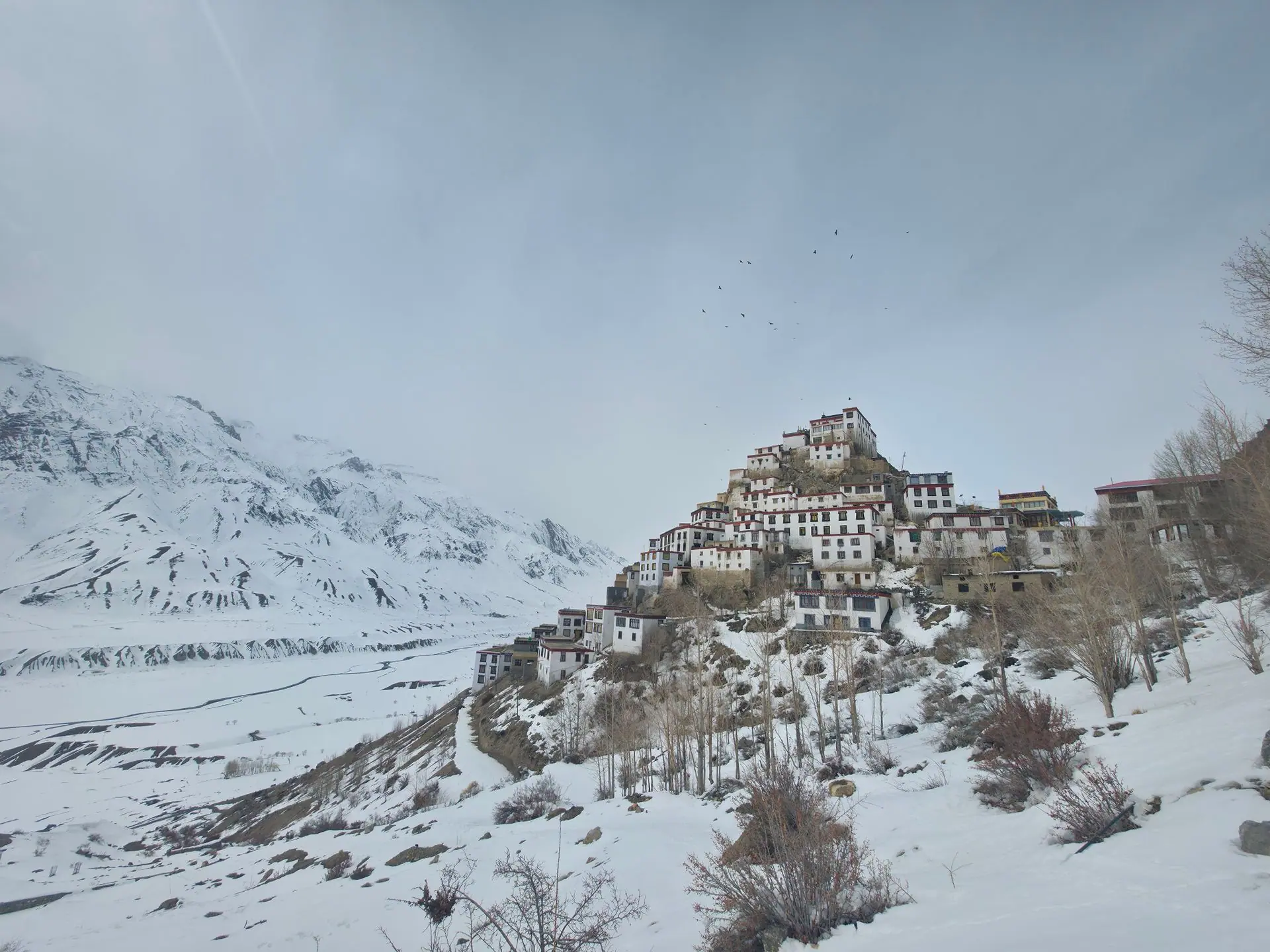
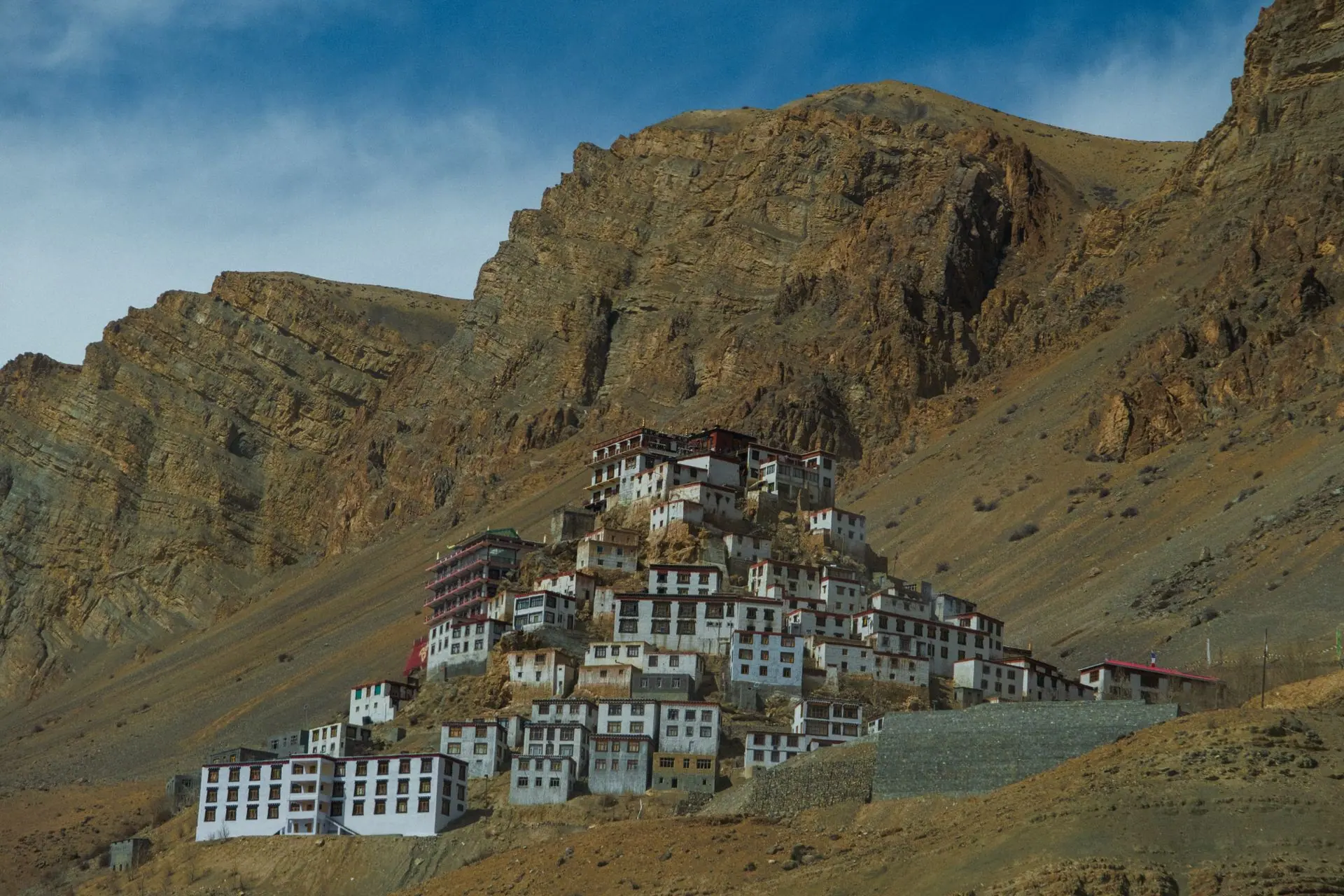
Over the Kunzum Pass from Lahaul, or through Kinnaur from Shimla, Spiti is a high cold desert of monasteries, such as Key above Kaza and Tabo, and villages such as Kibber and Langza. The Lahaul and Spiti district calls the Shimla–Kinnaur road to Kaza an almost all-weather road; the Kunzum route from Manali generally closes from about October or November to June or July. Foreign nationals need a Protected Area Permit for the stretch near the Tibet border. Our Spiti Valley travel guide covers routes, permits and seasons.

Kinnaur: Sangla, Chitkul and Kalpa

Kinnaur lies on the Hindustan–Tibet road, and Himachal Tourism gives April to October as the time to visit. Sangla, on the Baspa river 38 km from Reckong Peo, the district headquarters, has the five-storey Kamru fort above it, the old seat of Kinnaur's rulers. Chitkul, 25 km further up the Baspa valley, is where the motorable road ends. Kalpa, 13 km from Reckong Peo, looks across to the Kinner Kailash peak and holds the liveliest celebration of Fulaich, the flower festival of mid-September.

Things to do in Himachal Pradesh

Fly tandem at Bir Billing or Solang with a registered operator, trek from Manali, Dharamkot or Shoja, raft the Beas near Kullu from March to May or September to November, ski at Solang or Narkanda in winter, or ride the Kalka–Shimla toy train. Our Manali trekking experience arranges the guide and camps for routes such as the Hampta Pass, and everything we run in the state is on our Himachal Pradesh tours and experiences page.

Best time to visit Himachal Pradesh

For the hill towns, March to June and September to November are the comfortable months, the window our Himachal Hills Tour is planned around. Himachal Tourism calls April to June Shimla's summer season and December to February its snowfall season, and IMD's 1991–2020 averages show why winter needs planning in Manali: January nights there average −1.1°C.

The monsoon reaches Himachal in the second half of June; IMD's normal date is 25 June. July and August are the wettest months: Shimla averages 328 mm and 351 mm of rain in them, on about 16 rainy days each, against 30 mm in October. Cloudbursts, flash floods and landslides can block roads in the rains, so leave spare days and check the road before each drive.

In winter, Shimla and Narkanda get snow, Kufri holds a winter sports festival in February, Narkanda's ski slopes run from January to March, and Solang's snow-packed slopes become a ski area. The Rohtang Pass closes in late November and reopens by about May, Jalori from December to March, and the Kunzum route to Spiti from about October or November to June or July. The Atal Tunnel keeps Lahaul connected all year, and the Kinnaur road to Kaza is almost all-weather. Himachal Tourism suggests April to October for Kinnaur.

How to reach Himachal Pradesh

  • By air: Himachal Tourism lists five airports. Chandigarh and Pathankot lie just outside the state; inside it, Gaggal (Kangra) serves Dharamshala and Chamba, Bhuntar (Kullu–Manali), 50 km from Manali, serves Kullu, Manali and Lahaul, and Jubbarhatti, 23 km from Shimla, has limited flights that depend on the weather. Chandigarh airport is about 120 km from Shimla.
  • By train: broad-gauge trains reach Kalka, for Shimla, and Pathankot, for the Kangra valley and Dalhousie. From them, narrow-gauge lines climb to Shimla (96 km, about six hours) and from Pathankot to Joginder Nagar; check current trains on NTES or IRCTC.
  • By road: interstate buses run from Delhi, Chandigarh and Jaipur, and Himachal Tourism and the state transport corporation, HRTC, sell bus tickets online. Delhi to Manali is about 550 km by road.

How many days in Himachal Pradesh

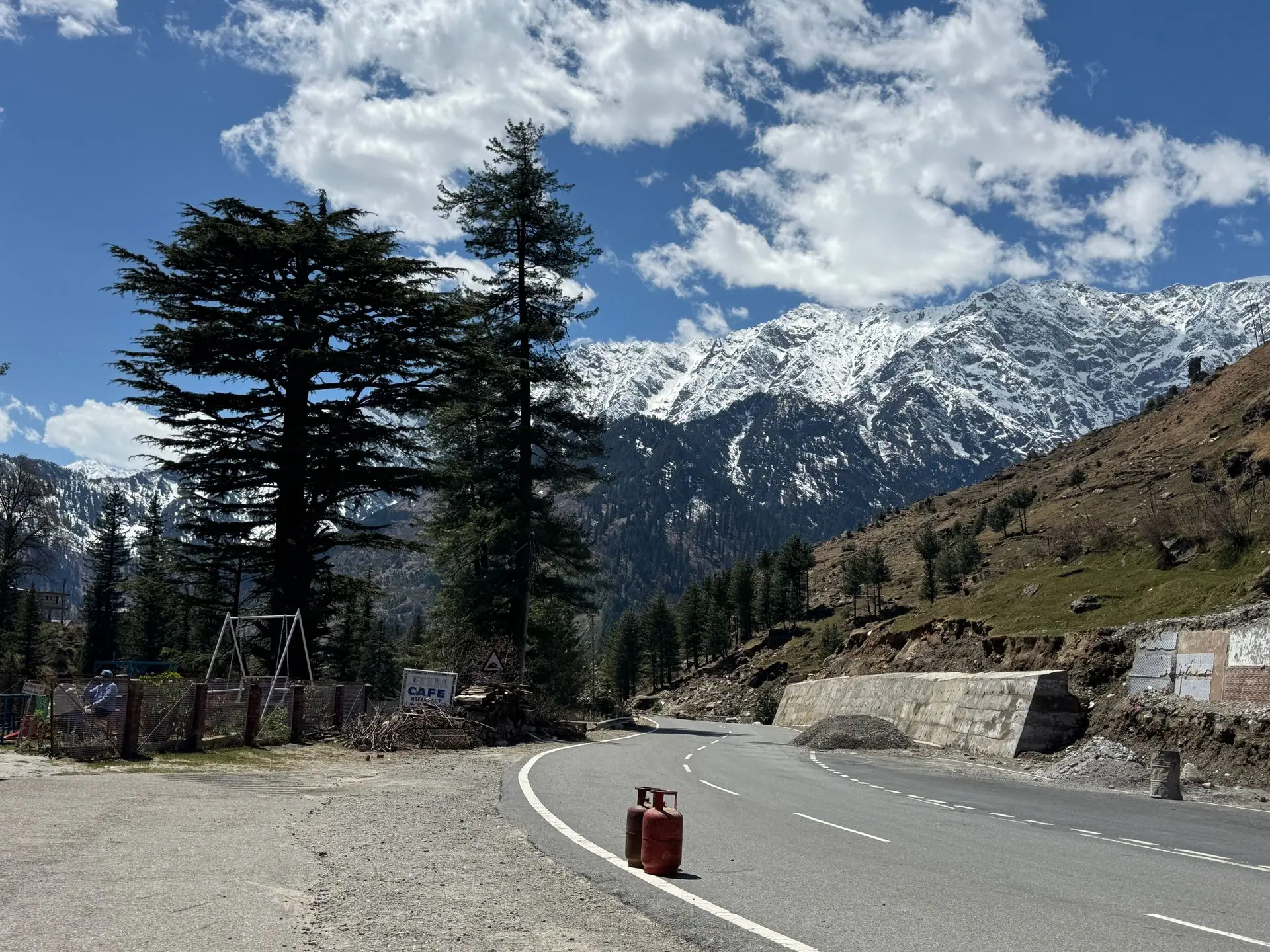
Seven days covers the classic circuit at a road-trip pace. Our Himachal Hills Tour — 7 days spends two nights in Shimla, three in Manali and one in McLeod Ganj, with a private car and driver, drives of about seven to eight hours from Shimla to Manali and six to seven from Manali to Dharamshala, and a departure from Kangra airport. With three or four more days, add Bir Billing and Palampur, or Dalhousie, Khajjiar and Chamba. Lahaul, Spiti and Kinnaur are a separate journey, planned around the road seasons and altitude. Every package that stays in the state is on our Himachal Pradesh tour packages page.

Getting around, permits and safety

  • Roads: Himachal Tourism says public buses and taxis reach every destination in the state. Mountain drives are slow: our tour allows seven to eight hours for the 260 km from Shimla to Manali.
  • Rohtang Pass: vehicles going up for tourism need a permit from the Kullu district administration, applied for online up to two days ahead, within a daily quota.
  • Border areas: foreign nationals need a Protected Area Permit for the stretch near the Tibet border in Kinnaur and Spiti.
  • Paragliding: the state's Aero Sports Rules, 2022, allow only registered operators and licensed pilots, and bar children under 12 or under 30 kg, pregnant women, people with heart conditions, epilepsy, lung disorders or asthma, and anyone who has had alcohol in the previous eight hours.
  • Altitude: Lahaul and Spiti sit high, and the Kunzum Pass is at 4,590 m, so gain height gradually and plan rest days there.

Why book with Experience My India

  • Government-approved operator

    Approved by the Ministry of Tourism, Government of India

  • 500+ vetted local guides

    35+ destination specialists plan every trip by hand.

  • Human help, every day

    Mon–Sun, 9:00 AM – 9:00 PM IST · +91 73022 65809

  • No payment until you approve

    You receive a written quote first; nothing is charged to start planning.

Frequently asked questions

What is the best time to visit Himachal Pradesh?

For Shimla, Manali, Dharamshala and Dalhousie, March to June and September to November. December to February brings snow to the hill towns, and Himachal Tourism also suggests winter for Dharamshala, with a good chance of snowfall. July and August are the wettest months, when landslides can close roads. Kinnaur is best from April to October, and Spiti's Kunzum route opens only from about June or July.

Is Mussoorie in Himachal Pradesh?

No. Mussoorie is in Dehradun district of Uttarakhand, 38 km from Dehradun, and the Dehradun district administration describes it as a gateway to the Gangotri and Yamunotri shrines. For Mussoorie itself, see our Mussoorie travel guide. In Himachal, the old colonial hill stations are Shimla, Kasauli and Dalhousie.

Which World Heritage Sites are in Himachal Pradesh?

Two. The Kalka–Shimla Railway, built between 1898 and 1903, joined the Mountain Railways of India World Heritage Site in 2008, alongside the Darjeeling and Nilgiri lines. The Great Himalayan National Park Conservation Area in Kullu district was inscribed in 2014. The railway can be ridden from Kalka to Shimla; the park has no roads and is seen only on foot, on treks with camping.

Can you travel around Himachal Pradesh by train?

Only in part. Broad-gauge trains stop at Kalka and Pathankot, on the state's borders. From Kalka, the narrow-gauge line climbs 96 km to Shimla in about six hours, and from Pathankot a narrow-gauge line runs through the Kangra valley towards Joginder Nagar, passing Kangra and Palampur. Manali has no railway: the line ends at Joginder Nagar, and the rest is by road. Check current trains on NTES or IRCTC before you plan on them.

Which festivals are worth timing a Himachal trip around?

Kullu Dussehra in October, when more than 200 village deities are carried in palanquins to honour Lord Raghunath on the Dhalpur ground; Manali's winter carnival in the first week of January; Shimla's Summer Festival in May or June and its ice skating carnival around Christmas and New Year; the Minjar fair in Chamba in July or August; the Lavi trade fair at Rampur in November; and Fulaich in Kinnaur in mid-September.

What should you buy in Himachal Pradesh?

Look for the embroidered Chamba rumal, Himachali handloom, and Kinnauri woollens, shawls and pashmina, sold at the Lavi fair in Rampur along with dried apricots, walnuts and chilgoza pine nuts. Himachal Emporium at the west end of Shimla's Mall sells local handicrafts and handloom, Dalhousie's Mall has Himachali shawls, Chamba rumals and Tibetan handicrafts, and Bir is known for Tibetan handicrafts.

Where can you see Tibetan Buddhist culture in Himachal Pradesh?

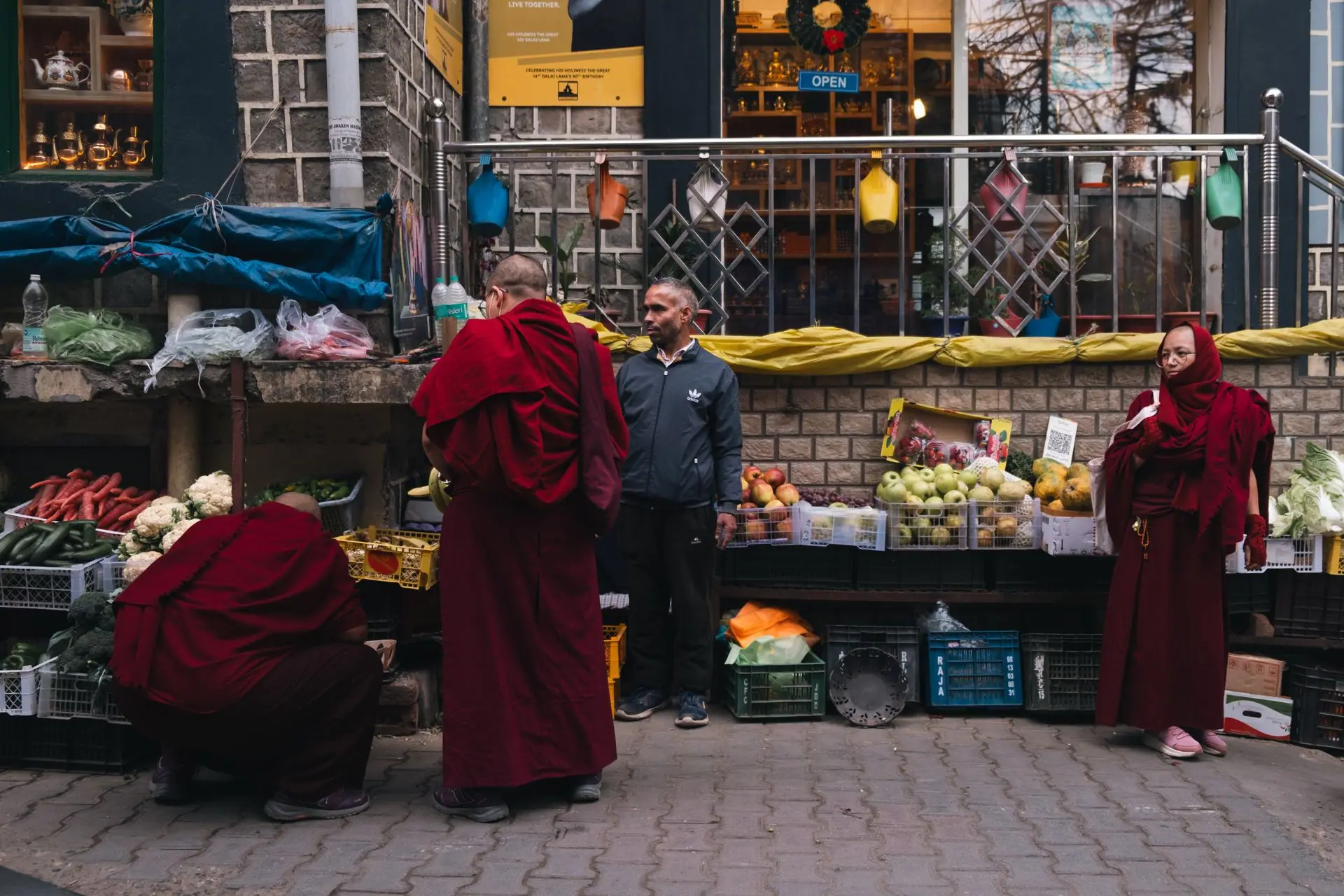
McLeod Ganj, above Dharamshala, is the seat of the Central Tibetan Administration, the Tibetan government in exile. Bir has Buddhist monasteries, and Manali's colourful Gompa near the Mall dates from the early 1960s. Further north, Lahaul's monasteries hold murals, thangkas and statues of Guru Padmasambhava; Spiti has Key and Tabo; and near Kalpa in Kinnaur, the Hu-Bu-Lan-Kar gompa is said to have been founded by Rinchen Zangpo.

Tour packages in Himachal Pradesh

See all
Himachal Hills Tour — 7 days

Himachal Hills Tour — 7 days

Himachal Hills Tour — 7 days

7 days / 6 nights • Private guide and vehicle

Price on request

Experiences in Himachal Pradesh

See all
Bir Billing paragliding

Bir Billing

Bir Billing paragliding

Private vehicle for the transfer to the take-off site

Price on request
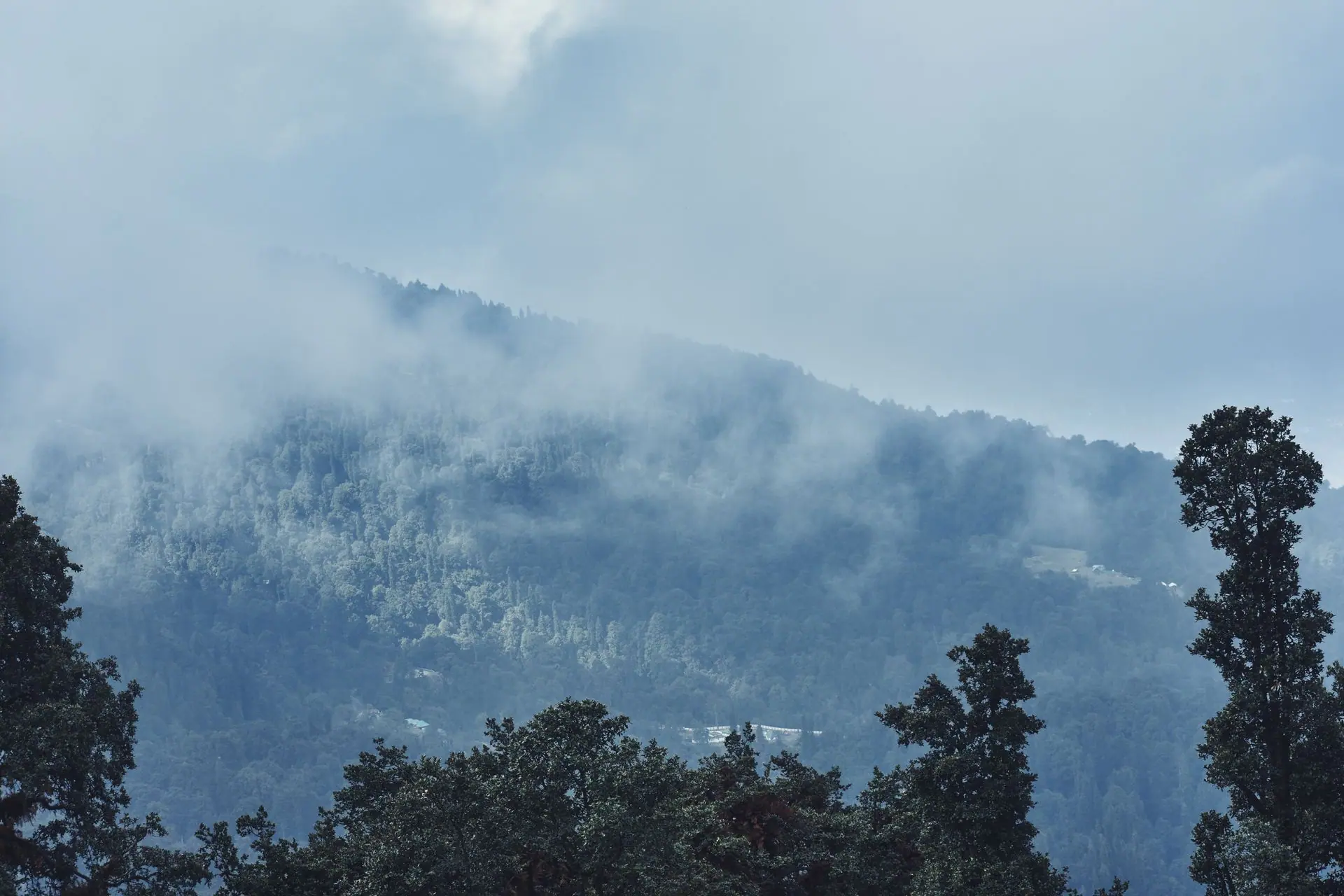
Manali trekking
Manali trekking

Manali

Manali trekking

Private guide and support crew on multi-day treks

Price on request
From the journal: Himachal Pradesh
Customer reviews

Experience My India is rated 4.3 on Tripadvisor. We publish guest reviews after each trip.

Read our reviews

Plan a trip

Tailor-made quote from a specialist