
Hampi Travel Guide: Temples, Royal Ruins and How to Plan Your Days
Hampi, on the south bank of the Tungabhadra in Karnataka, was the capital of the Vijayanagara empire, and its ruins have been a World Heritage Site since 1986. The main places to visit in Hampi are the Virupaksha temple, still in worship, the Vittala temple and its stone chariot, the palaces and elephant stables of the Royal Centre, and Matanga Hill at sunrise. Come between October and February.
By Experience My India Editorial Team · Reviewed by Experience My India Editorial Team
See all 2 tours and experiences in Hampi →
Government-approved operatorApproved by the Ministry of Tourism, Government of India
Places to visit in Hampi
Things to do in Hampi
Karnataka Tourism suggests a coracle ride on the Tungabhadra, a bicycle between the monuments and the granite boulders, a well-known spot for climbing: our Hampi bouldering session comes with a guide, crash pads and problems picked for your level, beginners included. Across the river, Virupapur Gadde is known for its cafés. Everything we run here is on our Hampi tours and experiences page.
Best time to visit Hampi
How to reach Hampi
- By air: Jindal Vijaynagar Airport, at Vidyanagar, about 40 km away, is the nearest; Karnataka Tourism names Hubballi's airport, about 150 km off by the district's count, as an alternative. For international flights, use Bengaluru's Kempegowda International Airport.
- By train: Hosapete Junction (HPT) is about 13 km away, with daily trains from the Hubballi and Guntakal junctions.
- By road: Bengaluru is about 340 km away, six to seven hours by car or bus; our Bengaluru travel guide covers the city. Taxis, local buses and rental bikes run between Hosapete and Hampi.
How many days in Hampi
Karnataka Tourism suggests two to three days to see Hampi at a relaxed pace.
Day 1, the Sacred Centre: sunrise on Matanga Hill, then the Virupaksha temple, Hampi Bazaar and the Ganeshas of Hemakuta Hill, and in the afternoon the Vittala temple and its stone chariot.
Day 2, the Royal Centre: the Ugra Narasimha and the Badavilinga, the Mahanavami Dibba and stepped tank, the Lotus Mahal, the elephant stables and the Queen's Bath, with sunset on Hemakuta Hill.
Day 3: across the river to Anegundi and Anjanadri Hill, or a morning of bouldering while the rock is cool.
A single guided day covers the Sacred Centre and the Vittala temple; our Hampi tour packages page shows what we arrange here.
Getting around and where to stay
The monuments are spread out, so most visitors move between them by bicycle, scooter, cycle rickshaw or cab, and walk within each cluster; Karnataka Tourism also mentions battery buggies serving several of the main monuments. On our ruins tour, a private vehicle takes you to and around the site, and the guide can arrange a bicycle, moped or auto-rickshaw for the stretches between ruins. Places to stay range from guesthouses and homestays to hotels and resorts, and many travellers prefer to stay in Hampi itself, close to the monuments; Hosapete has the railway station.
Tips for visiting Hampi
- Hampi is a plastic-free zone, so carry a reusable water bottle.
- Bring a hat, sunglasses and sun cream in any month; shade is scarce among the ruins.
- The Virupaksha temple is a working temple: dress modestly, and expect to take your shoes off at temple platforms.
- The monuments close at sunset, so plan sunset on a hill rather than inside a monument.
Why book with Experience My India
Government-approved operator
Approved by the Ministry of Tourism, Government of India
500+ vetted local guides
35+ destination specialists plan every trip by hand.
Human help, every day
Mon–Sun, 9:00 AM – 9:00 PM IST · +91 73022 65809
No payment until you approve
You receive a written quote first; nothing is charged to start planning.
Frequently asked questions
Is Hampi worth visiting?
Yes, if you enjoy history and landscape together. Hampi was the capital of the Vijayanagara empire; the ASI dates its monuments to between 1336 and 1570, and they have been a World Heritage Site since 1986. Temples, palace platforms, baths and bazaars stand among granite boulders along the Tungabhadra, and the Virupaksha temple is still in worship. It suits travellers who are happy to start early and spend their days outdoors.
Is Hampi suitable for a day trip?
From Bengaluru, no: it is about 340 km, six to seven hours each way by road. From Hosapete, about 13 km away, a long day covers the Virupaksha temple, Hampi Bazaar and the Vittala temple. Karnataka Tourism suggests two to three days for the whole site, and the Royal Centre, a sunrise on Matanga Hill and the crossing to Anegundi need at least a second day.
In what order should you see Hampi's monuments?
Begin where the town does, at the Virupaksha temple and Hampi Bazaar, with Hemakuta Hill and its two Ganeshas just above, then ride on to the Vittala temple and the stone chariot. Keep the Royal Centre for another day: the Ugra Narasimha and the Badavilinga first, then the Mahanavami Dibba and stepped tank, the Lotus Mahal, the elephant stables and the Queen's Bath. Save Matanga Hill for a sunrise on either morning.
How much walking does a visit to Hampi involve?
A fair amount, even if you ride between the clusters. The ASI gives the protected area as nearly 26 sq km, and the Sacred Centre, the Vittala temple and the Royal Centre lie well apart, so most visitors cycle or take a vehicle between them and walk within each. Climbs add effort: Matanga Hill is a scramble over rocks and old steps, and Anjanadri across the river has 570 steps. Wear shoes that grip but slip off easily at temple doors.
Do you need a guide at Hampi?
Not to get in, but the ruins are spread over a large area and much of their story is in the details, such as the inverted shadow inside the Virupaksha temple, which Karnataka Tourism says a guide will point out. Our Hampi ruins tour comes with a private guide for the day across the Sacred and Royal Centres, a vehicle, and help hiring bicycles, mopeds or auto-rickshaws, with the route timed around the heat.
Which places near Hampi are worth the trip?
Across the river, Anegundi and Anjanadri Hill. Karnataka Tourism also lists the Tungabhadra dam, about 15 km away, for its gardens and views over the reservoir, and the Daroji sanctuary, about 25 km away, which protects sloth bears. Badami's cave temples, with Pattadakal and Aihole close by, are about 140 km from Hampi: a stop of their own on a longer road trip, not a day out. Our Karnataka travel guide covers them.
What is Hampi like in the monsoon?
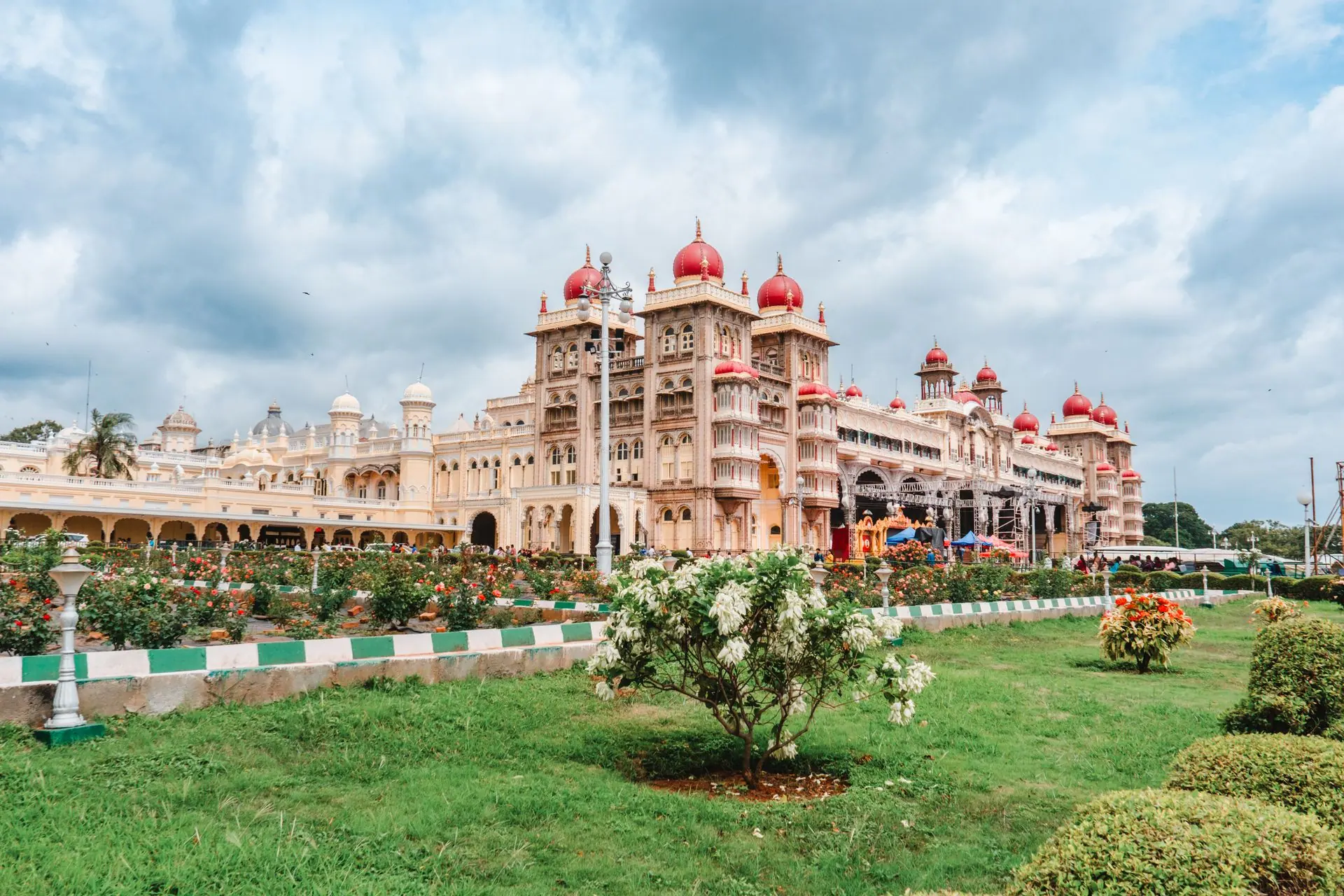
Wet, but less so than the coast: Karnataka Tourism describes light to moderate rain in north Karnataka from June to September, against heavy to very heavy rain on the coast and in the Western Ghats. IMD's normal dates for nearby Gangawati bring the monsoon around 6 June and see it withdraw around 15 October. The river is the main change, as the Purandara Mandapa floods and boat crossings to Anegundi depend on the weather. October to February remains the main season. For a longer trip, our Mysore travel guide covers the palace city in the south, and our Goa travel guide the coast to the west.
Tour packages in Hampi
See all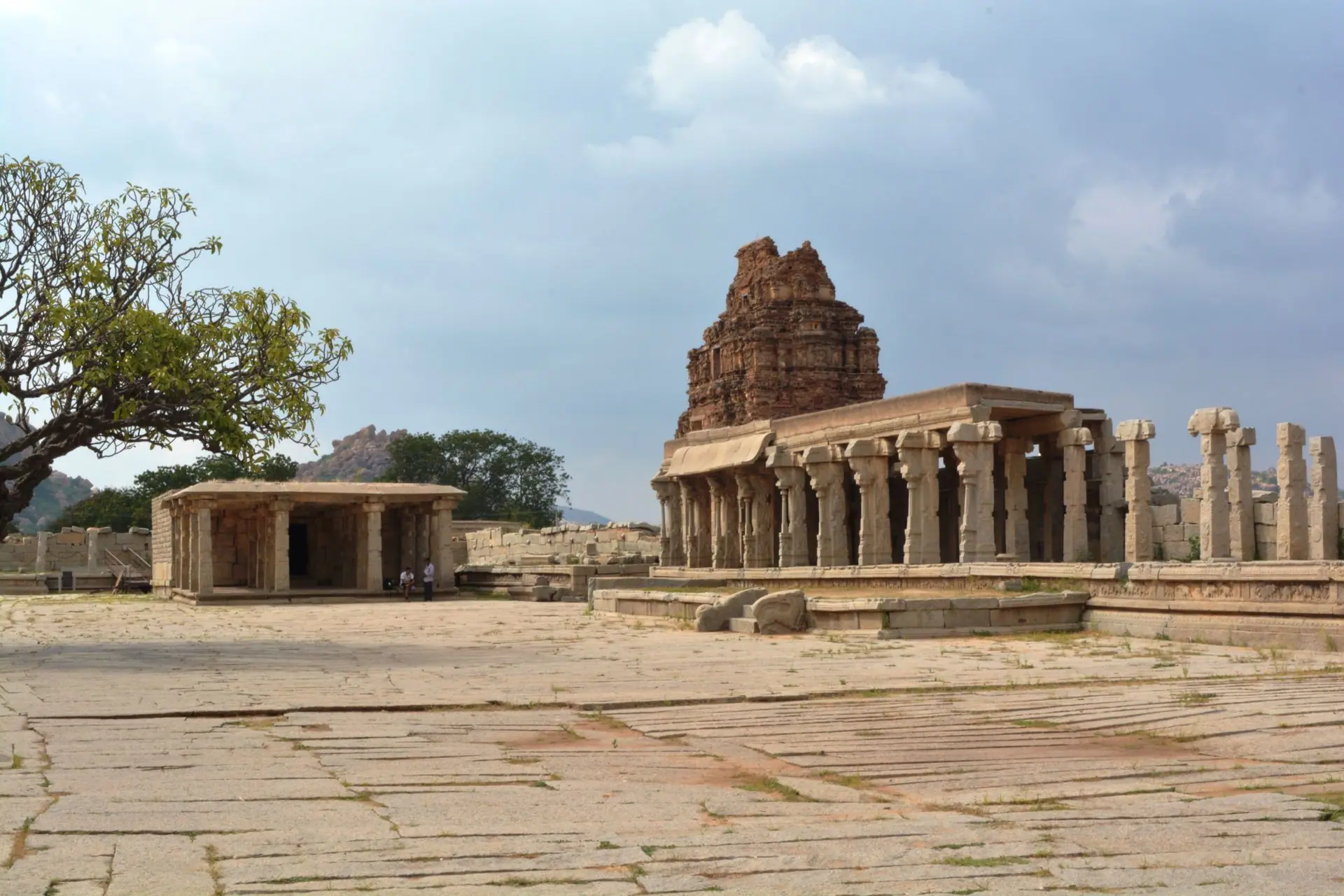
Hampi
Hampi ruins tour
Private guide and vehicle
Price on request
Experiences in Hampi
See all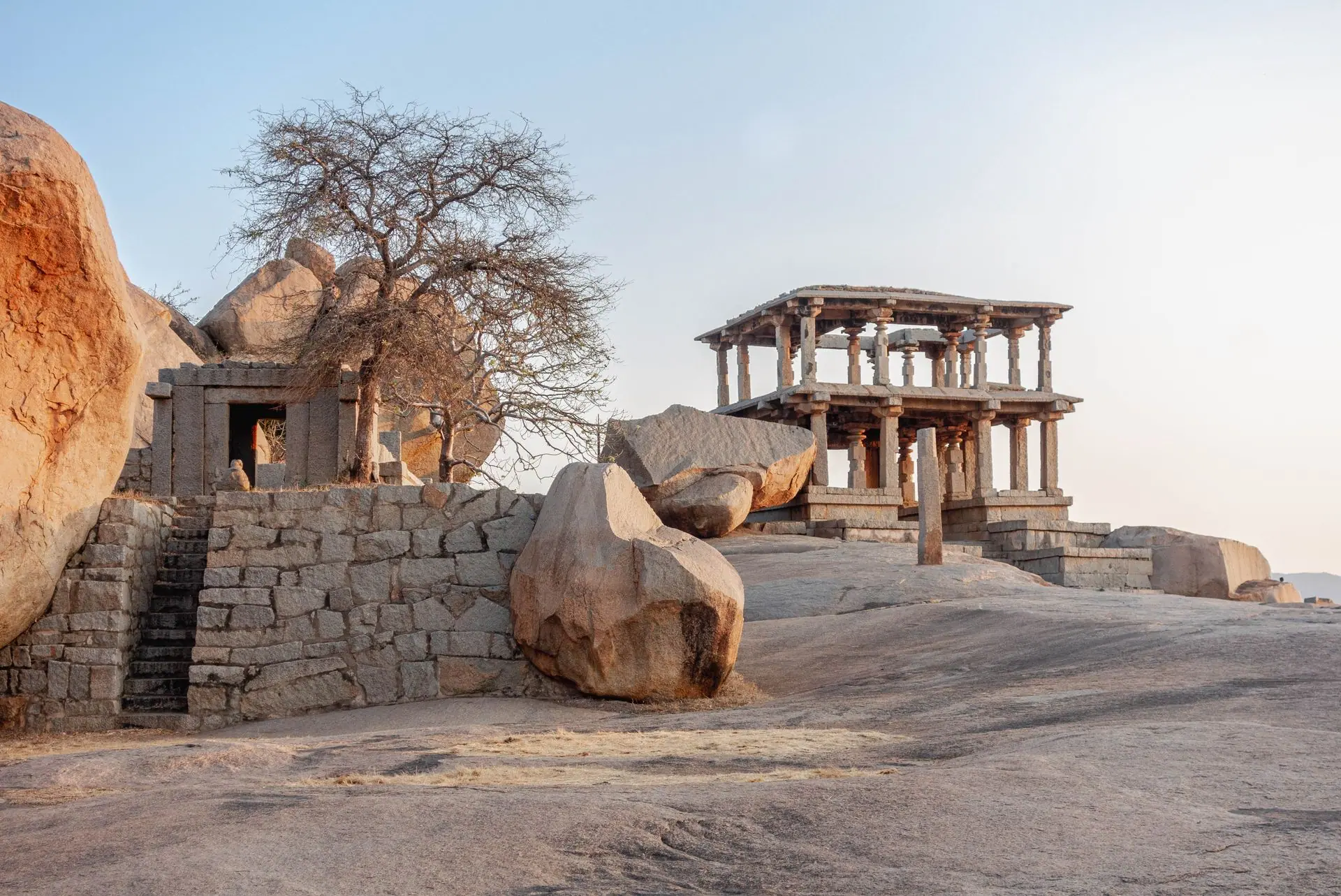
Hampi
Hampi bouldering
Private guide who knows the boulder areas
Price on request


From the journal: Hampi
Journal
Trip to Hampi: A Journey Through History and Adventure
Journal
Hampi Tour Package: Explore the Ruins of a Glorious Past
Journal
Hampi Travel Itinerary: A Complete Guide to Exploring the Ancient City
Journal
Reliving the Glorious Past of Hampi Virupaksha Temple
Customer reviews
Experience My India is rated 4.3 on Tripadvisor. We publish guest reviews after each trip.
Plan a trip
Tailor-made quote from a specialist