
Last updated:
Best Places to Visit in India in June: The Dry Mountains and the Monsoon's Arrival
June is the month the south-west monsoon crosses India. On the India Meteorological Department's normal dates it reaches Kerala around 1 June, Goa by 10 June, Mumbai by 15 June and Delhi by 30 June. The best places to visit in India in June are the mountains behind it, Ladakh, Spiti and the Kashmir valley, where rain stays light, while Delhi still averages 39°C by day.
By Experience My India Editorial Team
Destination specialists and licensed local guides
June weather in India: heat on the plains, rain on the coasts
The India Meteorological Department (IMD) counts June as the first month of the south-west monsoon season, which runs from June to September. It is also the last month of the heat-wave season, which IMD says runs mainly from March to June. So the plains stay hot until the rains arrive, while the west coast and the far south-west are wet from the first week. The table gives IMD's long-term averages for named weather stations; one year can differ a good deal from another.
| Criteria | Average high | Average low | Average rainfall |
|---|---|---|---|
| New Delhi (Safdarjung) | 39.0°C | 27.7°C | 80.6 mm |
| Jaipur | 39.7°C | 27.9°C | 61.9 mm |
| Srinagar | 28.5°C | 15.0°C | 46.4 mm |
| Leh | 23.3°C | 10.3°C | 8.9 mm |
| Shimla | 24.8°C | 16.2°C | 193 mm |
| Panaji (Goa) | 30.6°C | 24.9°C | 874 mm |
| Kochi | 30.3°C | 24.2°C | 679 mm |
| Bengaluru | 29.7°C | 20.6°C | 110.3 mm |
| Chennai | 37.2°C | 27.9°C | 58.8 mm |
| Kolkata | 33.9°C | 26.9°C | 288 mm |
Delhi, Jaipur, Srinagar, Bengaluru and Chennai carry IMD's 1991–2020 normals, Leh carries IMD's 2011–2024 averages, and Shimla, Panaji, Kochi and Kolkata are taken from IMD's city climate profiles.
How the monsoon moves through the month
IMD's research report on the monsoon's normal dates (1961–2019) has it advance like this:
- Around 1 June: Kerala and the south of Tamil Nadu.
- By 10 June: coastal Karnataka, Goa and the south of Maharashtra.
- By 15 June: Mumbai and most of West Bengal.
- By 30 June: Delhi, Uttarakhand, Ladakh, most of Jammu and Kashmir, and east Rajasthan.
- By 8 July: the rest of the north-west.
IMD adds that onset and progress vary a great deal from year to year, so a given monsoon can run ahead of these dates or behind them.
What that means region by region
The plains and the desert. New Delhi averages 39.0°C by day in June, with 80.6 mm of rain: more than May's 29.4 mm, and well short of July's 195.8 mm. Jaipur averages 39.7°C and Jaisalmer 41.1°C. IMD's heat-wave guidance names high humidity and strong winds among the conditions that make a heat wave worse.
The Himalaya. Behind the main range the climate is different: the Leh district administration describes Ladakh as mainly dry, and IMD's average for Leh in June is 8.9 mm, although its normal dates cover Ladakh by 30 June. On the southern slopes the rain builds quickly: Shimla's rises from 77 mm in May to 193 mm in June.
The coasts and the south. June is the wettest month of the year at both Kochi and Thiruvananthapuram on IMD's profiles, and IMD says about 90 per cent of Panaji's rain falls in the south-west monsoon season. Bengaluru is mild, at 29.7°C. Chennai, in the rain shadow of this monsoon, is hot, at 37.2°C by day; IMD gives Tamil Nadu only about 36 per cent of its annual rain from the south-west monsoon.
The east and the islands. Kolkata is wet, at 288 mm, Guwahati's profile names June its wettest month, and Port Blair averages 448 mm.
Best places to visit in India in June
For the driest weather, Ladakh comes first on IMD's figures, with the Kashmir valley and Spiti behind it. If you need one best place in India in June for dry, mild days, start there.
Ladakh
June is a main month for Ladakh. The Leh district gives the Srinagar–Leh highway an open season of May to November or December, and the Manali–Leh road May or June to September or October, so both routes in are normally in season. The district says every tourist arriving in Leh must spend at least 48 hours acclimatising before heading for higher ground, Khardung La and Pangong Lake among them. The district also places the Hemis Tsechu, a monastery festival dedicated to Padma Sambhava, in late June or the first half of July; see our Hemis festival guide. Our Ladakh travel guide covers Leh, Nubra Valley and Pangong Lake; the routes are on our Ladakh tour packages page.
The Kashmir valley
Srinagar is warm, not hot, at 28.5°C by day, and its 46.4 mm of rain is lower than in any month from January to May. Higher up, Gulmarg averages 19.3°C by day with 101.6 mm of rain, and Pahalgam 24.2°C and 91.2 mm. Start with our Srinagar travel guide; the guides to Pahalgam, Gulmarg and Sonmarg cover the side valleys, and the best time to visit Kashmir the whole year. Routes are on our Kashmir tour packages page.
Spiti and the Himachal hills
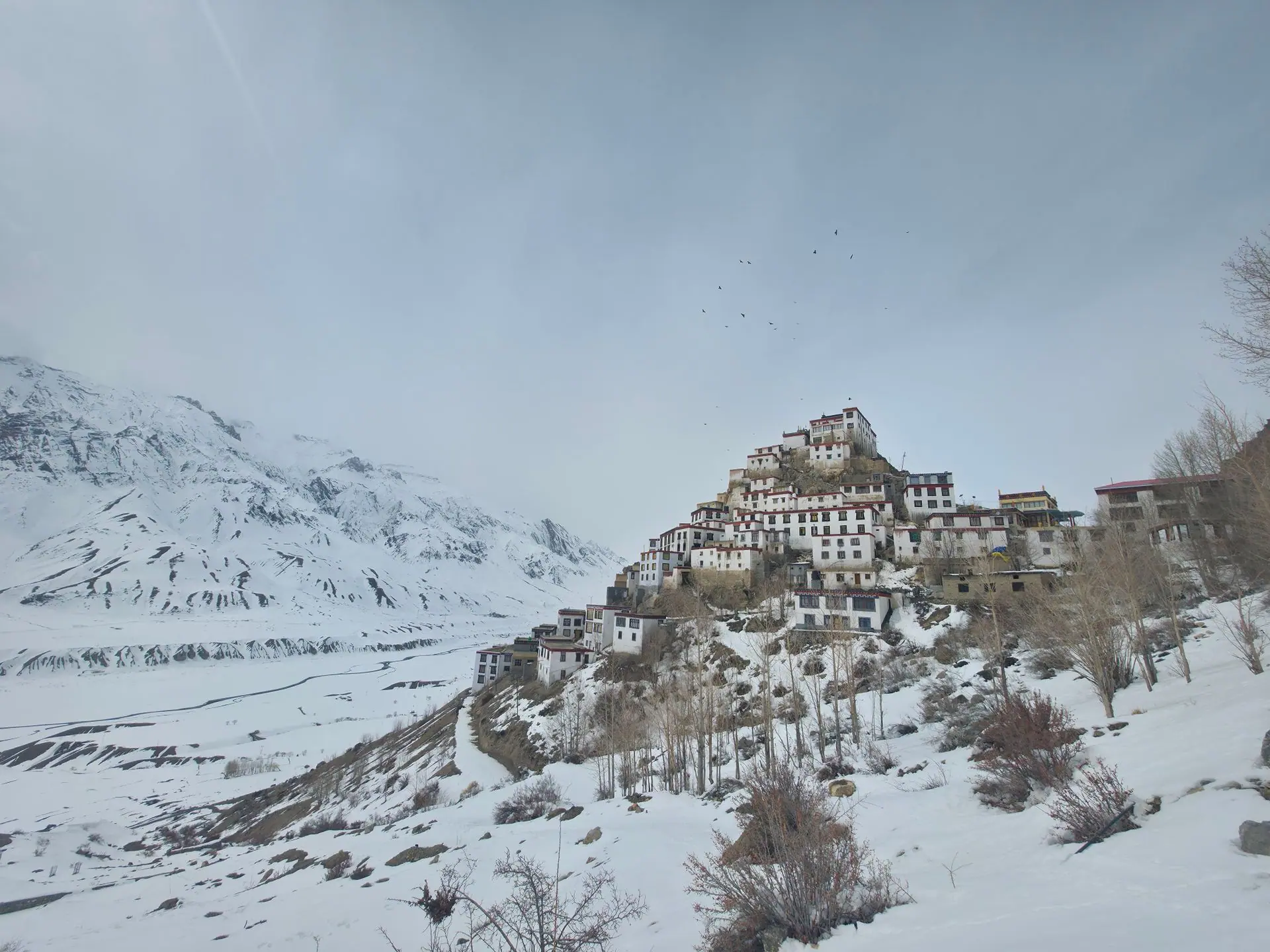
The Lahaul and Spiti district says Spiti receives scanty rain because it lies in the Himalaya's rain shadow, and Himachal Tourism says May and June there stay between 15 and 20°C. Choose the route with care. The district says the Kunzum route from Manali is generally closed in winter, from about October or November until June or July, while the road from Shimla through Kinnaur is an almost all-weather connection to Kaza. Himachal Tourism lists regular buses to Spiti from Shimla from May and from Manali from July. See our guides to Spiti Valley, Shimla and Manali, and our Spiti Valley tour packages.
Kanha and Bandhavgarh, in their last weeks
Kanha's own site says the park is usually open from 15 October to 30 June and that the monsoon arrives in the second week of June. It adds that some visitors prefer the peak of summer because they believe tigers are seen more often near water. Bandhavgarh gives the same dates. See our guides to Kanha and Bandhavgarh.
Kerala, for the monsoon itself
Kerala is where the rains arrive first. Kerala Tourism says it rains for a few hours with sunny interludes, which suits the backwaters and hills better than the beach; see the best time to visit Kerala and our monsoon guide.
What to avoid, or plan around, in June
- Midday on the plains. Delhi, Jaipur and Jaisalmer average 39 to 41°C by day. See monuments at opening time and rest from late morning.
- Swimming on the west coast. Goa's Department of Tourism lists swimming in the monsoon among the things not to do.
- Mountain roads from late June. The Geological Survey of India says landslides strike India every year, mostly during the monsoon, and counts the North West Himalaya (Uttarakhand, Himachal Pradesh, Jammu and Kashmir) as landslide-prone. Leave spare days on hill routes, and in Ladakh, where IMD lists flash floods and mudslides among the main hazards.
- Wildlife in Assam and the Andamans. The Assam Forest Department gives November to April as Kaziranga's season, and the Andaman tourism department keeps Jolly Buoy Island closed from mid-May to mid-November.
Festivals and fixed dates in June
- International Day of Yoga, 21 June. The United Nations proclaimed the day in 2014 on India's proposal. For a yoga town, see our Rishikesh travel guide.
- Rath Yatra, Puri. Odisha Tourism places it in the month of Ashadha, June–July, so it can fall in either month; see our Rath Yatra guide.
July brings the heart of the rains; see India in July, and India in May for the weeks before. The best time to visit India guide sets June beside the other eleven months.
Frequently asked questions
Does the monsoon start in June in India?
Yes, in the south-west. IMD's normal date for the monsoon's arrival over Kerala is around 1 June, with Goa reached by about 10 June, Mumbai by 15 June and Delhi by 30 June. IMD says a year's monsoon can run ahead of these dates or late.
Is June a good time for Ladakh?
Yes, it is one of the main months. Leh averages 23.3°C by day and 10.3°C at night in June, with 8.9 mm of rain, and both roads in are normally in season. Allow at least 48 hours in Leh to acclimatise, as the district requires, and keep a spare day, since IMD lists flash floods and mudslides among Ladakh's main hazards.
Can I still visit Kerala in June?
You can, if you plan around the rain. June is the wettest month of the year at Kochi, with 679 mm, and at Thiruvananthapuram, with 303 mm, on IMD's profiles. Beach time is unlikely. Kerala Tourism presents the monsoon as the best season for Ayurvedic rejuvenation therapies, so a stay built around those, the backwaters or the hills suits the month.
How hot is North India in June?
Very. IMD's averages give New Delhi 39.0°C by day and 27.7°C at night, Jaipur 39.7°C and Jaisalmer 41.1°C by day. Rain starts to arrive, with Delhi's June average at 80.6 mm against 29.4 mm in May, but the monsoon normally reaches Delhi only by 30 June.
Can you swim at Goa's beaches in June?
It is not advised. Goa's Department of Tourism includes "Do not swim in the monsoon" among its beach do's and don'ts, and IMD's profile for Panaji gives June 874 mm of rain. The standing rules apply too: swim only in zones marked by red and yellow flags, and never enter the water where red flags fly.
Is Kashmir a good choice in June?
For the valley, yes. Srinagar averages 28.5°C by day and 15.0°C at night, with 46.4 mm of rain, less than in any month from January to May. Gulmarg is cooler, at 19.3°C by day, and wetter, at 101.6 mm. IMD's normal dates bring the monsoon to most of Jammu and Kashmir by 30 June.
Related guides
Customer reviews
Experience My India is rated 4.3 on Tripadvisor. We publish guest reviews after each trip.
Why book with Experience My India
Government-approved operator
Approved by the Ministry of Tourism, Government of India
500+ vetted local guides
35+ destination specialists plan every trip by hand.
Human help, every day
Mon–Sun, 9:00 AM – 9:00 PM IST · +91 73022 65809
No payment until you approve
You receive a written quote first; nothing is charged to start planning.
Browse experiences by theme
See all
Wildlife Safaris
8 experiences
Heritage & Architecture
2 experiences
Beaches & Islands
5 experiences
Wellness & Ayurveda
1 experience
Yoga & Meditation
4 experiences
Trekking
2 experiences
Adventure
6 experiences
Culinary
5 experiences
Festivals
8 experiences
Performing Arts
5 experiences
Luxury Trains
4 experiences
Houseboats
3 experiences
Toy Trains & Railways
1 experience
Village & Tribal Tourism
2 experiences
Glamping & Desert
1 experience
Honeymoon & Romance
3 experiences
VIP & Luxury
2 experiences
Plan a trip
Tailor-made quote from a specialist