Skip to content

Kolkata Travel Guide: Places to Visit, Durga Puja and Getting Around

Kolkata, the capital of West Bengal, stands on the Hooghly river and is known for the Victoria Memorial, Howrah Bridge, the Indian Museum, College Street's book market and its river ghats. Durga Puja, inscribed by UNESCO in 2021, is its great festival. Two to three days cover the main sights, and the cooler months from November to February are the comfortable season.

By Experience My India Editorial Team · Reviewed by Experience My India Editorial Team · Updated 1 Sept 2026

See all 1 tour or experience in Kolkata →

Government-approved operatorApproved by the Ministry of Tourism, Government of India

Places to visit in Kolkata

West Bengal Tourism calls Kolkata the City of Joy, and its sights are spread across the river, the Maidan and the old north of the city. Group them by area: the Maidan and south for museums, the riverside and Howrah for bridges, ghats and markets, and College Street in the north for books.

Victoria Memorial

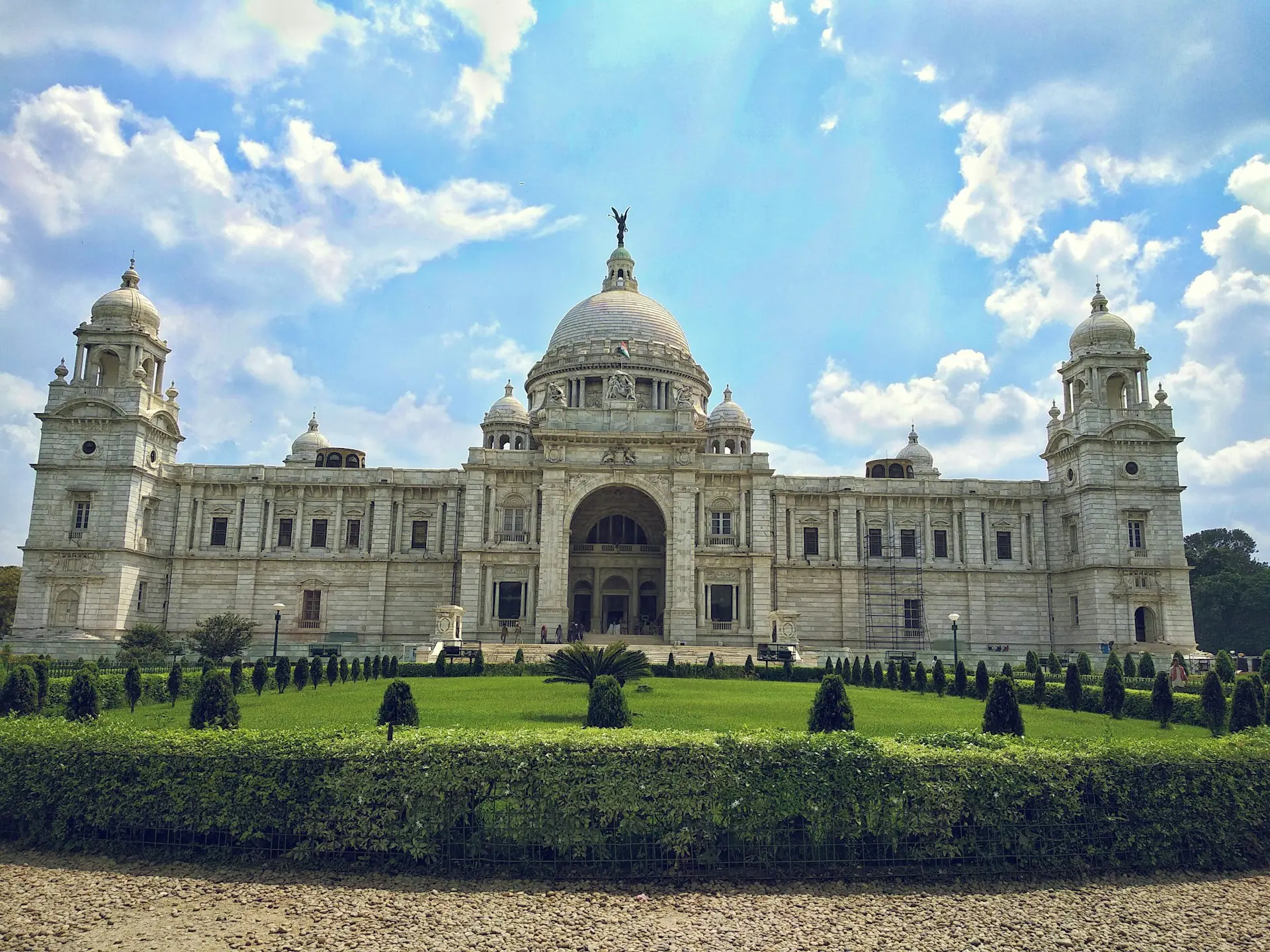
Lord Curzon planned the Victoria Memorial Hall as a memorial to Queen Victoria, and the white marble building now serves as a museum and art gallery. West Bengal Tourism counts 28,934 artefacts and 3,900 paintings in it, with gardens around. The galleries are open from 10 am to 6 pm and closed on Mondays and national holidays, while the gardens open from 6 am to 6 pm every day. Tickets are sold online and at the counters, so buy them from the Hall's own site.

Howrah Bridge

The balanced cantilever bridge over the Hooghly was commissioned in 1943 and replaced a pontoon bridge linking Kolkata and Howrah. West Bengal Tourism gives its length as 2,150 feet with a single span of 1,500 feet, and says it carries about 100,000 vehicles and possibly more than 150,000 pedestrians a day, which it calls one of the busiest cantilever bridges in the world. Mallick Ghat, with its flower market, lies just beneath it on the Hooghly bank, and the bridge is best seen from the ghats.

Mallick Ghat flower market

Below the Howrah Bridge, this market is more than 165 years old and the biggest wholesale flower market in eastern India. It starts around 4 am, with sellers from across Kolkata and nearby areas bringing marigolds, lotuses, lilies, roses and garlands, and it is livelier in the festival and wedding seasons. Go at dawn, as trading starts around 4 am.

Kumortuli

The potters' quarter in the north makes clay idols for Kolkata's festivals and also exports them. West Bengal Tourism says that watching master craftsmen shape the deities one by one from wet clay is the heart of a visit, and that Kumortuli's fame grew in the era of community Durga Puja. It also holds one of the oldest Durga Pujas in the city. The weeks before the festival are when the idols are being made, so time a visit then.

Prinsep Ghat and Millennium Park

Prinsep Ghat, built in 1841, has a Palladian porch added after the death of James Prinsep in 1843, with gardens, lawns and benches by the river. Small boats can be hired there for a ride on the Hooghly. Millennium Park runs 2.5 km along Strand Road between Vidyasagar Setu and Howrah Bridge, with landscaped gardens, slides and swings for children. Outram Ghat, near Howrah Bridge, is a quieter spot for early-morning and evening walks.

Indian Museum

Founded in 1814, the Indian Museum calls itself the earliest and largest multipurpose museum in the Indian subcontinent. Its galleries include Bharhut, Gandhara, Egyptian, bronze, coin, textile and natural-history collections, and West Bengal Tourism mentions an Egyptian mummy and a Buddhist stupa among the highlights. It is open Tuesday to Sunday from 10 am to 6 pm and closed on Mondays. Tickets can be booked on the museum's site, with separate rates for adults, children under 18 and foreign nationals.

College Street and the Indian Coffee House

College Street, known as Boi Para, runs from Bowbazar towards Mahatma Gandhi Road and is the largest book market in India, according to West Bengal Tourism, with secondhand books in great numbers. Calcutta University, Presidency College and Medical College are on it. Above all, visit the Indian Coffee House, a meeting place of students, writers and politicians that was converted to a coffee house in 1942, and which serves affordable snacks and coffee.

Park Street and its cemetery

Park Street has been Kolkata's main evening zone since the British era, with restaurants and clubs, and the street is lit up for Diwali, Christmas and New Year's Eve. The Park Street Cemetery, ceremonially opened in 1767, is one of the first non-church cemeteries in the world and holds graves of Sir William Jones, founder of the Asiatic Society, and the poet Henry Derozio. Sandstone tombs in Gothic and Indo-Saracenic styles stand among tall trees.

Jorasanko Thakur Bari

Jorasanko, in north Kolkata, is the ancestral home of the Tagore family and the birthplace of Rabindranath Tagore. It is also where Gaganendranath and Abanindranath Tagore, founders of the Bengal School of Art, lived. The house is now part of Rabindra Bharati University, and its Rabindra Bharati Museum, founded in 1961, tells stories from the lives of the Tagores. Visit it with an interest in the Bengal Renaissance and the Brahmo Samaj.

Temples and pilgrim sites

Kalighat is regarded as the holiest of the Shakti Peethas, with a gold-tongued image of Kali, on the banks of the Adi Ganga. The Birla Mandir in Ballygunge, opened in 1996, is built in white marble and sandstone. Across the river at Belur, the headquarters of the Ramakrishna Math and Mission opens from 6.30 to 11.30 am and 3.30 to 8.30 pm. Our article on temples in Kolkata lists more.

Chinatown

Chinese families settled in Kolkata in the 18th century, and the Tangra and Topsia area in the east is still known for Buddhist temples, heritage buildings, a Chinese pastry shop and restaurants serving food kept alive by the families there. West Bengal Tourism mentions India's only Chinese Kali temple, which offers noodles as prasad. Chinese New Year brings lion and dragon dances.

Science City and Eco Park

For families, Science City is the largest science centre in the Indian subcontinent, with the Dynamotion Hall, 3D space rides and a cable car. Eco Park, spread over 475 acres, is one of the largest urban parks in India, with a lake, a butterfly garden, kayaking and cycling. The Birla Industrial and Technological Museum and the Nehru Children's Museum, with dolls from 92 countries, suit younger visitors too.

Things to do in Kolkata

Walk the river ghats at dawn, ride the Metro, spend an afternoon at the museums and College Street, and join the city for Durga Puja if your dates allow. Our Kolkata destination page lists everything we run in the city, and our Sundarbans guide covers the mangrove delta south of it.

Durga Puja in Kolkata

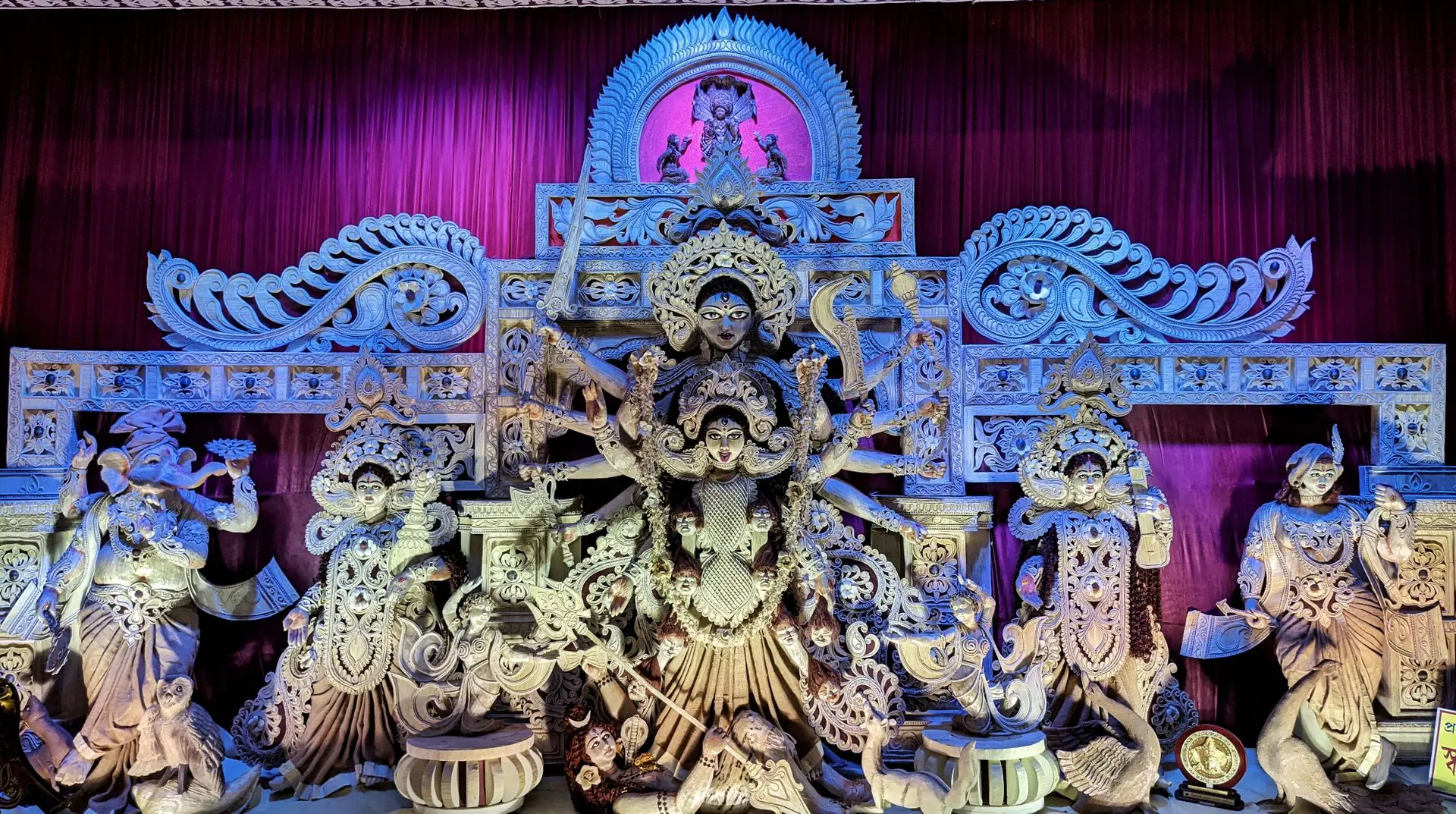
UNESCO inscribed Durga Puja in Kolkata on its list of intangible cultural heritage in 2021. It describes an annual festival in September or October marking the ten-day worship of the goddess Durga, beginning on Mahalaya, when eyes are painted onto the clay images, and ending on the tenth day, when the images are immersed in the river. Kolkata's neighbourhoods build large pavilions, and crowds walk between them. The date follows the lunar calendar and changes yearly.

Our Durga Puja experience in Kolkata is planned around a private guide who follows each year's most talked-about pandals, a vehicle for longer hops and a hotel within reach of the main circuits. It suits travellers happy to walk for hours among crowds, not those who want quiet or have limited mobility. Traffic slows considerably during the festival. Kolkata Metro has announced night-long services on the Blue and Green lines on Maha Saptami, Maha Ashtami and Maha Navami; check its notices for the current year. Our festival guide to Durga Puja covers the festival in more detail.

Best time to visit Kolkata

November to February is the comfortable season. IMD's figures for Kolkata (Alipore) give January days of about 26°C and nights of about 14°C, with under 30 mm of rain a month from November to February. March to May turn hot, May averaging 35°C by day. The monsoon, June to September, brings about three-quarters of the year's 1,778 mm of rain, July being the wettest month at about 377 mm, and thunderstorms are frequent from April to October. Durga Puja falls in September or October, when IMD still records frequent thunderstorms, so pack for rain.

How to reach Kolkata

  • By air: Netaji Subhas Chandra Bose International Airport, at Dum Dum, is about 17 km from the city centre. West Bengal Tourism calls it the largest airport in eastern India and a major centre for flights to the north-east.
  • By train: Howrah and Sealdah are the two main termini; the Sundarban Tiger Reserve tells visitors to reach Kolkata by train at Sealdah or Howrah.
  • By Metro from the airport: Metro Railway Kolkata inaugurated its Yellow Line on 22 August 2025, from Noapara to Jai Hind Bimanbandar, whose name means airport.

For Darjeeling and the hills, the gateways are Bagdogra airport and New Jalpaiguri station; read our Darjeeling travel guide. For the rest of the state, see our West Bengal travel guide.

Getting around

Metro Railway Kolkata is India's first underground metro. Its first stretch opened on 24 October 1984 between Esplanade and Bhowanipore, and the Blue Line now runs north to south from Dakshineswar to Kavi Subhash. The Green Line runs east to west, and its section from Howrah Maidan to Esplanade, opened to the public in March 2024, is described by the Government of India as the first underwater metro tunnel under any major river in the country. See our guide to metro travel.

How many days in Kolkata

Two to three days cover the Victoria Memorial, Howrah Bridge and the ghats, the Indian Museum, College Street and a day for Park Street, Jorasanko or the temples. Add a day if you want Science City or Eco Park, and book a night nearby if you visit during Durga Puja. For trips beyond the city, West Bengal Tourism puts Gangasagar about 100 km south, Bishnupur about 132 km and Santiniketan about 212 km away; the Sundarbans need at least a night. Heading to Odisha next? Our article on the Kolkata to Bhubaneswar distance covers the route.

Why book with Experience My India

  • Government-approved operator

    Approved by the Ministry of Tourism, Government of India

  • 500+ vetted local guides

    35+ destination specialists plan every trip by hand.

  • Human help, every day

    Mon–Sun, 9:00 AM – 9:00 PM IST · +91 73022 65809

  • No payment until you approve

    You receive a written quote first; nothing is charged to start planning.

Frequently asked questions

What is Kolkata known for?

Its colonial-era landmarks such as the Victoria Memorial and Howrah Bridge, its book market on College Street, its Tagore heritage at Jorasanko and the festival of Durga Puja. West Bengal Tourism also stresses its museums, galleries and theatres, among them the Indian Museum and the Academy of Fine Arts, and its river ghats.

Why is Durga Puja in Kolkata on UNESCO's list?

UNESCO inscribed it in 2021 as intangible cultural heritage. It describes the ten-day worship of the goddess Durga in September or October, from Mahalaya to the immersion of the clay images on the tenth day, as the best instance of the public performance of religion and art, where large installations and drumming draw crowds who walk around to admire them.

How many days do you need in Kolkata?

Two to three days. That covers the Victoria Memorial, Howrah Bridge and the ghats, the Indian Museum, College Street and one of the cultural sites such as Jorasanko. The museums close on Mondays, so plan them for other days, and add a day for Science City, Eco Park or a trip out of the city.

Which Kolkata museums are closed on Mondays?

The Victoria Memorial's galleries and the Indian Museum are both closed on Mondays; the Victoria Memorial's galleries also close on national holidays. Its gardens are open every day from 6 am to 6 pm. The Indian Museum opens Tuesday to Sunday, 10 am to 6 pm. Hours can change, so check the museum's own site on the day.

What is College Street known for?

Books. West Bengal Tourism calls it the largest book market in India, and the place for secondhand books, with Calcutta University, Presidency College and several other colleges along it. The Indian Coffee House opposite Presidency College has been a meeting place for writers, students and artists for decades.

When is the best time to visit Kolkata?

November to February, when days are about 26°C and rain is rare. Summers are hot, with May days averaging about 35°C, and the monsoon from June to September brings most of the year's rain. Durga Puja, in September or October, is the main reason to come outside the winter season, and it brings crowds.

Does Kolkata have an underground metro?

Yes: Metro Railway Kolkata, India's first underground metro, opened its first stretch in 1984. Its Blue Line runs from Dakshineswar to Kavi Subhash, and the Green Line crosses under the Hooghly between Howrah Maidan and Esplanade. A Yellow Line links Noapara with the airport. See the Metro's own site for lines and timings.

Is Kolkata a good gateway to Darjeeling?

Kolkata has the largest airport in eastern India, by West Bengal Tourism's account, and the main train termini, so many travellers start there. The hills, though, are served by Bagdogra airport, 90 km from Darjeeling by the district's figure, and New Jalpaiguri station, so you change there. Read our Darjeeling guide for the onward journey.

What time does Belur Math open?

Belur Math, the headquarters of the Ramakrishna Math and Mission, opens from 6.30 to 11.30 am and from 3.30 to 8.30 pm. It lies in Howrah district across the Hooghly from the city centre. After the evening aratrikam bell, visitors may sit only in the Sri Ramakrishna temple. Check the Math's own site for arati and festival timings.

Experiences in Kolkata

See all
From the journal: Kolkata

Customer reviews

Experience My India is rated 4.3 on Tripadvisor. We publish guest reviews after each trip.

Read our reviews

Plan a trip

Tailor-made quote from a specialist