Skip to content

Srinagar Travel Guide: Dal Lake, Mughal Gardens and the Old City

Srinagar, the summer capital of Jammu and Kashmir, is built around Dal Lake. The places to visit in Srinagar are the lake and its houseboats, the Mughal gardens of Shalimar, Nishat and Chashma Shahi, Hari Parbat, the old city's mosques and the Shankaracharya Temple. Two to three nights covers them. Check your own government's travel advice and your insurance before you book.

By Experience My India Editorial Team · Reviewed by Experience My India Editorial Team · Updated 21 Oct 2026

See all 3 tours and experiences in Srinagar →

Government-approved operatorApproved by the Ministry of Tourism, Government of India

Before you book

The UK Foreign, Commonwealth & Development Office advises against all travel to the Union Territory of Jammu and Kashmir, including the city of Srinagar, and warns that your travel insurance could be invalidated if you travel against its advice. Other governments publish their own advice, which changes. Read your own government's current advice and your policy before you pay for anything; our Kashmir travel guide sets out the advice and the insurance questions in full. This guide gives no verdict of its own on safety.

Places to visit in Srinagar

Dal Lake is the centre of the city. The three Mughal gardens, Pari Mahal and the Tulip Garden lie on its right bank, below the Zabarwan range, while Hari Parbat stands to the west. Every tour and experience we run here is on our Srinagar tours and experiences page.

Dal Lake

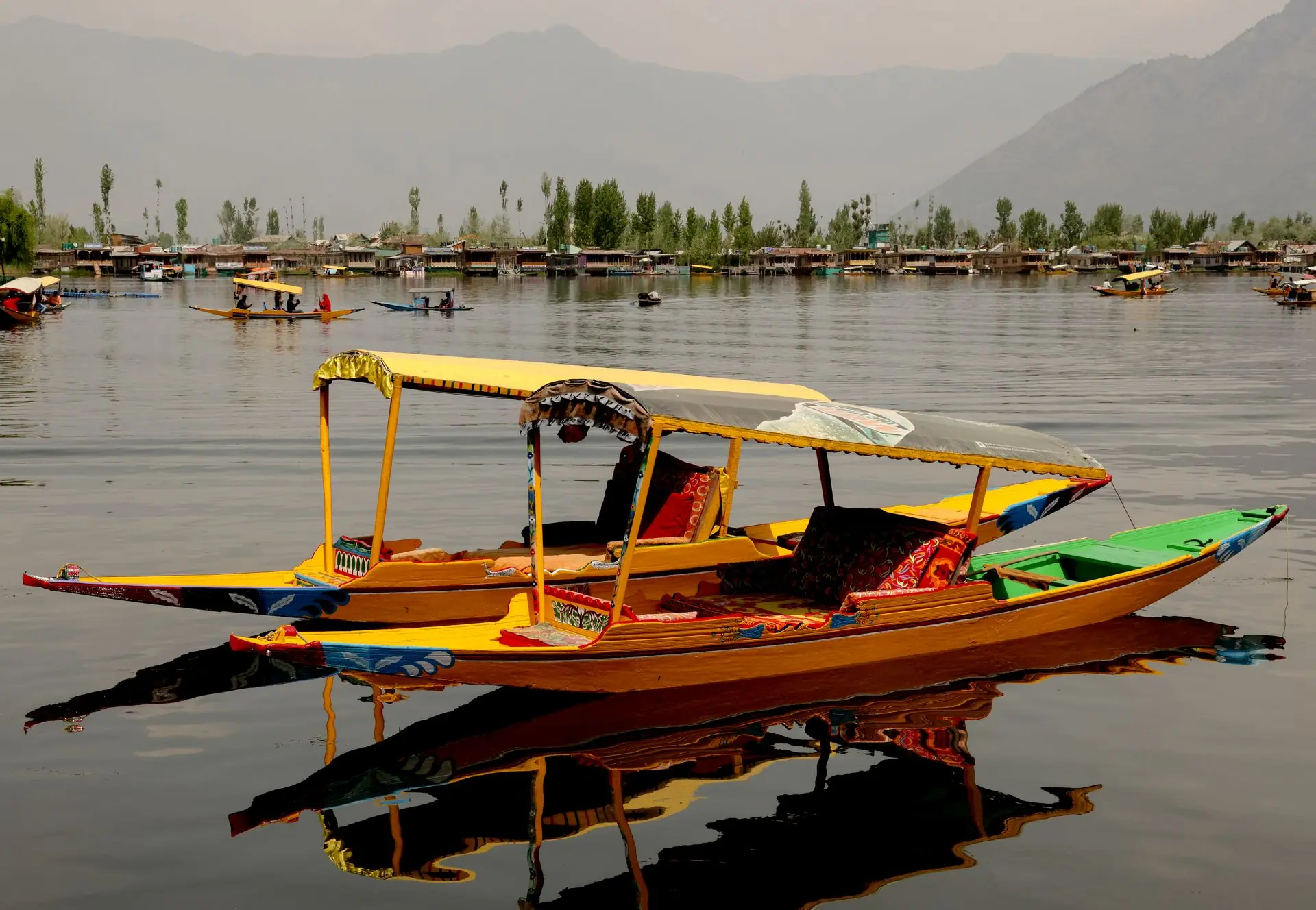
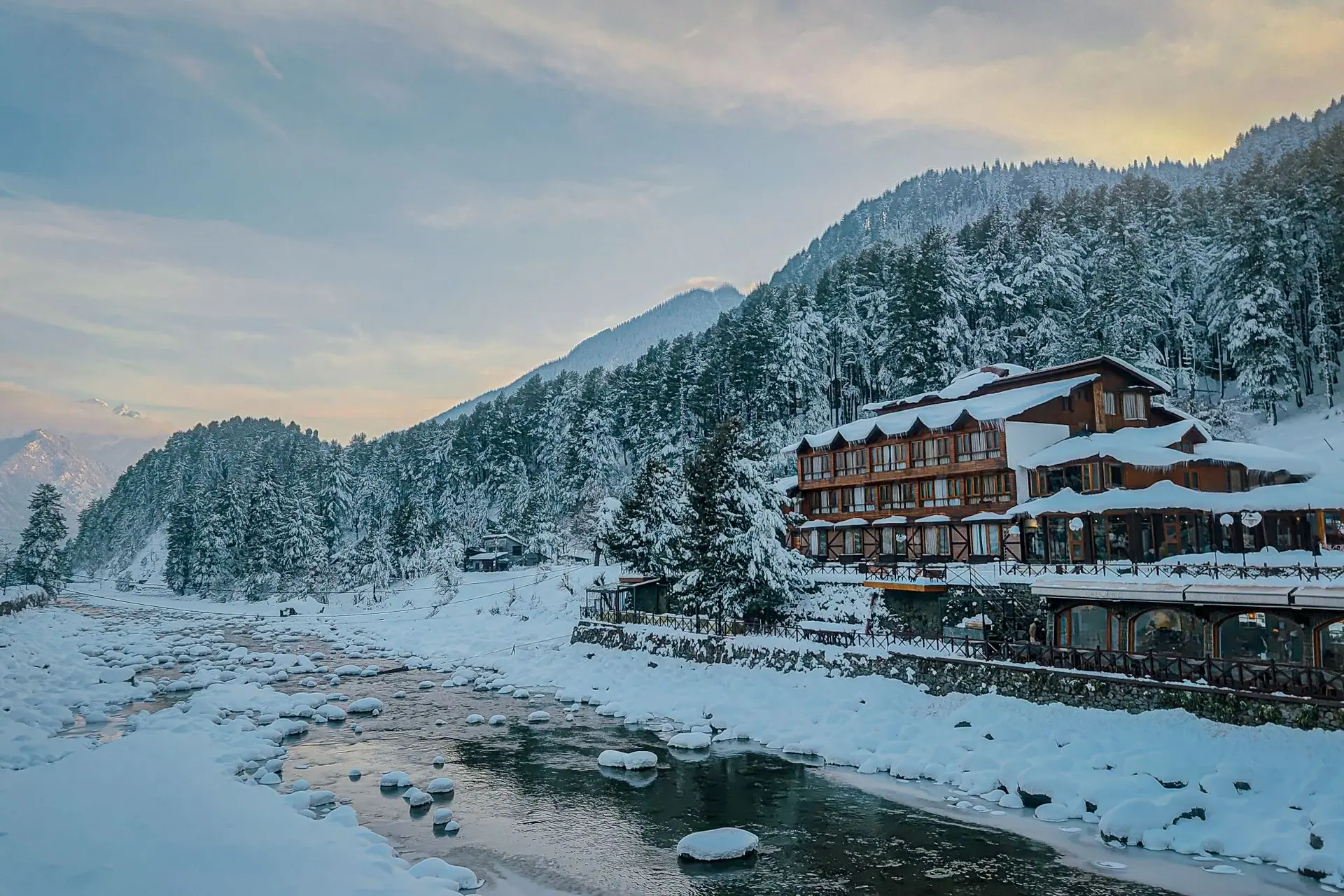
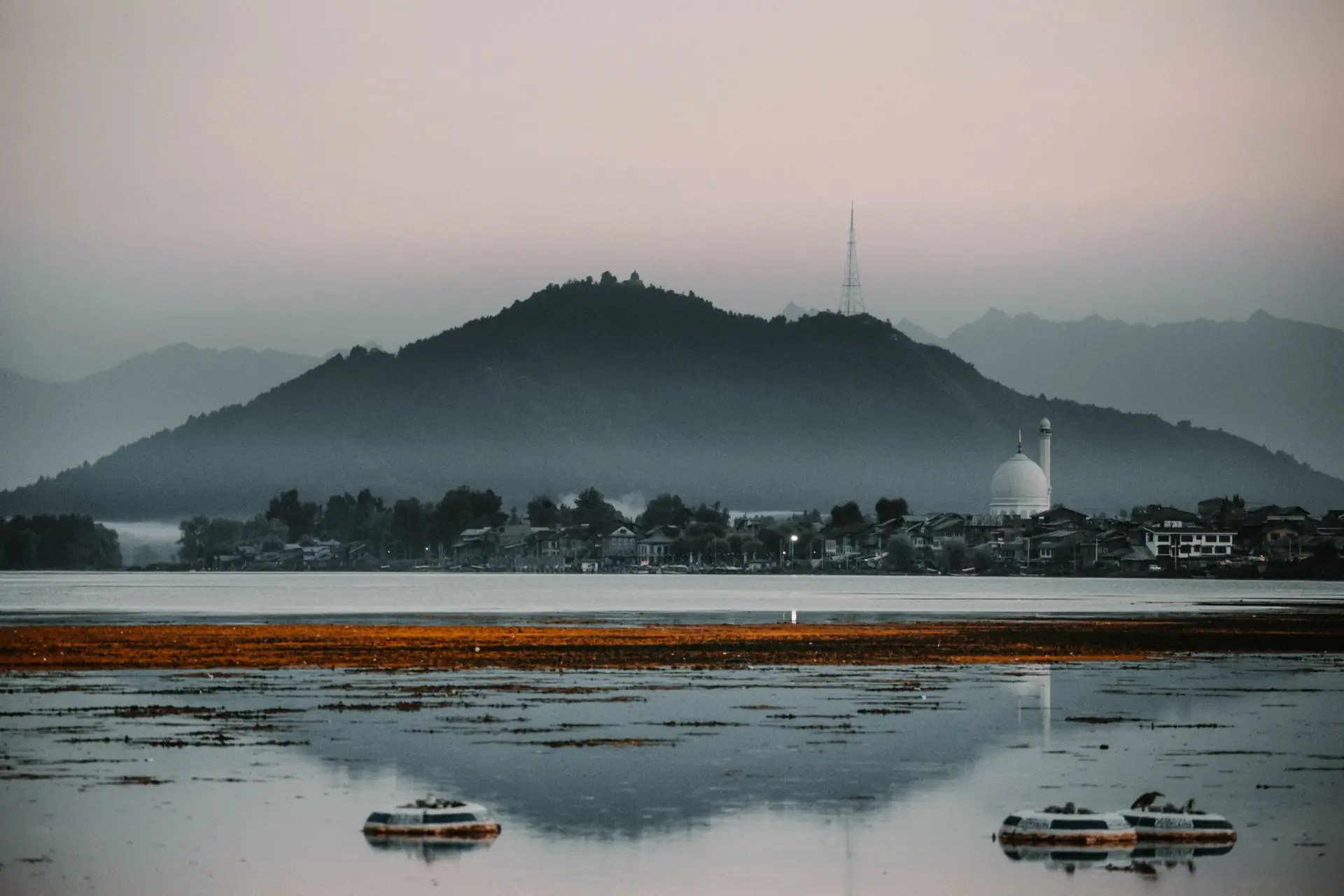
The lake covers about 18 square kilometres, within a wetland of 21.1 square kilometres, and causeways divide it into four basins: Gagribal, Lokut Dal, Bod Dal and Nagin. Lokut Dal's island is Rup Lank, or Char Chinari. Incredible India describes the shikara as a gondola-like boat propelled by heart-shaped paddles. The floating gardens, called raad in Kashmiri, blossom with lotus in July and August. On an early-morning ride, visitors see the floating vegetable market, where, as our own shikara page describes it, growers trade from boat to boat. The Srinagar district says that when winter temperatures sometimes reach −11°C, the lake freezes.

Houseboats and Nigeen Lake

Houseboats are closely tied to Dal Lake. Incredible India calls them floating palaces that arose when the British were prohibited from owning land, with carved walnut panels and Khatamband ceilings. Nigeen Lake, joined to Dal by a narrow strait, is deeper and less crowded according to the district, and also has houseboats and shikaras. Hazratbal lies to its north-east. Our shikara ride and houseboat stay includes a night or more on a heritage houseboat on Dal or Nigeen, private shikara rides and a local guide, with the standard of boat matched to what you expect.

Shalimar Bagh

Jahangir enlarged an older garden in 1619 and made it a royal garden for his wife, Nur Jahan; Shah Jahan's governor extended it in 1630. The garden covers 12.4 hectares in three terraces, with fountains and chinar-lined vistas fed by a central channel, the Shahnahar. Incredible India calls it the most famous of Srinagar's gardens, and the district says the colour change of the chinar leaves makes it very beautiful in autumn and spring.

Nishat Bagh

Asif Khan designed and built Nishat Bagh in 1633 on the eastern side of Dal Lake. Its twelve terraces, which the district says represent the twelve signs of the zodiac, rise from the water's edge, and the garden commands a view of the lake, with the snow-capped Pir Panjal range far to the west. Incredible India says its steep terracing and panoramic view win visitors over at once. Nishat and Shalimar make a natural morning together, and our six-day Kashmir tour visits both with a local guide on day two.

Chashma Shahi

Ali Mardan Khan built the garden in 1632 around a freshwater spring, whose water flows down the terraces as an aqueduct, a waterfall and fountains; the district notes a belief that the water has medicinal properties. It stays open to tourists from March to November, the district recommends April to October, and the garden is at full bloom in May and June. Pari Mahal, a five-minute drive away, is a seven-terraced garden at the top of the Zabarwan range, looking over the city and the south-western side of the lake.

Indira Gandhi Memorial Tulip Garden

On the foothills of the Zabarwan range, with a view of Dal Lake, the garden covers about 30 hectares in seven terraces, and the district describes it as the largest tulip garden in Asia. Hyacinths, daffodils and ranunculus grow here as well. The tulip festival is held at the onset of spring in the valley; the garden opens for the bloom, so the opening date follows the weather, and you should check the Department of Floriculture, Gardens and Parks before you fix your dates.

Badamwari

The district calls Badamwari a sprawling historic garden in Shahr-e-Khaas, at the foothills of Koh-e-Maran, where the early bloom of the almond trees "heralded the spring". It covers about 300 kanals, and the district says it was formally thrown open to the public in 2008. The district gives no month for the blossom, so check with the Department of Floriculture, Gardens and Parks before you plan a visit around it.

Hari Parbat

Hari Parbat, also known as Kooh-e-Maran, lies on the west of Dal Lake. The district says an Afghan governor, Atta Mohammed Khan, built the fort in the 18th century, that a long wall was built in 1590 under Akbar, and that the Archaeological Survey of India maintains it. It gives a view of Dal Lake and of the Makhdoom Sahib shrine. The district's page lists no opening times and dates from 2020, so check before you go.

The old city: Jamia Masjid, Shah Hamdan and Khanqah-e-Moula

Incredible India describes the old city as a labyrinth of narrow lanes, ancient mosques and bustling bazaars. It dates the Jamia Masjid to 1672 and says 378 columns support it, and it names the Shah Hamdan shrine beside it. The Khanqah-e-Moula, a Muslim meeting hall from the 1730s, is covered in papier-mâché reliefs and Khatamband panelling; non-Muslim visitors, Incredible India says, are welcome to look through the door but not to enter. Our shikara and houseboat page pairs an old-city walk to the Jamia Masjid, Hazratbal and the Shankaracharya Temple with a local guide.

Hazratbal

A white marble shrine on the bank of Dal Lake, Hazratbal houses a relic that Incredible India says is believed to be a hair of the Prophet Muhammad, and draws devotees from across the world. It lies north-east of Nigeen Lake, so it fits naturally with a houseboat stay there.

Shankaracharya Temple

A small Shiva temple of weathered grey stone stands on the wooded Shankaracharya Hill. Incredible India says the hill is named for a sage who attained enlightenment here in 750 AD, that the octagonal structure appears to date from the 5th century, and that the site is older still. The road from Nehru Park is 5.5 km, and Incredible India advises against walking up because wild bears live in the area.

Dachigam National Park

Dachigam lies 22 km from Srinagar and covers 141 square kilometres. The district describes it as the home of the hangul, or Kashmir stag, and says it is open throughout the year, with April to August the best time to visit. The district page lists no entry rules and dates from 2018, so check with the park authorities before you go.

Things to do in Srinagar

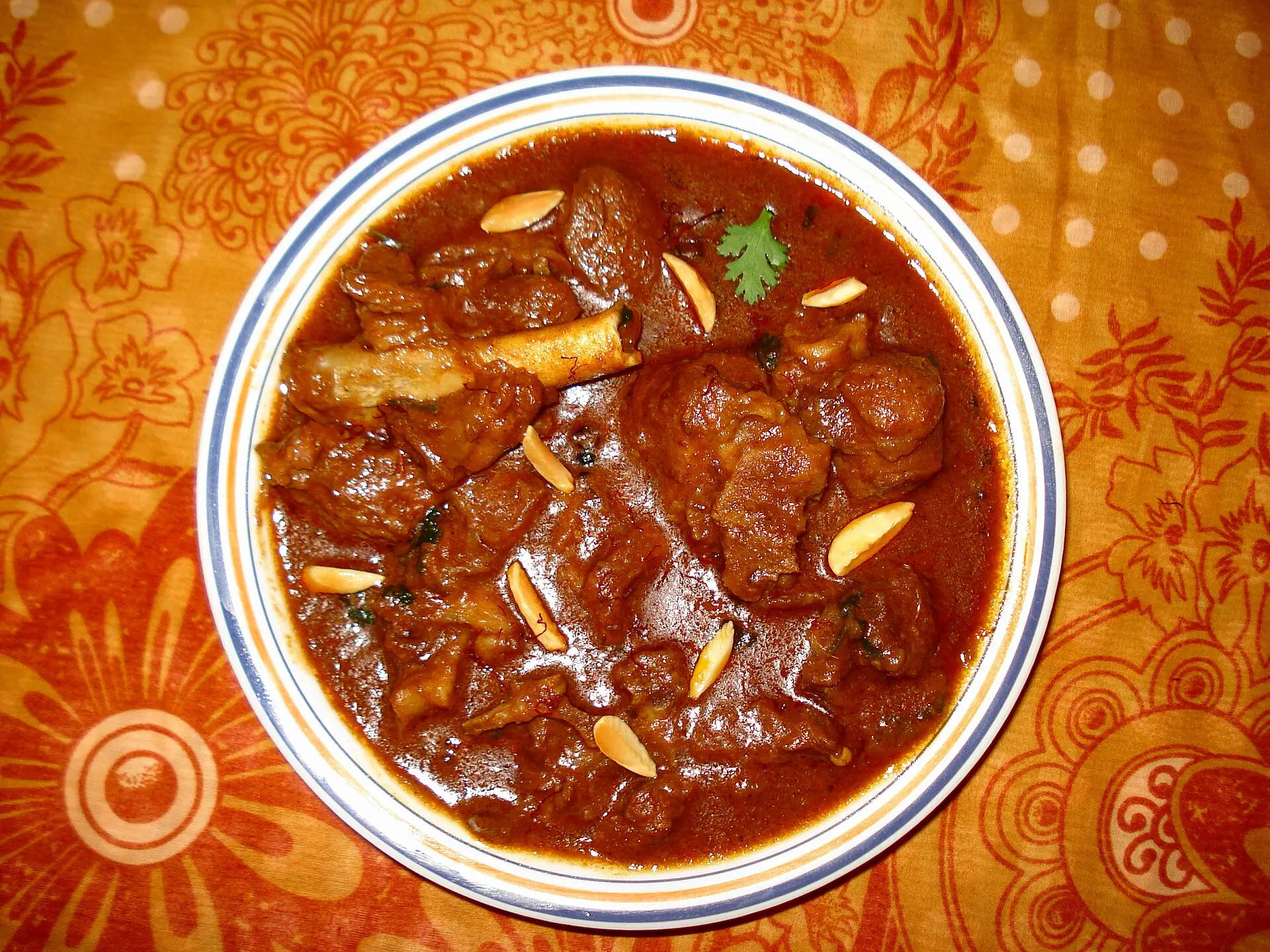
Take a shikara ride on Dal Lake at dawn or sunset, spend a night on a houseboat, walk through two or three of the Mughal gardens, and give one evening to a Kashmiri wazwan feast, the traditional multi-course meal, which our experience describes as particularly memorable on a houseboat on Dal Lake in the evening. In the old city, the bazaars sell Kashmiri handicrafts, pashmina shawls, spices and dry fruits. Everything we run in the city is on the Srinagar page linked above.

Best time to visit Srinagar

Incredible India calls Srinagar a year-round destination, from gardens in spring to snow in winter. IMD's 1991–2020 normals for its Srinagar station give the shape of the year. January is coldest, with days at 7.1°C and nights at −1.9°C. Days reach 20.6°C in April and 24.7°C in May, and July (30.0°C) and August (29.7°C) are the warmest months. In October days average 23.0°C and nights 6.2°C, and it is the driest month, with 21.8 mm of rain over 2.0 rainy days. March is the wettest, at 104.6 mm over 7.2 days. The Chashma Shahi garden is open from March to November and at full bloom in May and June, the lotus flower in July and August, and the chinar colour in autumn. Our month-by-month guide to the best time to visit Kashmir has IMD's figures for every month.

How to reach Srinagar

  • By air: Sheikh ul-Alam International Airport (SXR), at Humhama in Budgam, is about 14 km from the centre, around 30 minutes by road, and the district puts the drive to Dal Lake at 25 to 35 minutes. It lists daily flights from Delhi, Mumbai, Bengaluru, Hyderabad, Pune and Kolkata. Pre-paid taxis and app cabs wait outside arrivals, and the district advises carrying a valid photo ID, since security checks are thorough.
  • By train: Srinagar Railway Station is on the Udhampur–Srinagar–Baramulla Rail Link, via Katra, Banihal and Qazigund. All India Radio gives the Vande Bharat between Jammu Tawi and Srinagar as about 4 hours 55 minutes; book on IRCTC and check the timetable.
  • By road and bus: NH-44 is 290 km from Jammu, which the district puts at 6 to 7 hours, and about 800 km from Delhi, 15 to 18 hours. The district warns that landslides or snowfall can affect it, particularly from November to March. JKSRTC buses run from Jammu's General Bus Stand to the Tourist Reception Centre bus stand in Srinagar.
  • From Ladakh: Leh is 434 km away, 9 to 10 hours by road. The highway is closed in winter and typically opens in May, and the dates change each year.

How many days in Srinagar

With one day, take a shikara ride at dawn, visit Nishat and Shalimar in the morning, as our six-day tour does on its second day, and walk the old city to the Jamia Masjid after lunch. Two nights cover the lake, the gardens and the old city at an easy pace, and a third gives room for Hari Parbat or a day trip. Our Kashmir Tour — 6 days spends three nights here, two at the start and one at the end: a shikara ride and an evening by the lake on arrival, then Nishat and Shalimar in the morning and the old city in the afternoon of day two. Whether the nights are in a hotel or on a houseboat is confirmed at enquiry. In 10 Days Ladakh with Srinagar, two nights go to Srinagar and the third falls in Srinagar or Leh, depending on whether you go by road or by air. The routes we run from here are on our Srinagar tour packages page.

Day trips from Srinagar

  • **Gulmarg:** 54 to 60 km, about an hour and a half by car, according to the Baramulla district.
  • **Sonamarg:** 87 km, under three hours, according to Ganderbal district, which also says, in its note on the trip to the Thajiwas glacier, that private vehicles are not allowed and visitors have to hire a taxi.
  • **Pahalgam:** 96 km from Srinagar airport, according to Anantnag district.
  • Yusmarg and Doodhpathri: 47 to 53 km and about 42 km, according to Budgam district; snow can close both in winter.

Where to stay and getting around

The choice is a houseboat on Dal or Nigeen Lake, or a hotel on shore: the Srinagar district says the lake's shoreline boulevard is lined with houseboats and hotels. Nishat, Shalimar and Chashma Shahi are on the lake's right bank and Hari Parbat is on its west. The district lists local mini-buses, shared autos and app-based cabs from the Tourist Reception Centre, pre-paid taxis at the airport, and rental cars at the airport and in the city.

Why book with Experience My India

  • Government-approved operator

    Approved by the Ministry of Tourism, Government of India

  • 500+ vetted local guides

    35+ destination specialists plan every trip by hand.

  • Human help, every day

    Mon–Sun, 9:00 AM – 9:00 PM IST · +91 73022 65809

  • No payment until you approve

    You receive a written quote first; nothing is charged to start planning.

Frequently asked questions

How many days should I spend in Srinagar?

Two nights cover the lake, the gardens and the old city at an easy pace; three give room for Hari Parbat or a day trip. Our six-day Kashmir tour spends three nights in Srinagar, two at the start and one at the end, and our ten-day Ladakh tour spends two, with a third in Srinagar or Leh.

Should I stay on a houseboat in Srinagar?

At least one night is the classic Srinagar stay. Houseboats are moored on Dal and Nigeen lakes; Nigeen is deeper and less crowded, according to the district. Standards vary, so say what you expect. You can also split your nights between a houseboat and a hotel on shore.

What is there to see on the Dal Lake?

A shikara ride crosses the lake's basins past floating gardens, which flower with lotus in July and August, and the houseboats that line the shore. Lokut Dal's island is Rup Lank, or Char Chinari. Visitors on an early-morning ride see the floating vegetable market, and the Mughal gardens climb the hillside along the lake's right bank.

How do I get to Srinagar?

Most visitors fly to Sheikh ul-Alam International Airport, 14 km from the centre, with daily flights from Delhi, Mumbai, Bengaluru, Hyderabad, Pune and Kolkata. The railway runs through Katra, Banihal and Qazigund to Srinagar, and NH-44 is 290 km from Jammu. Leh is 434 km away by the Srinagar–Leh highway, which is closed in winter.

Is Srinagar safe to visit?

This page gives no safety verdict. The UK Foreign, Commonwealth & Development Office advises against all travel to the Union Territory of Jammu and Kashmir, including the city of Srinagar, and warns that a policy may be invalid for a trip made against it. Read your own government's current advice, and ask your insurer to confirm the trip is covered. Our travel insurance guide lists what to check.

Do the Mughal gardens need tickets?

The Department of Floriculture, Gardens and Parks runs online ticket booking for gardens, with an e-ticket for garden entry, and lists a separate e-permission for video and photo shoots. Check its website before you go to see which gardens are ticketed.

How do you reach the Shankaracharya Temple?

Take the winding road of 5.5 km from Nehru Park, Incredible India says, and avoid walking up, because the area is inhabited by wild bears. The temple is a small Shiva shrine of weathered grey stone on the wooded Shankaracharya Hill, and signs suggest that the octagonal structure dates from the 5th century.

What is the Khanqah-e-Moula, and can visitors go in?

Incredible India describes it as a Muslim meeting hall from the 1730s, in the Khawaja Bazaar area, adorned inside and out with papier-mâché reliefs and Khatamband panelling. Non-Muslim visitors are welcome to look through the door but are not allowed to enter.

Tour packages in Srinagar

See all
Experiences in Srinagar

See all

From the journal: Srinagar

Customer reviews

Experience My India is rated 4.3 on Tripadvisor. We publish guest reviews after each trip.

Read our reviews

Plan a trip

Tailor-made quote from a specialist