Skip to content

Maharashtra Travel Guide: Places to Visit, Best Time and Planning

Maharashtra runs from Mumbai's harbour to the cave temples of Ajanta and Ellora, the Western Ghats hills, the Konkan coast and the tiger reserves of Vidarbha. The places to visit in Maharashtra start with Mumbai, Ajanta and Ellora, Nashik, Lonavala and Tadoba. October to March suits most of the state, the monsoon suits the hills, and about ten days covers its main regions.

By Experience My India Editorial Team · Reviewed by Experience My India Editorial Team · Updated 21 Oct 2026

See all 2 tours and experiences in Maharashtra →

Government-approved operatorApproved by the Ministry of Tourism, Government of India

Places to visit in Maharashtra
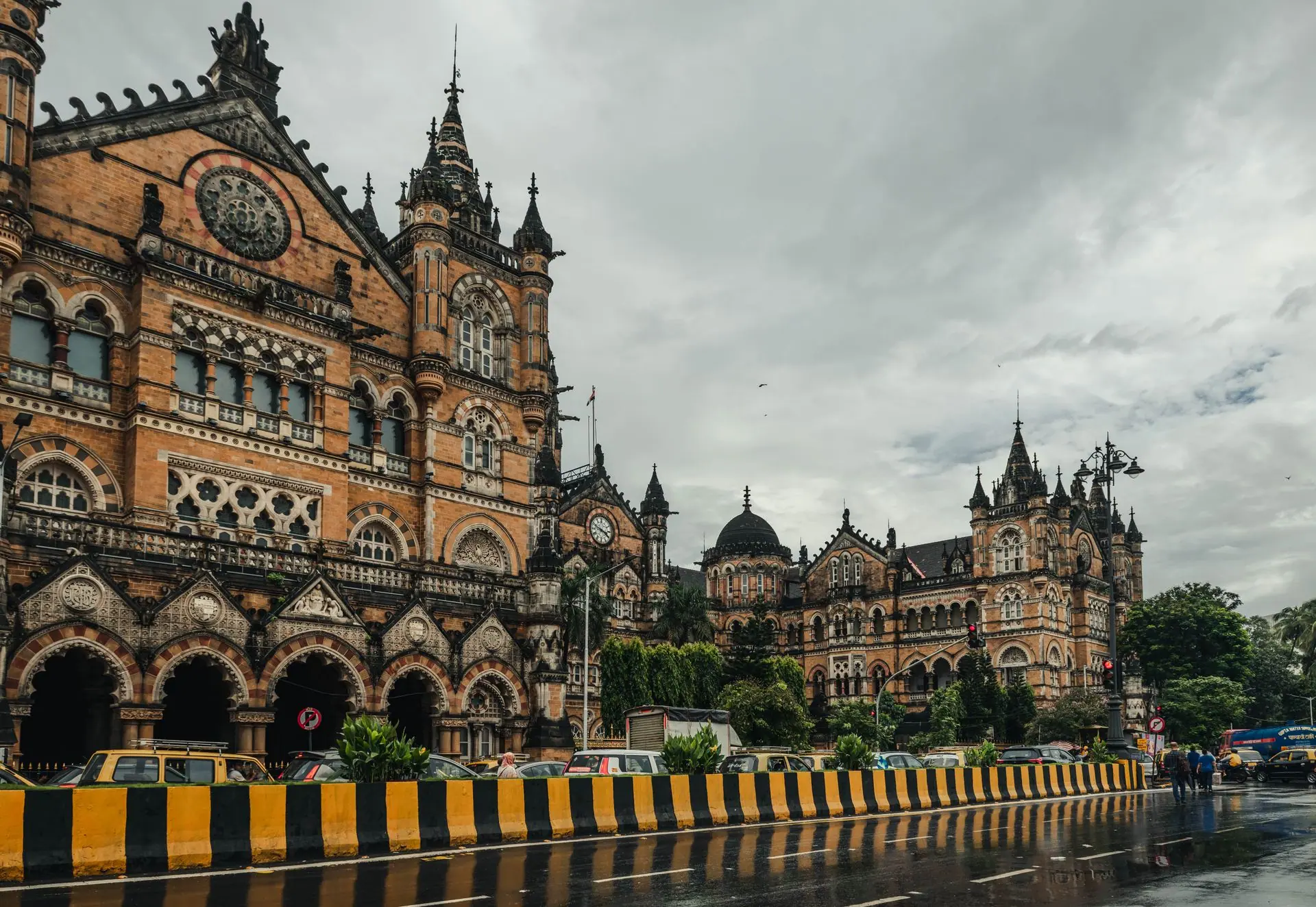
The state is large, so it helps to think in regions: Mumbai and the Konkan coast in the west, the Western Ghats hills inland from them, Nashik in the north, the cave country around Chhatrapati Sambhajinagar (formerly Aurangabad), and the tiger reserves of Vidarbha in the east. Every trip we run in the state, tours and experiences, is on our Maharashtra tours and experiences page.

Mumbai

Mumbai has two World Heritage listings inside the city: Chhatrapati Shivaji Terminus, formerly Victoria Terminus, inscribed in 2004, and the Victorian Gothic and Art Deco Ensembles of Mumbai, inscribed in 2018. Maharashtra Tourism names Chhatrapati Shivaji Maharaj International Airport as the city's global connection, and Navi Mumbai International Airport now also handles commercial flights. Our Mumbai travel guide covers the city's sights and food in detail.

Elephanta Caves

The Archaeological Survey of India places the caves about 11 km north-east of Apollo Bandar, with a famous bust of Shiva in three forms, the Mahesa-murti. The ferry leaves from the Gateway of India and takes about an hour, says Maharashtra Tourism, and visitors climb steps to the caves, with a toy train for those who prefer not to walk. The site is closed on Mondays. November to February is the best time, and in the monsoon the ferry ride becomes rough.

Ajanta and Ellora

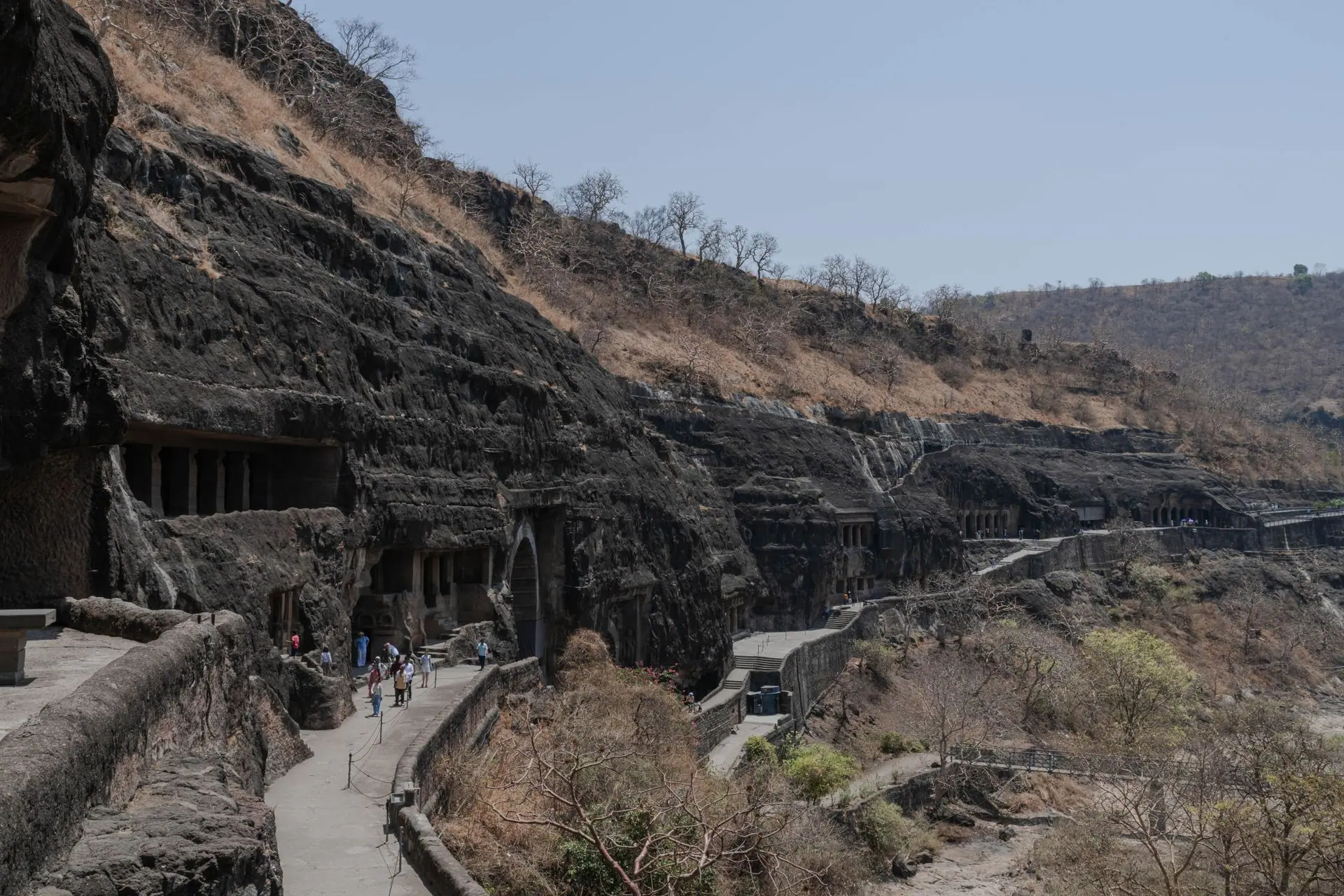
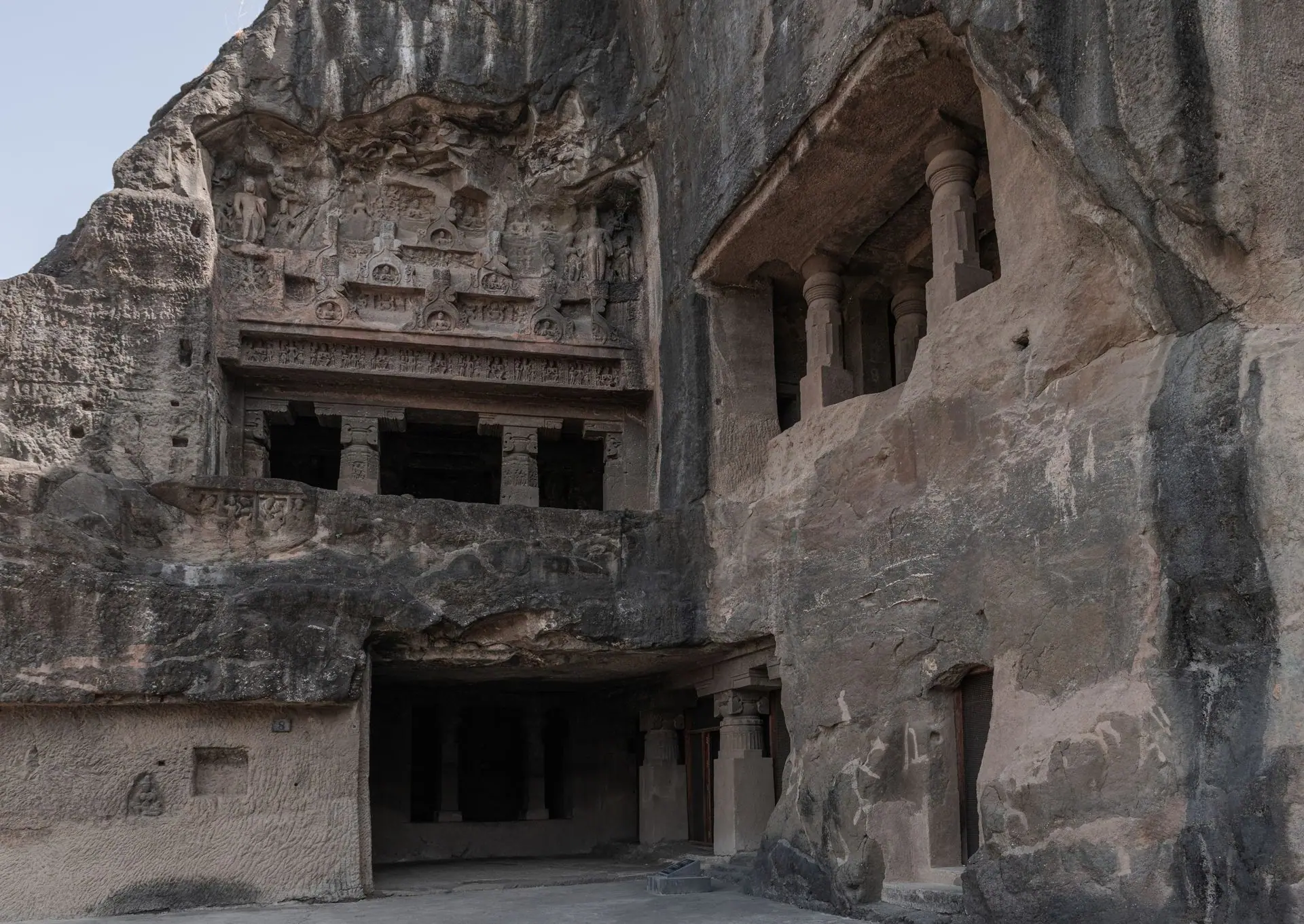
Both sets of rock-cut caves lie north of Chhatrapati Sambhajinagar. The ASI puts Ajanta 107 km north of the city and Ellora 30 km north-north-west. Ajanta's roughly 30 Buddhist caves, excavated from about the 2nd century BCE to the 6th century CE, are known for their paintings. Ellora has 34 caves: Caves 1 to 12 are Buddhist, 13 to 29 Brahmanical and 30 to 34 Jaina, and the Kailasa Temple, Cave 16, is described by the ASI as the largest single monolithic excavation in the world. Ajanta is closed on Mondays and Ellora on Tuesdays. Our Ajanta and Ellora travel guide goes cave by cave.

Lonavala and the Western Ghats

Lonavala is a two-hour drive from Mumbai (83 km) and Pune (65 km), with its own railway station on the Mumbai-Pune line. Maharashtra Tourism lists the Karla and Bhaja caves from the 2nd century BCE, the Rajmachi trek and the view of Pawna Lake from Lohagad. June to September is its most popular season, and October to February suits trekking. See our Lonavala travel guide for the full list.

Mahabaleshwar and Matheran

Mahabaleshwar is a year-round hill station about 121 km from Pune by road. Its Wilson Point, at 1,439 metres, is the highest point, and Venna Lake, Arthur's Seat and the Elephant's Head rock are the other sights Maharashtra Tourism names. Pratapgad fort is 24 km away. Matheran is a hill station of 2,625 feet where motor vehicles are banned: you park at Dasturi Naka and continue on horseback, by hand-pulled rickshaw or on foot, and the nearest railway station is Neral, about 20 km away.

Kaas Plateau

Maharashtra Tourism calls Kaas a World Heritage Site famous for its seasonal bloom of wildflowers, which peaks from late August to early October. It lies about 25 km from Satara, 125 km from Pune and 278 km from Mumbai. Daily visitor numbers are capped because the site is ecologically sensitive, so book entry passes in advance, and do not pick flowers.

Nashik and Trimbakeshwar

Nashik, on the Godavari, is one of the four cities that host the Kumbh Mela and the base for Trimbakeshwar, one of the twelve Jyotirlingas, the Pandavleni Caves and the wineries near Gangapur Dam. Maharashtra Tourism suggests two to three days. Our Nashik travel guide has the details, and our Pancha Jyotirlinga guide covers the state's five Jyotirlingas.

Tarkarli, Murud-Janjira and the Konkan coast

Tarkarli, in Sindhudurg district, is Maharashtra Tourism's pick for water sports: boating, kayaking, paddleboarding, scuba diving and snorkelling, best between October and March, with Malvan 6 km away. Closer to Mumbai, Murud-Janjira fort sits on an island about 1.5 km off Murud, reached by sailboat from the Rajapuri jetty, roughly 165 km south of Mumbai.

Raigad and the Maratha forts

Chhatrapati Shivaji Maharaj renovated Raigad Fort in 1674 and made it his capital, and a ropeway now takes visitors to the summit. Raigad is one of twelve forts, eleven in Maharashtra and one in Tamil Nadu, inscribed together as the Maratha Military Landscapes of India, India's 44th World Heritage property. The Maharashtra forts are Salher, Shivneri, Lohgad, Khanderi, Raigad, Rajgad, Pratapgad, Suvarnadurg, Panhala, Vijaydurg and Sindhudurg. Our journal article on Raigad Fort covers the visit itself.

Tadoba and the tiger reserves of Vidarbha

Tadoba Andhari Tiger Reserve, in Chandrapur district, is Maharashtra's oldest and largest national park, with morning and evening safaris and, says Maharashtra Tourism, a need to book early. The nearest airport is Nagpur, about 140 km away. Pench Tiger Reserve lies along the border with Madhya Pradesh, and Melghat Tiger Reserve in Amravati district. Our Tadoba travel guide has the safari details.

Shirdi

Shirdi, in Ahmednagar district, is the town of the Sai Baba temple, with the Samadhi Mandir, Dwarkamai and Chavadi. The Kakad Aarti at 4.30 am opens the temple, and a palanquin procession runs on Thursdays from the Samadhi Mandir to Dwarkamai and Chavadi. Guru Purnima and Dussehra are the main festivals, and October to March is the cooler season. The airport is about 14 km from the temple and Sainagar Shirdi railway station about 3 km.

Lonar Crater

Lonar, in Buldhana district, is a crater lake formed by a meteorite striking the basalt of the Deccan plateau, which Maharashtra Tourism puts at about 52,000 years ago. The water is saline and alkaline, and temples stand around the rim. October to March is the best time, and the nearest airport, Chhatrapati Sambhajinagar, is about 140 km away.

Things to do in Maharashtra

Heritage and caves come first for most visitors: Ajanta, Ellora and Elephanta, with Karla, Bhaja and Pandavleni as smaller options. In the monsoon, go to the Ghats for waterfalls and the Kaas bloom; in winter, trek around Lonavala; from October to March, head to the Konkan coast for water sports. Wildlife means Tadoba, with summer the tiger season. Pilgrims have Trimbakeshwar, Shirdi and the other temples that Maharashtra Tourism lists.

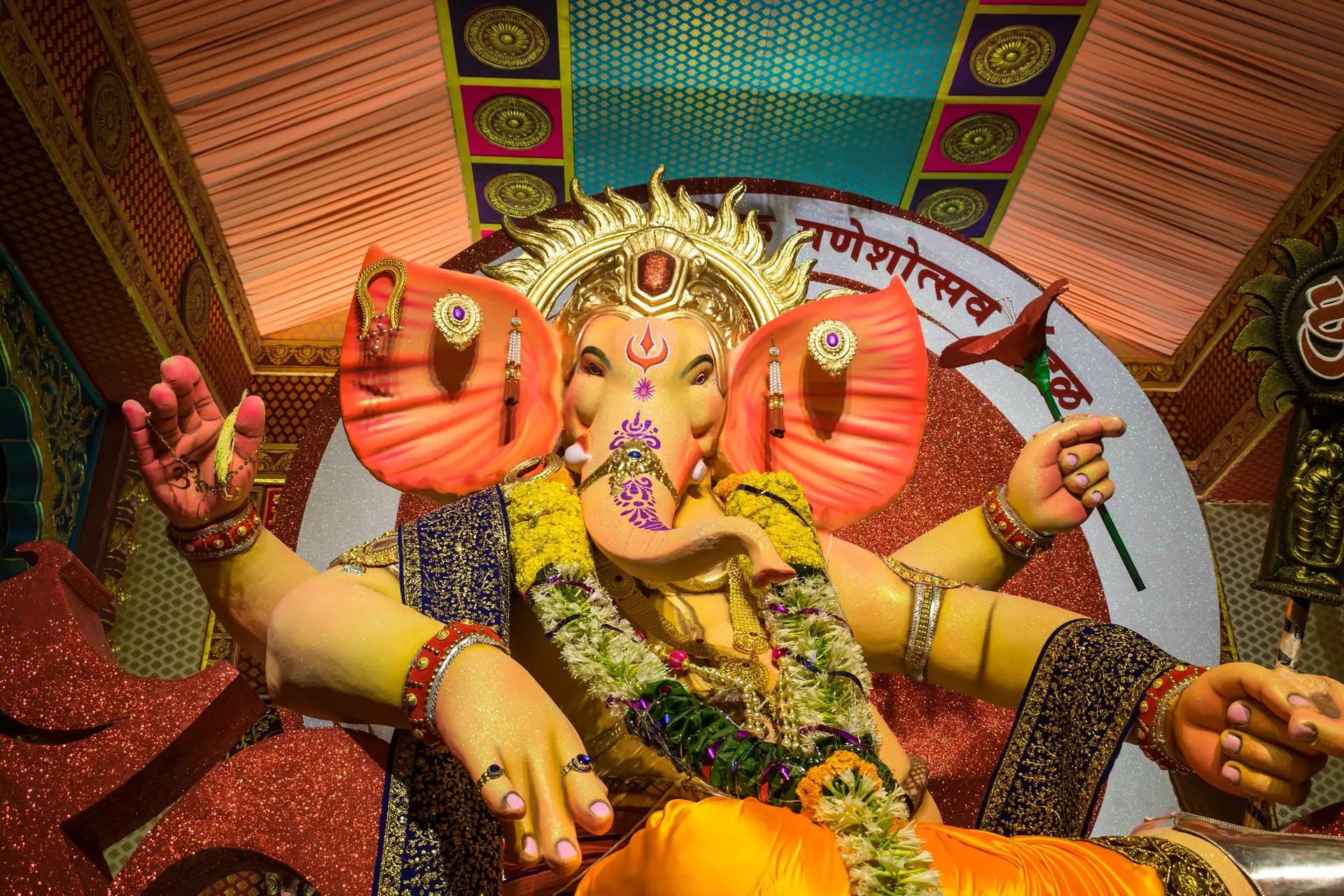
Ganesh Chaturthi is the state's great festival. Maharashtra Tourism places it on the fourth day of the waxing moon in Bhadrapada, around August or September, and says idols are kept for one and a half days, five to seven days or eleven days before immersion, ending with Gauri Ganapati and Anant Chaturdashi. The immersion days bring dense crowds and road closures.

Our tours and experiences in Maharashtra

Tour packages

Our Ajanta and Ellora caves from Aurangabad package spends day one at Ellora and day two at Ajanta, with a private guide and vehicle for both days and a driver throughout; monument entry tickets are not included. Our Mumbai street food tour visits several stalls with a local guide for a few hours at a relaxed pace, trying vada pav, pav bhaji and bhelpuri, and most of the classic snacks are vegetarian. The full list is on our Maharashtra tour packages page.

Experiences

Ganesh Chaturthi in Mumbai visits a mix of famous and neighbourhood pandals with a private guide and a vehicle adapted to festival-day road closures. It works best with at least two full days in the city, for travellers comfortable with dense, joyful crowds. The date changes each year and is confirmed on enquiry.

Best time to visit Maharashtra

October to March suits Mumbai, the caves, Nashik and the Konkan coast: Maharashtra Tourism gives November to March for Ajanta and October to March for Ellora. The Mumbai office of the India Meteorological Department puts the normal onset of the monsoon over Mumbai on 11 June and its normal withdrawal on 8 October, so early October can still be wet.

The monsoon, June to September, is the season for the Ghats: waterfalls in full flow at Lonavala and Igatpuri, a lush Ellora, and the Kaas bloom. It is a poor season for the Elephanta ferry, which turns rough, for Tadoba, where safaris may be restricted from July to September, and for cave paths, which become slippery. Tadoba is best for tigers from March to June, when temperatures can reach 45°C; November to February is its most comfortable season.

How to reach Maharashtra

  • Mumbai: Chhatrapati Shivaji Maharaj International Airport, with Navi Mumbai International Airport also in service.
  • Caves: Chhatrapati Sambhajinagar Airport (Airports Authority of India) and Chhatrapati Sambhajinagar station on South Central Railway's Nanded Division. The ASI's pages still use the old name, Aurangabad.
  • Tadoba: Nagpur, about 140 km away.
  • Nashik and Shirdi: each has an airport; the Nashik airport is at Ozar, and Shirdi's is about 14 km from the temple.
  • Hills and coast: Lonavala has its own railway station, and Neral is the station for Matheran.

How many days in Maharashtra

About ten days covers the main regions. Give Mumbai two to three days, with a day for Elephanta if you wish. The caves need two days from Chhatrapati Sambhajinagar, one for each site. Add Nashik for two to three days, Lonavala for a night or two, and extend with Tadoba or the Konkan coast if you have more time. The regions are far apart, so decide the order before booking.

Getting around and tips

Distances between regions are long, with Chhatrapati Sambhajinagar the gateway for the caves and Nagpur for Tadoba, so plan a flight or train between regions and a car with a driver within each. Carry rain gear in the monsoon, check closed days for the caves, and book Kaas passes and Tadoba safaris in advance. For help choosing a route, see our Maharashtra tour packages.

Why book with Experience My India

  • Government-approved operator

    Approved by the Ministry of Tourism, Government of India

  • 500+ vetted local guides

    35+ destination specialists plan every trip by hand.

  • Human help, every day

    Mon–Sun, 9:00 AM – 9:00 PM IST · +91 73022 65809

  • No payment until you approve

    You receive a written quote first; nothing is charged to start planning.

Frequently asked questions

What is the best time to visit Maharashtra?

October to March for Mumbai, the caves, Nashik and the coast. The monsoon, June to September, suits the Western Ghats, but early October can still be wet in Mumbai because the IMD's normal withdrawal date is 8 October. Tadoba is best for tigers from March to June, though the heat can reach 45°C.

Which side of Chhatrapati Sambhajinagar are Ajanta and Ellora on?

Both lie north of the city. The ASI puts Ajanta 107 km north and Ellora 30 km north-north-west, and Maharashtra Tourism gives road distances of 103 km and 31 km. The ASI's pages still call the city Aurangabad, the name Chhatrapati Sambhajinagar replaced, so expect both names on signs and tickets.

Can you see Ajanta and Ellora in one day?

Not comfortably. Maharashtra Tourism says each site rewards a full day, and they close on different days, Ajanta on Mondays and Ellora on Tuesdays. The ASI suggests that with three to four hours at Ellora you can see Caves 10, 16, 21, 32 and 34. Our package spends one day at each.

Which airport should you fly into for Maharashtra?

It depends on the region. Fly into Mumbai for the city, Elephanta, Lonavala and the Konkan coast, into Chhatrapati Sambhajinagar for the caves, and into Nagpur for Tadoba. Nashik and Shirdi also have airports, and Navi Mumbai International Airport now handles commercial flights alongside the main Mumbai airport.

What should you avoid in Maharashtra during the monsoon?

Avoid the Elephanta ferry, which Maharashtra Tourism says becomes rough, and know that Tadoba safaris may be restricted from July to September. The caves at Ellora can become slippery, and Mumbai can be wet into early October. The hills, waterfalls and Kaas flowers are the reasons to come.

How long are Ganesh idols kept in Maharashtra?

Maharashtra Tourism says the festival lasts one and a half days, five to seven days or eleven days. It ends with the immersion on Gauri Ganapati and Anant Chaturdashi. The festival falls on the fourth day of the waxing moon in Bhadrapada, around August or September, and the date changes every year.

Can you drive to Matheran?

Only as far as Dasturi Naka. Motor vehicles are banned in Matheran, so you park there and go on horseback, by hand-pulled rickshaw or on foot. The nearest railway station is Neral, about 20 km away, and the nearest airport is in Mumbai. Maharashtra Tourism describes the hill station as open all year.

Do you need a pass for the Kaas Plateau?

Maharashtra Tourism says the number of daily visitors is capped because the site is ecologically sensitive, and that booking entry passes in advance is highly recommended in peak bloom. The flowers peak from late August to early October. Do not pick flowers or leave litter.

How many days do you need for Maharashtra?

About ten days covers Mumbai, the caves, Nashik and Lonavala. Mumbai takes two to three days, the caves two, Nashik two to three, and Lonavala a night or two. Adding Tadoba or the Konkan coast needs more time, so a first visit can be shorter if you choose two or three regions.

Tour packages in Maharashtra

See all
Experiences in Maharashtra

See all

From the journal: Maharashtra

Customer reviews

Experience My India is rated 4.3 on Tripadvisor. We publish guest reviews after each trip.

Read our reviews

Plan a trip

Tailor-made quote from a specialist