Skip to content

Punjab Travel Guide: Amritsar, the Gurus' Towns and Planning Your Trip

Punjab, in India's north-west, is best known for Amritsar and the Golden Temple, but its places to visit also include Anandpur Sahib, Fatehgarh Sahib, Patiala, Kapurthala and the Harike wetland. October to March is the comfortable season; summers are hot, and July and August are the wettest months. Allow two days for Amritsar and three or four more for the rest of the state.

By Experience My India Editorial Team · Reviewed by Experience My India Editorial Team · Updated 21 Oct 2026

See all 2 tours and experiences in Punjab →

Government-approved operatorApproved by the Ministry of Tourism, Government of India

Places to visit in Punjab
Places to visit in Punjab

Punjab borders Haryana, Himachal Pradesh, Rajasthan and Jammu and Kashmir, and lies close to New Delhi. Most visitors come for Amritsar, yet the state's holiest places and its palaces are spread along the old Grand Trunk Road and the Sutlej valley. Chandigarh, a Union Territory and the shared capital of Punjab and Haryana, is the gateway to several of them: Punjab Tourism puts Rupnagar about 50 km from Chandigarh and Fatehgarh Sahib about 50 km from Mohali airport. The sights below start with Amritsar and then follow that road.

Amritsar

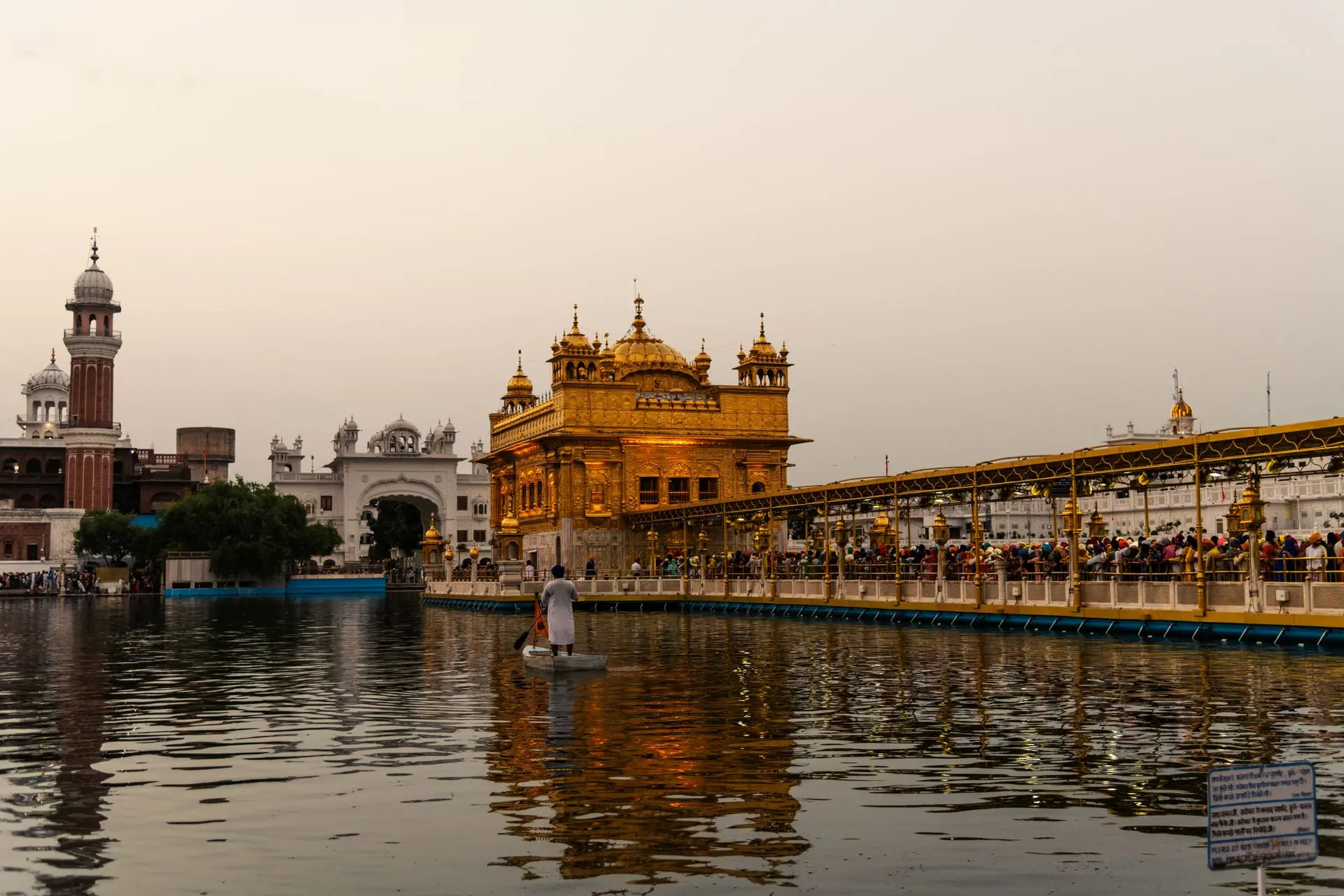
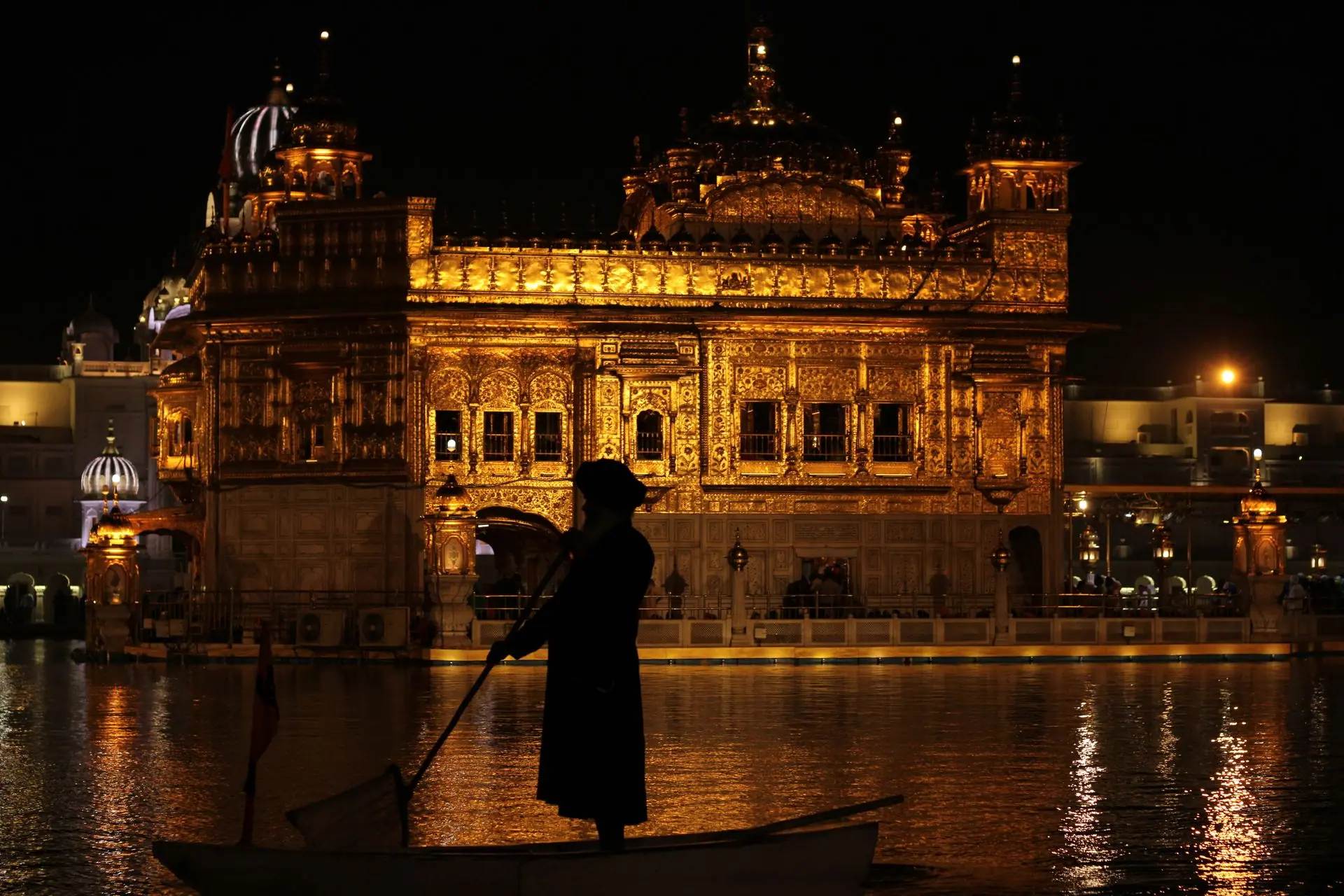
The Golden Temple (Sri Harmandir Sahib) is the central shrine of the Sikh faith and, in Punjab Tourism's words, the most sacred shrine for people of all faiths and particularly for Sikhs. Beside it stands the Akal Takht, which Incredible India calls one of the five seats of power in Sikhism. Jallianwala Bagh, the site of the shooting of 13 April 1919, the Partition Museum in the Town Hall and the daily flag-lowering ceremony at Attari, about 30 km out, complete the city's main sights. Our Amritsar travel guide covers all of them, with hours, etiquette and how to plan a day.

Anandpur Sahib and Virasat-e-Khalsa

Anandpur Sahib is where Guru Gobind Singh created the Khalsa on Baisakhi Day in 1699, and Takht Sri Keshgarh Sahib there is one of the five Takhts. Virasat-e-Khalsa, a museum on Sikh history designed by Moshe Safdie, stands near the Takht; Punjab Tourism lists it as open from 10 am to 4 pm and closed on Mondays and public holidays. Eating non-vegetarian food and drinking alcohol are restricted in the town. Hola Mohalla, a festival of martial arts instituted by Guru Gobind Singh, fills the town around Holi, in February or March.

Rupnagar and its Harappan site

On the Sutlej, Rupnagar (Ropar) is the first Harappan site excavated in independent India, with a cultural sequence from the Harappan period to the medieval one that Punjab Tourism says the district's archaeological museum displays. Its wetland is a Ramsar site that suits birdwatching and boating. Rupnagar town is about 50 km from Chandigarh, and Anandpur Sahib is about 40 km from it.

Fatehgarh Sahib and Sirhind

Gurdwara Sri Fatehgarh Sahib marks the spot where the two younger sons of Guru Gobind Singh, Zorawar Singh and Fateh Singh, were entombed alive on 26 December 1705. Sirhind stood on the Delhi–Lahore highway, the Grand Trunk Road, between Ludhiana and Ambala, and keeps the Aam Khas Bagh, which Punjab Tourism calls the earliest extant Mughal garden in Punjab and Haryana. The Shaheedi Jor Mela gathers pilgrims here in the last week of December.

Patiala

Baba Ala Singh founded the fort-palace of Qila Mubarak, around which the city of Patiala grew, and its Darbar Hall, built by Maharaja Narendra Singh in 1859, displays a jade dagger said to have belonged to Guru Gobind Singh. Punjab Tourism's pages disagree on the fort's founding year, so we give none. The Sheesh Mahal in Moti Bagh, built in 1847 on the pattern of Lahore's Shalimar Garden, holds more than 3,200 medals and decorations, which Punjab Tourism calls the world's largest such collection. A heritage walk runs on Friday, Saturday and Sunday mornings.

Kapurthala and Sultanpur Lodhi

Punjab Tourism calls Kapurthala the "Paris of Punjab" for the European architecture that Maharaja Jagatjit Singh brought to it. Jagatjit Palace, built in 1908 and modelled on the Palace of Versailles, now houses a Sainik School, and the Moorish Mosque, completed in 1930, was inspired by the Grand Mosque of Marrakesh. Sultanpur Lodhi, about 40 km away, is where Guru Nanak Dev attained enlightenment while bathing in the Kali Bein in 1499. Kapurthala is about 75 km from Amritsar and 20 km from Jalandhar.

Talwandi Sabo and Bathinda

Takht Sri Damdama Sahib at Talwandi Sabo, about 30 km from Bathinda, is another of the five Takhts: Guru Gobind Singh stayed here for nine months and nine days and re-dictated the Adi Granth in its final form. Vaisakhi, on 13 or 14 April, brings a fair here. In Bathinda itself, the Qila Mubarak, which Punjab Tourism says is among the oldest surviving forts in India, held Razia Sultana prisoner in 1240.

Harike Wetland

Where the Beas and the Sutlej meet, Harike is the largest wetland in northern India, a Ramsar site and a habitat for resident and migratory birds. Punjab Tourism says early morning is best for birdwatching, and it lists Harike among Amritsar's attractions, on the border of Amritsar and Ferozepur, though its FAQ places it under Tarn Taran. Punjab's list of ecosites also names the Kanjli wetland at Kapurthala and the Keshopur wetland at Gurdaspur.

Things to do in Punjab

Time an evening in Amritsar for the border ceremony, sit down to a langar meal, and follow the Gurus' trail to Anandpur Sahib and Sirhind. Punjab's food is a reason to travel in its own right: sarson da saag with makki di roti, Amritsari kulcha, chhole bhature, dal makhani and lassi, as Punjab Tourism lists them. For fairs, plan around Lohri, which marks the end of winter, Hola Mohalla in February or March, and Vaisakhi in April. Our Punjab tours and experiences and Punjab tour packages pages list our trips in the state. They include the Golden Temple, Amritsar tour, a private guide and vehicle with a briefing on dress code and etiquette, and the 10 Days Delhi Agra Jaipur with Golden Temple Tour, which adds a flight north from Delhi to Amritsar for the Golden Temple and the Wagah border ceremony.

Best time to visit Punjab

October to March is the comfortable season; Punjab Tourism gives it for Amritsar and Fatehgarh Sahib and for Rupnagar. On the IMD's 1991–2020 table for Chandigarh, whose Meteorological Centre also forecasts for Punjab, average daily maximums rise from 18.2°C in January to 34.6°C in April and peak at 38.6°C in May, then 37.7°C in June. The monsoon brings 275.6 mm in July and 273.0 mm in August, against 154.6 mm in September. In Amritsar itself, recent May and June temperatures have exceeded 45°C, and the lowest January minimums in recent years have been between about 1°C and 3°C. Dense to very dense fog over most of Punjab in winter, with visibility at Amritsar falling to zero on some mornings, can affect airports, highways and railway routes, so leave slack in December and January.

How to reach Punjab

  • By air: Sri Guru Ram Dass Jee International Airport at Amritsar, and Shaheed Bhagat Singh International Airport at Mohali, which serves Chandigarh and is run by a joint venture of the Airports Authority of India with the governments of Punjab and Haryana. Punjab Tourism gives flights from Delhi to Chandigarh from 45 minutes.
  • By train: Punjab Tourism names the Shatabdi Express and Vande Bharat Express on the Delhi–Chandigarh route, from about 3 hours. Amritsar Central has direct trains to Delhi, Chandigarh and Mumbai. The IRCTC guide for foreign visitors explains how to reserve a seat.
  • By road: Delhi Tourism's distance charts give 238 km from Delhi to Chandigarh, 305 km to Ludhiana, 364 km to Jalandhar, 447 km to Amritsar and 476 km to Pathankot. Sirhind is on the Grand Trunk Road, and Fatehgarh Sahib is 250 km from New Delhi.

How many days in Punjab

Two days cover Amritsar: the Golden Temple, Jallianwala Bagh, and the border ceremony in the evening. A third day adds Harike, or the drive to Kapurthala and Sultanpur Lodhi, about 75 km from the city. Anandpur Sahib, Sirhind and Patiala sit on the Chandigarh side of the state, and each is a day out. Five or six days covers Amritsar and the Gurus' towns without rushing. If you are coming from Delhi, our Delhi travel guide is the place to start.

Getting around and where to stay

Local transport is mainly auto-rickshaws, taxis and buses, and Punjab Tourism notes that fares for rickshaws and autos are negotiable rather than fixed. Punjab Tourism also publishes lists of bed-and-breakfasts and farmstays, and in Amritsar the SGPC runs pilgrim lodgings, covered in our Amritsar guide. No individual hotel is recommended here, because none has been checked for this guide.

Tips for visiting Punjab

  • At the Golden Temple, visitors remove their shoes and cover their heads, and scarves are available at the entrance; expect the same at other gurdwaras.
  • Anandpur Sahib restricts non-vegetarian food and alcohol.
  • For the Attari ceremony, the Border Security Force changes the start time with the season, so check it on the day.
  • Leave slack for fog from December to January.
  • Punjab Tourism's own safety advice is to stay aware of your surroundings, take care with money and valuables, and take care crossing streets or driving, as traffic can be chaotic.

Why book with Experience My India

  • Government-approved operator

    Approved by the Ministry of Tourism, Government of India

  • 500+ vetted local guides

    35+ destination specialists plan every trip by hand.

  • Human help, every day

    Mon–Sun, 9:00 AM – 9:00 PM IST · +91 73022 65809

  • No payment until you approve

    You receive a written quote first; nothing is charged to start planning.

Frequently asked questions

What is Punjab famous for?

Sikh heritage above all: the Golden Temple, the Akal Takht, which Incredible India calls one of the five seats of power in Sikhism, and the Takhts at Anandpur Sahib and Talwandi Sabo, which Punjab Tourism lists as two of the five Takhts. It is also known for the daily border ceremony at Attari, for its food, and for fairs such as Hola Mohalla and Vaisakhi.

Which airports and railway stations serve Punjab?

Amritsar has Sri Guru Ram Dass Jee International Airport and a railway station on the main Northern Railway network with direct trains to Delhi. Shaheed Bhagat Singh International Airport at Mohali, near Chandigarh, is the other main gateway, and it is the nearest airport to Anandpur Sahib, Rupnagar and Fatehgarh Sahib.

Is Chandigarh part of Punjab?

No. Chandigarh is a Union Territory with its own administration, and it serves as the capital of both Punjab and Haryana, according to Incredible India. Its airport is at Mohali, in Punjab, and Punjab's tourism directorate has its office in Chandigarh. Punjab Tourism puts Rupnagar about 50 km from Chandigarh.

Why do people visit Anandpur Sahib?

It is the birthplace of the Khalsa, which Guru Gobind Singh created there on Baisakhi Day in 1699, and Takht Sri Keshgarh Sahib is one of the five Takhts. Punjab Tourism also lists Virasat-e-Khalsa, a museum on Sikh history, and the five forts that Guru Gobind Singh built around the town. Hola Mohalla draws large crowds each year.

What food is Punjab known for?

Punjab Tourism lists sarson da saag with makki di roti, Amritsari kulcha, chhole bhature, dal makhani and lassi as Punjab's classics, with Amritsari fish and tandoori chicken among the non-vegetarian dishes and peda-lassi among the sweets. Langars at the gurdwaras serve free vegetarian meals to every visitor.

Is Punjab safe for tourists?

Visitors take the same precautions as elsewhere in India. Punjab Tourism's advice is to stay aware of your surroundings, take care with money and valuables, take care crossing streets or driving, keep emergency contacts, and follow local news and travel advisories. Check your government's current travel advice before you book. Our safety guide explains how to read it.

Where can you see birds in Punjab?

Harike Wetland, where the Beas and Sutlej meet, is the largest wetland in northern India and a Ramsar site, best in the early morning. Punjab Tourism also lists the Kanjli Wetland near Kapurthala, the Rupnagar wetland, which it says is a Ramsar site, and the Nangal wetland.

Is Punjab too hot in summer?

April to June is hot: the IMD's average daily maximum for Chandigarh is 34.6°C in April, 38.6°C in May and 37.7°C in June, and Amritsar has recorded over 45°C in recent years. The monsoon, with about 275 mm of rain in each of July and August, is humid. Sightsee early in the morning and again in the evening, or plan your trip for October to March.

Tour packages in Punjab

See all
Customer reviews

Experience My India is rated 4.3 on Tripadvisor. We publish guest reviews after each trip.

Read our reviews

Plan a trip

Tailor-made quote from a specialist