Skip to content

Udaipur Travel Guide: Lakes, Palaces and Planning Your Days

Udaipur, the old capital of the Mewar kingdom, is a city of lakes in the Aravalli hills of Rajasthan. The places to visit in Udaipur start with the City Palace and a boat on Lake Pichola, then Jagdish Temple, Bagore ki Haveli, Fateh Sagar, Saheliyon ki Bari and the hilltop Monsoon Palace. October to March is the main season, and two or three nights covers the city.

By Gurudutt Kaushal · Reviewed by Gurudutt Kaushal · Updated 20 Oct 2026

See all 2 tours and experiences in Udaipur →

Government-approved operatorApproved by the Ministry of Tourism, Government of India

Places to visit in Udaipur

The old city and the City Palace line the eastern shore of Lake Pichola; Fateh Sagar lies to the north, joined to Pichola by a canal, with Saheliyon ki Bari below its embankment. Sajjangarh and Shilpgram sit just outside the city. Every trip we run here, tours and experiences together, is on our Udaipur tours and experiences page.

City Palace

Begun by Maharana Udai Singh II and enlarged by the rulers who followed him, the City Palace is a run of courtyards, pavilions, terraces and hanging gardens above the lake. The main way in is the Tripolia, a triple-arched gate, and the Mor Chowk courtyard is known for its peacocks in glass mosaic. The royal family still lives in one part; the museum, which the Maharana of Mewar Charitable Foundation administers, opened in 1969 and shows paintings, textiles and silver. Tickets are sold at the Badi Pol and Shitla Mata gates or online, and flash photography is not allowed in the galleries.

Lake Pichola

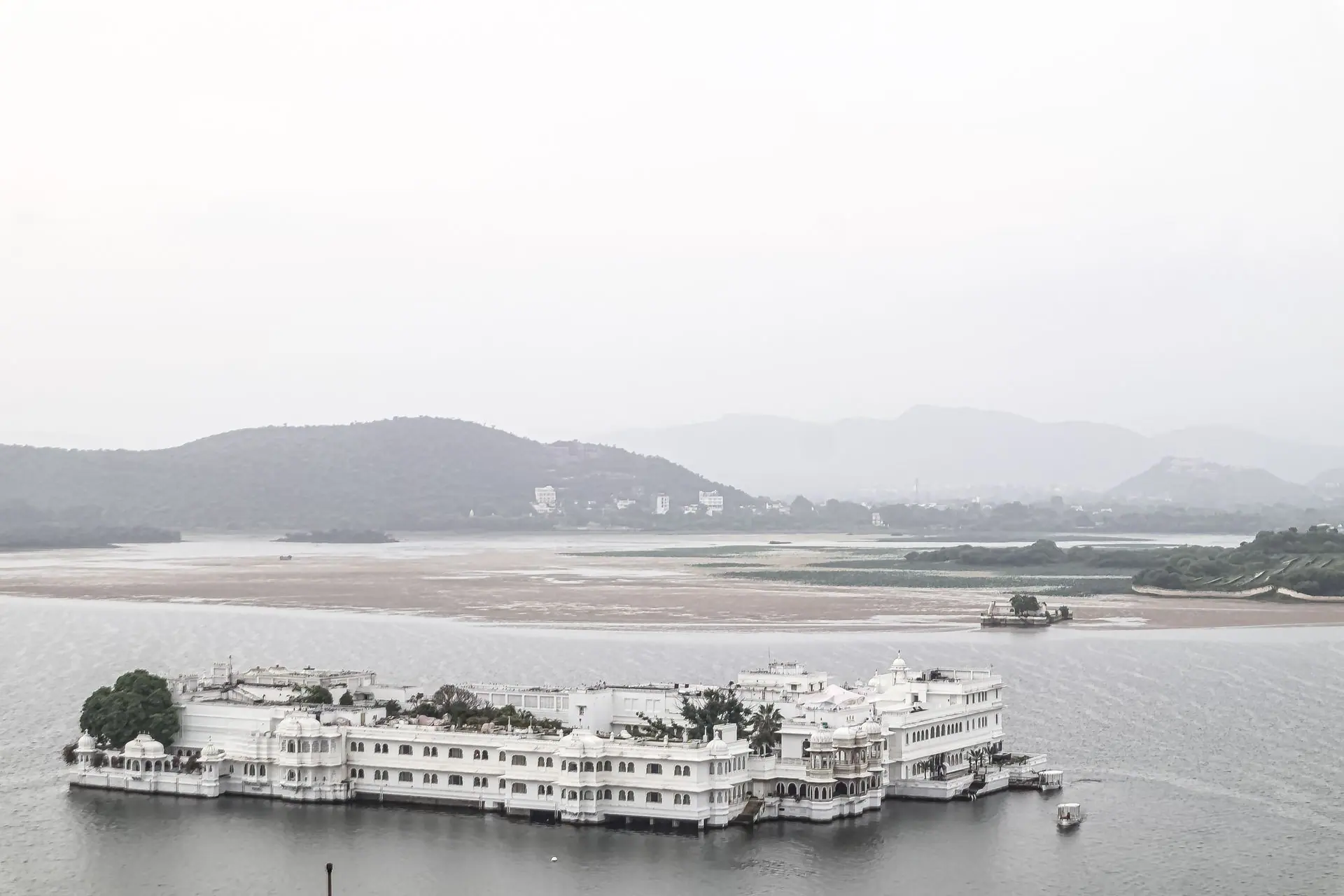
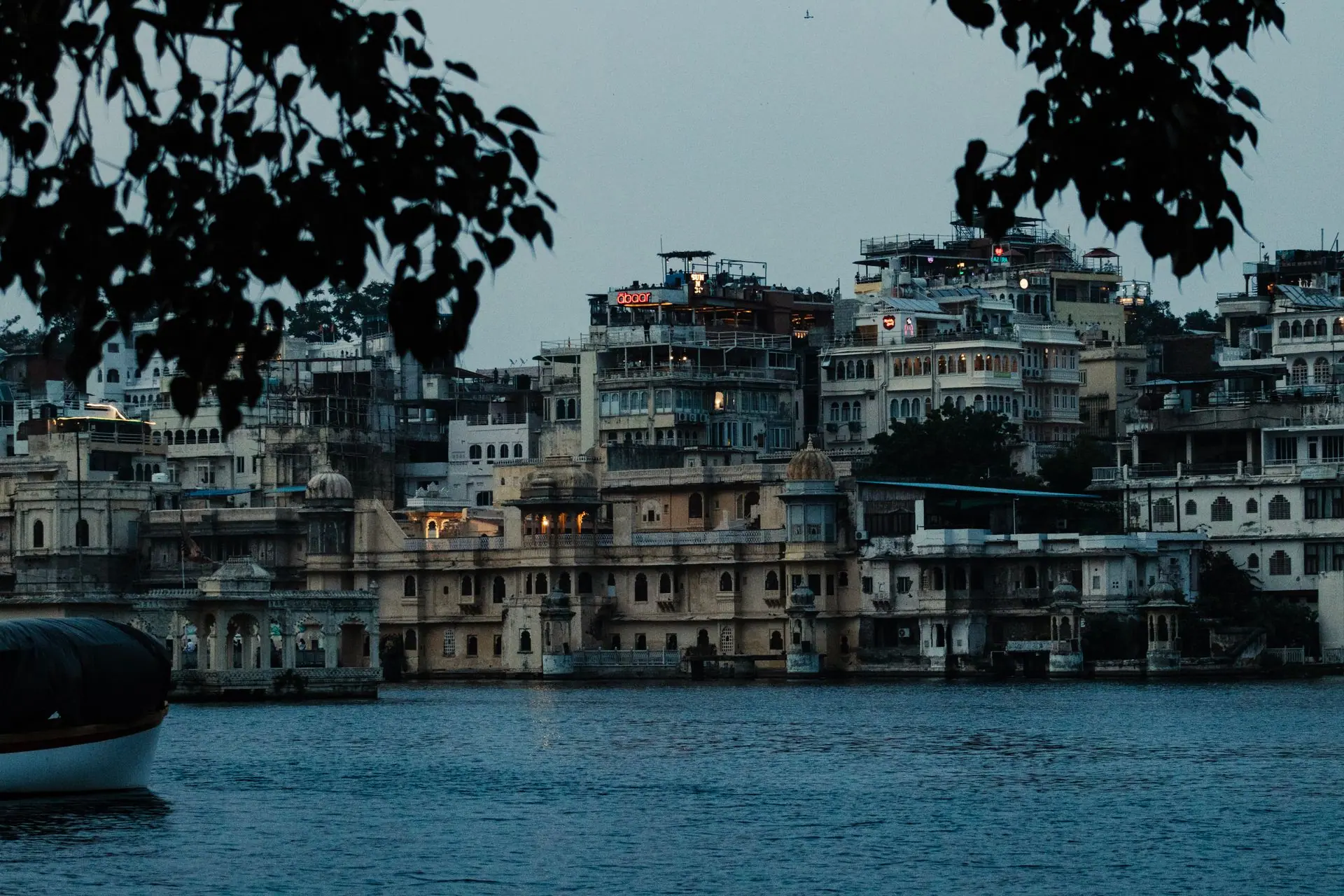
The lake takes its name from Picholi, a village that went under its water. Incredible India dates the first dam here to 1362; Maharana Udai Singh II later enlarged the lake and built his new capital on its shore. On its islands stand Jag Mandir, built between 1620 and about 1652, where Prince Khurram sheltered before he became Emperor Shah Jahan, and Jag Niwas, the summer palace of 1743 to 1746 that now operates as the Lake Palace hotel; non-guests generally see it only from the water. Rajasthan Tourism suggests a boat ride around sunset for the view of the City Palace on the eastern bank.

Jagdish Temple

Maharana Jagat Singh I built this temple to Vishnu, worshipped here as Jagannath, in 1651. A flight of 32 marble steps, guarded by two stone elephants, climbs to a three-storey shrine in the Indo-Aryan style, with carved pillars, painted ceilings and walls, and a black stone image of Vishnu in the sanctum. It stands in the old city beside the City Palace, so the two fit into one morning. Incredible India lists the temple as shut from 1 pm to 5 pm, so come early or for the evening aarti.

Bagore ki Haveli

Amar Chand Badwa, a prime minister of Mewar, built this haveli on Lake Pichola at Gangaur Ghat in the 18th century, and Maharaj Shakti Singh of Bagore added its triple-arched gateway in 1878. Its hundred-plus rooms now hold a museum of costumes, jewellery, paintings and manuscripts. In the evening, its Neem Chowk courtyard hosts Dharohar, a programme of Rajasthani folk dance and music; a ticket for the show does not cover the museum, and seats go to whoever arrives first.

Fateh Sagar Lake and Moti Magri

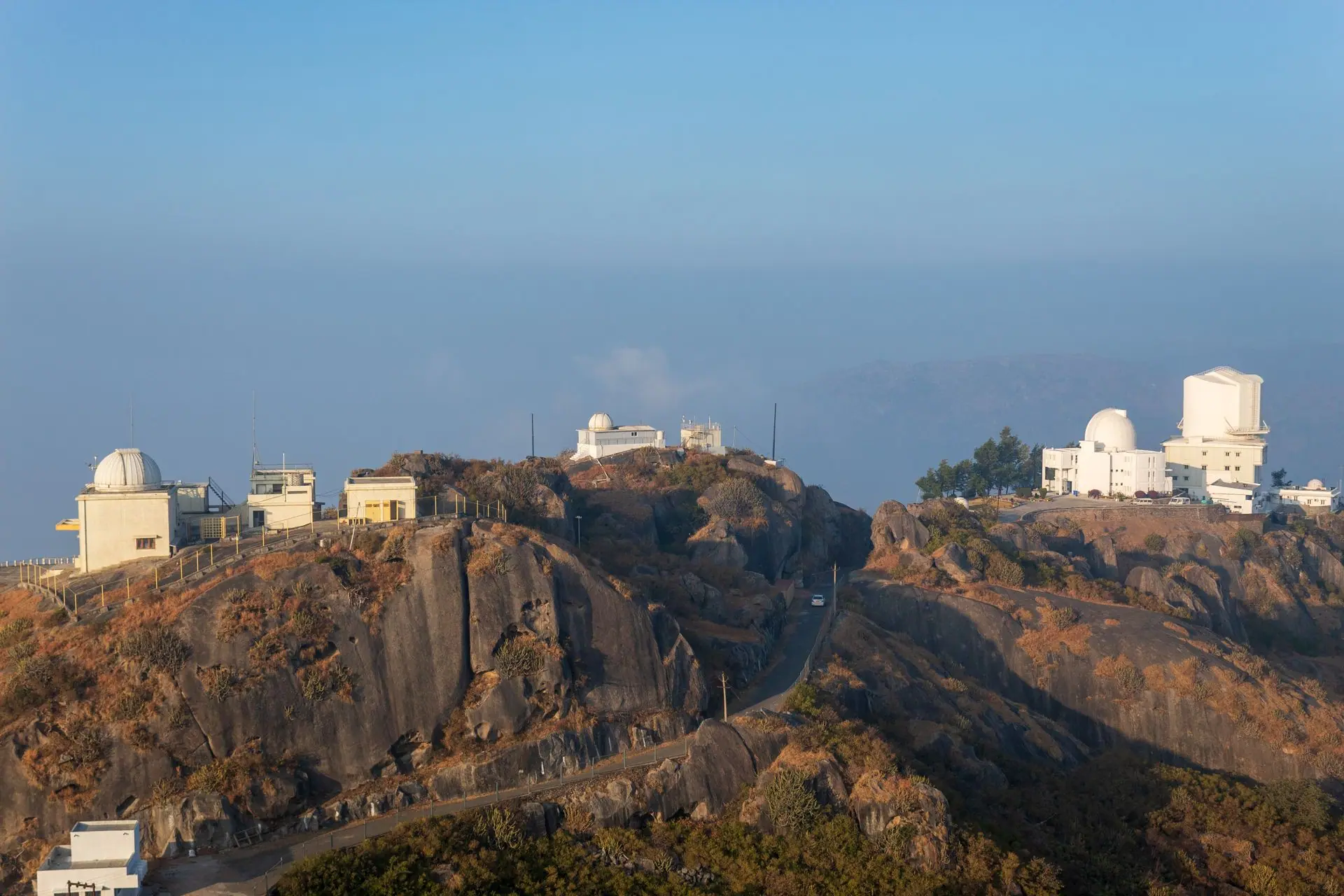
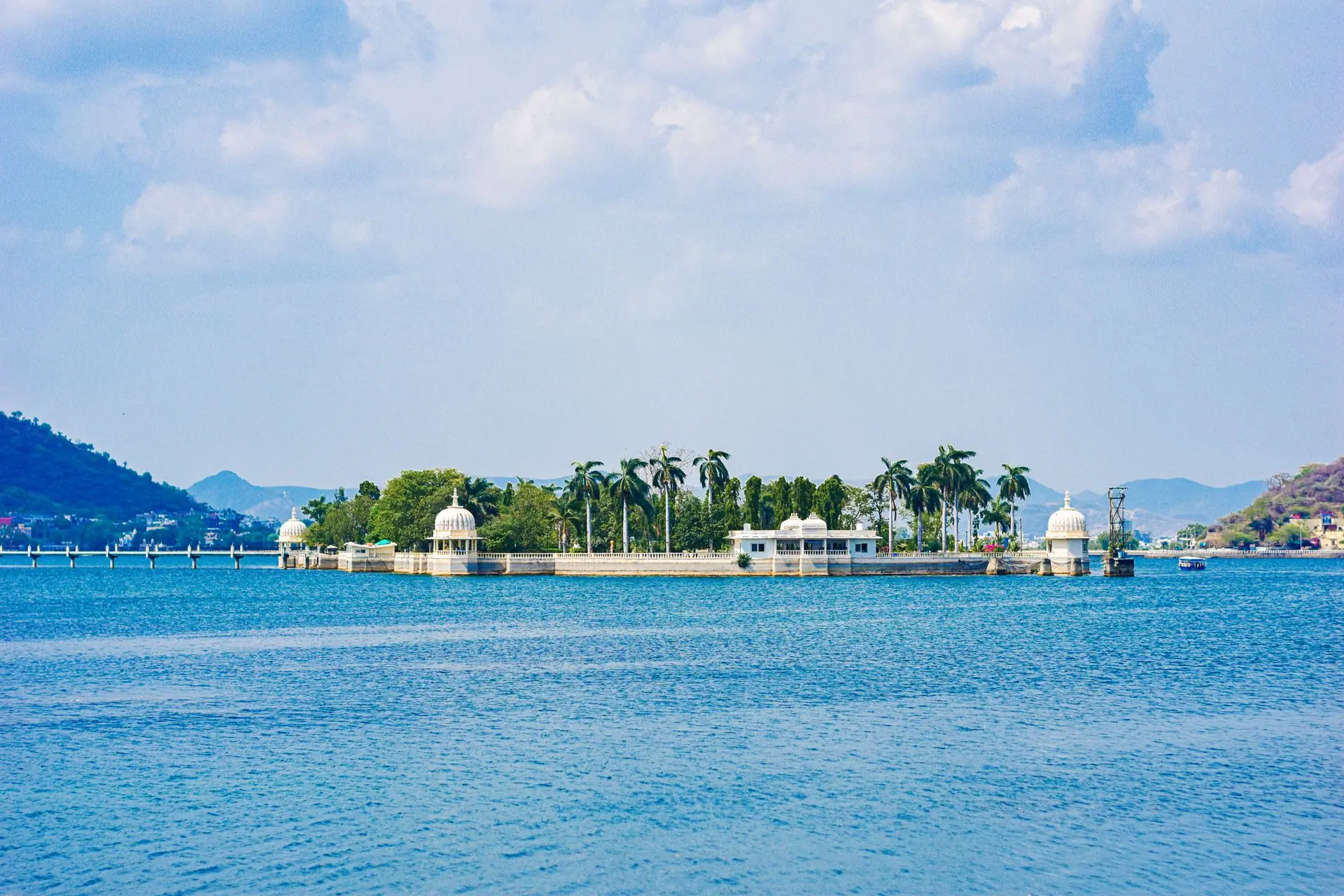
Fateh Sagar was first built in 1678 under Maharana Jai Singh and later enlarged and renamed by Maharana Fateh Singh; the Duke of Connaught inaugurated it, and it was first called Connaught Bundh. Boats cross to Nehru Park, the largest of its three islands, and another island holds the Udaipur Solar Observatory. Above the shore, Moti Magri hill carries a bronze statue of Maharana Pratap on Chetak, the horse that carried him to safety from the battlefield of Haldighati.

Saheliyon ki Bari

Maharana Sangram Singh II laid out the Garden of the Maidens for the women of the court in the 18th century. It lies in the north of the city, just below the Fateh Sagar embankment, and its fountains are still fed by gravity from the lake rather than by pumps. Marble elephants, kiosks and a lotus pool line the paths, and a small museum displays royal household objects. Being next to Fateh Sagar, the garden and the lake make an easy half-day together.

Sajjangarh (Monsoon Palace)

Maharana Sajjan Singh built this 19th-century palace on the Bansdara hills just outside the city as a monsoon retreat and hunting lodge, and planned to make it an astronomical centre for watching the monsoon clouds; the plan ended with his early death. It now holds a museum and looks out over the city, its lakes and the Aravallis. A wildlife sanctuary surrounds the palace, with the Sajjangarh Biological Park at the foot of the hills, and if you drive up in your own vehicle, the vehicle needs its own ticket.

Shilpgram

This 70-acre rural arts and crafts complex, surrounded by the Aravalli hills, lies west of the city near Fateh Sagar. Traditional huts from Rajasthan, Gujarat, Maharashtra and Goa show the building styles and crafts of India's west zone, alongside museums of rural and tribal objects, a crafts bazaar and an open-air amphitheatre. The Shilpgram festival fills the last ten days of December with crafts, folk music and dance.

Ahar and Bharatiya Lok Kala Mandal

At Ahar, a cluster of cenotaphs of the Maharanas of Mewar stands beside the small Ahar Museum, whose pottery and sculpture include finds dated to around 1700 BC and a 10th-century metal figure of the Buddha. In the city, Bharatiya Lok Kala Mandal studies the folk art, songs and festivals of Rajasthan, Gujarat and Madhya Pradesh, keeps a museum of Rajasthani artefacts and stages traditional puppet shows.

Doodh Talai and the Karni Mata ropeway

Doodh Talai is a lake among small hillocks on the road to Lake Pichola, with Deen Dayal Upadhyay Park and Manikya Lal Verma Garden on its banks. From the park, a ropeway climbs to the Karni Mata temple on the hill above, with the city spread out below, and Incredible India recommends the garden for watching the sun go down.

Things to do in Udaipur

On the water, take a boat on Lake Pichola around sunset, or cross Fateh Sagar to the Nehru Park island. Couples on our 4 Days Honeymoon Udaipur Tour Package have a private sunset boat ride included, and our Udaipur lake palace experience pairs a guided City Palace visit with a private boat past Jag Mandir at sunset, plus a candlelit dinner at a heritage property if you want one.

After dark, choose between Dharohar at Bagore ki Haveli and the sound and light show on Mewar's history that Rajasthan Tourism lists at the City Palace's Manek Chowk. Jagdish Temple holds its evening aarti, and Bharatiya Lok Kala Mandal stages puppet shows.

By day, Rajasthan Tourism suggests seeing the lanes around the lake by bicycle. For shopping, Shilpgram's crafts bazaar sells pottery, textiles, woodwork and metalwork made across western India.

For festivals, come in spring for the Mewar Festival, which coincides with Gangaur in Chaitra, the first month of the Hindu calendar (March or April). Rajasthan Tourism describes women dressing images of Isar and Gangaur, carrying them through the streets and immersing them in the middle of Pichola, followed by songs, dances and fireworks. The Shilpgram festival closes the year in late December.

Best time to visit Udaipur

Udaipur's main season runs from October to March. IMD's 1991–2020 averages for the city's weather station at Dabok put December to February days at about 25–28°C and nights at about 8–10°C, so bring a jacket for after dark, while October and March reach about 33°C by day. From April the heat builds, and May days average about 40°C. The rains come from June to September and bring most of the year's 674 mm, with July and August the wettest months at over 200 mm each, spread over nine to ten rainy days in each. Incredible India counts September in the season, but it still averages about 112 mm of rain, so October is the safer start. The monsoon tops up the lakes and turns the Aravallis green, and Incredible India notes that mist often wraps the Monsoon Palace in the rains.

How to reach Udaipur

  • By air: Maharana Pratap Airport (UDR), at Dabok, is about 20–25 km from the city centre; Rajasthan Tourism lists daily flights from Delhi and Mumbai.
  • By train: Udaipur City station (UDZ) is served by trains from Mumbai, Ahmedabad, Jaipur and New Delhi. The City Palace Museum gives about 7 hours 35 minutes from Jaipur and 12 hours 43 minutes from New Delhi.
  • By road: Chittorgarh is 117 km away. Our Jaipur to Udaipur drive on the 5 Days Jaipur Udaipur Tour takes about six to six and a half hours, breaking the journey at Ranakpur's Jain temple, and the Jodhpur to Udaipur day of the Royal Rajasthan Circuit takes about six hours with the same stop. Coming from the west of the state, see our Jodhpur travel guide.

How many days in Udaipur

Two nights covers the city at an easy pace. On the first day, see the City Palace in the morning, walk to Jagdish Temple and Bagore ki Haveli, and take a boat on Lake Pichola late in the afternoon. On the second, head north for Saheliyon ki Bari, Fateh Sagar and Moti Magri, then Shilpgram and Sajjangarh. A third night leaves room for a day out of the city or simply a slower pace. Two nights is what our five-day Jaipur and Udaipur route and the twelve-day Rajasthan Grand Tour spend here; the honeymoon package gives couples three, with a free day before departure. Every route that stays in the city is on our Udaipur tour packages page.

Day trips from Udaipur

  • Kumbhalgarh: Maharana Kumbha's 15th-century fort, about 85 km away in the Aravallis, has walls that run for about 36 km.
  • Chittorgarh: 117 km away; like Kumbhalgarh, its fort was inscribed in 2013 as part of the Hill Forts of Rajasthan World Heritage Site.
  • Eklingji and Nagda: Eklingji, a Shiva temple at the heart of Mewar's royal worship, is about 20 km north, and Nagda, 22 km from the city, has the carved Sas-Bahu temples of the 9th and 10th centuries.
  • Nathdwara: about 45 km away, the pilgrimage town of Shrinathji, a form of Krishna.
  • Ranakpur: our routes from Jaipur and Jodhpur stop at its Jain temple on the way in.

For the rest of the state, from Mount Abu to the desert cities, see our Rajasthan travel guide.

Where to stay and getting around in Udaipur

Staying in the old city on Lake Pichola's eastern shore, around Gangaur Ghat, Jagdish Temple and the City Palace, puts the main sights within walking distance of one another: the temple is beside the palace and Bagore ki Haveli a short walk away. Saheliyon ki Bari, Fateh Sagar, Shilpgram and Sajjangarh are a few kilometres out and easier by car. Our packages include a private car and driver, and the lake palace experience begins by matching you with a lakefront or lake-view hotel to your budget.

Why book with Experience My India

  • Government-approved operator

    Approved by the Ministry of Tourism, Government of India

  • 500+ vetted local guides

    35+ destination specialists plan every trip by hand.

  • Human help, every day

    Mon–Sun, 9:00 AM – 9:00 PM IST · +91 73022 65809

  • No payment until you approve

    You receive a written quote first; nothing is charged to start planning.

Frequently asked questions

What is there to do in Udaipur in the evening?

Start with a boat on Lake Pichola around sunset, then choose between Dharohar, the folk dance and music show in the courtyard of Bagore ki Haveli, and the sound and light show on Mewar's history that Rajasthan Tourism lists at the City Palace. Jagdish Temple holds an evening aarti, Bharatiya Lok Kala Mandal stages puppet shows, and the Fateh Sagar embankment, lined with food kiosks, suits an evening stroll.

What can you see in Udaipur in one day?

Give the morning to the City Palace, where the museum itself suggests allowing at least an hour, then walk to Jagdish Temple next door and on to Bagore ki Haveli at Gangaur Ghat. After lunch, drive north to Saheliyon ki Bari and Fateh Sagar. End with a boat on Lake Pichola at sunset and the evening show at Bagore ki Haveli. Sajjangarh, Shilpgram and the day trips need a second day.

Which lakes can you visit in Udaipur?

Lake Pichola, with the City Palace on its shore and two island palaces, is the one most visitors see from a boat. Fateh Sagar, to its north and linked by a canal, has three islands, and Doodh Talai, on the road to Pichola, has gardens and the ropeway. Farther out, Rajasthan Tourism lists Udai Sagar, about 13 km east, Badi Lake (Jiyan Sagar), about 12 km away and built by Maharana Raj Singh against drought, and Jaisamand, a large artificial lake with an island at its centre.

Where can you buy tickets for the City Palace?

The City Palace Museum sells tickets at counters at its two gates, Badi Pol and Shitla Mata, and online through its own website, so you can book before you arrive. On each of our trips that visit the palace, the entry ticket is paid separately from the package, while the local guide is included.

Can you hire a guide inside the City Palace?

Yes. The museum has certified, trained guides, recognisable by their orange lanyards, and their fixed charges are printed on each guide's identity card. Audio guides in English, French, German and Spanish are available at the information desk in Moti Chowk. If you travel with us, a local guide for the City Palace visit is already part of the package.

Which places in Udaipur suit children?

Sajjangarh Biological Park, at the foot of the Monsoon Palace hill, shows carnivores and herbivores in a natural setting across 36 hectares, seen on foot or by golf cart for a fee. The bird park in Gulab Bagh has 28 species in 12 enclosures. The ropeway from Doodh Talai to the Karni Mata temple, the boat to Nehru Park on Fateh Sagar and the puppet shows at Bharatiya Lok Kala Mandal are short, easy outings too.

Tour packages in Udaipur

See all
Experiences in Udaipur

See all

From the journal: Udaipur
Customer reviews

Experience My India is rated 4.3 on Tripadvisor. We publish guest reviews after each trip.

Read our reviews

Plan a trip

Tailor-made quote from a specialist