
Choose a state
Frequently asked questions
How many of India's toy trains are World Heritage Sites?
Three, listed together as one property, the Mountain Railways of India. UNESCO inscribed the Darjeeling Himalayan Railway in 1999 and extended the listing to the Nilgiri Mountain Railway in 2005 and the Kalka–Shimla Railway in 2008. Indian Railways runs other hill lines, such as the toy train from Neral up to Matheran and the narrow-gauge line from Pathankot into the Kangra Valley, but they are not part of the listing.
Which is the oldest of India's toy trains?
The Darjeeling Himalayan Railway, completed to Darjeeling in 1881. UNESCO's 1999 decision called it the first, and still the most outstanding, example of a hill passenger railway. The Nilgiri line was proposed in 1854 but built only from 1891, and reached Ooty in 1908.
Why are they called toy trains?
Because of their size. The Darjeeling line runs on track only two feet (0.610 metres) wide, and its small carriages earned it the nickname. Indian Railways' own history of the line insists there is nothing of a toy about its engineering: it rises more than 7,000 feet in under 50 miles, with gradients as steep as 1 in 23.
Do India's toy trains still run on steam?
Some services do. On the Darjeeling line, steam and diesel locomotives both run, depending on the day, and UNESCO notes that the B-class steam engines are still maintained. On the Nilgiri line, Southern Railway keeps X-class steam locomotives, fitted with rack and pinion, to haul trains on the steep climb between Mettupalayam and Coonoor.
Which toy train should I choose?
Choose by what you want to see and how long you have. Darjeeling's joy ride is the short option, a ride to Ghum and back with Himalayan views on a clear day. The Nilgiri line is the one for engineering, with its rack section and steam on the climb to Coonoor. The Kalka–Shimla line is the longest of the three, through more than a hundred tunnels on the way up to Shimla.
Can I book toy train seats on IRCTC?
For the Darjeeling line, yes: Indian Railways sells its seats on the IRCTC website and at computerised reservation counters, and joy-ride tickets also at Darjeeling station. With our Darjeeling experience you do not need to: standard joy-ride tickets are included, and any longer journey on the line is confirmed on your quote.
About Toy Trains & Railways in India
Three toy trains in India are World Heritage: the Darjeeling Himalayan Railway in West Bengal, the Nilgiri Mountain Railway in Tamil Nadu and the Kalka–Shimla Railway in Himachal Pradesh, listed together by UNESCO as the Mountain Railways of India and all still run by Indian Railways. We arrange the Darjeeling joy ride to Ghum and back, with station transfers, a local guide and standard tickets.
Reviewed by Experience My India Editorial Team · Updated 20 Oct 2026
How to choose a toy train
The three lines were opened between 1881 and 1908, and each climbs to a different hill station.
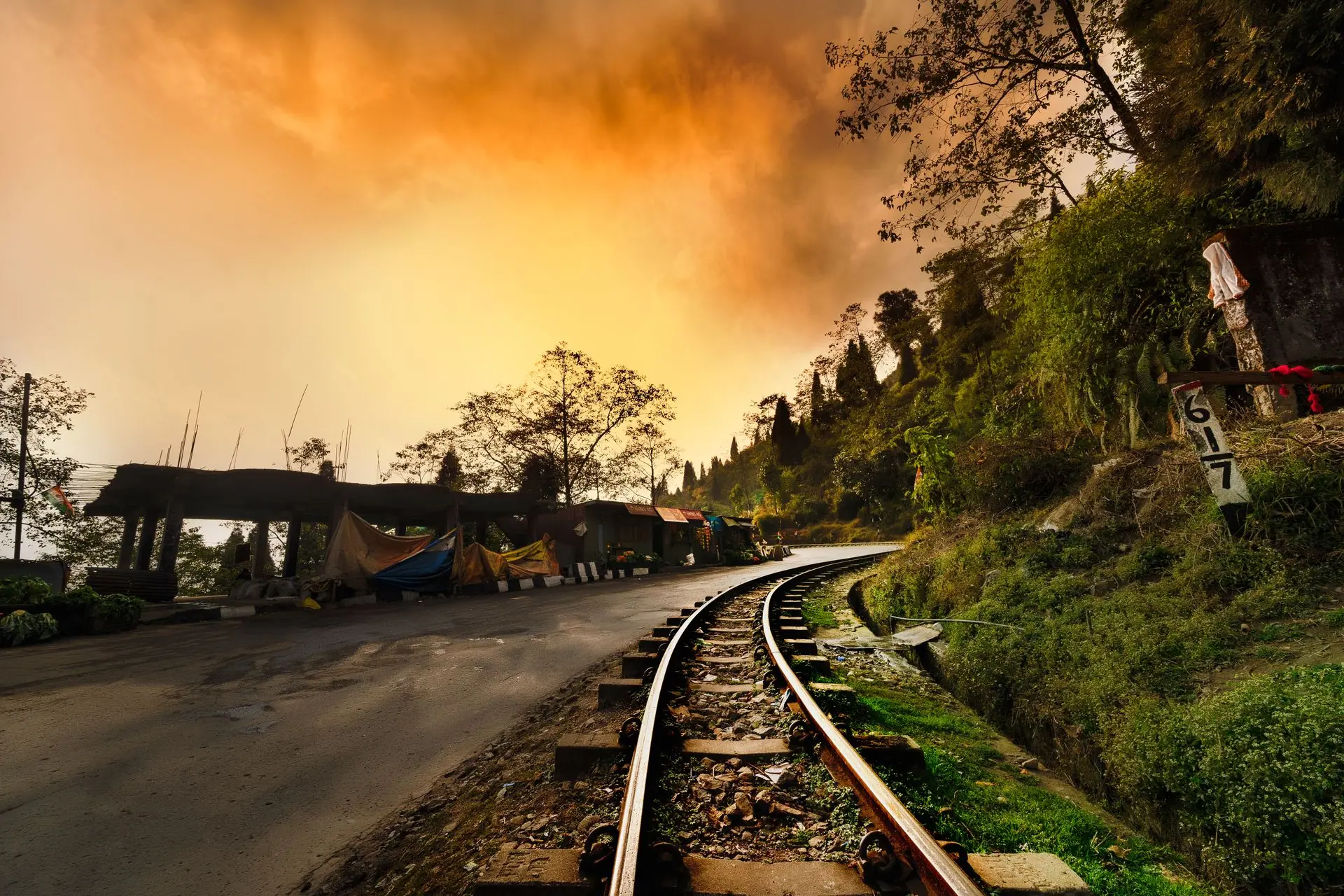
- Darjeeling Himalayan Railway, West Bengal: opened in 1881, it runs 88.48 km on track two feet wide from New Jalpaiguri up to Darjeeling, through Ghum at 2,258 metres, with six zigzag reverses and three loops (UNESCO). Most visitors take the joy ride from Darjeeling to Ghum and back, which Indian Railways runs with halts at the Batasia Loop and at Ghum. That is our Darjeeling toy train experience; the Darjeeling travel guide covers the town.
- Nilgiri Mountain Railway, Tamil Nadu: completed to Ooty in 1908, it runs 45.88 km on metre gauge from Mettupalayam to Udhagamandalam, climbing from 326 to 2,203 metres (UNESCO). Between Kallar and Coonoor the train climbs on a toothed rack, hauled by steam locomotives fitted with rack and pinion (Southern Railway), and Tamil Nadu Tourism calls it the only operational rack railway in India. See our Ooty travel guide.
- Kalka–Shimla Railway, Himachal Pradesh: 96.6 km of single track from Kalka to Shimla (UNESCO), through more than a hundred tunnels; the longest, at Barog, is 1,143.61 metres (Northern Railway). See our Shimla travel guide.
The three lines are far apart, so choose the one that fits the rest of your route.
What to expect on the Darjeeling joy ride
You board the narrow-gauge carriage in Darjeeling town. The train spirals round the Batasia Loop, a war memorial garden with views back over the town and, when the weather allows, towards Kanchenjunga, then climbs on to Ghum, the summit of the line, where Indian Railways keeps a railway museum, before returning to Darjeeling. The ride is largely seated and gentle, needs no acclimatisation or particular fitness, and suits a wide range of ages.
Steam and diesel locomotives both run on the line, depending on the day; UNESCO notes that the railway's famous B-class steam engines are still maintained. If riding behind steam matters to you, ask us to check the day's schedule.
When to go
The weather decides how much you see.
- Darjeeling: IMD's records show June to September as the wet months, with July averaging about 785 mm, and skies heavily clouded through the monsoon. The rest of the year is lightly to moderately cloudy, though winter mornings are often misty, and January nights average 1.2°C. A view of Kanchenjunga depends on a clear spell.
- Shimla: the cold season runs from December to March, July and August are the wettest months, and October and November have the clearest skies (IMD).
- The Nilgiris: the line gets rain from both the southwest and the northeast monsoon (Southern Railway).
UNESCO notes that monsoon rain, landslides and rock-falls have regularly disturbed all three lines, so leave room for changes on a monsoon trip.
Practical points
- Tickets: Indian Railways sells Darjeeling Himalayan Railway seats at its computerised reservation counters and on the IRCTC website, and joy-ride tickets also at Darjeeling station. Our Darjeeling experience includes standard joy-ride tickets; any journey beyond that segment is confirmed on your quote.
- Booking from abroad: our guide to train travel in India for foreign visitors explains IRCTC registration and the foreign tourist quota.
- A longer train journey: if you want a train that is the whole holiday, see India's luxury trains.
Plan a trip
Tailor-made quote from a specialist