
Last updated:
India Itinerary Ideas for 7, 10, 14 and 21 Days
A good India itinerary gives each region about a week. Seven days covers Delhi, Agra and Jaipur, the Golden Triangle. Ten days adds Varanasi or Udaipur. Fourteen days pairs the north with Kerala, or tours Rajasthan in full. Three weeks joins two or three regions with rest days. Choose the season first: the northern plains are mildest from October to March.
By Experience My India Editorial Team
Destination specialists and licensed local guides
Choose the season before the route
India's weather decides which itinerary works, so fix the month first. The India Meteorological Department (IMD) puts the normal arrival of the southwest monsoon over Kerala around 1 June, Mumbai around 11 June and Delhi around 27 June, with the whole country covered by about 8 July. It withdraws from Delhi around 25 September and from most of the country by about 15 October, after which the northeast monsoon brings rain to the far south.
On the northern plains, IMD's 1991–2020 averages for Delhi give daytime highs of about 20–23°C in December and January, climbing to 39.9°C in May and 39.0°C in June. Winter has its own catch: Delhi's Safdarjung station averages about 19 foggy days in December and 22 in January. The south keeps a different calendar: Alappuzha in Kerala averages 16 mm of rain in January and 592 mm in June. Ladakh is the summer exception, with Leh's daytime highs averaging 23–28°C from June to September and under 15 mm of rain a month. Our guide to the best time to visit India takes this region by region.
7 days: the Golden Triangle
Delhi, Agra and Jaipur form the Golden Triangle, where most first trips to India begin. Every leg is a manageable drive: the Taj Mahal's official site gives Agra as 204 km from Delhi and 232 km from Jaipur, and Delhi Tourism's distance chart puts Jaipur 258 km from Delhi. Trains also run between Delhi and Agra, among them the Gatimaan, Shatabdi, Rajdhani and Taj Express.
- Days 1–2, Delhi: arrive, recover from the flight, and see the old and new cities.
- Days 3–4, Agra: the Taj Mahal opens 30 minutes before sunrise and closes every Friday, so make sure your Agra morning falls on another day.
- Days 5–7, Jaipur: two full days for the forts and the old city, then back to Delhi for the flight home.
A week holds these three cities and little more. Our multi-state India tours include Golden Triangle routes, and the Agra travel guide plans the Taj Mahal visit itself.
10 days: add Varanasi or Udaipur
Three more days buy one city that needs a flight or a long train journey. Delhi Tourism's chart puts Varanasi 780 km and Udaipur 670 km from Delhi, too far for a comfortable day's drive.
- Varanasi, on the Ganga: UP Tourism lists direct flights from Delhi and Agra to Lal Bahadur Shastri International Airport at Babatpur, 22 km from the city, and its railway stations link it with all of India's major cities. Sarnath, where the Buddha preached his first sermon, is 10 km away. It shares Delhi's calendar, with average May highs of 40.7°C and about 22 foggy days in each of December and January. The Varanasi travel guide covers the ghats and the evening aarti.
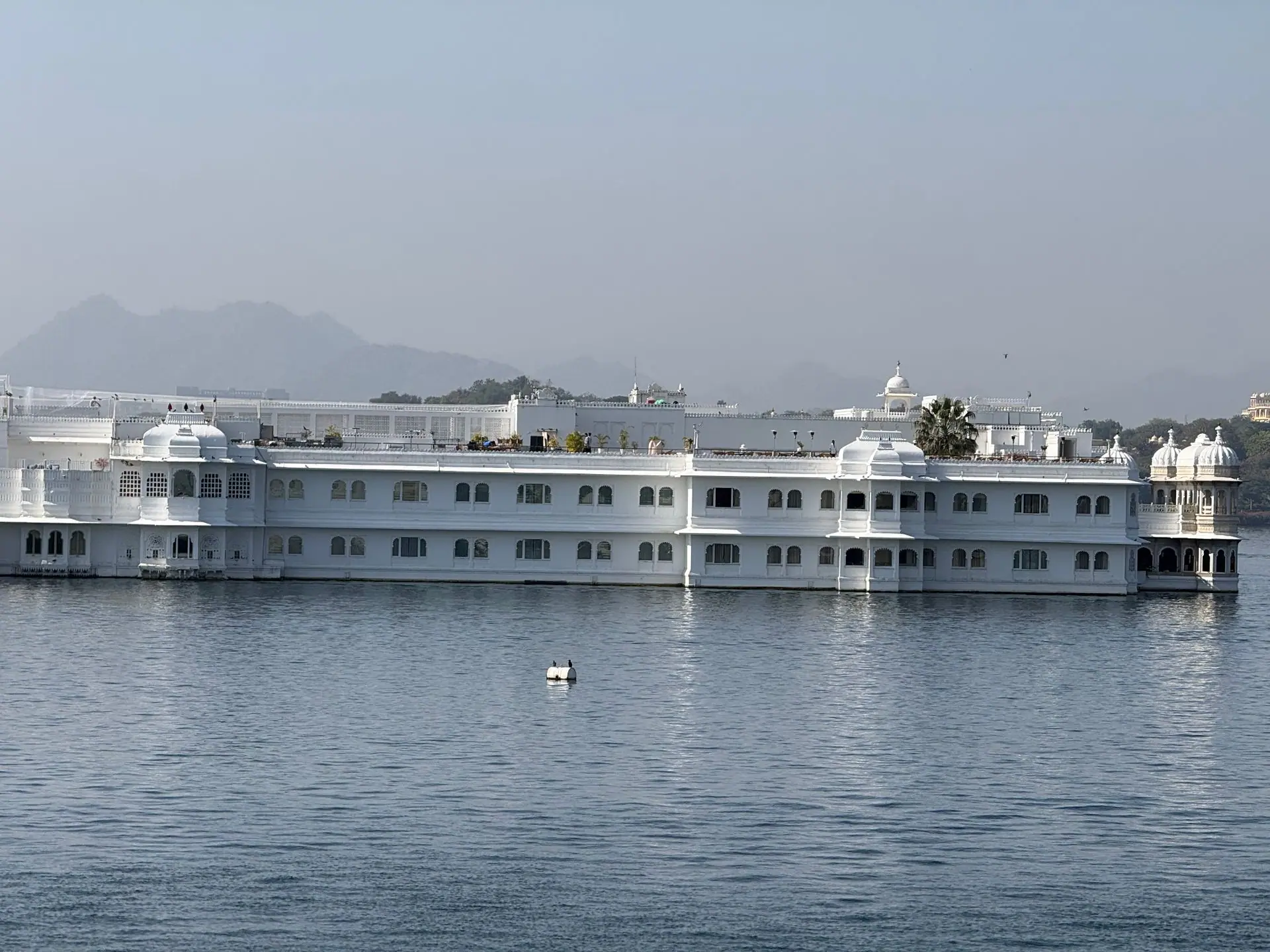
- Udaipur, the lake city: Rajasthan Tourism describes the Lake Palace standing in the middle of Lake Pichola, with the City Palace and the hilltop Sajjangarh nearby. Dabok airport is about 25 km from the centre, and trains connect Udaipur with Jaipur, Agra and Delhi.
14 days: two regions
North India and Kerala
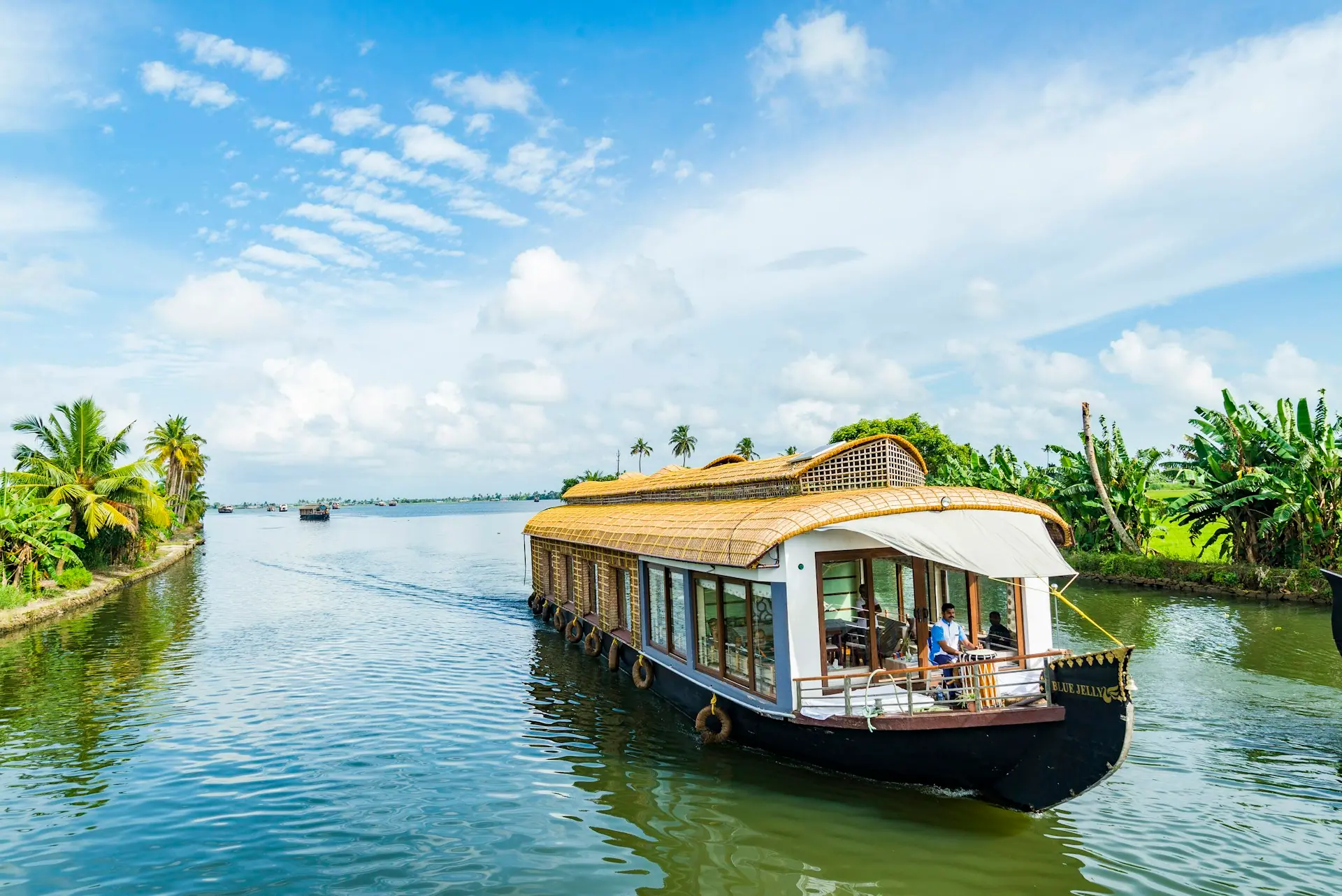
Spend the first week on the Golden Triangle, then fly south to Cochin International Airport, the nearest airport for both Alappuzha's backwaters and Munnar's tea hills. In Alappuzha, houseboats cruise a network of canals, lakes and lagoons; Munnar sits among tea plantations higher up. Choose December to March, Alappuzha's four driest months on IMD's averages, when Delhi is also at its coolest. Our Kerala tour packages take care of the southern half.
Rajasthan in full
Two weeks lets you go past Jaipur to the desert and the lakes. Jodhpur, the Blue City, sits below Mehrangarh Fort; Jaisalmer has camel safaris on the Sam and Khuri dunes; Udaipur has its lakes. The distances are long, with Jodhpur 589 km and Jaisalmer 793 km from Delhi on Delhi Tourism's chart, but Jodhpur, Jaisalmer and Udaipur each have an airport. Winter is the season for it: IMD records 3 mm of rain or less at Udaipur in each month from December to March. See our Rajasthan tour packages.
21 days or more: three regions, with rest days
Three weeks joins the Golden Triangle, a Rajasthan loop or Varanasi, and Kerala, with a free day in each region. Leave one day in every week unplanned: a late train or a tired afternoon then costs you nothing.
From June to September, when the monsoon covers most of the country, a long trip can turn north to Ladakh instead. The Leh district's health advisory asks every visitor to spend at least 48 hours acclimatising in Leh before going higher, with no exertion in the first two days, and it warns that arriving by road does not help acclimatisation. Put those days into the plan; the Ladakh travel guide covers Leh, Nubra and Pangong.
Getting between regions
Within a region, a car with a driver or a day train covers most legs. Between regions, a domestic flight usually saves a full day, because the distances in the sections above add up quickly. Indian Railways also runs sleeper coaches, from sleeper class to two-tier air-conditioned, so an overnight train can replace both a travel day and a hotel night. Our guide to booking Indian trains as a foreign visitor explains how.
Book in order of how hard each part is to change: flights between regions first, then trains, then hotels. Whatever you choose with us, every trip can be cancelled for a full refund up to 24 hours before it starts.
Frequently asked questions
How many days should an India itinerary be?
Allow about a week for each region. Seven days is enough for the Golden Triangle of Delhi, Agra and Jaipur. Ten days adds one more city, such as Varanasi or Udaipur, and two weeks covers two regions, for example the north and Kerala. With three weeks you can see three regions and still keep a free day in each. Fewer, longer stops make a better trip than many one-night stays.
Can I fit Varanasi into a ten-day India itinerary?
Yes, as a fourth stop after Delhi, Agra and Jaipur. Varanasi is 780 km from Delhi on Delhi Tourism's chart, so fly or take the train rather than drive; UP Tourism lists direct flights from both Delhi and Agra to its airport at Babatpur. Give it two nights so you see the riverfront in the evening and again at dawn, and add Sarnath, 10 km away.
Is it better to fly or take the train between regions of India?
Between regions, usually fly: Delhi to Udaipur is 670 km and Delhi to Varanasi 780 km, a long day or more by road. Trains suit shorter legs such as Delhi to Agra, where the Taj Mahal's official site lists the Gatimaan, Shatabdi, Rajdhani and Taj Express among the services. An overnight train in a sleeper berth can also stand in for a hotel night.
Where in India can I travel in July and August?
Ladakh is the main choice. IMD's averages give Leh under 15 mm of rain a month from June to September and daytime highs of about 23–28°C, while the monsoon covers the rest of India from early July. Allow 48 hours to acclimatise in Leh, as the district's health advisory asks. The plains and Kerala stay open, but expect heavy rain: Alappuzha averages 486 mm in July.
Should an India itinerary include rest days?
Yes, at least one free day a week. Distances are long, winter fog can delay departures in the north, and an empty day absorbs a late train or an upset stomach without unravelling the rest of the plan. On a two-week trip, give each region its own rest day; on a three-week trip, add another after the longest travel day.
Does winter fog affect travel in north India?
It can. IMD's 1991–2020 averages count about 19 foggy days in December and 22 in January at Delhi's Safdarjung station, and about 22 in each of those months at Varanasi. Avoid tight connections between flights and trains in midwinter, and keep a spare night in Delhi before your flight home rather than arriving from Agra or Jaipur on the day.
Can I see North and South India in one trip?
Yes, with two weeks or more. The usual pairing is the Golden Triangle followed by Kerala, joined by a flight to Cochin International Airport, the nearest airport for Alappuzha and Munnar. December to March suits both halves: Delhi's days are mild, and those are Alappuzha's four driest months on IMD's averages. With three weeks, add Varanasi or Udaipur in the north.
Related guides
Customer reviews
Experience My India is rated 4.3 on Tripadvisor. We publish guest reviews after each trip.
Why book with Experience My India
Government-approved operator
Approved by the Ministry of Tourism, Government of India
500+ vetted local guides
35+ destination specialists plan every trip by hand.
Human help, every day
Mon–Sun, 9:00 AM – 9:00 PM IST · +91 73022 65809
No payment until you approve
You receive a written quote first; nothing is charged to start planning.
Browse experiences by theme
See all
Wildlife Safaris
8 experiences
Heritage & Architecture
2 experiences

Beaches & Islands
5 experiences

Wellness & Ayurveda
1 experience
Yoga & Meditation
4 experiences
Trekking
2 experiences

Adventure
6 experiences

Culinary
5 experiences

Festivals
8 experiences

Performing Arts
5 experiences

Luxury Trains
4 experiences
Houseboats
3 experiences
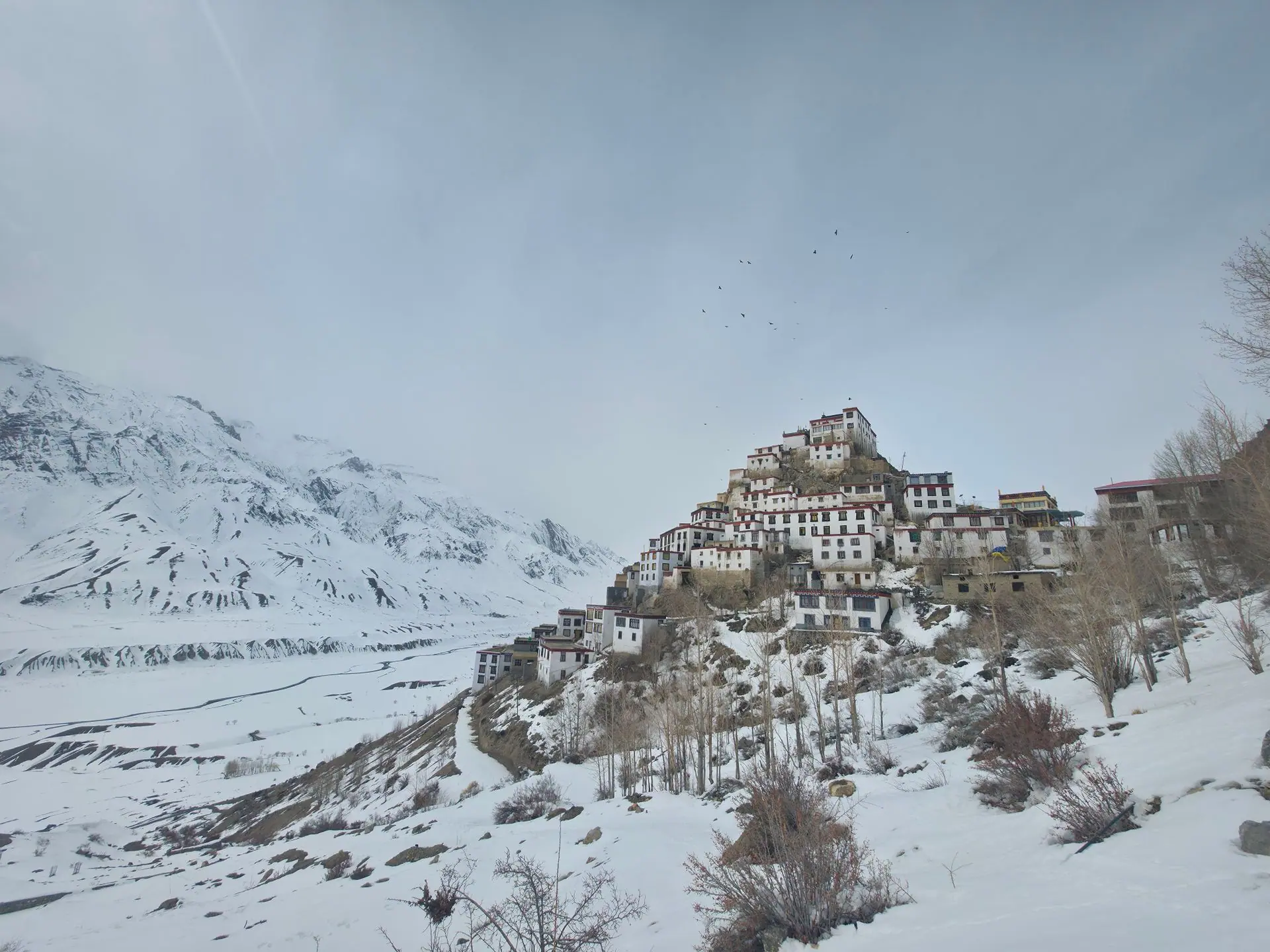
Toy Trains & Railways
1 experience
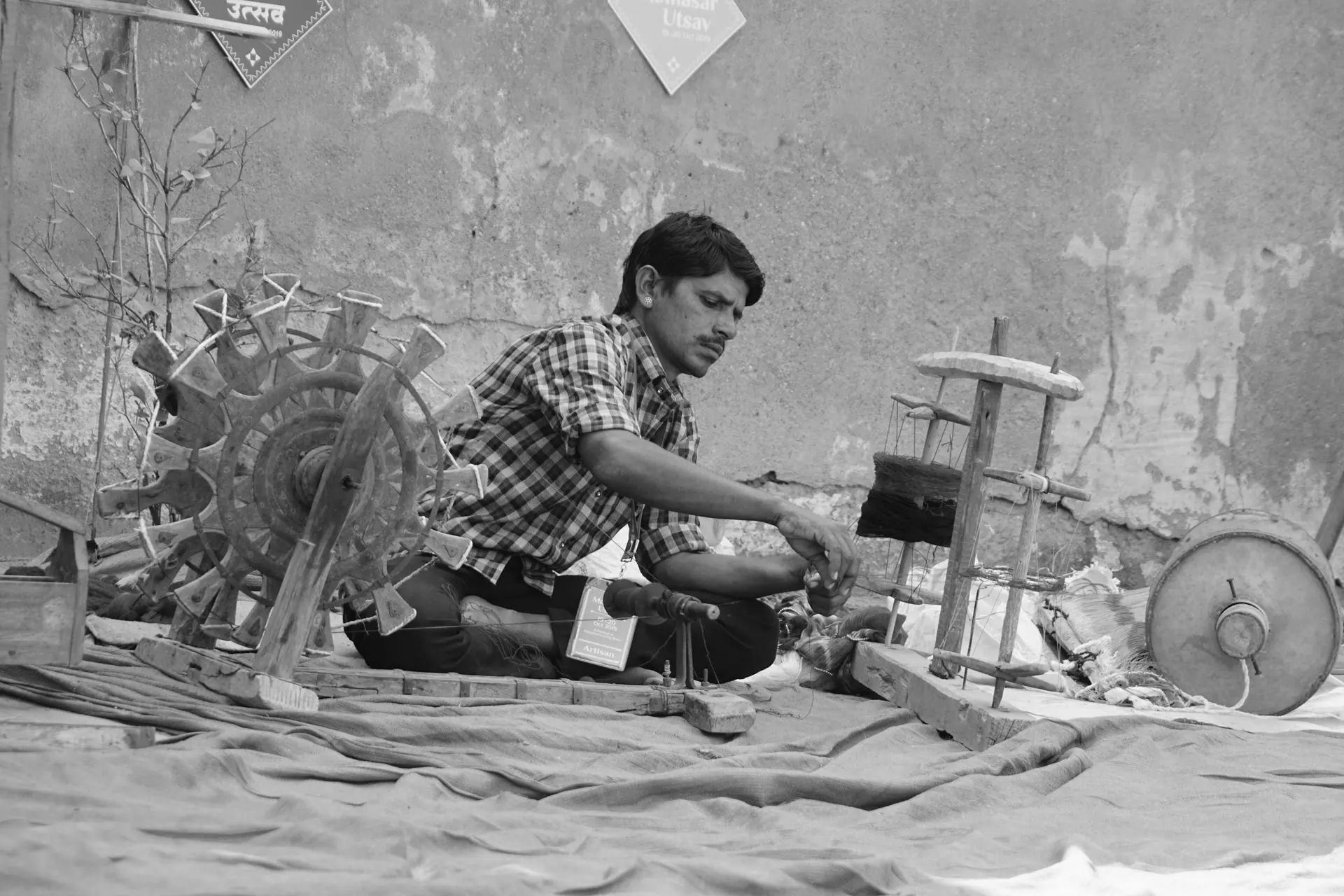
Village & Tribal Tourism
2 experiences
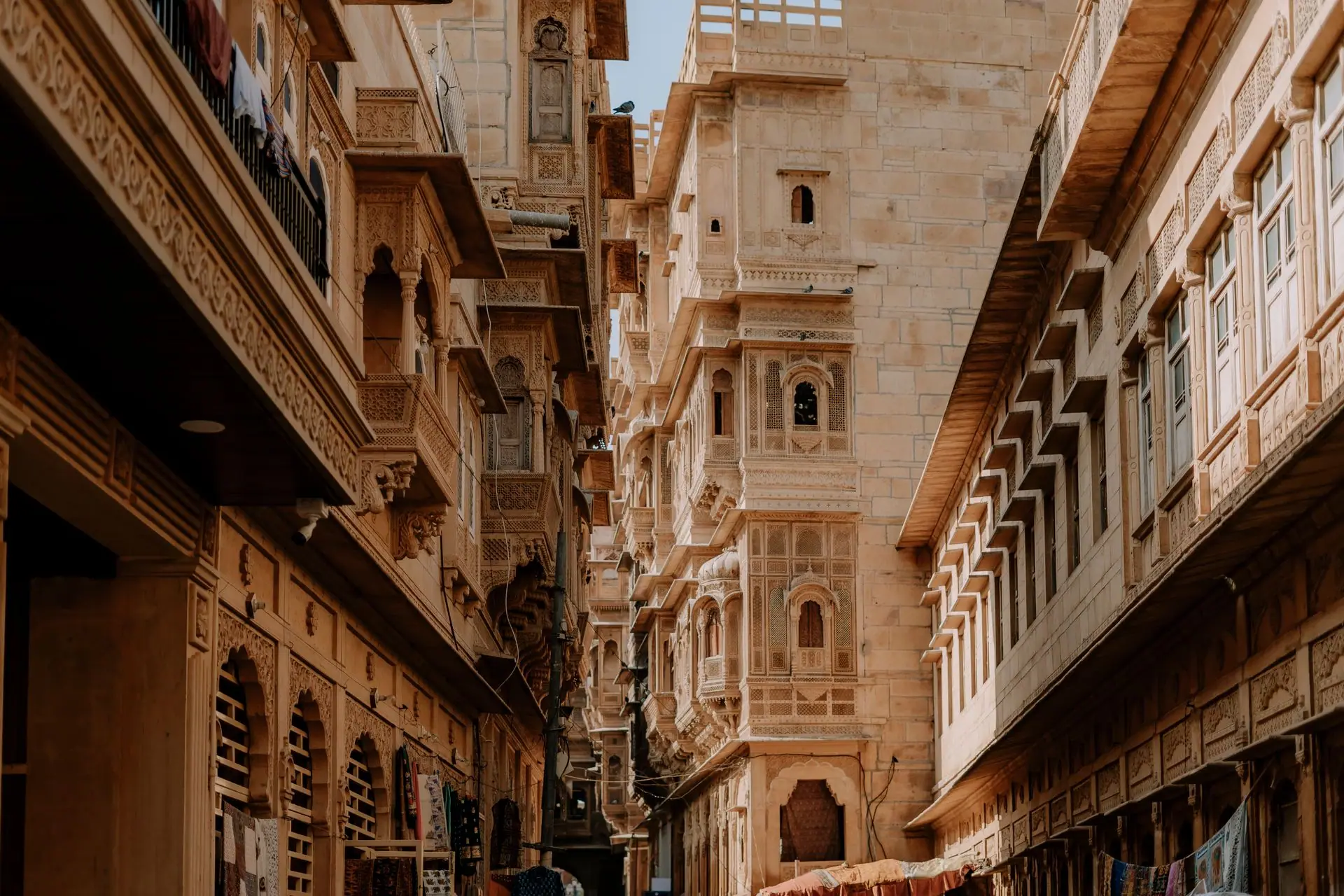
Glamping & Desert
1 experience
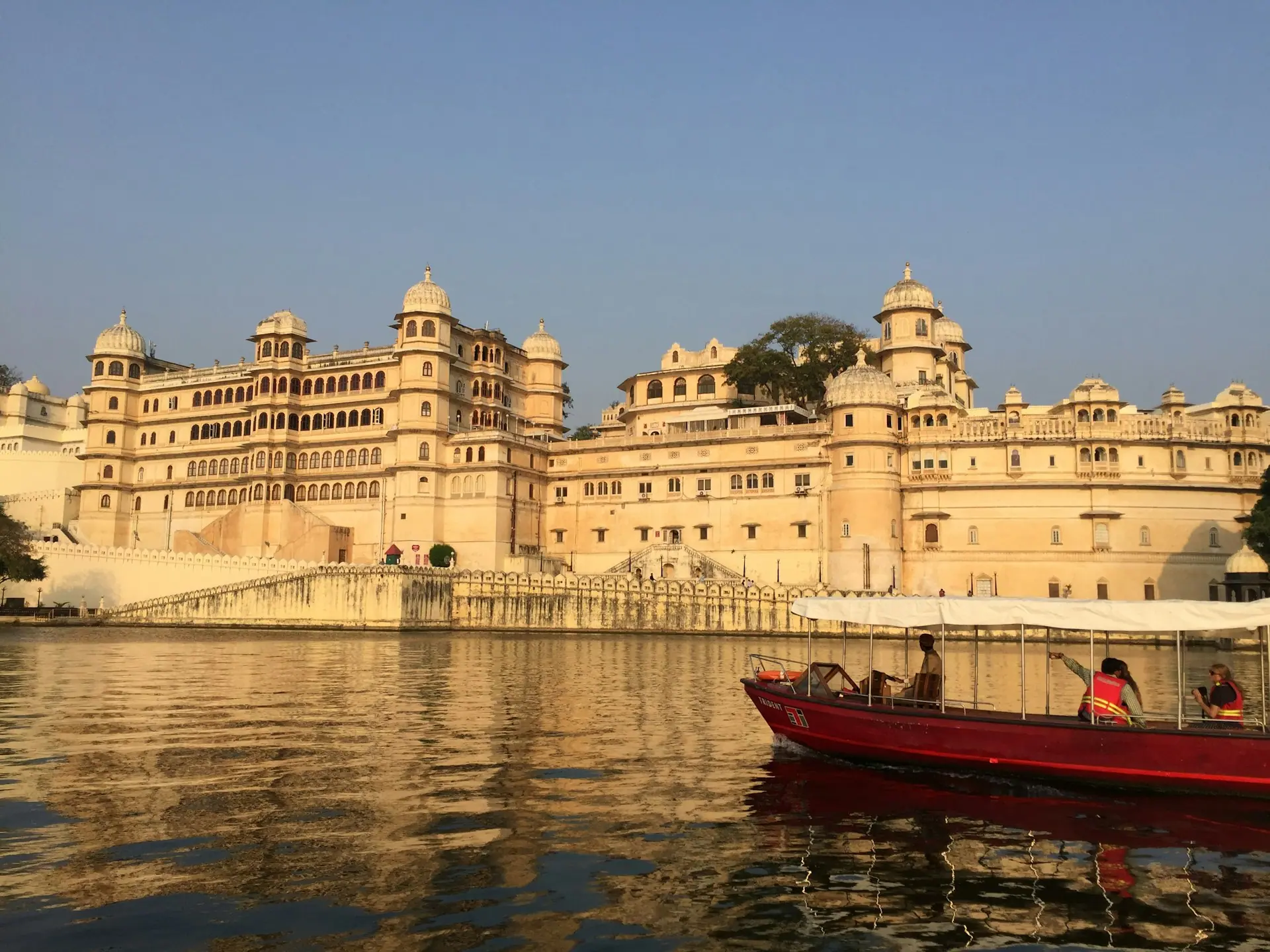
Honeymoon & Romance
3 experiences
VIP & Luxury
2 experiences
Plan a trip
Tailor-made quote from a specialist