
Skip to content

Andhra Pradesh Travel Guide: Temples, the Coast and the Eastern Ghats

Travel guide1 tour or experience

Andhra Pradesh stretches along the Bay of Bengal on India's east coast, backed by the hills of the Eastern Ghats. The main places to visit in Andhra Pradesh are its temple towns, Tirumala above Tirupati, Srisailam, Srikalahasti and Lepakshi; Visakhapatnam's beaches and the Araku valley; Amaravati's Buddhist site; and the Gandikota gorge. Plan by region, and travel between December and March if you can.

By Experience My India Editorial Team · Reviewed by Experience My India Editorial Team

See all 1 tour or experience in Andhra Pradesh →

Government-approved operatorApproved by the Ministry of Tourism, Government of India

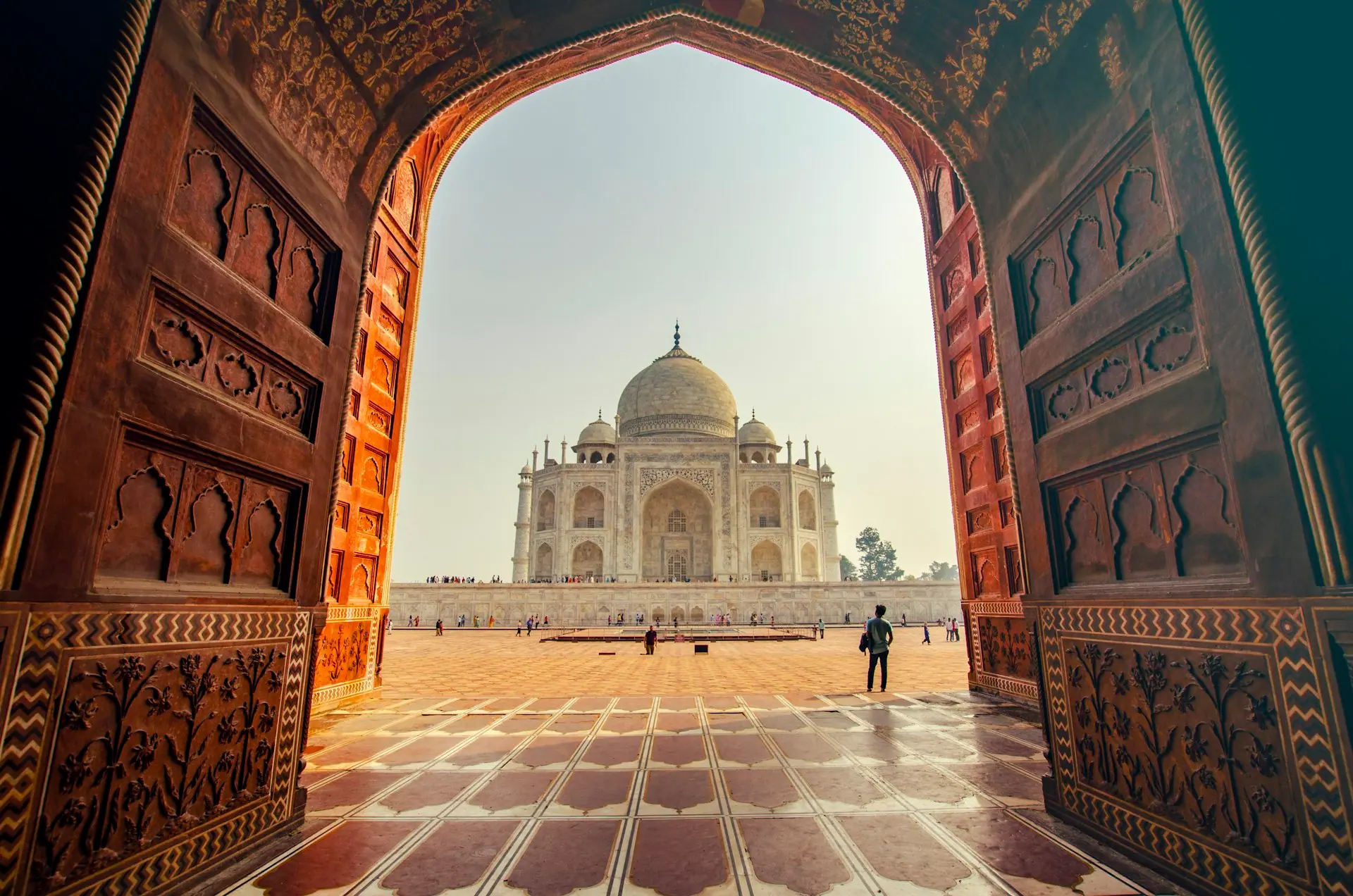
Places to visit in Andhra Pradesh
Places to visit in Andhra Pradesh

The state is large and its sights sit in clusters far apart: the south around Tirupati, the centre around Vijayawada and the Krishna and Godavari rivers, and the north-east around Visakhapatnam. Visakhapatnam is 755 km from Tirupati by road, and Vijayawada 412 km, by the Tirupati district administration's reckoning.

Tirupati and Tirumala

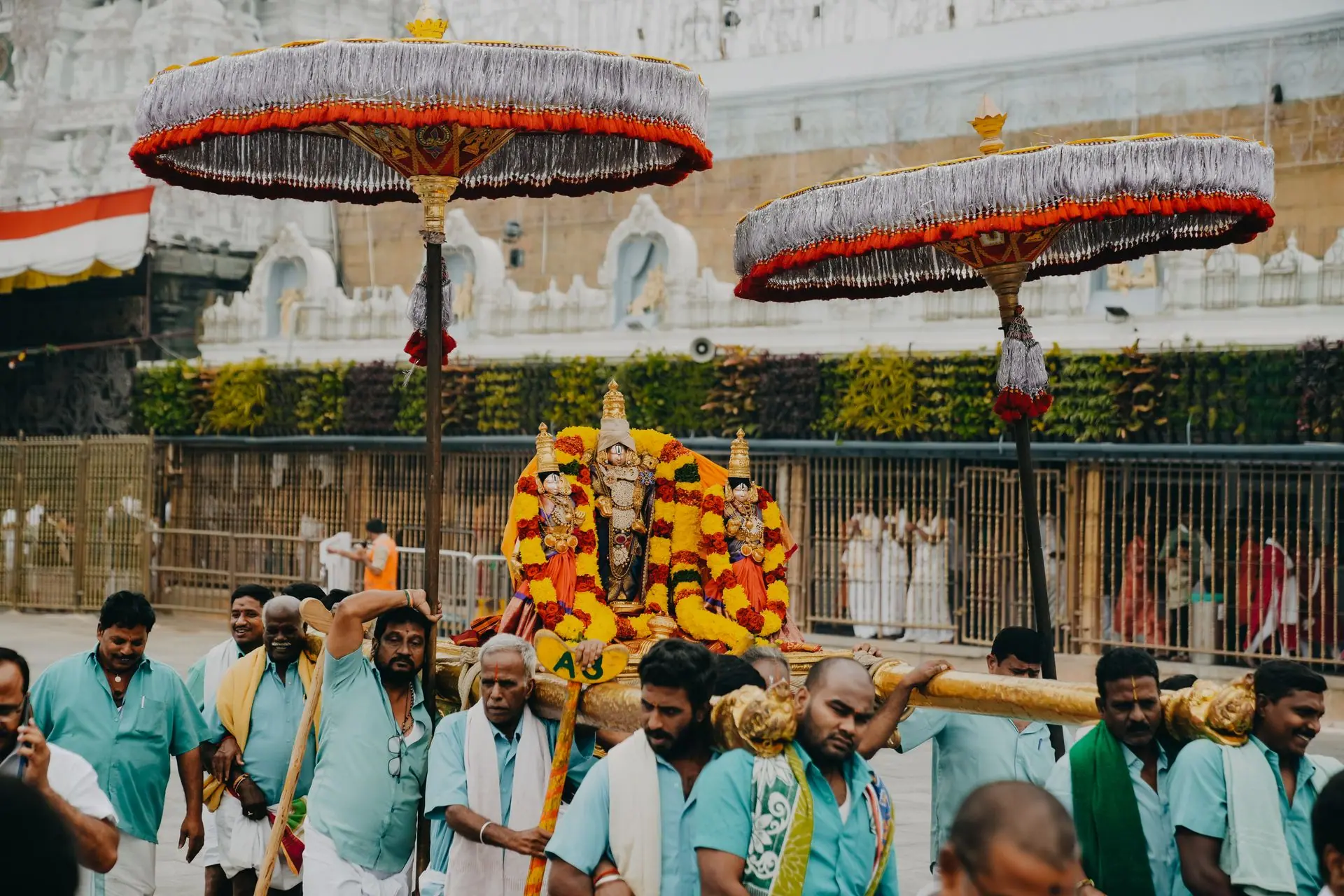
Lord Venkateswara's temple at Tirumala, in the hills above Tirupati, is the one AP Tourism calls the most visited in the world, and darshan there is run and booked by the Tirumala Tirupati Devasthanams (TTD). Around it are the goddess Padmavathi's temple at Tiruchanur, the older temples of Tirupati town, Chandragiri Fort and Srikalahasti. Our Tirupati travel guide covers each of them, along with TTD's darshan rules, the walk up the hill and a plan for the days.

Srisailam

The Brahmaramba Mallikarjuna Swamy temple stands in the forested Nallamala hills above the Krishna, and pilgrims revere it at once as a jyotirlinga of Shiva and a Shakti Peetha of the goddess. AP Tourism notes that it is one of the few temples where devotees may touch the linga. About 1 km away, Pathala Ganga is where pilgrims bathe in the river, and the Srisailam dam spans the Krishna nearby. Hyderabad has the nearest airport and Markapur the nearest railway station.

Lepakshi

The Veerabhadra temple at Lepakshi was most likely built by Virupanna, an officer of the Vijayanagara king Achyuta Raya, and his brother Veeranna, AP Tourism records; its earliest inscription is dated 1583. Its ceilings carry murals from the Mahabharata, the Ramayana and the Puranas, and one of its pillars hangs clear of the floor. About 200 m away sits a monolithic Nandi 15 feet high and 27 feet long. Hindupur, 14 km off, is the nearest station and Bengaluru the nearest airport; for the empire's capital, see our Hampi travel guide.

Gandikota and the Belum Caves

Gandikota takes its name from the Telugu words for gorge and fort: a medieval fort stands on the rim of a deep gorge cut by the Penna river in Kadapa district. Inside are the Madhavaraya Swamy temple and a mosque built by Mir Jumla when the Qutb Shahi kings held the fort, and AP Tourism says the best view of the gorge is from the boulders beyond the Ranganatha Swamy temple. Nearby, AP Tourism lists the Belum Caves, which it measures at 3,229 m, with buses from Tadipatri.

Visakhapatnam

Visakhapatnam sits between the Eastern Ghats and the Bay of Bengal, and most of its sights line a Beach Road that AP Tourism puts at 25 km. Near Ramakrishna Beach the submarine INS Kursura, commissioned in 1969 and retired in 2001, is now a museum; a ropeway climbs Kailasagiri hill for views over the city; and towards Bheemunipatnam, a former Dutch settlement, are the red sand hills of Erra Matti Dibbalu, a national geo-heritage monument on India's tentative list for UNESCO status. Simhachalam's Narasimha temple is about 16 km from the centre.

Araku valley and the Borra Caves

Araku is a valley in the Ananthagiri hills of the Eastern Ghats, about 114 km from Visakhapatnam and some three hours by road. The valley is known for its coffee plantations, and AP Tourism points visitors to its coffee museum and tribal museum. On the way, a 6 km detour leads to the Borra Caves, limestone caverns of stalactites and stalagmites that the geologist William King recorded in 1807; the entrance is at 705 m.

Vijayawada, Undavalli and Kondapalli

Vijayawada sits on the Krishna, and its landmark is the Kanaka Durga temple on Indrakiladri hill, which AP Tourism says draws huge crowds at Dussehra. Just outside the city, in Guntur district, the rock-cut Undavalli caves, protected by the Archaeological Survey of India and begun around the 6th century, rise in three levels to a reclining Vishnu. Boats run from Berm Park to Bhavani Island in the river until 6 pm, and Kondapalli, on the Hyderabad highway, makes the light painted wooden toys registered as Kondapalli Bommallu.

Amaravati

The Buddhist Mahachaitya at Amaravati, known locally as Dipaladinne, is one of the most prominent Buddhist pilgrimage sites in South India, AP Tourism says, with a history traced to the time of Ashoka. Colonel Colin Mackenzie brought it to notice in 1797, and many of its carved slabs went to the Madras Museum and the British Museum. The Archaeological Museum on the site, where photography is not allowed, shows what remains, and a 125-foot statue of the meditating Buddha stands in the town, about 32 km from Vijayawada Junction.

Rajahmundry and the Godavari

Rajahmundry is the town of the Godavari. AP Tourism notes that it is called the birthplace of Telugu, and that the poet Nannayya, the 'first poet', is believed to have written much of his work on its river ghat; every 12 years it is a main centre of the Godavari Pushkaralu. From the ghat you see the 4.2 km Rajahmundry–Kovvur bridge, a road deck laid over a railway. Upstream, AP Tourism lists day-long boat cruises through the Papikondalu hills, which close in on the river, and gives October to January as their season.

Horsley Hills

Hill stations are rare in Andhra Pradesh, as AP Tourism observes, and Horsley Hills, at about 4,000 feet near Madanapalle, is one of them. It is small enough to walk across in 15 minutes and is named after W. H. Horsley, the British Collector of Kadapa, who built a forest rest house on top in 1863 to escape the heat of the plains. Madanapalle, 27 km away, has the nearest railway station and Bengaluru the nearest airport, 144 km off; AP Tourism suggests December to February.

Coringa, Pulicat and the wetlands

Two coastal wetlands are worth a detour. Coringa Wildlife Sanctuary, about 20 km from Kakinada, protects mangrove creeks with some 35 kinds of mangrove plant, crossed by wooden walkways and by boat; AP Tourism says it is closed on Tuesdays. In the far south, Pulicat Lake, which the Tirupati district administration calls India's second-largest brackish-water lagoon, is shared with Tamil Nadu and draws flamingos, painted storks and grey pelicans; Sullurpeta, 10 km away, is the nearest station.

Things to do in Andhra Pradesh

Ride the train from Visakhapatnam up to Araku, which AP Tourism recommends for the hills, bridges and tunnels of the three-hour run, though it warns of crowded carriages at weekends and holidays. Walk down into the Belum Caves, which reach their deepest point, Pataalaganga, about 151 feet below the entrance. At the Borra Caves, AP Tourism notes, the tribal communities of the hills come to worship a natural linga every Shivaratri.

Time a visit to a ritual: Simhachalam's deity stays covered in sandalwood paste all year except for 12 hours before Akshaya Tritiya. In Kuchipudi village, in Krishna district, the Siddhendra Yogi Kalakshetram, founded in 1961, still teaches the dance that was born there. At table, try chitrannam, the spiced tamarind rice that AP Tourism singles out from the state's cooking.

Best time to visit Andhra Pradesh

Coastal Andhra Pradesh, IMD notes, gets rain from both monsoons. The southwest monsoon season runs from June to September, and between October and December the northeast monsoon brings about 31% of the coast's yearly rain, 56% of it in October. Those three months are also the main cyclone season over the Bay of Bengal, so leave slack in a coastal plan. Summer is the season of IMD's heat-wave warnings.

AP Tourism's own advice runs by place: October to March for Visakhapatnam and its beaches, November to February for the Araku valley, December to February for Horsley Hills, October to January for the Papikondalu cruises and October to February for Pulicat. Taken together, December to March is the safest window, with the rains and the cyclone season over and the heat still ahead.

How to reach Andhra Pradesh

Each region has its own airport. Visakhapatnam's flights now use the new Alluri Sitarama Raju International Airport at Bhogapuram, near Vizianagaram and 25 km from that town by AAI's figure; the old city airport no longer has scheduled flights. In the centre, AAI's airport at Gannavaram lies 25 km from Vijayawada on NH16, the Chennai–Kolkata highway, and Rajahmundry's is at Madhurapudi, about 16 km north of the city. Tirupati has its own airport at Renigunta, and Kadapa has one too. AP Tourism points travellers to Hyderabad for Srisailam and to Bengaluru for Lepakshi and Horsley Hills.

The railway reaches each region: Vijayawada Junction for the centre, Visakhapatnam Junction for the north-east, Rajahmundry for the Godavari and Tirupati for the south, and APSRTC buses link the towns. Our two Andhra Pradesh tour packages start in Tirupati: the Tirupati darshan tour is planned around TTD's booking system, and the 6 Days Tirupati Madurai Rameshwaram Kanyakumari Tour spends its first night there before continuing by private car into Tamil Nadu.

How many days in Andhra Pradesh

Treat the state as several trips rather than one. The south needs two or three days: Tirumala and Tirupati's temples first, then perhaps Srikalahasti or the Talakona falls. Three or four suit Visakhapatnam with a day for the Araku valley, about three hours each way. Two days cover Vijayawada with Amaravati, Undavalli and Kondapalli. Srisailam, Gandikota with Belum, and Lepakshi each need a day or two of their own. Seeing the south, the centre and the north-east together takes ten days or more, because of the distances between them.

For tailor-made routes, see every tour and experience in Andhra Pradesh and our Tirupati tour packages; to continue south, our Tamil Nadu travel guide picks up across the border.

Why book with Experience My India

  • Government-approved operator

    Approved by the Ministry of Tourism, Government of India

  • 500+ vetted local guides

    35+ destination specialists plan every trip by hand.

  • Human help, every day

    Mon–Sun, 9:00 AM – 9:00 PM IST · +91 73022 65809

  • No payment until you approve

    You receive a written quote first; nothing is charged to start planning.

Frequently asked questions

What is Andhra Pradesh famous for?

First for Tirumala, where AP Tourism describes Lord Venkateswara's temple as the world's most visited, and then for a long line of other temples, from Srisailam and Srikalahasti to Lepakshi and Simhachalam. It is also known for Buddhist sites such as Amaravati, for the Kuchipudi dance, named after the village where it began, for its spicy cooking, and for a long coastline with Visakhapatnam's beaches.

Does Andhra Pradesh have hill stations?

A few, all in the Eastern Ghats. The Araku valley, about 114 km from Visakhapatnam, is the best known, with coffee plantations and a tribal museum. Lambasingi, at about 1,025 m in the same hills, is being developed by APTDC for eco-tourism. Horsley Hills, near Madanapalle, has been a cool-weather retreat since the 1860s. AP Tourism suggests the winter months for all three.

Which beaches in Andhra Pradesh are worth visiting?

Most are around Visakhapatnam: Ramakrishna Beach in the city, Rushikonda, about 8 km from the port and the place for water sports, Yarada near Dolphin's Nose, and Bheemunipatnam at the northern end of Beach Road. Further south, AP Tourism recommends Suryalanka near Bapatla, a wide beach at its best from November to March, and Uppada near Kakinada, one of the longest beaches on that coast.

What are the famous things to buy in Andhra Pradesh?

Look for crafts and produce registered as Geographical Indications: Kondapalli wooden toys, Kalamkari cloth from Srikalahasti and Machilipatnam, Budithi bell and brass metal craft, handloom saris from Uppada, Mangalagiri and Venkatagiri, and Guntur Sannam chillies. Etikoppaka village, on the Varaha river, is known for lacquered wooden toys coloured without chemicals, AP Tourism says.

Which parts of Andhra Pradesh are easiest to reach from Bengaluru or Chennai?

From Bengaluru, Lepakshi and Horsley Hills are the natural choices, since AP Tourism names Bengaluru's as the nearest airport for both; Tirupati is 248 km by road. From Chennai, Tirupati is 134 km, and Pulicat Lake, which spans the border with Tamil Nadu, is about 90 km from Chennai's airport. The 6-day tour above links Tirupati with Madurai, Rameswaram and Kanyakumari by car.

What can you see in Andhra Pradesh in three days?

Pick one region. In the south, spend two days on Tirumala and Tirupati's temples and a third at Srikalahasti or Talakona. In the north-east, give a day to Visakhapatnam's Beach Road and Kailasagiri, a day to the Araku valley and the Borra Caves, and a third to Simhachalam and Bheemunipatnam. Around Vijayawada, the Kanaka Durga temple, Undavalli, Amaravati and Kondapalli fill three unhurried days.

Which month is best for tourism in Andhra Pradesh?

January and February are the most reliable: the northeast monsoon and the Bay of Bengal's cyclone season are over, and summer's heat has not begun. December is usually drier than October and November, and AP Tourism names November to February for the Araku hills. October brings the coast more rain than any other month of the northeast monsoon, and summer brings IMD's heat-wave warnings.

Tour packages in Andhra Pradesh

See all
Customer reviews

Experience My India is rated 4.3 on Tripadvisor. We publish guest reviews after each trip.

Read our reviews

Plan a trip

Tailor-made quote from a specialist