Skip to content

Kashmir Travel Guide: Places to Visit, Seasons and Planning

The places to visit in Kashmir start with Srinagar's Dal Lake and Mughal gardens, then the meadows of Gulmarg, Pahalgam and Sonamarg, each reached by road from Srinagar. Five to seven days covers them. Before you book, read your own government's travel advice for Jammu and Kashmir and check your insurance: the UK Foreign Office, for one, advises against all travel to the Union Territory.

By Gurudutt Kaushal · Reviewed by Gurudutt Kaushal

See all 6 tours and experiences in Kashmir →

Government-approved operatorApproved by the Ministry of Tourism, Government of India

Before you book: travel advice and insurance

Governments publish their own advice on Jammu and Kashmir, it changes, and it differs from one country to the next, so read your own government's current advice before you pay for anything. The UK Foreign, Commonwealth & Development Office (FCDO) advises against all travel to the Union Territory of Jammu and Kashmir, and names Pahalgam, Gulmarg, Sonamarg, the city of Srinagar and the Jammu–Srinagar national highway; its exceptions are air travel to and from Jammu city and travel within it. The same page warns that travel insurance may be invalidated by a trip made against its advice.

Then check your policy: whether it covers travel to Jammu and Kashmir, what it excludes and what it pays if you have to cancel. Our travel insurance guide explains what to look for. This guide does not rate how safe the region is; that advice is for governments and insurers to give. What it can do is set out what there is to see, when to go and how the routes work, so that you decide with the facts in front of you.

Places close and reopen, too. Budgam district, for example, publishes a dated list of closed tourist destinations on its website, so check the district administration or the state tourism department for the particular meadow or viewpoint before you plan a day around it.

Places to visit in Kashmir

Our Kashmir routes start at Srinagar, the summer capital of Jammu and Kashmir, and go on by road to one or two valleys. The distances below are the district administrations' own. Every trip we run here, tours and experiences together, is on our Kashmir tours and experiences page.

Srinagar and Dal Lake

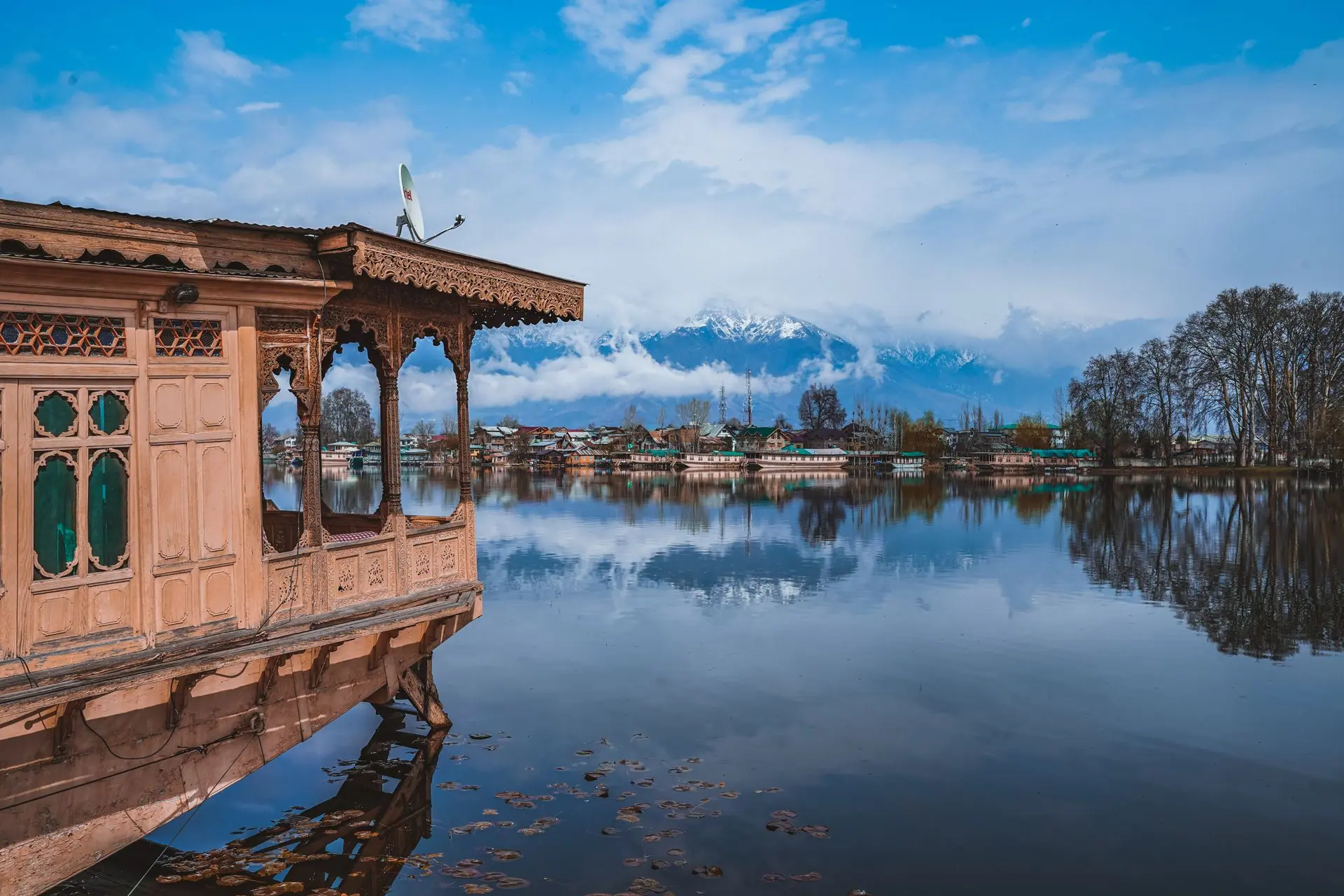
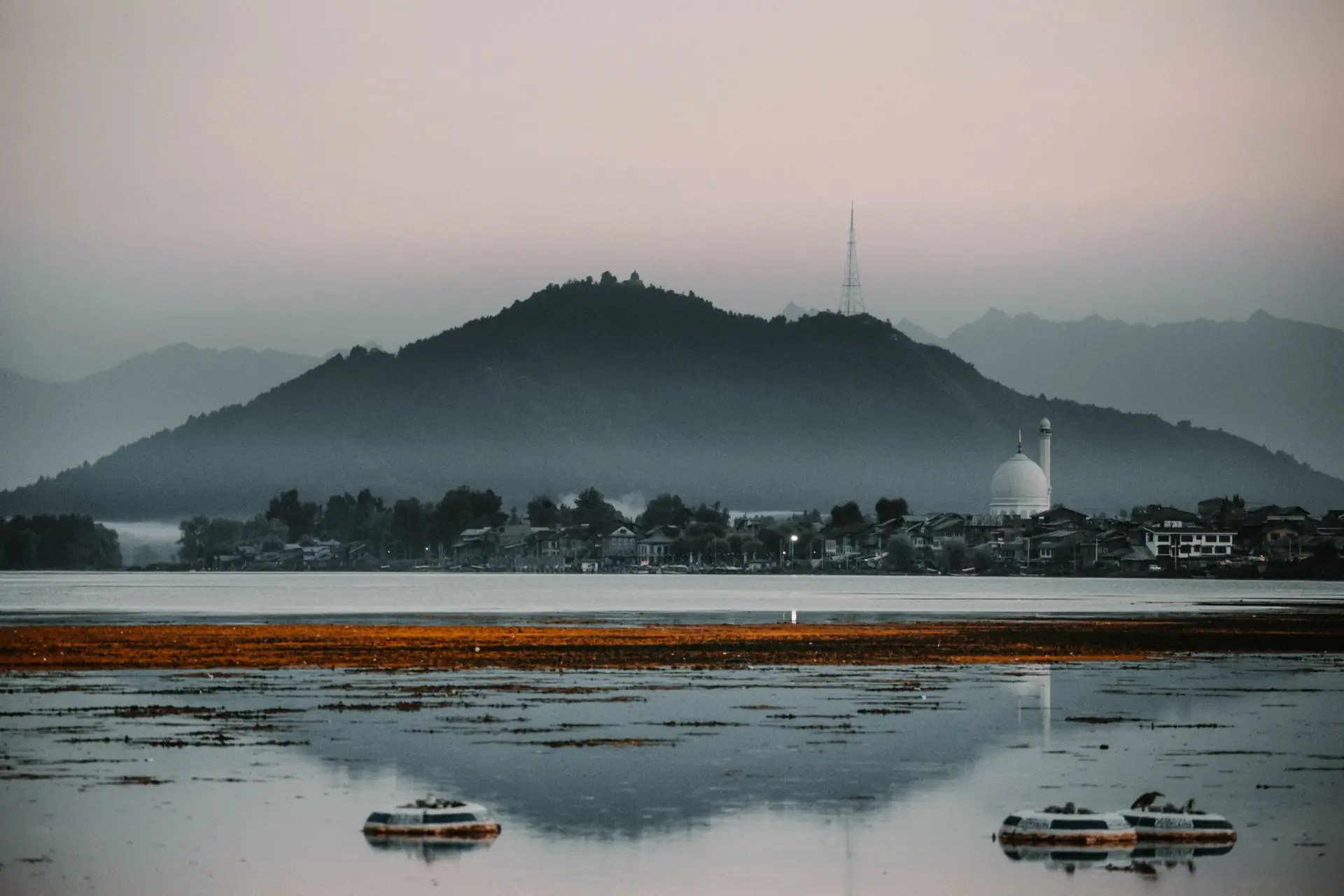
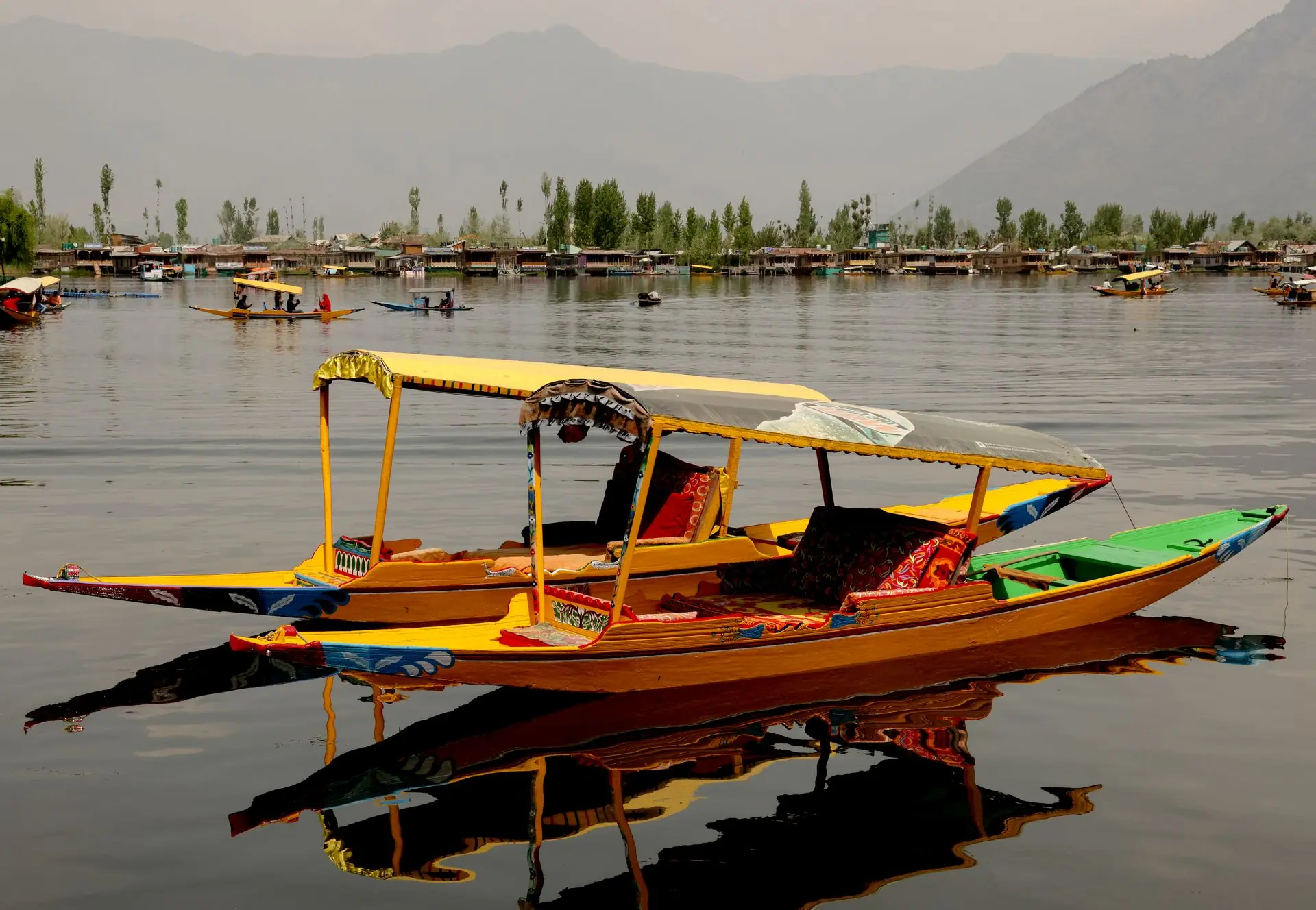
Dal Lake is the centre of Srinagar. It covers about 18 square kilometres within a wetland of 21.1 square kilometres, and causeways divide it into four basins: Gagribal, Lokut Dal, Bod Dal and Nagin. The floating gardens, called raad in Kashmiri, blossom with lotus in July and August, and houseboats line the shore; Incredible India, the Ministry of Tourism's site, says they arose when the British were barred from owning land. Nigeen Lake, joined to the Dal by a narrow strait, is deeper and less crowded, and has houseboats too. Our Srinagar travel guide covers the lake, the old city and the gardens in full.

The Mughal gardens and the Tulip Garden

Three Mughal gardens lie on the Dal's right bank, below the Zabarwan range. Jahangir made Shalimar Bagh for Nur Jahan in 1619, and its chinar trees colour in autumn. Asif Khan built Nishat Bagh in 1633 as twelve terraces on the lake's eastern side. Ali Mardan Khan built Chashma Shahi in 1632 around a spring; it is open from March to November and at full bloom in May and June. The Indira Gandhi Memorial Tulip Garden, about 30 hectares on seven terraces, opens for the tulip festival at the start of spring. The Department of Floriculture, Gardens and Parks sells e-tickets for garden entry online.

Gulmarg

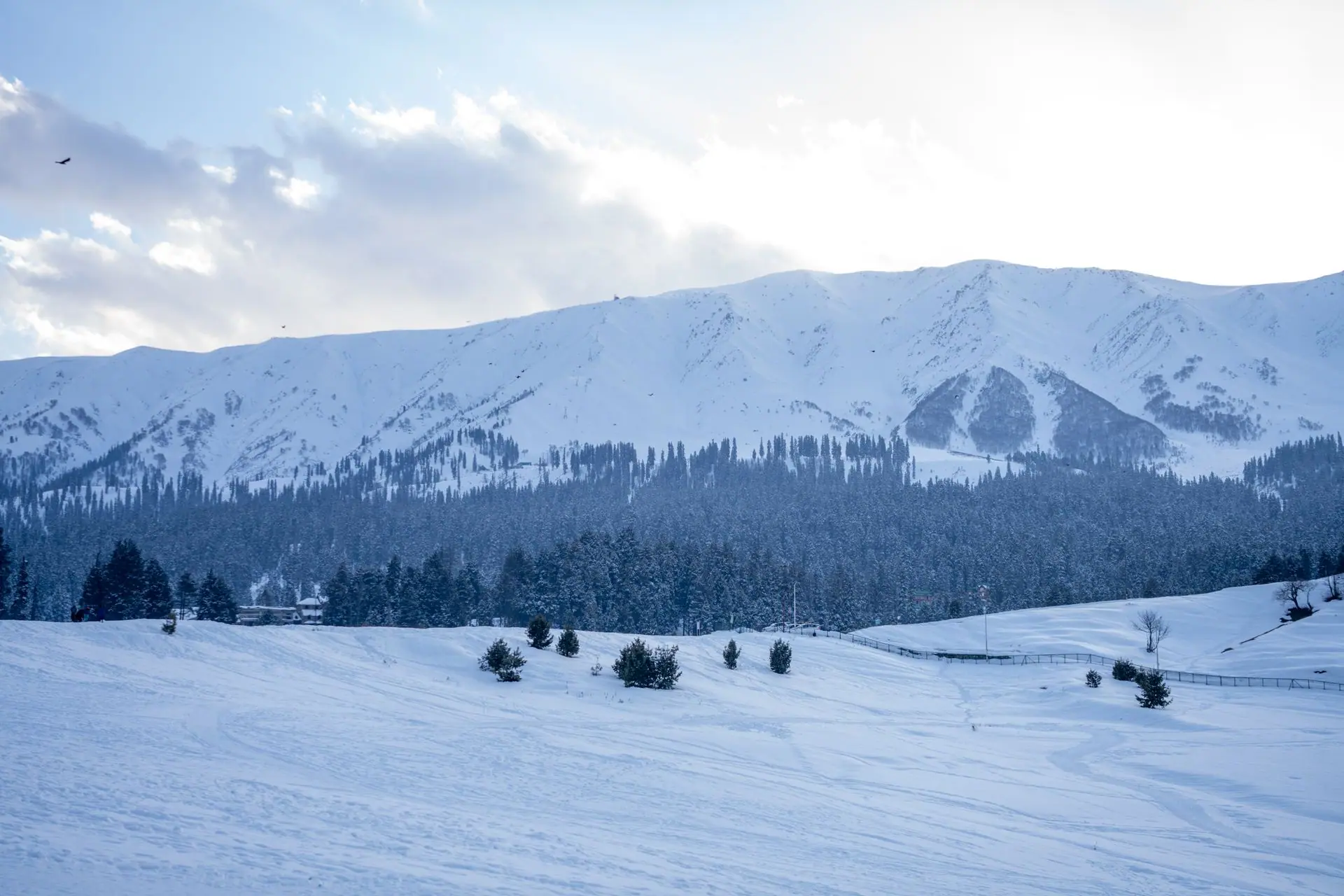
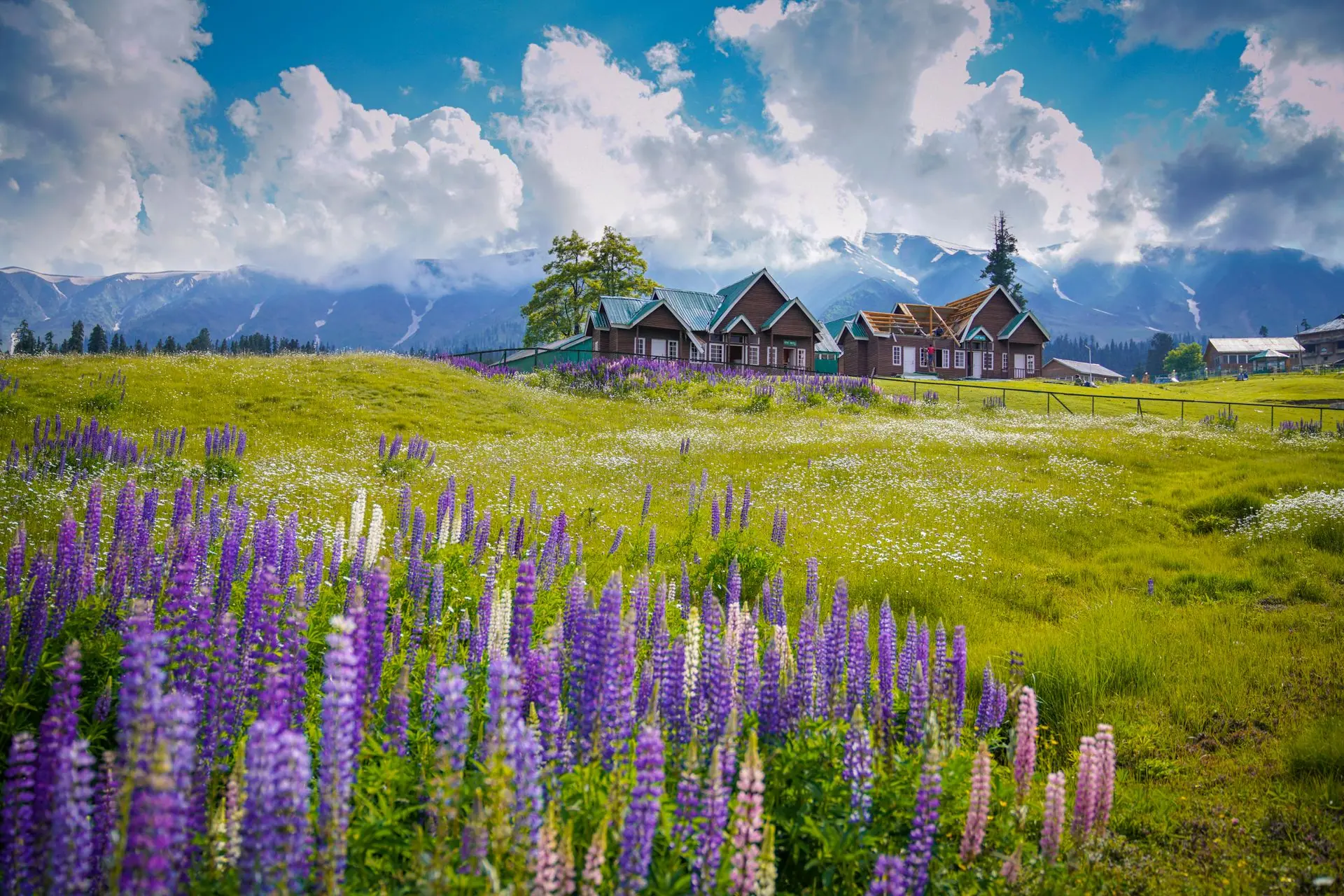
Gulmarg, the "meadow of flowers", is 54 to 60 km from Srinagar: the Baramulla district's page gives both figures and calls it an hour and a half by car. Winter turns it into a ski town, and the district describes the natural slopes as untouched and a challenge for ace skiers. The Gulmarg Gondola is a two-stage ropeway run by the Jammu & Kashmir Cable Car Corporation, whose first phase goes to Kongdori station and whose second goes higher; the corporation tells visitors to book on its official ticketing site and not to fall for touts. Our Gulmarg travel guide has the detail.

Pahalgam

Pahalgam lies in the north-east of Anantnag district, among hills of evergreen forest, beside the Lidder. The district puts it 96 km from Srinagar airport and calls it an important transit camp on the way to the Amarnath cave. Incredible India lists Betaab Valley and the Lidder's riverside walks, and the district's pages add the Aru Valley, which holds Katarnag Lake, the Lidderwat valley at the foot of the Kolahoi glacier, and Tulian Lake for trekkers. See our Pahalgam travel guide.

Sonamarg

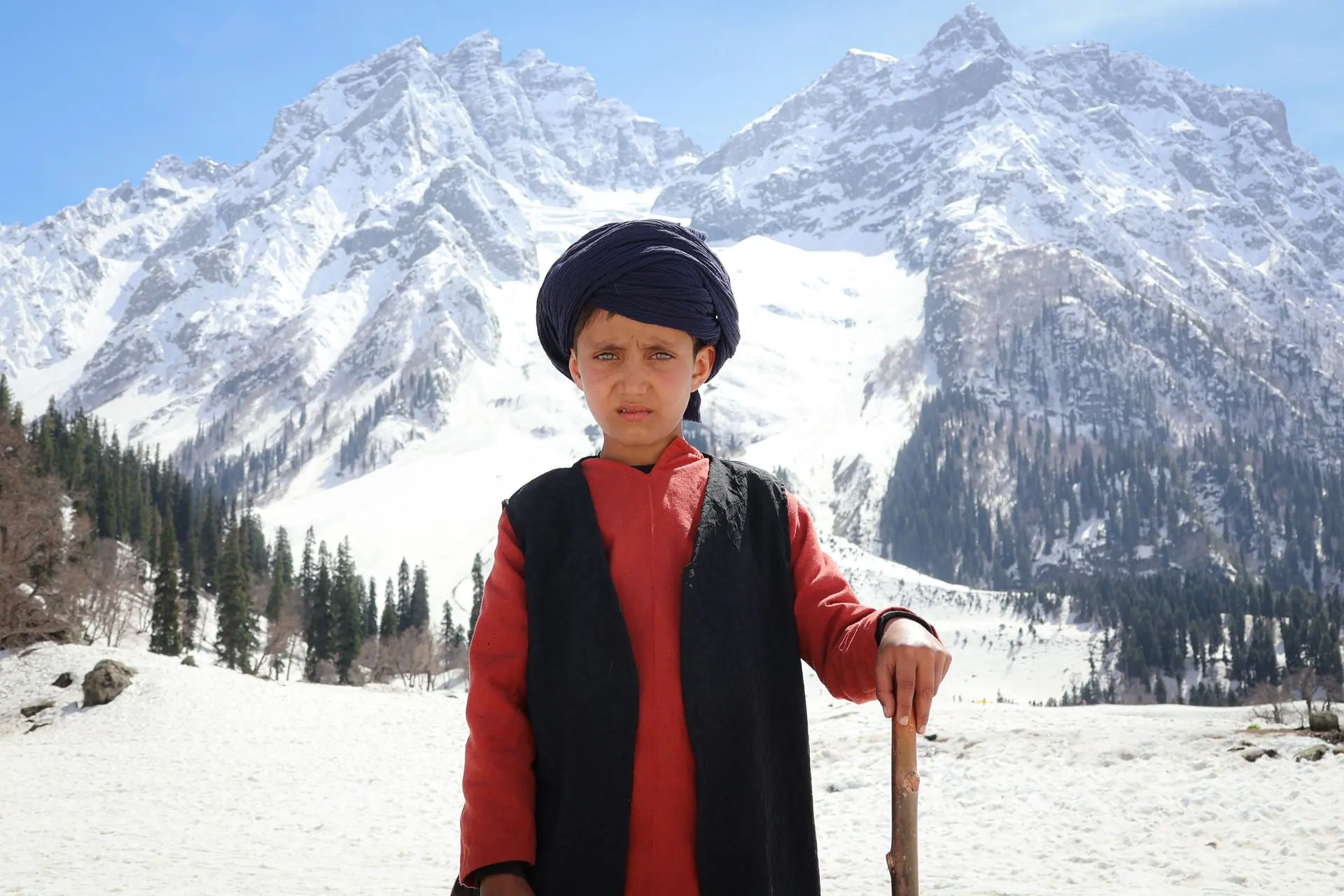
Sonamarg, the "meadow of gold", is 87 km from Srinagar, which Ganderbal district puts at under three hours by road. Visitors come for the Thajiwas glacier, where ponies can be hired and which the district calls a major attraction in the summer months, and trekkers set out from here to the lakes of Vishansar, Krishansar, Gangabal and Gadsar. In its note on the trip to the glacier, the district also says private vehicles are not allowed and visitors have to hire a taxi. The Sonamarg tunnel, inaugurated in January 2025, will maintain connectivity to Sonamarg through the winter, according to the Press Information Bureau. See our Sonamarg travel guide.

Yusmarg and Doodhpathri

Both lie in Budgam district. It gives Yusmarg, the "Meadows of Jesus", as 47 km from Srinagar in one place and 53 km in another, and lists walks, picnics and photography, with treks to Sang-e-Safed Valley and Nilnag Lake. Doodhpathri, the "Valley of Milk", is about 42 km away at around 8,957 feet. Snow shuts them in winter: the district says Doodhpathri is inaccessible for several months, and that after snowfall Yusmarg can stay cut off from the valley for weeks.

Dachigam National Park

Dachigam is 22 km from Srinagar and covers 141 square kilometres. The Srinagar district calls it the home of the hangul, or Kashmir stag, and the only area where that deer is found. It describes the park as open throughout the year, with April to August the best time to visit. The page lists no entry rules and dates from 2018, so check with the park authorities before you go.

Pampore and the saffron fields

Kashmir saffron gained a GI tag in 2020. Incredible India's saffron feature names Pulwama, Budgam and Kishtwar as the key producing districts, notes the sign at the entrance to Pampore that reads "Welcome to the Saffron town of India", and puts the flowering at around late October. That is the month to go for the purple fields.

South Kashmir: the springs and the Martand Sun Temple

Anantnag, about 55 km from Srinagar, is the gateway. Its district lists three springs with gardens: Verinag, about 26 km from Anantnag town, where Jahangir had an octagonal pavement raised around a spring of deep blue water; Achabal, 9 km from the district headquarters, whose water runs through a terraced garden in three channels; and Kokernag, 10 km from Anantnag, below a pine-covered hill. The district also lists the Martand Sun Temple, a shrine dedicated to Surya, over five miles from Anantnag.

Things to do in Kashmir

A shikara ride on Dal Lake and a night on a houseboat are the classic Srinagar experiences. Our shikara ride and houseboat stay includes a night or more on a heritage houseboat, private shikara rides and a local guide. Give the feast its own evening with the Kashmiri wazwan feast. In winter, Gulmarg means skiing and the gondola, which our Gulmarg guide covers. Every trip we run in Kashmir is listed on the Kashmir tours and experiences page.

Best time to visit Kashmir

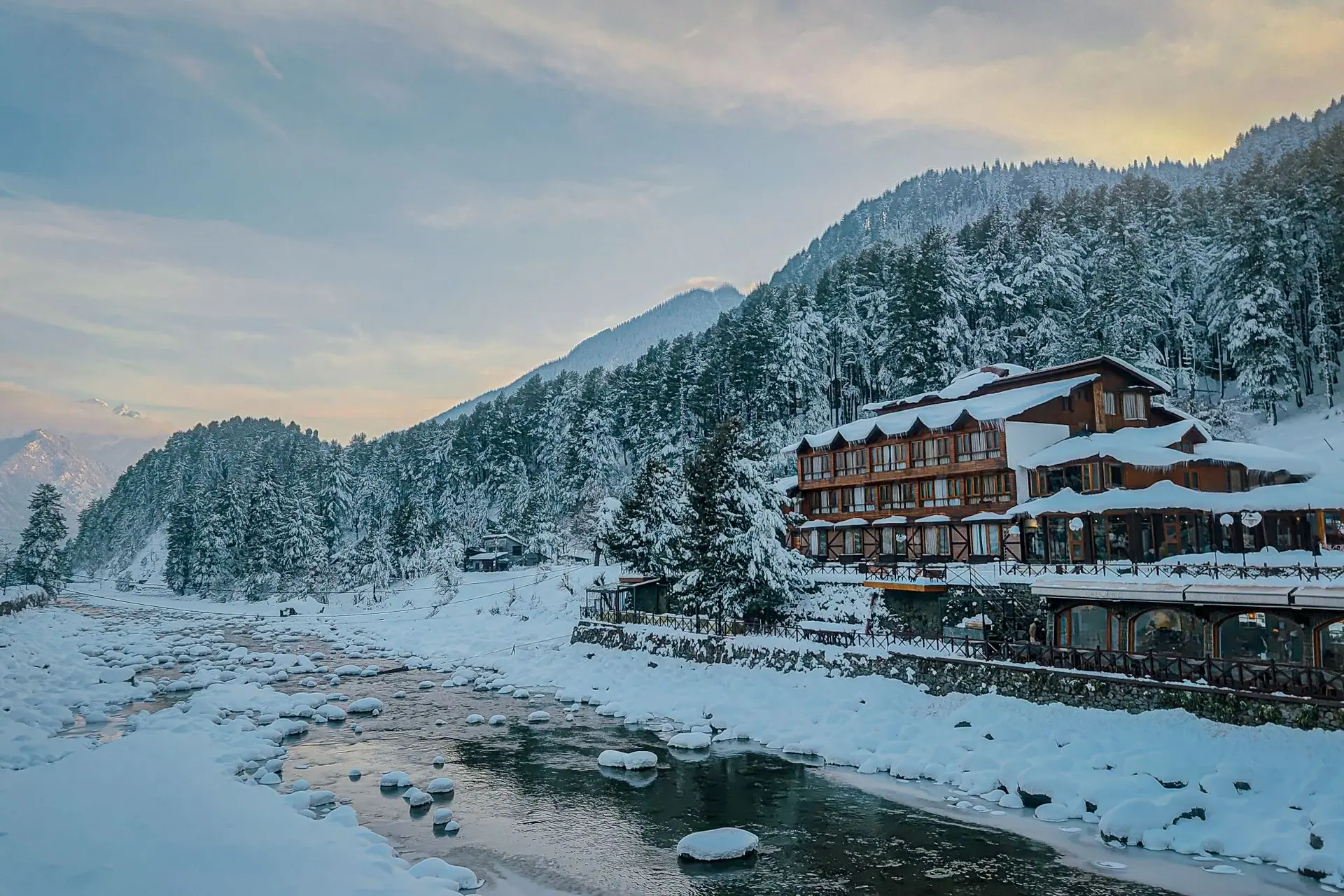
Kashmir's seasons differ sharply. IMD's 1991–2020 normals put the average daytime high in Srinagar at 30.0°C in July and 7.1°C in January, with January nights at −1.9°C. In Gulmarg, January nights average −7.7°C. March is the wettest month at Srinagar, Pahalgam and Gulmarg, and October the driest at all three. Spring brings the gardens, the tulip festival and, Incredible India says, wildflowers on Pahalgam's meadows; autumn brings the chinar colour and, in late October, the saffron flowers. In winter Gulmarg is under snow, and the Srinagar district says the lake freezes when winter temperatures sometimes reach −11°C. The Amarnath Yatra falls in July and August, and Anantnag district advises booking accommodation well in advance then. Our month-by-month guide to the best time to visit Kashmir gives IMD's figures for every month.

How to reach Kashmir

  • By air: Sheikh ul-Alam International Airport (SXR) at Humhama, Budgam, is about 14 km from the city centre, a drive of about 30 minutes. The Srinagar district lists daily flights from Delhi, Mumbai, Bengaluru, Hyderabad, Pune and Kolkata.
  • By train: Srinagar Railway Station is on the Udhampur–Srinagar–Baramulla Rail Link, which runs from Udhampur through Katra, for Vaishno Devi, to Banihal, Qazigund and Srinagar. All India Radio gives the Vande Bharat between Jammu Tawi and Srinagar as about 4 hours 55 minutes. Book on IRCTC and check the current timetable.
  • By road: NH-44 runs 290 km from Jammu, which the district puts at 6 to 7 hours, through the 8.5 km Banihal–Qazigund road tunnel, open throughout the year. Delhi is about 800 km, 15 to 18 hours. The district warns that landslides or snowfall can affect NH-44, particularly from November to March, and advises checking J&K Traffic Police advisories. The FCDO names the Jammu–Srinagar national highway in its advice against travel.

How many days in Kashmir

Five to seven days suits a first visit. Our Kashmir Tour — 6 days spends two nights in Srinagar, one in Pahalgam, one in Gulmarg and a last night in Srinagar, with a day for the Thajiwas glacier viewpoint at Sonamarg on day five. By the district figures, Gulmarg is 54 to 60 km from Srinagar and Sonamarg 87 km, under three hours each way, so ask us how that Sonamarg day is run, particularly as the Ganderbal district's Sonamarg page says private vehicles are not allowed and visitors have to hire a taxi, in its note on the trip to the Thajiwas glacier. Our Kashmir honeymoon typically runs five to seven days, built around a houseboat on Dal Lake, shikara rides and the Mughal gardens, often with an extension to Gulmarg or Pahalgam.

To add Ladakh, 10 Days Ladakh with Srinagar spends its first two nights in Srinagar and the third in Srinagar or Leh, then goes by the Srinagar–Leh highway or a short flight, depending on the season. The Srinagar district gives the road as 434 km and 9 to 10 hours, closed in winter and typically opening in May; Leh district says it is open from May to November or December. The dates change every year, and airlines also fly from Srinagar to Leh.

Getting around and where to stay

The Srinagar district recommends private cars and SUVs for the Jammu–Srinagar route, says rental cars are available at the airport and in the city, and advises good ground clearance for side trips to Pahalgam, Gulmarg or Sonamarg. Our six-day tour lists a private car and driver. In Srinagar the choice is a houseboat on Dal or Nigeen Lake or a hotel on shore. Houseboat standards vary, and when you book through us the boat is matched to what you expect. See our Kashmir tour packages for the routes we run.

Kashmiri food and what to buy

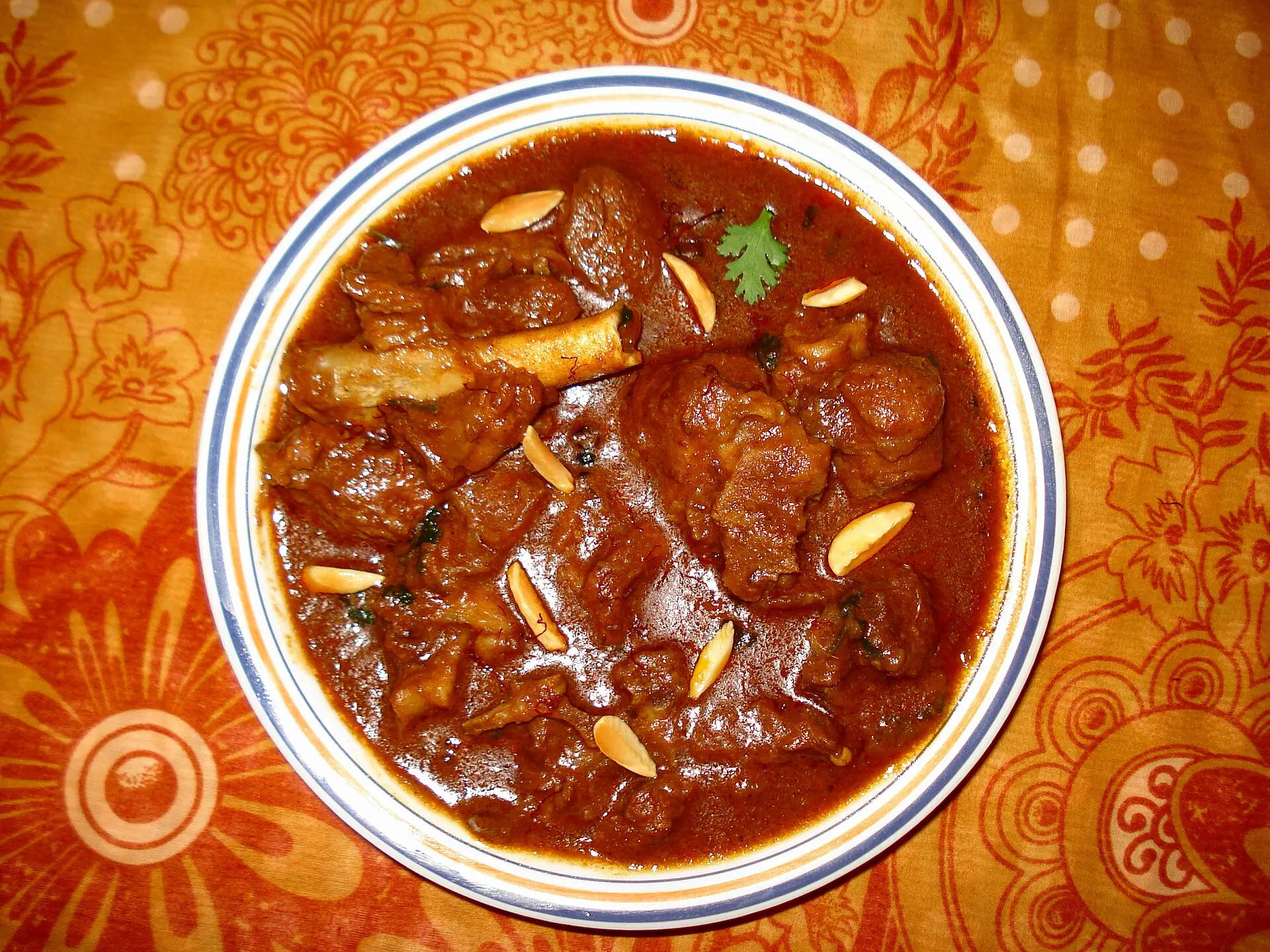
Kashmir's traditional feast is the wazwan, a multi-course meal. Our wazwan experience describes rogan josh, lamb on the bone in a chilli and fennel gravy; yakhni, a yoghurt curry; gushtaba, pounded meatballs in a yoghurt gravy; saffron pulao; lotus-stem nadru; and sheermal bread, finished with kahwa, saffron-scented green tea. In the old city of Srinagar, Incredible India lists Kashmiri handicrafts, pashmina shawls, spices and dry fruits, and says the Kashmir Government Arts Emporium sells copperwork, rugs, embroidered bedcovers and carved furniture.

Why book with Experience My India

  • Government-approved operator

    Approved by the Ministry of Tourism, Government of India

  • 500+ vetted local guides

    35+ destination specialists plan every trip by hand.

  • Human help, every day

    Mon–Sun, 9:00 AM – 9:00 PM IST · +91 73022 65809

  • No payment until you approve

    You receive a written quote first; nothing is charged to start planning.

Frequently asked questions

What should I check about safety before booking Kashmir?

This guide gives no verdict, and no operator should stand in for your own government's advice. The UK Foreign, Commonwealth & Development Office advises against all travel to the Union Territory of Jammu and Kashmir, including Pahalgam, Gulmarg, Sonamarg and the city of Srinagar. Other governments publish their own advice, which differs and changes, so read yours, and confirm that your insurer will cover the trip.

Do you need travel insurance for Kashmir?

Take insurance for any trip, and read the policy for Jammu and Kashmir. The FCDO warns that travel insurance could be invalidated if you travel against its advice, so ask your insurer in writing whether the policy covers the region and what you plan to do there, such as skiing at Gulmarg or trekking, and what it pays if a road or site closes. Our travel insurance guide lists what to check.

How many days do you need in Kashmir?

Five to seven days works for a first visit: two or three nights in Srinagar, then Pahalgam and Gulmarg, with Sonamarg as a day out. Our six-day tour follows that shape. Adding Ladakh points to a ten-day trip like ours: the Srinagar–Leh highway is 434 km and 9 to 10 hours by road and closes in winter, when you would fly.

How do you get around Kashmir?

The Srinagar district recommends private cars and SUVs for the Jammu–Srinagar route, says rental cars are available at the airport and in the city, and advises good ground clearance for side trips to Pahalgam, Gulmarg or Sonamarg. Local rules apply at some sights: the Ganderbal district's Sonamarg page says private vehicles are not allowed and visitors have to hire a taxi, in its note on the trip to the Thajiwas glacier. Our six-day tour lists a private car and driver, so ask how each day is run.

What is a wazwan?

Wazwan is Kashmir's traditional multi-course feast, rich, slow-cooked and largely meat-based. Our wazwan experience describes it as seated around shared dishes, often on a houseboat, with vegetarian dishes of paneer and vegetables on notice. Book the Kashmiri wazwan feast as an evening of its own rather than between sights.

Where does Kashmir saffron grow?

Kashmir saffron gained a GI tag in 2020. Incredible India names Pulwama, Budgam and Kishtwar as the key producing districts, and Pampore greets visitors with a sign calling it the saffron town of India. The flowers bloom around late October and are picked by hand, and the stigmas are then separated and dried. Saffron also flavours kahwa.

Are all of Kashmir's tourist places open?

Not always. District administrations publish their own lists of closed destinations, as Budgam does, and snow shuts places such as Doodhpathri for months and can cut Yusmarg off for weeks. Before you plan a day around a meadow or viewpoint, check the district's notice or ask your operator whether that place is open on your dates.

Tour packages in Kashmir

See all
Experiences in Kashmir

See all

Related guides

From the journal: Kashmir

Customer reviews

Experience My India is rated 4.3 on Tripadvisor. We publish guest reviews after each trip.

Read our reviews

Plan a trip

Tailor-made quote from a specialist