
Jaisalmer Travel Guide: The Living Fort, Havelis and the Dunes
Jaisalmer is the Thar Desert city built around a lived-in sandstone fort founded in 1156, 286 km by road from Jodhpur. The places to visit in Jaisalmer fill two or three days: the fort and its Jain temples, the carved havelis, Gadisar Lake and Bada Bagh, then a night on the Sam or Khuri dunes. October to March is the comfortable season.
By Gurudutt Kaushal · Reviewed by Gurudutt Kaushal
See all 2 tours and experiences in Jaisalmer →
Government-approved operatorApproved by the Ministry of Tourism, Government of India
Places to visit in Jaisalmer
Things to do in Jaisalmer
Best time to visit Jaisalmer
Come between October and March: Rajasthan Tourism's camping season covers those months, and Incredible India narrows its advice to November to March. IMD's 1991–2020 averages show how the season changes. October still averages 36°C by day and November 31°C; from December to February days average 23–27°C and nights fall to 9–13°C, so bring warm layers for the desert. From April the heat climbs to an average high of 42°C in May. Rain is scarce all year: even July and August, the wettest months, average under 75 mm each.
How to reach Jaisalmer
Jaisalmer lies a long way west: 793 km from Delhi by road, 286 km from Jodhpur and 330 km from Bikaner. By train, Jaisalmer station (JSM) has only a few direct services from Delhi. By air, the city's civil airport, run by the Airports Authority of India, has had direct flights from cities including Jaipur, Delhi, Mumbai, Bengaluru and Surat, according to Rajasthan Tourism, but schedules change, so check what is flying for your dates; Jodhpur's airport is the alternative. Buses and taxis connect Jaisalmer with Jodhpur, Bikaner and Jaipur. The Rajasthan Grand Tour covers the road from Jodhpur in about five to six hours.
How many days in Jaisalmer
Plan two or three days and spend one of the nights on the dunes.
Day 1: the fort and its Jain temples in the morning, the Patwon, Salim Singh and Nathmal havelis after lunch, and Gadisar Lake and Vyas Chhatri at the end of the day.
Day 2: Bada Bagh and Kuldhara, then out to Sam or Khuri for a camel ride at sunset and a night at a camp.
Day 3: the War Museum, Longewala and Tanot, a long day towards the border, or the Desert National Park.
Our Rajasthan Grand Tour gives Jaisalmer two nights in town and one at a desert camp; all our options are on the private Jaisalmer tour packages page, and the Rajasthan travel guide covers the rest of the state.
Getting around and tips
Walk the fort and the old city; auto-rickshaws cover the town, and for the dunes, Kuldhara and the border road you need a car or a tour. Inside the fort people live and work, so treat its lanes as a neighbourhood and ask before photographing residents. Carry water and sun protection for the dunes, and warm layers for winter nights. Beyond Tanot, the border area can be visited only with prior permission from the authorities.
Why book with Experience My India
Government-approved operator
Approved by the Ministry of Tourism, Government of India
500+ vetted local guides
35+ destination specialists plan every trip by hand.
Human help, every day
Mon–Sun, 9:00 AM – 9:00 PM IST · +91 73022 65809
No payment until you approve
You receive a written quote first; nothing is charged to start planning.
Frequently asked questions
What is inside Jaisalmer Fort, and how long do you need there?
The fort is a lived-in quarter, so its lanes are the sight: homes, shops, guesthouses and cafés among carved havelis. The seven Jain temples, built between the 12th and 15th centuries, are its main monument, and they open to visitors only in the morning. Give the fort and temples a morning, then see the havelis in the town below after lunch.
What is there to do in Jaisalmer in the evening?
Catch the sunset from Vyas Chhatri or Bada Bagh, then watch the laser and water show at Gadisar Lake. Many hotels and desert camps put on Rajasthani folk music and dance every evening, and rooftop restaurants look out over the city. Out at Sam, the camps' programmes of music, dance and puppetry run from late afternoon into the night.
Sam or Khuri: which dunes should you choose?
Sam, about 40 km from the city, is the livelier choice, with several tented camps, camel and jeep safaris, quad bikes and evening shows; Incredible India warns that it takes on a carnival atmosphere from late afternoon until the next morning. Khuri, a village surrounded by dunes, is quieter and more secluded, with camel rides and resort camps. Pick Sam for the full show and Khuri for solitude.
Can you visit the India–Pakistan border from Jaisalmer?
Up to a point. The Tanot Mata temple, about 120 km from Jaisalmer and run by a Border Security Force trust, and the Longewala war memorial, about 40 km from Tanot, are open to visitors. Incredible India says the border area itself, about 20 km beyond the temple, can be visited only with prior permission from the authorities. Plan it as a full day with your own car.
Is Kuldhara worth the trip?
If you like ruins with a story, yes, and it is only about 18 km from Jaisalmer. The village was abandoned in the 1800s, and the legend of its people leaving in one night, never to be traced, draws visitors from around the world, according to Rajasthan Tourism. Expect empty houses and lanes rather than a museum; an hour or two is plenty.
Should you choose Jaisalmer or Jodhpur?
See both if you can: they are 286 km apart, and our Rajasthan Grand Tour drives from one to the other. If you must pick one, Jodhpur, the Blue City below Mehrangarh Fort, has an airport about 5 km from the centre with flights to Delhi and Mumbai, so it suits a short trip. Jaisalmer, further into the Thar, is the choice for a lived-in fort, carved havelis and a night on the dunes. Our Jodhpur travel guide covers the Blue City.
Where should you shop in Jaisalmer?
Sadar Bazaar and Bhatia Bazaar sell ghagras, dupattas and turbans in mirror work, appliqué, tie-dye and block print, along with embroidered juttis (leather shoes) and camel-leather goods. For silver, gold and gemstone jewellery, go to Sonaron ka Bas.
Tour packages in Jaisalmer
See all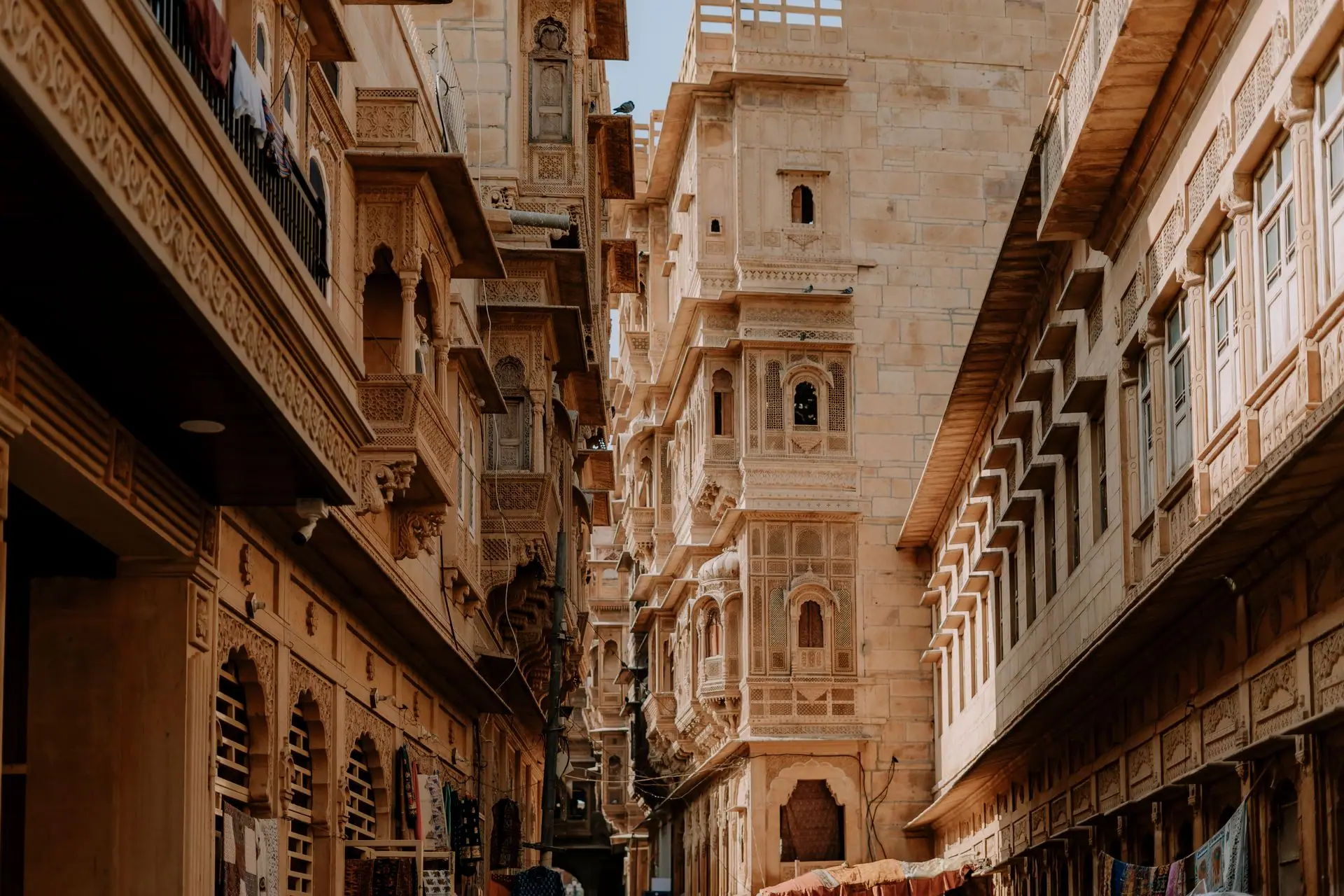
3 Days Jaisalmer Tour Package
3 Days Jaisalmer Tour Package
3 days / 2 nights • Private guide and vehicle
Price on request
Experiences in Jaisalmer
See all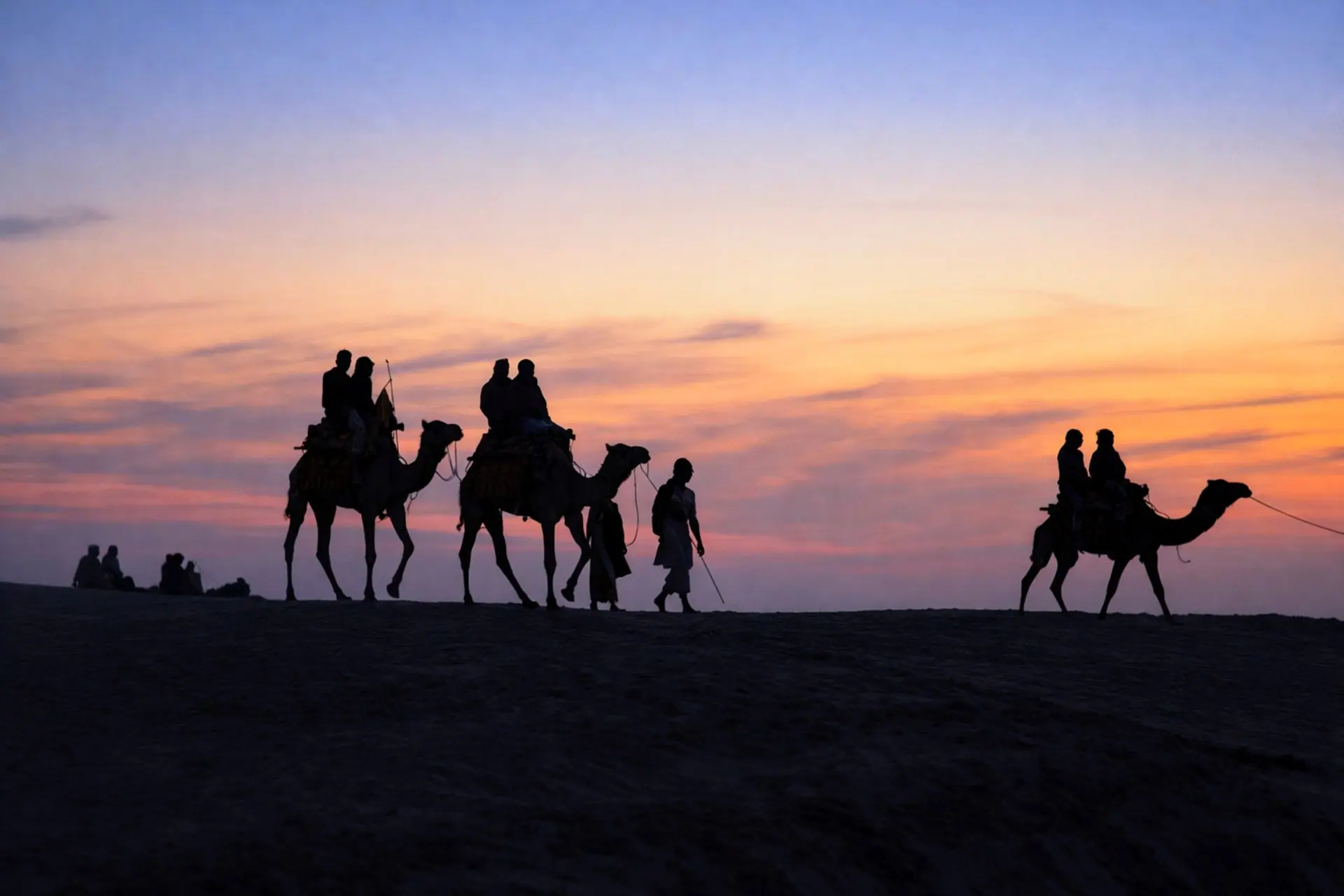
Jaisalmer
Thar Desert camel safari
Private vehicle and guide for the desert transfer
Price on request
More places in Rajasthan
See all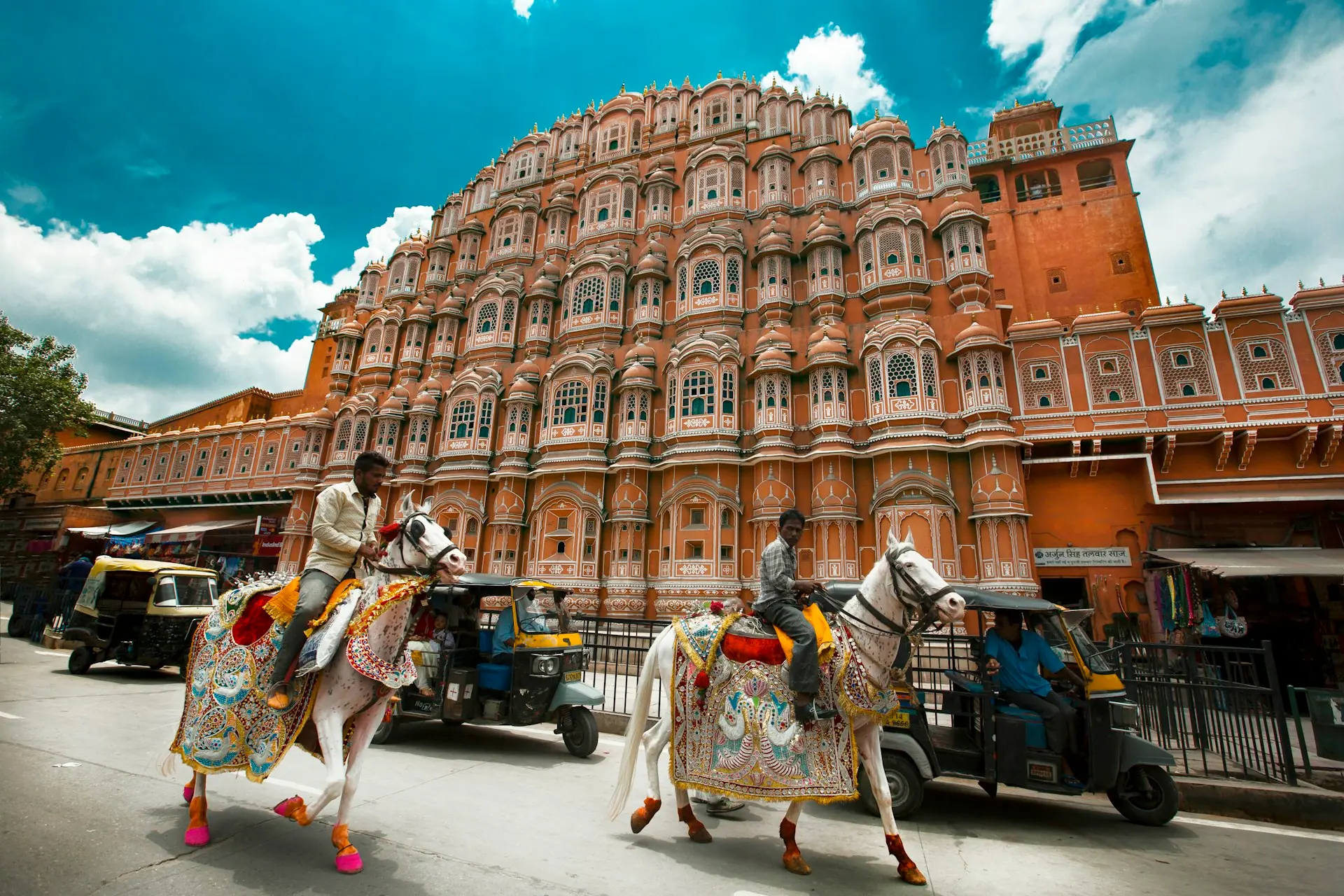
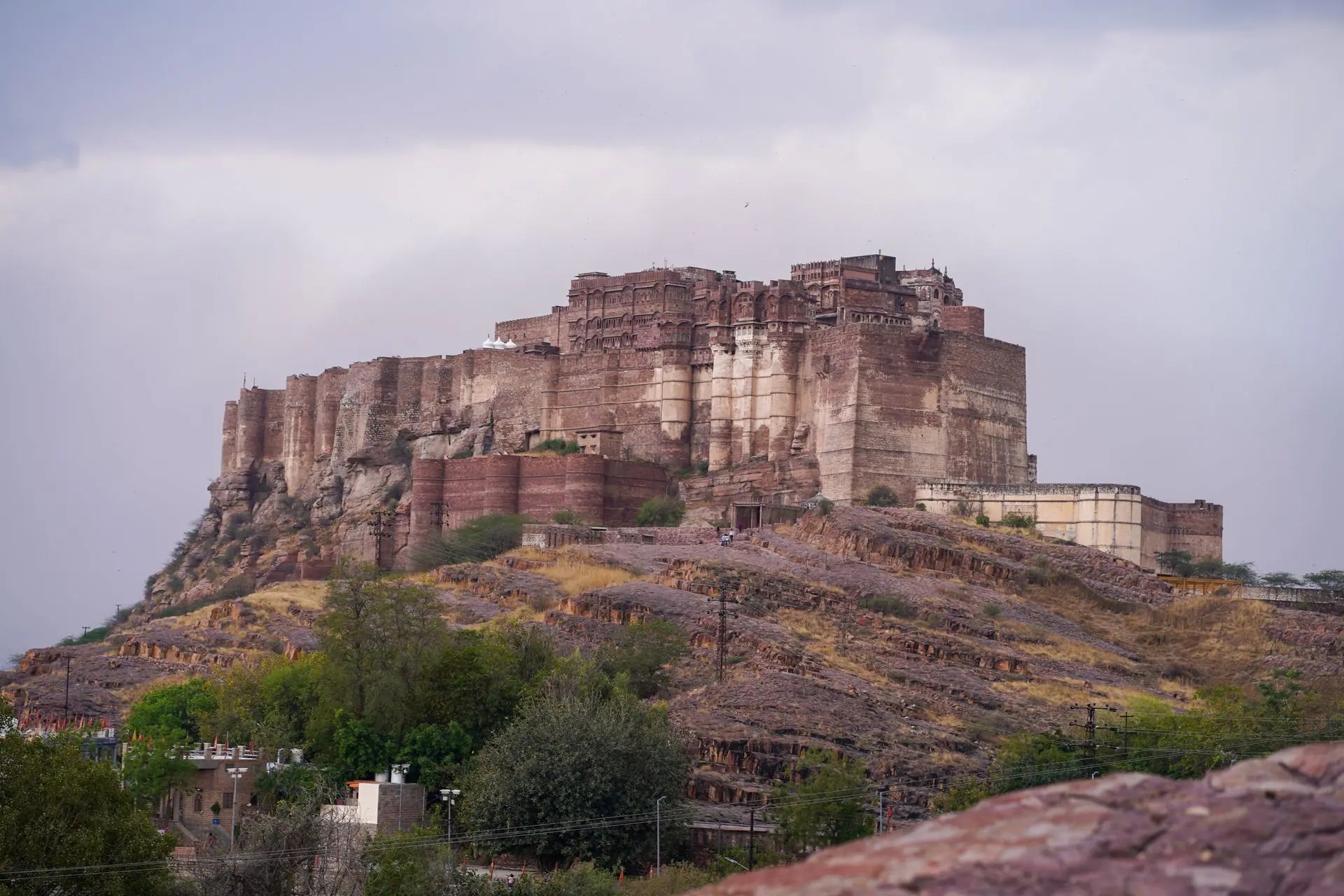
From the journal: Jaisalmer
Journal
Jaisalmer Desert Festival 2026 – Tour Itinerary, Festival Dates & Things to See
Journal
Jaisalmer Desert Festival 2026 – Everything You Need to Know Before You Go
Journal
Family Package for Jaisalmer – Desert Safari, Forts and Fun Activities
Journal
Jaisalmer Trip Package – Explore the Golden City of Rajasthan
Journal
Luxury & Romance Combined – Top Jaisalmer Honeymoon Package for Couples
Journal
How To Do Desert Camping in Jaisalmer Rajasthan
Journal
Thar Desert, Rajasthan – All You Need to Know
Journal
Ramdevra Temple (Ranuja Temple), Jaisalmer – Timings, Location, History
Journal
Top 10 Must-See Attractions in Jaisalmer, Rajasthan
Journal
Discover the Golden City of Jaisalmer
Customer reviews
Experience My India is rated 4.3 on Tripadvisor. We publish guest reviews after each trip.
Plan a trip
Tailor-made quote from a specialist