Skip to content

Kanha National Park Travel Guide: Zones, Wildlife and Planning

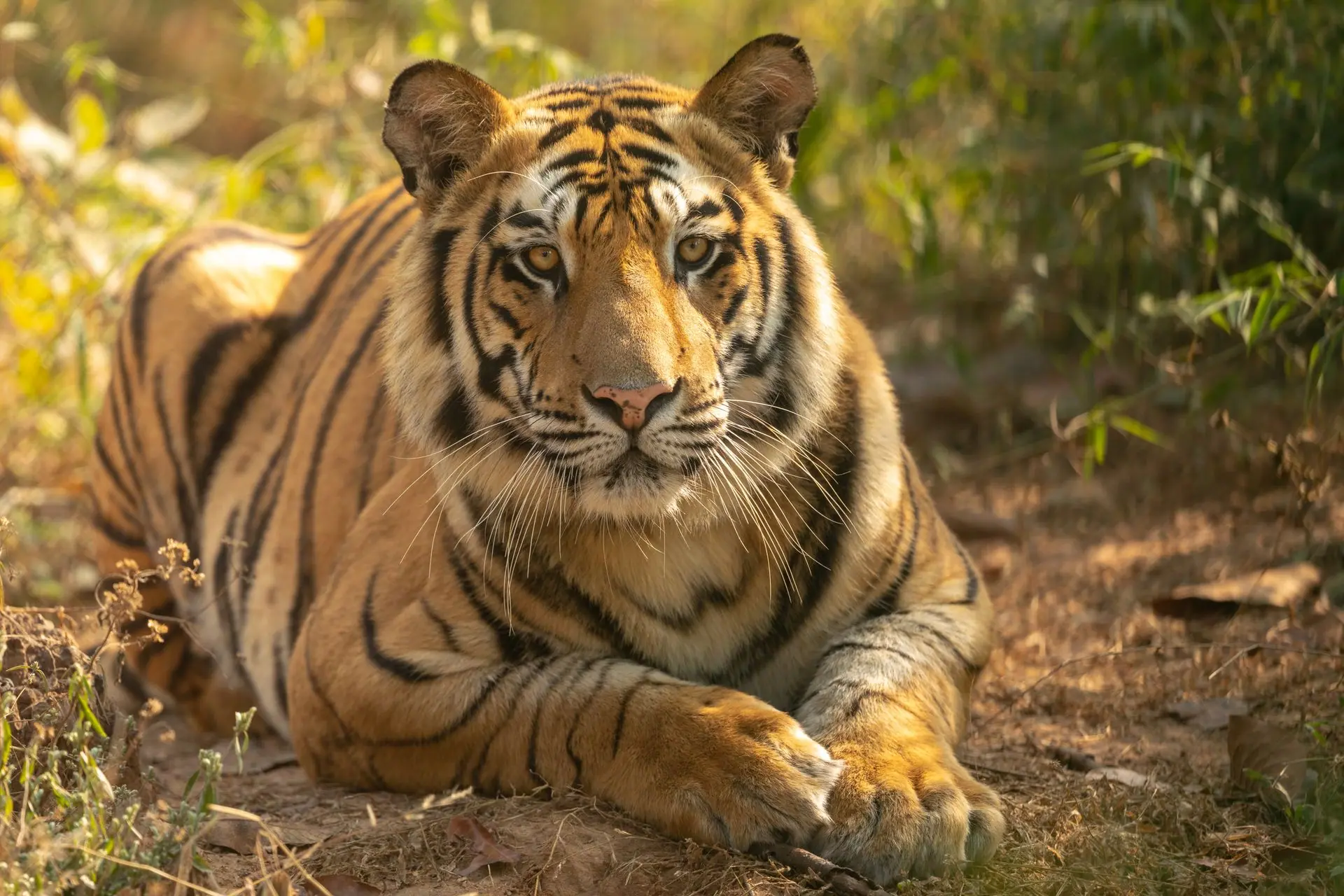
Kanha National Park lies in the Maikal ranges of Madhya Pradesh, in the Mandla and Balaghat districts. Its sal forest and open meadows shelter tigers and the hard-ground barasingha. Safaris run in four core zones, Kanha, Kisli, Mukki and Sarhi, each morning and evening, with an official guide in every vehicle. Core zones close from 1 July to 30 September; the buffer zones stay open.

By Experience My India Editorial Team · Reviewed by Experience My India Editorial Team · Updated 1 Sept 2026

See all 1 tour or experience in Kanha National Park →

Government-approved operatorApproved by the Ministry of Tourism, Government of India

Places to visit in Kanha National Park

Kanha sits in the Maikal ranges of the Satpuras. The reserve's own site puts the whole tiger reserve at 2,074.32 sq km, made up of a national park core, a buffer zone and the Phen Wildlife Sanctuary as a satellite core. The land became a reserve forest in 1879 and a national park in 1955, and Kanha was among the first nine tiger reserves when Project Tiger began. Visitors may use only a small part of it: the tourism zone covers 184.74 sq km, about a fifth of the core. Most of the sights below are reached on a safari.

Kanha meadows

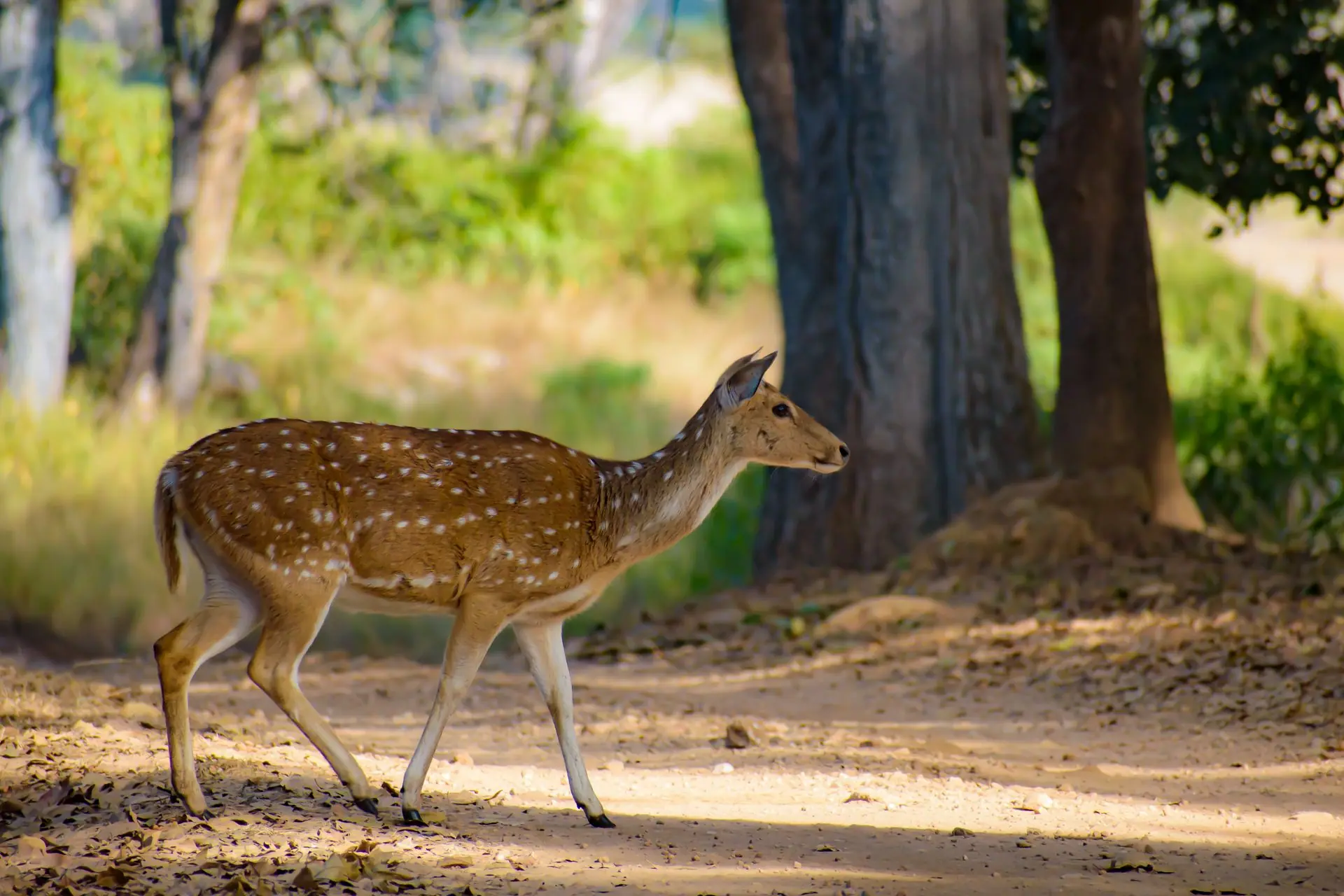
The reserve describes the Kanha meadows as perhaps the best place to view wildlife. Chital, barasingha, sambar and gaur graze on the open grass, while tiger, panther and wild dog lurk in the thickets around it. The meadows lie in the Kanha safari zone, entered from the Khatia gate on the Mandla side; the Mukki gate admits morning safaris to the same zone.

Sonf meadows and the barasingha

Sonf is the abandoned site of the first forest village moved out of the park, and the reserve uses it to restore habitat for the barasingha, or hard-ground swamp deer. The animal is Madhya Pradesh's state animal. The reserve says Kanha held the last world population of it for close to five decades, and that by 1970 only 66 survived in the wild, all within the core zone.

Shravan Tal, Shravan Chita and Lapsi Kabar

Shravan Tal is a small earth-bund tank in the central meadows, tied in local tradition to the story of Shravan Kumar, and the reserve says it attracts many animals. Shravan Chita is a cremation site whose colour is strikingly different from its surroundings, visible from the Bamhani Dadar-Keraghat road. Lapsi Kabar marks the grave of a hunter and guide who was killed by a tiger in 1930.

Babathenga tank and the Mukki range

Babathenga is a tank in the Mukki range that the reserve says draws a variety of birds, with tigers and panthers also possible at the water. The Mukki gate covers this range. Between Mukki and Kisli lies the Kopedabri-Naktighati sector, where the forest opens in small clearings and supports tigers and several herbivores.

Bamni Dadar sunset point

MP Tourism calls Bamni Dadar a spectacular place to watch the sun set over the dense forest of Kanha, and says herbivores can be spotted from the sunset point. The reserve's own blog adds that the Bamhnidadar plateau is home to birds of prey. Treat it as a stop within a drive rather than a separate outing.

Kanha Museum

The forest department maintains a museum inside the park, with skeletons and displays on the tribal culture of the region. MP Tourism says it can be visited throughout the year, which makes it the one sight that does not depend on the safari calendar. The sources we checked give no opening hours, so ask the park office or your guide.

Buffer zones and villages

The buffer zones, which the reserve lists as Khatia, Khapa and Sijhora, stay open when the core is shut. The reserve counts 161 villages in its buffer area, and MP Tourism mentions walking and cycling there and visits to villages to see life at the forest's edge. Safaris in the buffer zones also run in the morning and evening.

Safari zones, gates and permits

Kanha has four core safari zones, Kanha, Kisli, Mukki and Sarhi, and three entry gates, Khatia, Mukki and Sarhi. The reserve runs two rounds a day, morning and evening. Some gates are limited: the forest department's brochure says that from Mukki gate you can enter only for the morning safari in the Kanha zone, and from Sarhi gate only for the morning safari in the Kisli zone.

Permits are booked on the Madhya Pradesh Forest Department's portal, forest.mponline.gov.in, for both core and buffer safaris. The reserve lists an online full-vehicle permit, a waiting list and single-seat permits at the tourism gate for the core, and full-vehicle permits at the entry gate for the buffer. We give no fees because they change; the portal shows the current ones.

An official guide is compulsory with every vehicle. The reserve's rules also ask you not to smoke or carry matches, blow a horn, litter, feed or chase animals, play music, wear strong perfume or get down unless the guide says so, and to ask the driver not to speed.

Wildlife and birds in Kanha

The forest department's brochure counts 43 mammal species and 26 reptile species. Kanha is best known for the tiger and the barasingha. On the meadows the reserve names chital, barasingha, sambar and gaur, and it lists the tiger, panther and wild dog as the predators. For birds, the forest department's brochure gives about 300 species and the reserve's own site around 325; the common ones the reserve names include the Indian roller, racket-tailed drongo, woolly-necked stork, crested serpent eagle and brown fish owl. A sighting of any big cat is never guaranteed.

Kanha is often linked with Kipling's The Jungle Book. The reserve's own pages do not make that claim, and MP Tourism ties the story's Seeonee hills and Alikatta village to Pench, so treat the Kanha connection as a popular story rather than a fact.

Things to do in Kanha

The main activity is the safari: a morning and an evening round in a different zone each time gives the widest view of forest, meadow and water. Away from the core, the buffer zones offer walking, cycling and village visits, and the museum is open all year.

For a guided version, our Kanha tiger safari drives one zone per safari in an open gypsy, with a private naturalist and permits booked ahead. Its page advises that December to March slots fill quickly, and it warns of a cold pre-dawn start in winter. Every Kanha trip we run is on our Kanha tours and experiences page, and the wider list of wildlife trips is under Kanha wildlife safaris.

Best time to visit Kanha

The reserve says tourism usually runs from 15 October to 30 June, while Madhya Pradesh's rules for tiger reserves close the core zones from 1 July to 30 September. The first two weeks of October fall between the two statements, so check the booking portal before you plan an early-October trip. The buffer zones are open all year.

MP Tourism gives October to March as the pleasant, cool season. January can bring sub-zero temperatures and frost, so winter mornings in an open vehicle are cold. From March to June the vegetation dries, which MP Tourism says helps tiger sightings, and some visitors choose peak summer because tigers come to the water bodies. April to June is hot, and the monsoon arrives in the second week of June.

How to reach Kanha

The reserve names Jabalpur, Raipur and Nagpur as the nearest operating airports, and Jabalpur, Gondia, Raipur, Bilaspur and Balaghat as the nearest railway stations. Its page gives approximate road distances by gate:

  • Khatia gate: about 160 km from Jabalpur, 220 km from Nagpur and 250 km from Raipur.
  • Mukki gate: about 200 km from Jabalpur, 210 km from Raipur and 260 to 270 km from Nagpur.
  • Sarhi gate: about 150 km from Jabalpur, 200 km from Raipur and 305 km from Nagpur.

Pick the gate before you pick the route, because the zone you want decides it. MP Tourism adds that Gondia railway station is 145 km from the Khatia gate and Jabalpur 160 km from Mukki, so its figures differ a little from the reserve's.

How many days at Kanha

Two to three nights suits the park. Each safari covers one zone, so a morning and an evening round on each of two days gives four rounds across at least two zones, and a third day allows for a second visit to the meadows or a buffer-zone drive. Our Kanha safari is planned as two to three nights, and it is often paired with Bandhavgarh, which has its own tiger safari. For the rest of the state, see our Madhya Pradesh travel guide.

Where to stay and what to bring

Stay near the gate you plan to use, since the zones are entered from Khatia on the Mandla side, from Mukki on the Balaghat side and from Sarhi. Wear muted colours, and carry layers for the pre-dawn start in winter. The reserve asks visitors not to bring music players, strong scents or anything that could start a fire.

Why book with Experience My India

  • Government-approved operator

    Approved by the Ministry of Tourism, Government of India

  • 500+ vetted local guides

    35+ destination specialists plan every trip by hand.

  • Human help, every day

    Mon–Sun, 9:00 AM – 9:00 PM IST · +91 73022 65809

  • No payment until you approve

    You receive a written quote first; nothing is charged to start planning.

Frequently asked questions

Where is Kanha National Park?

Kanha is in the Maikal ranges of the Satpuras, in the Mandla and Balaghat districts of Madhya Pradesh. The reserve names Jabalpur, Raipur and Nagpur as the nearest operating airports. The Khatia gate is on the Mandla side and the Mukki gate on the Balaghat side.

Is Kanha National Park open in the monsoon?

Only partly. Madhya Pradesh closes the core zones from 1 July to 30 September, and the reserve says tourism usually runs from 15 October to 30 June. The buffer zones stay open all year, as MP Tourism confirms, so monsoon visitors can still go on buffer safaris, though the core zones are shut.

Which zone of Kanha is best for tigers?

The reserve does not rank its zones, and no zone guarantees a tiger. It calls the Kanha meadows perhaps the best place to view wildlife, because herbivores gather there and predators follow. The better plan is to book more than one round in more than one zone, rather than rely on a single drive.

Do you need a guide in Kanha National Park?

Yes. The reserve states that it is compulsory to take an official guide with every vehicle, so you cannot book a safari without one. Its rules also say not to get down from the vehicle unless the guide tells you to, which matters in a park where tigers and other large animals move freely.

How do you book a safari in Kanha?

Book on the Madhya Pradesh Forest Department's portal, forest.mponline.gov.in, which covers core and buffer safaris. The reserve lists online full-vehicle permits, a waiting list and single-seat permits at the tourism gate for the core, and entry-gate permits for the buffer zones. Book early for winter, and check the portal for current fees.

What animals live in Kanha besides tigers?

The reserve names chital, barasingha, sambar and gaur on its meadows, with panther and wild dog among the predators. The forest department's brochure counts 43 mammal species and 26 reptile species, and the birds include the Indian roller, the racket-tailed drongo, the woolly-necked stork, the crested serpent eagle and the brown fish owl.

How far is Kanha from Jabalpur, Nagpur and Raipur?

By the reserve's approximate figures, Jabalpur is 150 to 200 km away depending on the gate, Raipur 200 to 250 km and Nagpur 220 to 305 km. The shortest of the three is Jabalpur to the Sarhi gate, about 150 km. Distances vary by route, so ask your driver which gate your permit uses.

What is the weather like at Kanha?

Winters are cold: the reserve says January may see sub-zero temperatures and frost, and open vehicles are chilly before dawn. April to June is hot. The monsoon arrives in the second week of June and the core zones close from 1 July. October to March is the pleasant, cool season.

Experiences in Kanha National Park

See all
Kanha tiger safari
Kanha tiger safari

Kanha National Park

Kanha tiger safari

Private naturalist guide and vehicle throughout

Price on request

Customer reviews

Experience My India is rated 4.3 on Tripadvisor. We publish guest reviews after each trip.

Read our reviews

Plan a trip

Tailor-made quote from a specialist