Skip to content

Madhya Pradesh Travel Guide: Temples, Tiger Reserves and Routes

Madhya Pradesh, in the centre of India, is the country's second-largest state by area. The main places to visit in Madhya Pradesh are Khajuraho's carved temples, the jyotirlinga shrines of Ujjain and Omkareshwar, Sanchi and Bhimbetka near Bhopal, Orchha and Gwalior in the north, Mandu, Maheshwar and Pachmarhi, and the tiger reserves of Bandhavgarh and Kanha. October to March suits most of the state.

By Experience My India Editorial Team · Reviewed by Experience My India Editorial Team

See all 3 tours and experiences in Madhya Pradesh →

Government-approved operatorApproved by the Ministry of Tourism, Government of India

Places to visit in Madhya Pradesh
The tourist places in Madhya Pradesh are spread across a big state, so take them region by region: Indore, Ujjain and the Narmada towns in the west; Bhopal, Sanchi, Bhimbetka and Pachmarhi in the centre; Gwalior, Orchha and Khajuraho in the north; and Jabalpur with the tiger reserves in the east. MP Tourism lists three World Heritage Sites: Khajuraho, Sanchi and Bhimbetka. Every trip we run in the state is on our Madhya Pradesh tours and experiences page.

Khajuraho

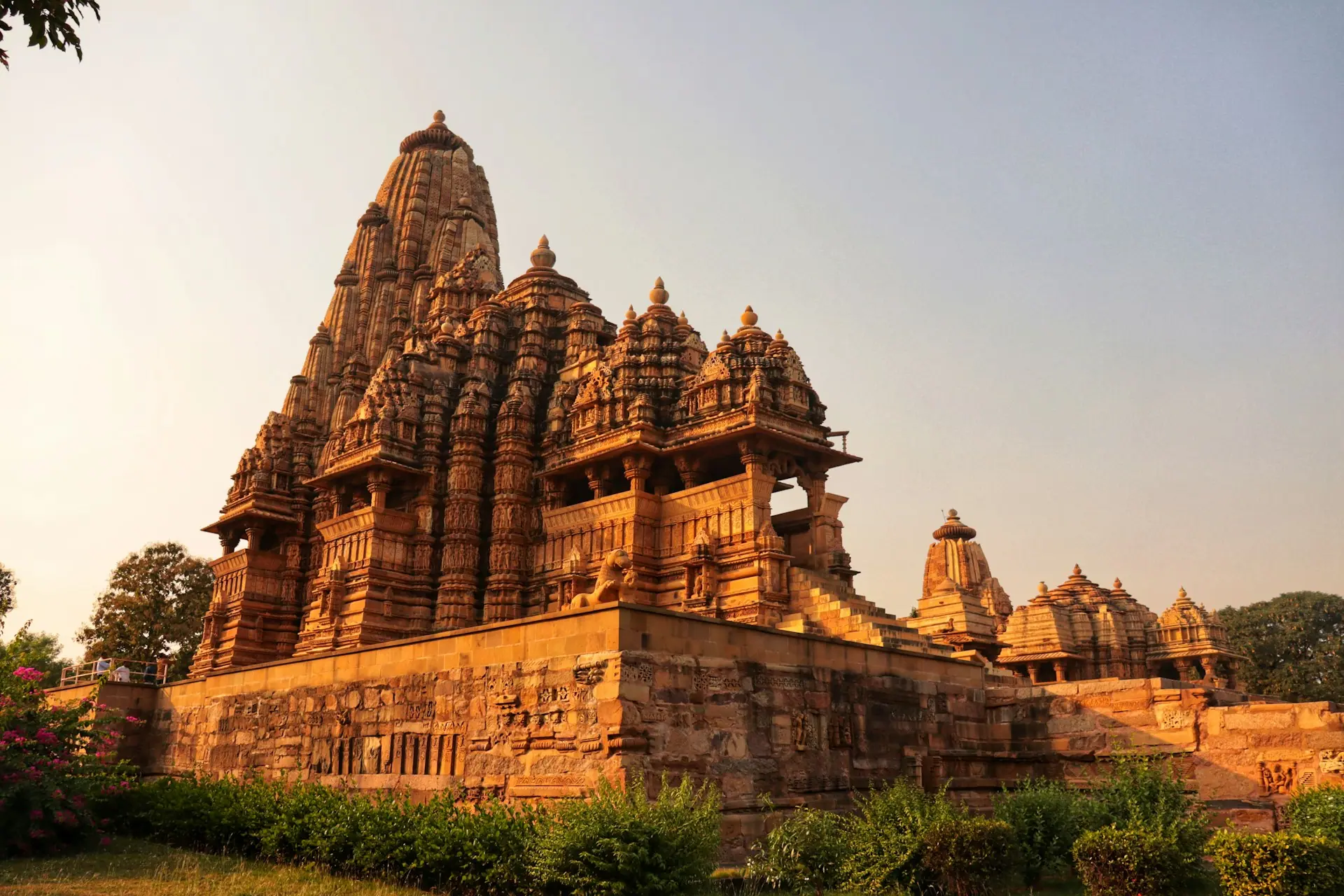
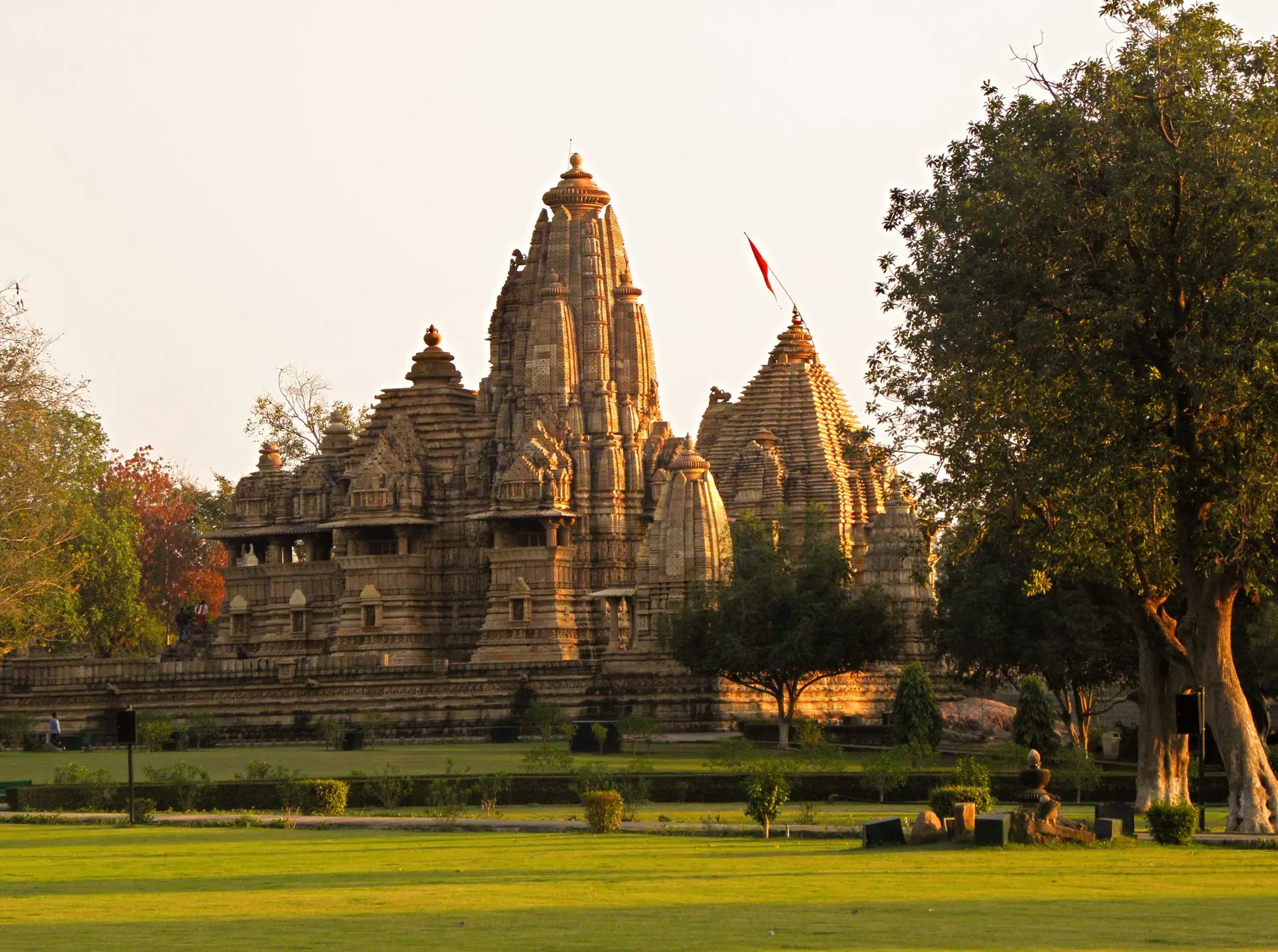
Khajuraho was the principal seat of the Chandela rulers, and its Hindu and Jain temples, which MP Tourism dates mostly to between 950 and 1050, have been a World Heritage Site since 1986. Their walls are profusely carved with gods, celestial dancers, musicians and couples; MP Tourism puts the erotic sculpture at only about a tenth of the whole. Our Khajuraho temples tour gives a day to all three temple groups with a private guide, and our Khajuraho travel guide covers each temple.

Ujjain and the Mahakaleshwar temple

Ujjain stands on the Shipra, 54 km from Indore. Its Mahakaleshwar temple is one of the twelve jyotirlingas, the shrines of Shiva, and each day begins there with the Bhasma Aarti from 4 am, when the lingam is covered in sacred ash; places at the aarti must be booked in advance. The Mahakal Lok corridor runs for more than 900 metres around the temple, and Ram Ghat and the Kal Bhairav and Harsiddhi temples are nearby.

Omkareshwar

About 80 km from Indore, Omkareshwar is the state's second jyotirlinga, on an island in the Narmada where the Kaveri joins it. The island, called Mandhata or Omkar Parvat, is said to be shaped like the sacred syllable Om, which gives the town its name. MP Tourism also lists the Mamleshwar temple, a hanging bridge over the river and Ekatma Dham, with its 108-foot statue of Adi Shankaracharya. July and August, the month of Sawan, bring the biggest crowds.

Indore

Indore, which MP Tourism calls the largest city in the state, is the base for the west. Rajwada, the seven-storey palace of the Holkars, stands in the old centre, Lal Bagh Palace has a gate modelled on Buckingham Palace's, and Kanch Mandir is a Jain temple lined with glass and mirrors. The city is known for its food: poha and jalebi for breakfast and, after dark, the stalls of Sarafa Bazaar, a jewellery market by day.

Maheshwar

About 100 km by road from Indore, Maheshwar was the 18th-century capital of Rajmata Ahilya Devi Holkar. Her fort and palace stand above the Narmada, with a statue of her on a throne inside and ghats with stone memorials below. The Maheshwari sari, usually cotton, plain, striped or checked, began under Ahilyabai about 250 years ago and was revived in 1979 through the Rehwa Society. Order a dal bafla thali, and expect crowds of pilgrims at Shivratri and Kartik Purnima.

Mandu

Mandu is a medieval hilltop city on the Vindhya range, at about 2,000 feet. The Jahaz Mahal, between the Munj Talao and Kapur Talao lakes, is built to look like a ship; the Hindola Mahal takes its name, the swinging palace, from its sloping walls; and Rani Roopmati's Pavilion looks out over Baz Bahadur's early 16th-century palace. MP Tourism calls Hoshang Shah's 15th-century tomb India's first marble building. Buses from Indore take about three hours, and the season runs from July to March.

Bhopal

Bhopal, the state capital, is called the City of Lakes: Raja Bhoj built its Upper Lake, the Bhojtal, in the 11th century, and Van Vihar National Park lies along its shore. The Tribal Museum tells the story of tribal life through full-scale models and art installations, and the name of the Taj-ul-Masajid means crown of mosques. The Bhojpur temple, 29 km away, dates from Raja Bhoj's reign, about 1,000 years ago, and still draws devotees of Shiva at Shivaratri.

Sanchi

About 50 km north-east of Bhopal and about 10 km from Vidisha, Sanchi keeps the Great Stupa, which MP Tourism counts among the oldest stone structures in India, built in the Mauryan period under the emperor Ashoka. Its four gateways are carved, in the Archaeological Survey's words, with episodes and miracles from the Buddha's life and stories from the Jataka tales. With Bhimbetka, it makes a long day out of Bhopal.

Bhimbetka rock shelters

About 45 km south-east of Bhopal, in the Ratapani Wildlife Sanctuary, Bhimbetka's rock shelters hold paintings whose earliest MP Tourism dates to about 10,000 years ago. A path leads past the Auditorium Rock Shelter, Boar Rock and Zoo Rock, which the Archaeological Survey calls the most densely painted shelter, crowded with animals and hunters and, from later periods, battle scenes.

Orchha

Founded in the 16th century by the Bundela chief Rudra Pratap, Orchha lies about 17 km from Jhansi Junction, on the way to Khajuraho. Veer Singh Deo built the Jahangir Mahal in the 17th century to honour the Mughal emperor Jahangir's first visit; the Laxminarayan Temple of 1622 has murals in its galleries; and fifteen cenotaphs of the Bundela kings line the bank of the Betwa. MP Tourism calls the monsoon its best season, when mist settles over the palaces.

Gwalior Fort

Gwalior's fort stands on a steep sandstone outcrop, its outer walls about two miles long. Inside are the Man Mandir palace, with its frieze of yellow ducks and mosaics of elephants, tigers and crocodiles; the Teli ka Mandir, a temple to Vishnu about 100 feet high; and the twin Sas Bahu temples, built by King Mahipala in the 11th century. The Gujari Mahal, built by Man Singh for his queen Mrignayani, holds an archaeological museum, and Tansen's tomb in the city hosts a music festival each winter.

Bhedaghat and Jabalpur

About 22 km from Jabalpur, the Narmada runs between marble cliffs up to 100 feet high at Bhedaghat, and boats take visitors through the gorge, on moonlit nights as well as by day; the Dhuandhar falls are close by. MP Tourism recommends Jabalpur in the monsoon, July to September, when the falls are at their fullest, and notes that the marble rocks of Bhedaghat and Lametaghat were placed on UNESCO's tentative list in 2021.

Pachmarhi

MP Tourism calls Pachmarhi Satpura ki Rani, the queen of the Satpuras: a hill station within Satpura National Park that stays cooler in summer than the rest of the state. Watch the sunrise or sunset from Dhoopgarh, the highest point of the Satpura range, and see Bee Falls, about 5 km from the bus stand, and the five Pandava Caves cut into the sandstone. Pipariya, the nearest railway station, is 54 km away.

Bandhavgarh

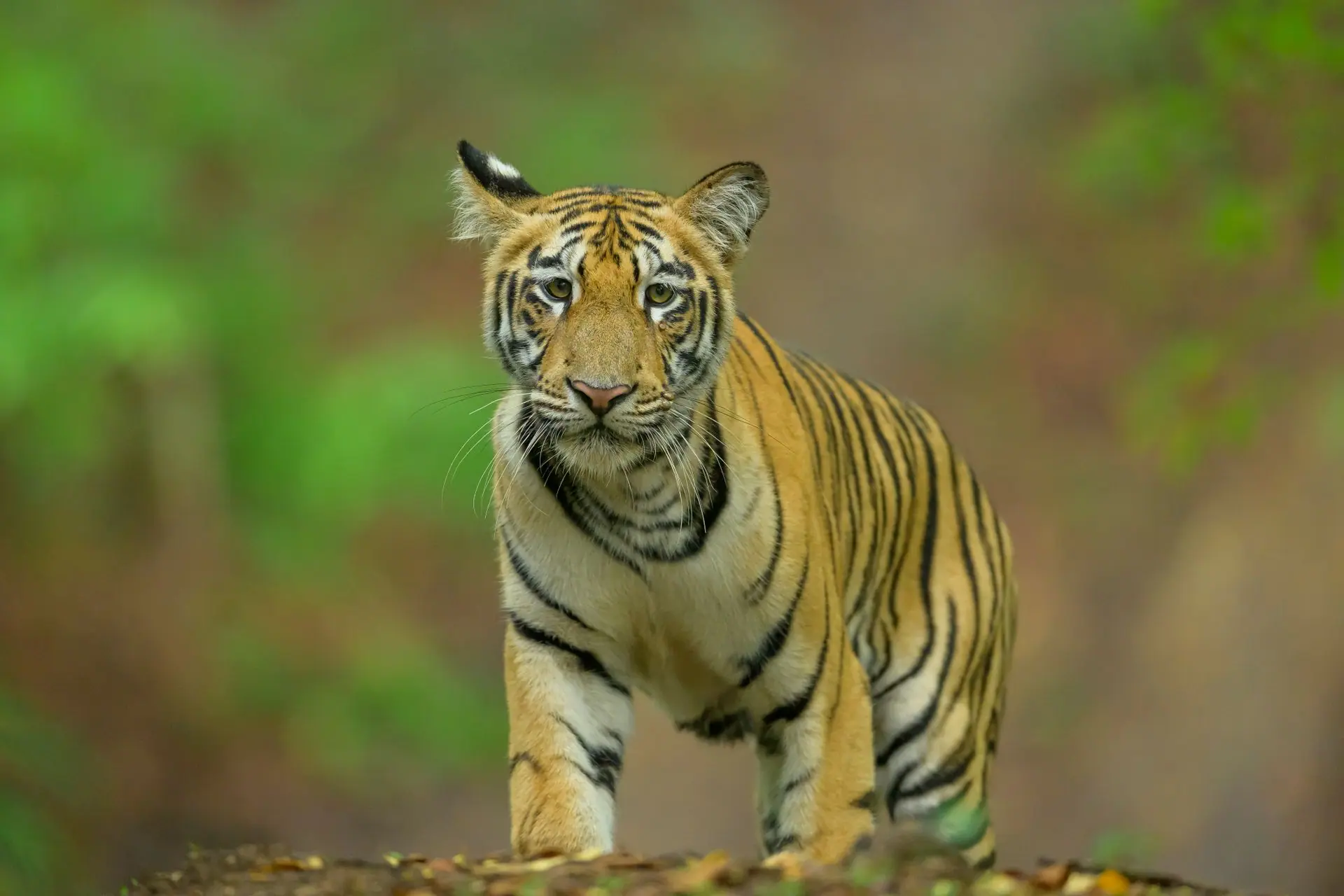
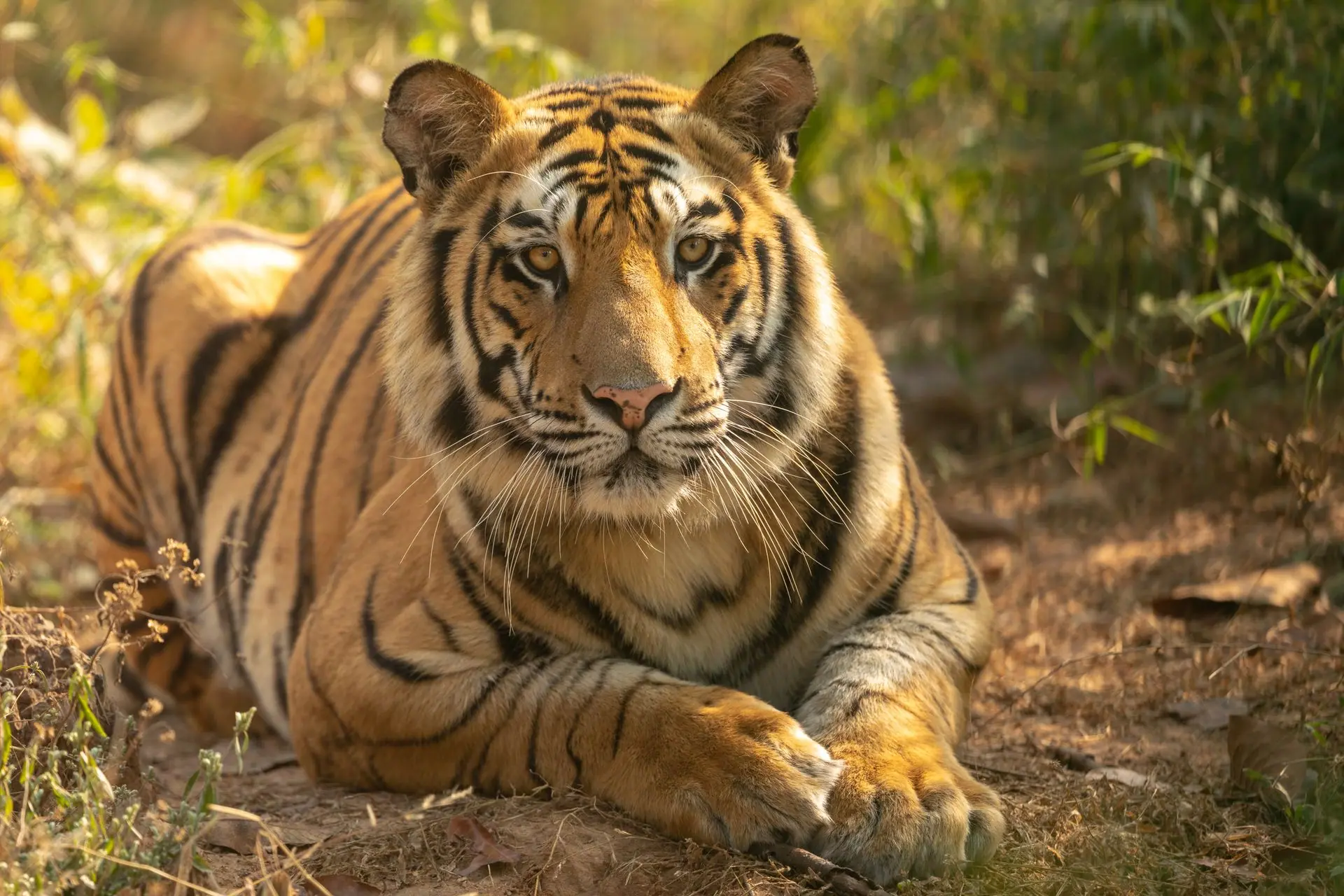
Bandhavgarh, in the Umaria and Katni districts, counts itself among the parks with the highest density of tigers. Gypsy safaris run in three core zones, Tala, Magadhi and Khitauli, below an old fort that visitors may not enter, and Tala-zone drives can reach Shesh Shaiya, a 10th-century statue of Vishnu reclining on a serpent. Our Bandhavgarh tiger safari books your permits and a private naturalist, and our Bandhavgarh travel guide covers the zones and seasons.

Kanha

In the Maikal hills of the Satpuras, Kanha is a reserve of sal forest, bamboo and open meadows, where the hard-ground barasingha, Madhya Pradesh's state animal, was saved from extinction. The core has four zones, and the Khatia gate is about 160 km from Jabalpur. Our Kanha tiger safari takes one zone on each drive with a private naturalist, and our Kanha travel guide has the rest.

Panna, Pench and Satpura

The forest department also sells safari permits for Panna, Pench and Satpura. Panna's Madla gate is 25 km from Khajuraho, in a park of gorges and waterfalls on the Ken river, where MP Tourism lists boat rides; Pench adds jungle walks and short treks with trained guides; and Satpura, which takes in Pachmarhi, is described by the forest department as unique in the state for allowing cycling, canoeing and trekking. We do not run trips to these three.

Things to do in Madhya Pradesh

Take a tiger safari at Bandhavgarh or Kanha, read Khajuraho's carving with a guide, ride a boat through the marble gorge at Bhedaghat, rise before dawn for the Bhasma Aarti in Ujjain, and eat your way through Sarafa Bazaar in Indore at night. Our safaris are listed on wildlife safaris in Madhya Pradesh, each with permits booked and a naturalist on every drive.

Best time to visit Madhya Pradesh

October to March is the main season for most of the state. IMD's figures for Bhopal put January days at about 25°C and nights at about 11°C; Satna, nearer Khajuraho and Bandhavgarh, is a little colder at night, about 9°C, with fog on some winter mornings. Heat builds from April to a May average high of about 41°C in Bhopal and 42°C in Satna. The south-west monsoon brings about 95 per cent of Bhopal's yearly rain, with August the wettest month.

  • Tiger reserves: under the state's wildlife rules, the core zones close from 1 July to 30 September, some areas reopen between 1 and 15 October, and the buffer zones stay open all year. Bandhavgarh and Kanha give their usual season as 15 October to 30 June. Winter mornings are cold, with frost possible at Kanha in January, and every protected area closes on Holi and Diwali.
  • In the monsoon: MP Tourism recommends the rains for Orchha, for Jabalpur and the Dhuandhar falls, and for Mandu, which turns green from July; Pachmarhi it treats as a year-round hill station. See our monsoon travel guide before you plan around the rains.
  • Festivals: the Khajuraho Dance Festival brings classical dancers to the Western Group for a week each February, and Gwalior's music festival at Tansen's tomb comes each winter. MP Tourism suggests seeing Ujjain at a festival such as Mahashivratri, and the city hosts the Simhastha, a gathering held every 12 years on the banks of the Shipra.

How to reach Madhya Pradesh

There is no single gateway, so the entry point follows the route.

  • By air: the Ministry of Tourism lists five major airports: Bhopal (BHO), Indore (IDR), Gwalior (GWL), Jabalpur (JLR) and Khajuraho (HJR). Indore's Devi Ahilya Bai Holkar Airport, about 10 km from the city, serves Ujjain, Omkareshwar, Maheshwar and Mandu; Bhopal's Raja Bhoj Airport, about 15 km from the centre, serves Sanchi, Bhimbetka and Pachmarhi; Jabalpur's serves Bhedaghat, Bandhavgarh and Kanha; and Khajuraho's has a limited number of flights.
  • By train: Bhopal Junction and Rani Kamlapati serve the capital, and Indore, Ujjain and Gwalior have direct trains from major cities. Jhansi Junction is well connected to Delhi, Mumbai, Chennai and other cities and lies about 17 km from Orchha and about 175 km from Khajuraho. For the forests and hills, Umaria station is 32 km from Bandhavgarh and Pipariya 54 km from Pachmarhi.
  • By road: distances are long. Gwalior is 321 km from Delhi by road, and Bhopal 423 km from Gwalior, so a car and driver is the practical way to link the regions; see our private car and driver service.

How many days in Madhya Pradesh

A week covers one or two regions; the whole state needs two to three weeks. Plan by region:

  • The west, from Indore, four or five days: Indore and its food, Ujjain for the Bhasma Aarti at dawn, a night on the Narmada at Omkareshwar or Maheshwar, and a day at Mandu.
  • Bhopal and the centre, three to five days: the city's lakes and museums, Sanchi and Bhimbetka on a day out, and two nights in Pachmarhi if you have them.
  • The north, four or five days: Gwalior Fort, a night at Orchha, and a full day at Khajuraho for its three temple groups, with a second day for Panna or Raneh Falls.
  • The tiger reserves, five to seven days: Jabalpur and Bhedaghat on the way in, then two to three nights each at Bandhavgarh and Kanha, which gives four to six drives in each park.

Our Madhya Pradesh tour packages list every package that stays in the state, starting with the Khajuraho temples tour.

Safari and temple tips

  • Safari permits: the forest department sells them online, each for one zone and one drive, and the December to March slots sell out early. A licensed park guide rides in every vehicle; follow the guide's instructions, which are for your safety.
  • Temples: Ujjain's and Omkareshwar's temples and Khajuraho's Matangeshwar are in daily worship, so dress modestly and wear shoes that slip off easily.

Why book with Experience My India

  • Government-approved operator

    Approved by the Ministry of Tourism, Government of India

  • 500+ vetted local guides

    35+ destination specialists plan every trip by hand.

  • Human help, every day

    Mon–Sun, 9:00 AM – 9:00 PM IST · +91 73022 65809

  • No payment until you approve

    You receive a written quote first; nothing is charged to start planning.

Frequently asked questions

What is Madhya Pradesh famous for?

For tigers, temples and history. The Ministry of Tourism calls it the Tiger State of India, and the forest department sells safari permits for Bandhavgarh, Kanha, Panna, Pench and Satpura. It has three World Heritage Sites, Khajuraho's temples, Sanchi's Buddhist monuments and the Bhimbetka rock shelters, and two of the twelve jyotirlingas, at Ujjain and Omkareshwar. Indore is known for its street food and Maheshwar for its handwoven saris.

Where is Madhya Pradesh?

In the middle of the country: the Ministry of Tourism places it in the heart of India. The state government describes it as part of the peninsular plateau in north-central India, with the Aravallis to the west, the Chhattisgarh plains to the east and the Tapti valley and Maharashtra plateau to the south. It is India's second-largest state by area, after Rajasthan, and Bhopal is its capital.

Which places can you visit near Indore?

Ujjain, 54 km away, for the Mahakaleshwar temple and its dawn Bhasma Aarti; Omkareshwar, about 80 km away, for the jyotirlinga on its island in the Narmada; Maheshwar, about 100 km by road, for Ahilya Devi Holkar's fort, the ghats and the handloom saris; and Mandu, about three hours by bus, for the Jahaz Mahal and Rani Roopmati's Pavilion. Omkareshwar, Maheshwar and Mandu each make a long day, so a night on the Narmada is easier.

Which places can you visit near Bhopal?

Sanchi, about 50 km north-east, for the Great Stupa and its carved gateways; Bhimbetka, about 45 km south-east, for its prehistoric rock paintings; and Bhojpur, 29 km away, for a Shiva temple from the reign of Raja Bhoj. In the city itself, see the Upper Lake, the Tribal Museum and the Taj-ul-Masajid. Pachmarhi, the hill station of the Satpuras, is farther, about 222 km from Bhopal's airport, so give it a night or two.

Which jyotirlingas are in Madhya Pradesh?

Two of the twelve: Mahakaleshwar in Ujjain, on the banks of the Shipra, and Omkareshwar, on an island in the Narmada about 80 km from Indore. Ujjain is 54 km from Indore, so both can be visited from there. At Mahakaleshwar, the Bhasma Aarti before dawn needs a place booked in advance; at Omkareshwar, July and August, the month of Sawan, bring the largest crowds.

How do you book the Bhasma Aarti in Ujjain?

In advance, online. MP Tourism says prior booking is required for the Bhasma Aarti at the Mahakaleshwar temple, and bookings are made through the temple's official website, shrimahakaleshwar.mp.gov.in. The aarti begins at 4 am, when the lingam is covered in sacred ash, and the queue is long, so MP Tourism advises arriving an hour or more before the start. Book as soon as your dates are fixed.

Is there a hill station in Madhya Pradesh?

Yes: Pachmarhi, in the Satpura range, which MP Tourism calls Satpura ki Rani, the queen of the Satpuras. It lies within Satpura National Park and stays cooler than the rest of the state in summer. Watch the sunrise or sunset from Dhoopgarh, the highest point of the range, and see Bee Falls and the Pandava Caves. Pipariya, 54 km away, is the nearest railway station.

Which national parks in Madhya Pradesh can you visit on safari?

The forest department's booking site sells safari permits for Kanha, Bandhavgarh, Panna, Pench and Satpura, among others. Bandhavgarh and Kanha are where our safaris run; Panna is close to Khajuraho, with boat rides on the Ken; Pench offers jungle walks with trained guides; and Satpura allows cycling, canoeing and trekking. Core zones close from 1 July to 30 September, while buffer zones stay open all year.

Tour packages in Madhya Pradesh

See all
Experiences in Madhya Pradesh

See all
Bandhavgarh tiger safari

Bandhavgarh National Park

Bandhavgarh tiger safari

Private naturalist guide and vehicle throughout

Price on request
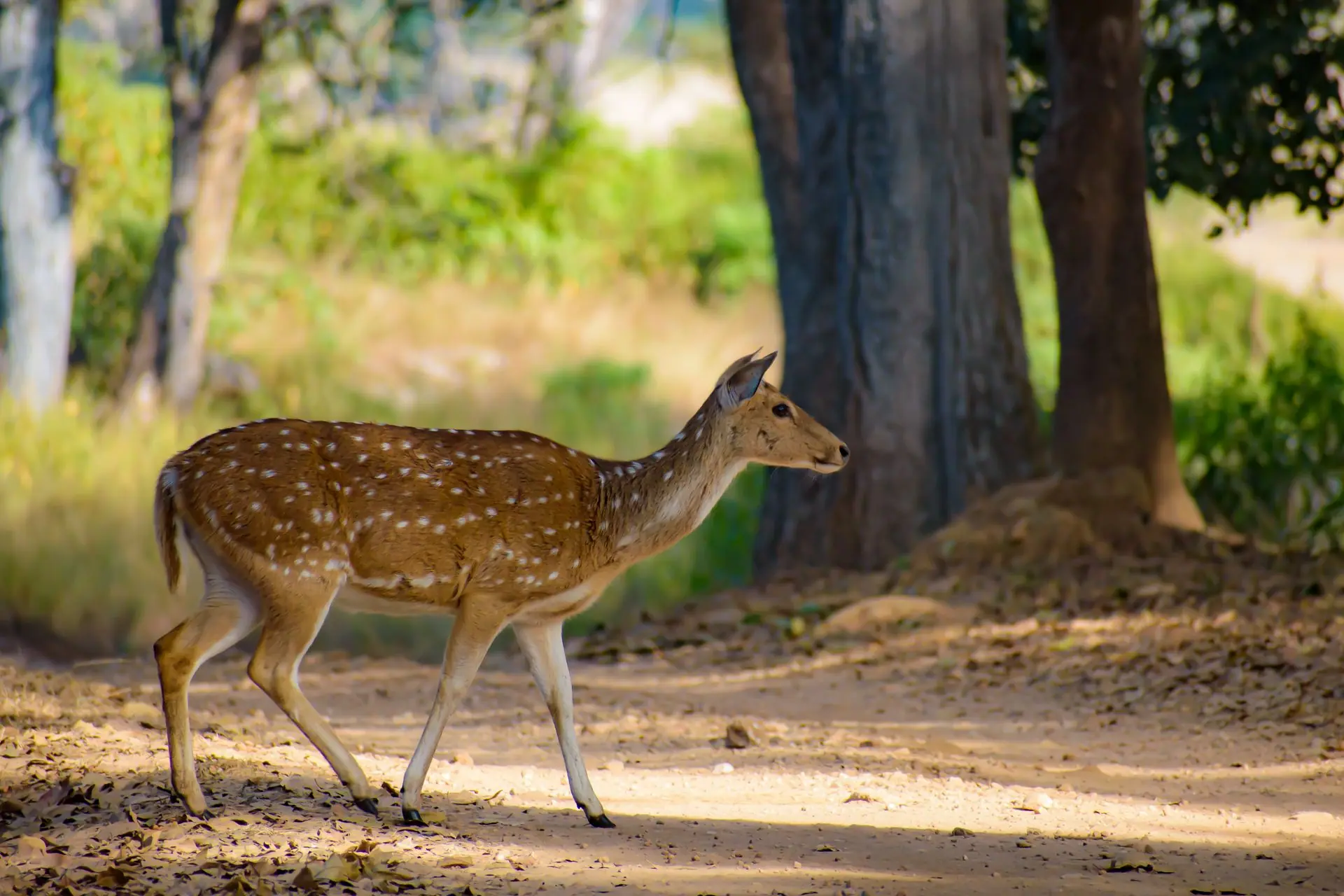
Kanha tiger safari
Kanha tiger safari

Kanha National Park

Kanha tiger safari

Private naturalist guide and vehicle throughout

Price on request

From the journal: Madhya Pradesh
Customer reviews

Experience My India is rated 4.3 on Tripadvisor. We publish guest reviews after each trip.

Read our reviews

Plan a trip

Tailor-made quote from a specialist