Skip to content

Old Delhi Travel Guide: The Walled City, Its Bazaars and Street Food

Old Delhi is Shahjahanabad, the walled city the Mughal emperor Shah Jahan founded in 1638 as his new capital. The main places to visit in Old Delhi are the Red Fort, the Jama Masjid and Chandni Chowk, the bazaar street running from the fort to Fatehpuri Masjid, lined with temples, a gurudwara and food lanes. A morning and an evening cover it well.

By Experience My India Editorial Team · Reviewed by Experience My India Editorial Team

See all 2 tours and experiences in Old Delhi →

Government-approved operatorApproved by the Ministry of Tourism, Government of India

Places to visit in Old Delhi

Shah Jahan laid out his city around the Red Fort, with Chandni Chowk as its main street, and the sights below sit on or just off that street; within its two kilometres stand a Jain temple, a Hindu temple, a Sikh gurudwara, a Baptist church and two mosques. Guided visits are gathered on our Old Delhi tours and experiences page.

Red Fort (Lal Qila)

Shah Jahan began his citadel in 1639 and completed it nine years later: an irregular octagon of red sandstone walls around marble palaces. You enter from the west through the Lahori Gate and the vaulted Chhatta Chowk arcade, then reach the Naubat Khana, the drum house, and the Diwan-i-Am, the hall of public audience. Further in are the Rang Mahal and the Diwan-i-Khas, whose marble dais is said to have held the Peacock Throne. A World Heritage Site since 2007, the fort is closed on Mondays; allow at least two hours.

Jama Masjid

Shah Jahan's great mosque stands on a raised plinth, its three gateways approached by long flights of steps and its courtyard large enough for 25,000 worshippers. Building began in 1644; the ASI dates its completion to 1650, while other official pages give 1656. Sightseeing visitors are let in from morning until sunset, with a midday break, and after sunset the mosque is open to worshippers only. Climb the southern minaret for the view across the old city's rooftops.

Chandni Chowk

Jahanara Begum, Shah Jahan's eldest daughter, laid out Chandni Chowk in 1650 as the walled city's main street, running from the Red Fort to Fatehpuri Masjid. A canal once ran down its middle, and the name, moonlit square, is said to come from an octagonal pool that reflected the moonlight. The street was once four bazaars in a row, among them the Urdu Bazaar and the jewellers' Jouhari Bazaar. A Delhi government redevelopment of the stretch from the Lal Jain Mandir to Fatehpuri Masjid aims to give pedestrians priority over vehicles.

Gurudwara Sis Ganj Sahib

On Chandni Chowk, a short walk from the Red Fort, Gurudwara Sis Ganj Sahib stands where Guru Tegh Bahadur, the ninth Sikh Guru, was beheaded on the orders of the emperor Aurangzeb on 11 November 1675. The trunk of the banyan tree under which he was martyred, and the place where he bathed while imprisoned, can still be seen. The gurudwara is one of the historic shrines run by the Delhi Sikh Gurdwara Management Committee.

Shri Digambar Jain Lal Mandir

Directly across from the Red Fort, at the corner of Netaji Subhash Marg and Chandni Chowk, the Lal Mandir is the oldest Jain temple in Delhi, first built in 1656 and enlarged in red sandstone in the early 19th century. A second building behind the main temple houses the Jain Birds Hospital, a veterinary hospital for birds. The Delhi government's heritage walks along Chandni Chowk start here, with the Gauri Shankar Mandir as the next stop.

Fatehpuri Masjid and Khari Baoli

At the western end of Chandni Chowk, Fatehpuri Masjid was built in 1650 by Fatehpuri Begum, one of Shah Jahan's wives: a red sandstone mosque under a single dome, with a prayer hall of seven arches, the central one the highest. Beyond it, Khari Baoli is the wholesale spice market that the Ministry of Tourism calls Asia's largest.

Dariba Kalan, Kinari Bazaar and Nai Sarak

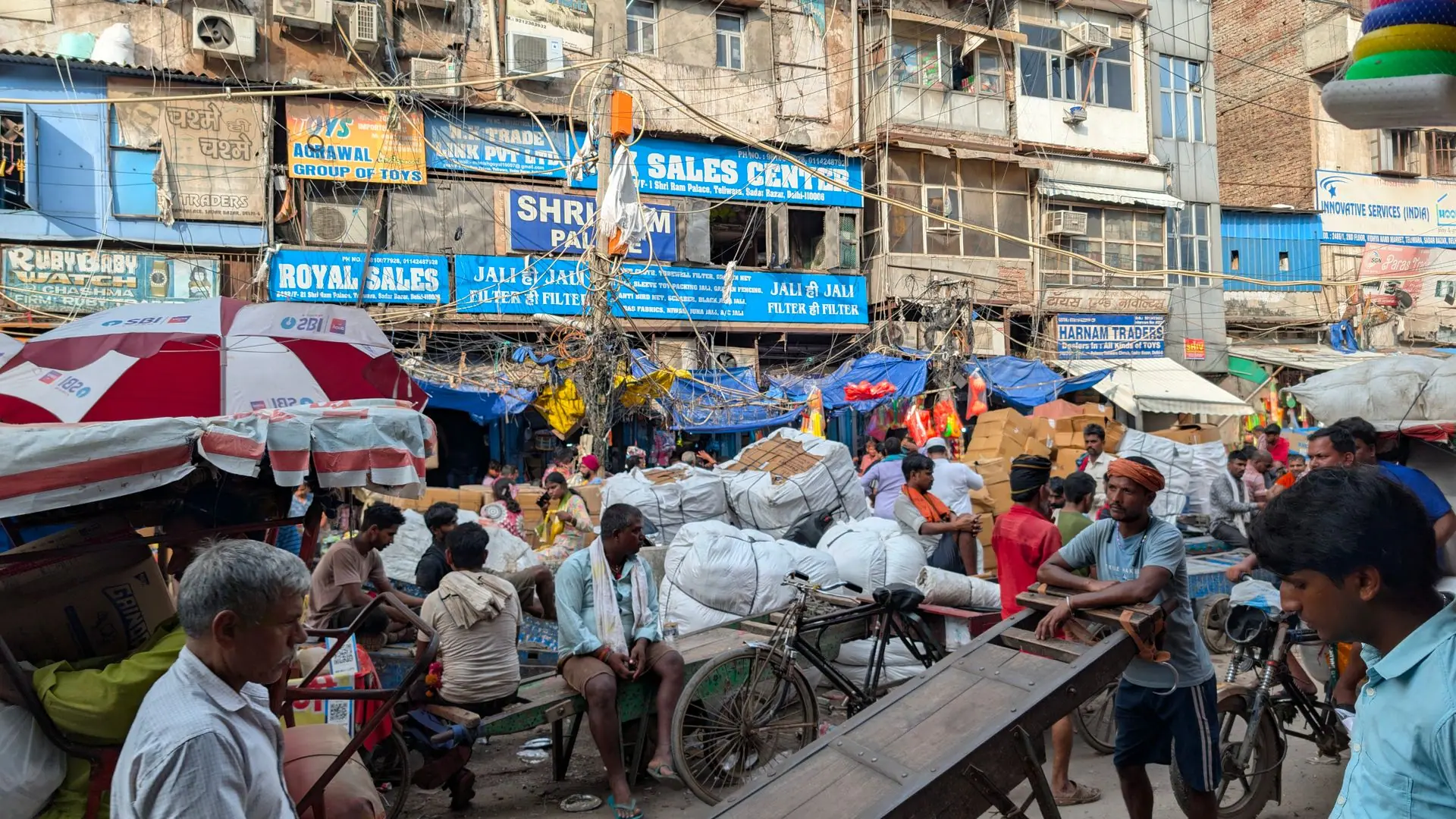
Shahjahanabad grew as a city of katras and kuchas, courtyards and lanes each given to one trade or community, and its bazaars still keep to their specialities. Dariba Kalan, once known as the jewellers' street, sells jewellery and traditional perfumes; Kinari Bazaar is full of trimmings, embellishments and silver and glass-bead jewellery; and Nai Sarak is lined with booksellers and stationers. Chatta Chowk, the arcade inside the Red Fort, sells jewellery and handicrafts.

Mirza Ghalib's haveli

In Gali Qasim Jan, off Ballimaran, part of the house where the Urdu poet Mirza Ghalib spent the last years of his life has been restored as a memorial museum by the Delhi government's Department of Archaeology, with displays on his life. It opened on his birth anniversary, 27 December 2000, and is closed on Mondays and gazetted holidays.

The gates and walls of Shahjahanabad

The city was enclosed by a stone wall with bastions and 14 gates. Most of the wall has gone, but several gates survive, and the Archaeological Survey of India protects Kashmere Gate and the walls on either side of it, Mori Gate, Delhi Gate, Ajmeri Gate and a stretch of wall near Delhi Gate. Kashmere Gate also gives its name to a metro station on three lines.

Things to do in Old Delhi

  • Walk Chandni Chowk end to end. The Delhi government's heritage walk route runs about 2 km from the Lal Jain Mandir past Begum Samru's mansion, the Central Baptist Church, Gurudwara Sis Ganj, the Town Hall and the Chunnamal haveli to Fatehpuri Masjid, in about two and a half hours.
  • See the Red Fort's museums. The Indian War Memorial Museum fills the upper floor of the Naubat Khana, the Mumtaz Mahal holds a museum of the fort, and the Kranti Mandir museums cover 1857, Jallianwala Bagh, Subhas Chandra Bose and the Indian National Army, and three centuries of Indian art.
  • Stay for the Jai Hind show. The ASI's sound and light show at the Red Fort runs every evening except Mondays, in Hindi and English.
  • Walk with a guide. Our Old Delhi heritage walk covers Chandni Chowk, the Jama Masjid, the Khari Baoli spice market and the lanes behind them in three to four hours, with cycle-rickshaw stretches where the lanes call for it.

Best time to visit Old Delhi

October to March is the comfortable season for a day on foot in the lanes. From April to June the daily maximum in Delhi averages 36.5°C to almost 40°C on the IMD's 1991–2020 normals, so start at opening time and save the bazaars for the evening; July and August are the rainiest months. Our street food walk runs all year, with mornings and early evenings the more comfortable slots in summer.

Two dates matter for the Red Fort: it closes every Monday, and for several weeks before Independence Day on 15 August, when the Prime Minister raises the national flag there. The Jama Masjid stops admitting sightseers at sunset.

How to reach Old Delhi

By metro, Chawri Bazar and Chandni Chowk are the next two stations north of New Delhi on the Yellow Line, and Chawri Bazar is the nearest station to the Jama Masjid; on the Violet Line, Lal Quila station is beside the Red Fort. From Rajiv Chowk, under Connaught Place, Chandni Chowk is about 5 km by metro.

By train, Old Delhi railway station (Delhi Junction) is the nearest station to Chandni Chowk. From the airport, take the Airport Express Line to New Delhi station, about 25 minutes, and change to the Yellow Line. Our Delhi travel guide covers arriving in the city.

How many days in Old Delhi

Half a day is enough for the Red Fort and the Jama Masjid. A full day, or a morning and an evening, adds Chandni Chowk end to end, the bazaars and a proper meal in the food lanes. A plan for one day:

  • Morning: the Red Fort at opening time, then the Jama Masjid and its southern minaret.
  • Midday: parathas in Paranthe Wali Gali, then Dariba Kalan and Kinari Bazaar.
  • Afternoon: Chandni Chowk west to Fatehpuri Masjid and Khari Baoli, with Ghalib's haveli in Ballimaran.
  • Evening: the Jai Hind show at the Red Fort, or a street food walk.

The rest of the capital, from India Gate to the Qutb Minar, is in our New Delhi travel guide, and for a stop of a few hours between flights, our India layover itineraries include a short Old Delhi food walk.

Old Delhi food: what to eat

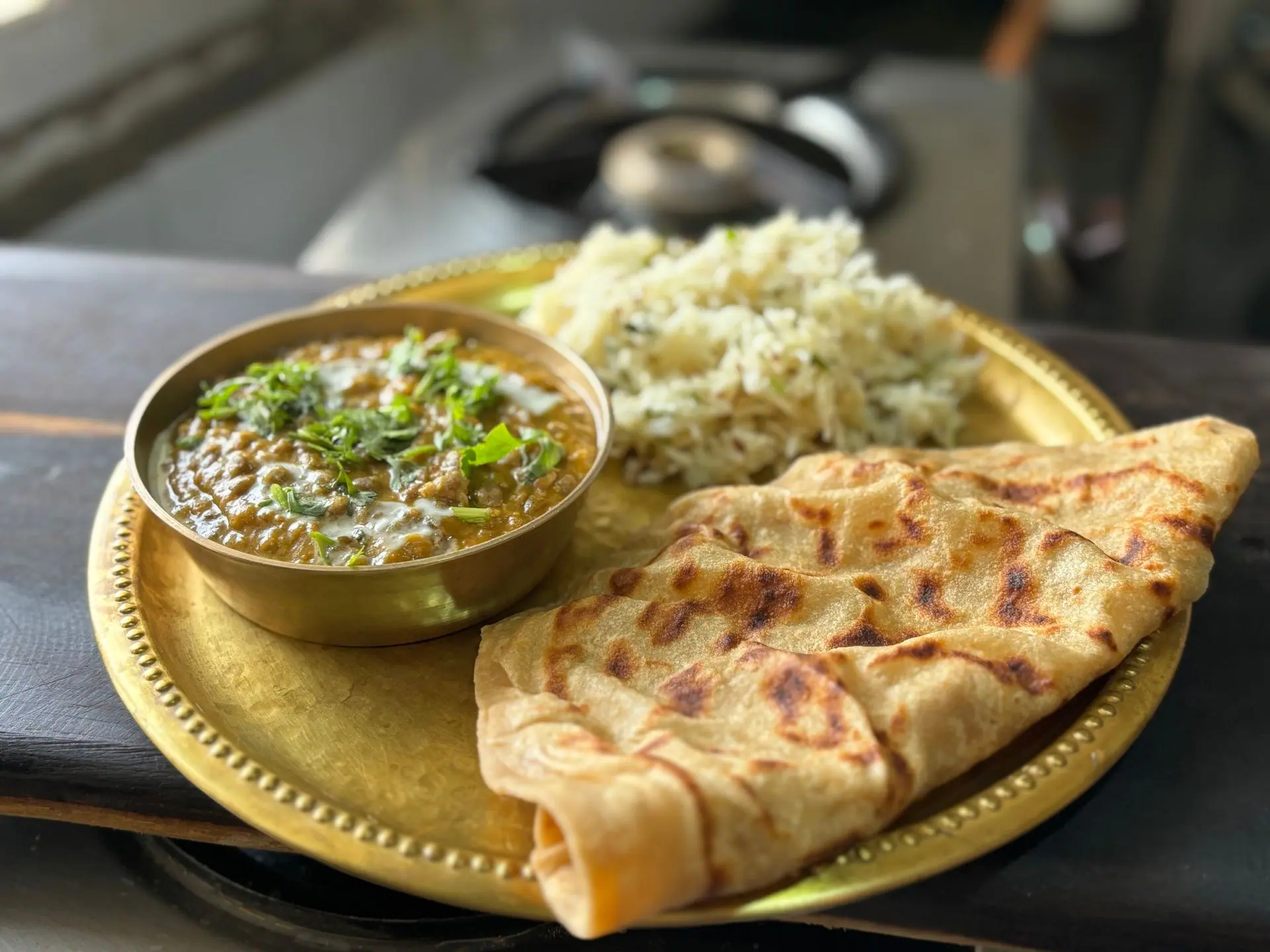
Delhi Tourism notes that Chandni Chowk is often called the food capital of India, and its streets are lined with halwais, the sweet-makers, namkeen sellers and paratha cooks. Start in Paranthe Wali Gali, where the paratha shops moved in the 1870s: the breads are stuffed with potato, cauliflower, peas or newer fillings, fried in ghee in cast-iron pans and served with mint chutney, a banana and tamarind chutney, pickle and potato curry.

Then try chaat, a mix of potato, crisp fried bread, dahi bhalla (lentil dumplings in whipped curd) and gram with tangy spices, tamarind sauce and yoghurt. Kachori with potato curry, kebabs from the Mughlai kitchens and chhole bhature are other staples. For something sweet, daulat ki chaat is a froth of whipped milk topped with pistachios, and rabdi faluda is the cold finish.

Our Old Delhi street food walk stops at stalls known for one dish done well, from stuffed parathas and chaat to grilled kebabs and a sweet finish of jalebi, with small portions at each stop. Tell us in advance about allergies or a Jain diet.

Getting around and tips

Old Delhi is best explored on foot or by cycle-rickshaw, the way Delhi Tourism suggests. The lanes are crowded and uneven, so wear comfortable closed shoes.

  • Dress for the Jama Masjid. Robes to cover up can be hired at the mosque's northern gate.
  • Mind the Monday closures. The Red Fort, its Jai Hind show and Ghalib's haveli are all closed on Mondays.
  • Buy Red Fort tickets online. The ASI sells tickets online, which saves queuing at the counter.

Why book with Experience My India

  • Government-approved operator

    Approved by the Ministry of Tourism, Government of India

  • 500+ vetted local guides

    35+ destination specialists plan every trip by hand.

  • Human help, every day

    Mon–Sun, 9:00 AM – 9:00 PM IST · +91 73022 65809

  • No payment until you approve

    You receive a written quote first; nothing is charged to start planning.

Frequently asked questions

Is Old Delhi worth visiting?

Yes, if you want the Mughal city at the heart of Delhi rather than its monuments alone. In one walkable area are a World Heritage fort, one of India's largest mosques, a Sikh shrine, Delhi's oldest Jain temple and bazaars still trading in spices, silver and books. It is crowded and loud, so allow time and, ideally, take a guide.

What is Old Delhi famous for?

The Red Fort, where the Prime Minister raises the national flag every Independence Day; the Jama Masjid; Chandni Chowk, the 17th-century bazaar street; and its food, from the parathas of Paranthe Wali Gali to chaat, kebabs and sweets. It is also Shahjahanabad, the walled Mughal city, whose surviving gates, such as Kashmere Gate, Delhi Gate and Ajmeri Gate, still mark its edges.

Where can you eat in Old Delhi?

Most eating here is street food in the lanes off Chandni Chowk: Paranthe Wali Gali for parathas, the main street for chaat, kachori and sweets, and the area around the Jama Masjid, where the Delhi government's heritage pages point to food stalls, for kebabs and Mughlai dishes. Most stalls are small and busy, so eat where the turnover is high, or let a guide choose for you.

How do you get from New Delhi to Old Delhi?

The Yellow Line is the simplest route: from New Delhi station, Chawri Bazar and Chandni Chowk are the next two stops north, and from Rajiv Chowk at Connaught Place the ride is about 5 km. Get off at Chawri Bazar for the Jama Masjid, or at Chandni Chowk for the main street. By taxi or auto-rickshaw, ask for the Red Fort and continue on foot.

What is there to do in Old Delhi in the evening?

Watch the Jai Hind sound and light show at the Red Fort, held every evening except Mondays, then eat along Chandni Chowk, which Delhi Tourism suggests for snacks or an early dinner after the fort. The Jama Masjid stops admitting sightseers at sunset, so see the mosque earlier in the day. Our street food walk also has early evening slots.

Why is it called Old Delhi?

Because it is the older of the city's two capitals. Shah Jahan founded Shahjahanabad in 1638, and the ASI counts it as the seventh city of Delhi. When the British built New Delhi as their capital, announced in 1911 and opened in 1931, the walled Mughal city came to be called Old Delhi.

Where should you stay to explore Old Delhi?

You can stay inside the walled city, but its lanes are crowded and hard to reach by car. An easier base is central Delhi, around Connaught Place or New Delhi railway station, a few stops away on the Yellow Line, from where you can come in for a morning, an evening or both.

Which historical places are in Old Delhi?

The Archaeological Survey of India protects 13 monuments in Old Delhi. Besides the Red Fort, they include Kashmere Gate, Mori Gate, Delhi Gate and Ajmeri Gate with stretches of the city wall, the Sunehri Masjid near the fort, and the mosque and gateways of Qudsia Garden. The Jama Masjid, Fatehpuri Masjid, Gurudwara Sis Ganj and the Lal Mandir are living places of worship, and Ghalib's haveli is a Delhi government memorial.

Experiences in Old Delhi

See all
More places in Delhi

See all

Related guides

Customer reviews

Experience My India is rated 4.3 on Tripadvisor. We publish guest reviews after each trip.

Read our reviews

Plan a trip

Tailor-made quote from a specialist