
Last updated:
Good Places to Visit in India in July: Weather, Where to Go and What to Avoid
July is the heart of the monsoon: on IMD's normal dates the rains have covered the whole of India by 8 July. The good places to visit are the dry ones, Ladakh and Spiti in the Himalayan rain shadow, and the ones that suit the rain, such as Kerala for Ayurveda and Bengaluru on the Deccan plateau. Leave beach holidays and foothill drives for drier months.
By Experience My India Editorial Team
Destination specialists and licensed local guides
Weather in India in July, region by region
By IMD's normal dates the monsoon has spread over the whole country by 8 July, so in July the question is not whether it rains but how much. The figures below are IMD's long-term averages for named weather stations; one year can differ a good deal from another.
- The northern plains are hot, humid and wet in bursts. New Delhi (Safdarjung) averages 35.6°C by day and 27.5°C at night, with 196 mm of rain on about ten days of the month; Varanasi gets about 299 mm. Between showers the heat stays heavy.
- The Himalaya splits in two. The foothills take a lot of rain: July is Shimla's wettest month, at about 334 mm. Behind the main range it is a different climate: Leh averages 13.8 mm of rain in July, with days around 28°C and nights around 15°C. Srinagar, in the Kashmir valley, averages 64 mm, 30°C by day and 18°C at night.
- The desert is hot and only lightly wet. Jaisalmer averages 38.4°C by day and 64 mm of rain on three or four days; on IMD's normal dates the monsoon reaches Jodhpur, at the edge of the Thar, only on 2 July.
- The west coast has its wettest weeks. Goa averages 907 mm of rain in July, on 26 days of the month, and Mumbai (Santacruz) about 841 mm; Kochi gets about 576 mm.
- The south away from the west coast is far drier. Bengaluru, on the Deccan plateau, averages 116 mm with days around 28°C and nights around 20°C, and Chennai about 102 mm, though Chennai is hot, around 36°C by day: Tamil Nadu lies in the rain shadow of this monsoon.
- The east and north-east are wet. Kolkata (Alipore) averages about 396 mm in July, on 18 days, and Guwahati about 326 mm.
The monsoon guide has the normal arrival and departure dates for each region.
Good places to visit in India in July
Ladakh
July is in the middle of Ladakh's season. The Leh district administration describes the climate as mainly dry, with little or no rain, and the Manali–Leh and Srinagar–Leh highways are both normally open: the district gives May or June to September or October for the first, and May to November or December for the second. IMD does list flash floods and mudslides among Ladakh's hazards, so leave a spare day. Our guide to the best time to visit Ladakh goes month by month, and our Ladakh tour packages run through July.
Spiti
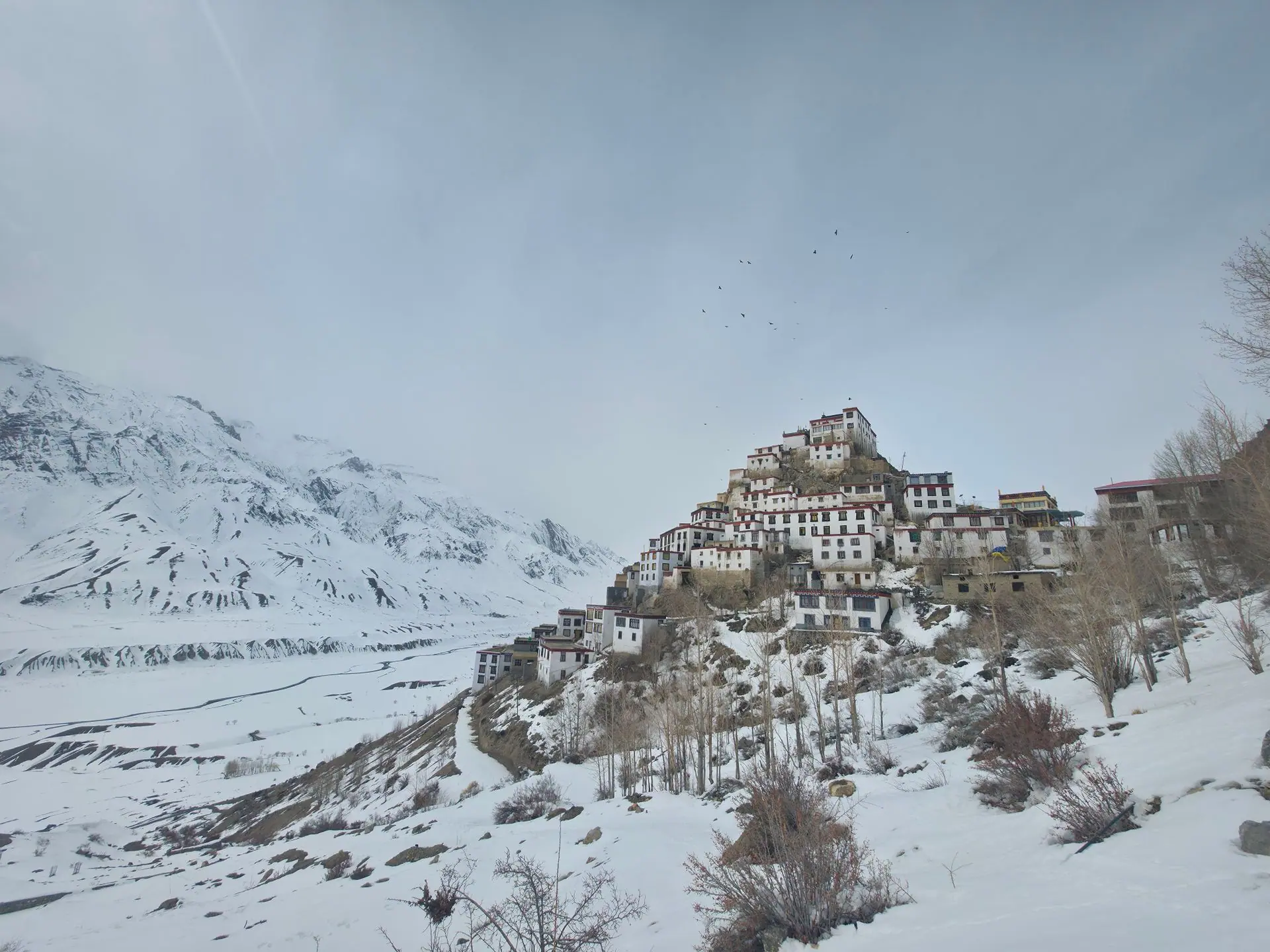
Spiti is in the Himalaya's rain shadow and gets scanty rain, according to the Lahaul and Spiti district, which counts mid-May to mid-October as the best time to visit. Two cautions for July: the Kunzum route from Manali usually opens only in June or July, and the district rates Spiti's landslide and flood risk as high. Our Spiti Valley travel guide covers both routes in.
Kerala, for the monsoon itself
Kerala Tourism presents the monsoon as a season to visit for, not to avoid. It says the rain falls for a few hours at a time with sunny interludes, and that, according to Ayurveda, the monsoon is the best season for rejuvenation therapies. The backwaters and the hills are at their greenest; the beaches are not for swimming. See our guide to the best time to visit Kerala.
Bengaluru and the Deccan plateau
With about 116 mm of rain in July and days around 28°C, Bengaluru is one of the more comfortable big cities in India this month. Our Bengaluru travel guide covers its gardens, palaces and day trips.
What to avoid, or plan around, in July
- Beach holidays on the west coast. Goa and Mumbai are in their wettest month, with rain on most days.
- Long drives in the Himalayan foothills. The Geological Survey of India says landslides strike every year, mostly in the monsoon, and counts large parts of Uttarakhand, Himachal Pradesh and Jammu and Kashmir as landslide-prone. If you go, drive in daylight, leave spare days and check the state's road status before setting out.
- Wildlife in Assam. The Assam Forest Department gives November to April as Kaziranga's season.
- Long outdoor days on the plains. Delhi, Agra and Varanasi can be seen in July, but plan the mornings outdoors and keep the afternoons for museums and indoor sights.
Festivals in July
- Rath Yatra, Puri. Odisha Tourism places the chariot festival of Lord Jagannath in the month of Ashadha, which it gives as June–July; the date moves each year with the lunar calendar. Our Rath Yatra guide explains how it unfolds.
- Teej, Rajasthan. Rajasthan Tourism describes Teej as the monsoon festival of the western and northern states, and in Jaipur a royal procession leaves the City Palace and winds through Tripolia Bazaar and Chhoti Chaupar. The festival follows the lunar calendar, so check the year's date; see our Jaipur travel guide.
Frequently asked questions
Is July a good time to visit India?
It depends where you go. July is the middle of the monsoon, so the west coast, the eastern plains and the Himalayan foothills are wet. It is a good month for Ladakh and Spiti, which lie in the rain shadow, for Kerala if you come for Ayurveda and the green landscape rather than the beach, and for Bengaluru, where the rain is light and days stay around 28°C.
Where in India does it not rain in July?
Nowhere is completely dry, but Ladakh comes closest: IMD's averages for Leh give about 14 mm of rain in July, against 196 mm at Delhi and 907 mm in Goa. Spiti, also in the rain shadow, gets scanty rain. In the south, Chennai averages about 102 mm, because Tamil Nadu gets most of its rain later, from October to December.
Is India hot in July?
On the plains and in the desert, yes. IMD's averages give New Delhi 35.6°C by day and 27.5°C at night, with high humidity, and Jaisalmer 38.4°C. The hills and the south-west are cooler: Bengaluru about 28°C, Goa about 29°C, and Leh about 28°C by day with nights around 15°C.
Where should you go in South India in July?
Away from the coast, or to Kerala for the rains. Bengaluru and the Deccan plateau get moderate rain, about 116 mm in July at Bengaluru, and mild days. Kerala is wet, with about 576 mm at Kochi, but Kerala Tourism presents the monsoon as the season for Ayurveda. Tamil Nadu's cities are drier, around 102 mm at Chennai, but hot.
Is it safe to travel in the Himalayan hills in July?
The foothills carry a real landslide risk in July: the Geological Survey of India says landslides occur every year, mostly in the monsoon, and much of Uttarakhand, Himachal Pradesh and Jammu and Kashmir is prone to them. Ladakh and Spiti are drier, but IMD and the Lahaul and Spiti district still list flash floods and landslides among their hazards. Leave spare days and check road status first.
Is Kerala worth visiting in July?
Yes, if you come for the monsoon rather than the beach. Kerala Tourism describes rain that falls for a few hours with sunny interludes and calls the monsoon the best season for Ayurvedic rejuvenation therapies. The backwaters and tea hills are at their greenest. The sea is rough, though, and Kochi averages about 576 mm of rain in the month.
Which festivals fall in July in India?
Two are worth planning around, both on the lunar calendar. The Rath Yatra at Puri falls in Ashadha, which Odisha Tourism gives as June–July, and Teej, Rajasthan Tourism's monsoon festival, brings a royal procession through Jaipur's old city. Check each year's dates before you book, as they move.
Related guides
Customer reviews
Experience My India is rated 4.3 on Tripadvisor. We publish guest reviews after each trip.
Why book with Experience My India
Government-approved operator
Approved by the Ministry of Tourism, Government of India
500+ vetted local guides
35+ destination specialists plan every trip by hand.
Human help, every day
Mon–Sun, 9:00 AM – 9:00 PM IST · +91 73022 65809
No payment until you approve
You receive a written quote first; nothing is charged to start planning.
Browse experiences by theme
See all
Wildlife Safaris
8 experiences
Heritage & Architecture
2 experiences
Beaches & Islands
5 experiences
Wellness & Ayurveda
1 experience
Yoga & Meditation
4 experiences
Trekking
2 experiences
Adventure
6 experiences
Culinary
5 experiences
Festivals
8 experiences
Performing Arts
5 experiences
Luxury Trains
4 experiences
Houseboats
3 experiences
Toy Trains & Railways
1 experience
Village & Tribal Tourism
2 experiences
Glamping & Desert
1 experience
Honeymoon & Romance
3 experiences
VIP & Luxury
2 experiences
Plan a trip
Tailor-made quote from a specialist