Skip to content

Gujarat Travel Guide: Places to Visit, Seasons and Planning

Gujarat, on India's west coast, offers the walled city of Ahmedabad, India's first UNESCO World Heritage City, the white salt desert of the Rann of Kutch, the Asiatic lions of Gir and the temple coast of Somnath and Dwarka. Stepwells, Harappan ruins and the Statue of Unity add more. Winter, from November to February, is the main season.

By Experience My India Editorial Team · Reviewed by Experience My India Editorial Team

See all 2 tours and experiences in Gujarat →

Government-approved operatorApproved by the Ministry of Tourism, Government of India

Places to visit in Gujarat
Gujarat's sights sit in four regions: Ahmedabad and its surroundings, the north around Patan, Kutch in the west, and Saurashtra, the peninsula with Gir, Somnath and Dwarka. Gujarat Tourism lists four UNESCO World Heritage Sites in the state: Rani ki Vav, Champaner-Pavagadh, Ahmedabad and Dholavira. Distances are long, so choose two regions for a week rather than all four.

Ahmedabad's walled city

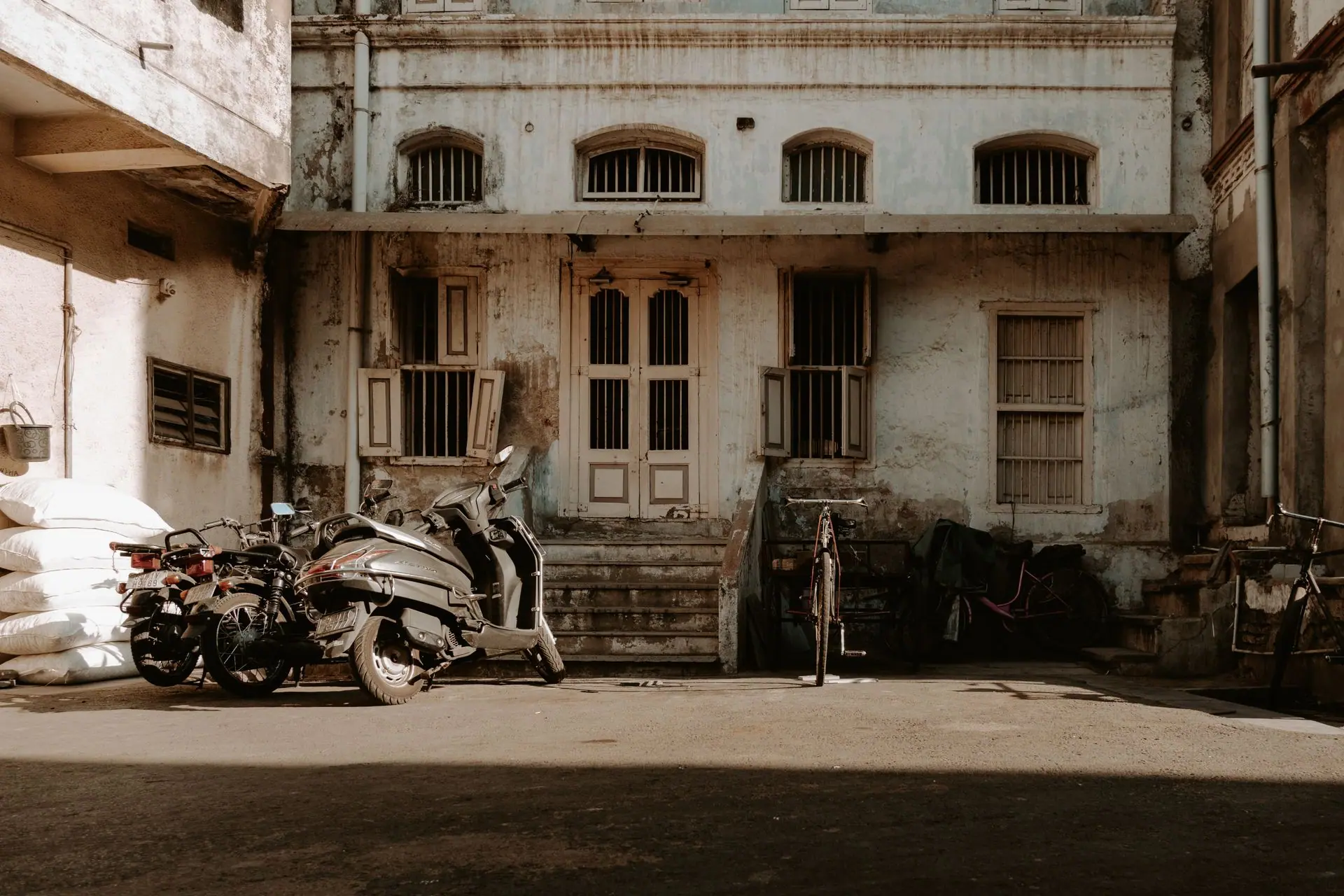
Gujarat Tourism says UNESCO listed the walled city in 2017 and calls Ahmedabad India's first World Heritage City. Its heart is the pols, self-contained neighbourhoods of narrow streets and small squares with community wells and chabutaras, towers for feeding birds. The Ahmedabad Municipal Corporation arranges heritage walks: a morning walk from the Swaminarayan Temple in Kalupur takes about 2.5 hours and passes the 15th-century Jama Masjid, and Manek Chowk's night market runs from dusk to midnight. Our Ahmedabad travel guide has the detail.

Sabarmati Ashram

Sabarmati Ashram was the home of Mahatma Gandhi and Kasturba. Gujarat Tourism says the ashram moved to its 36-acre site on the banks of the Sabarmati on 17 June 1917, and that Gandhi began the Dandi March from here. The museum is the best-known of the institutions in its grounds, and the ashram is open every day of the year. Also in the city, the Hutheesing Jain Temple, built in 1848 outside the Delhi Gate and dedicated to the 15th Tirthankara Dharmanatha, is open daily from 8 am to 5 pm.

Adalaj, Lothal and Nalsarovar

Three half-day trips leave Ahmedabad. Adalaj Ni Vav, a 15th-century stepwell with carved pillars supporting five storeys, is 19 km north. Lothal, about 80 km south-west, was a Harappan port city, and Gujarat Tourism calls its dock the world's oldest known artificial one; its museum is closed on Fridays. Nalsarovar, about an hour's drive away, is a Ramsar bird sanctuary with more than 250 species, including pelicans and flamingos, best from November to February.

Rani ki Vav, Patan

Rani Udayamati of the Chaulukya dynasty built this stepwell in 1063 to commemorate her husband, Bhimdev I. It carries more than 800 sculptures, mostly on the avatars of Vishnu, and has been a World Heritage Site since 2014. After sunset a 3D projection mapping show lights it every evening. Gujarat Tourism gives Ahmedabad's airport as 125 km from Patan, and the stepwell lies near Modhera and Patan's Patola Heritage Museum.

Modhera Sun Temple

According to the Archaeological Survey of India, as quoted by Gujarat Tourism, the Sun Temple at Modhera was built in 1026–27 CE in the reign of Bhima I of the Chaulukya dynasty. A rectangular tank, the Suryakund, holds 108 shrines, and the pillars of the assembly hall carry twelve carvings of the sun for the twelve months. It is open from 7 am to 6 pm and is 99 km from Ahmedabad by road, or 26 km from Mehsana.

Champaner-Pavagadh

Gujarat Tourism describes the archaeological park, dating from the 8th to the 14th century, as a landscape of forts, mosques, tombs, arches, temples and step-wells, with the Jami Masjid among its monuments. Pilgrims climb Pavagadh, 800 m above sea level, to the Kalika Mata Temple, the oldest in the area, from the 10th or 11th century; a cable car carries visitors up from about the midway point. Champaner is 45 km from Vadodara, and the site is open every day.

Vadodara and the Laxmi Vilas Palace

Maharaja Sayajirao Gaekwad III built the Laxmi Vilas Palace in 1890, with Major Charles Mant as its main architect, in an Indo-Saracenic style. The grounds cover about 500 acres, with a golf course, and the palace has a museum and a collection of weaponry and art. Gujarat Tourism lists it as open from 10 am to 5 pm, Tuesday to Sunday. Vadodara is also the railhead and airport for the Statue of Unity and a base for Champaner.

Statue of Unity, Kevadia

The 182-metre statue of Sardar Vallabhbhai Patel stands at Kevadia on the Sadhu Bet hillock above the Narmada, and was inaugurated on 31 October 2018. Nearby are the Valley of Flowers, 24 acres along the river, and the 163-metre Sardar Sarovar Dam. The statue opens at 8 am, closes at 6 pm from Tuesday to Sunday and is closed on Mondays for maintenance. Vadodara, about 90 km away by road, is the nearest airport and railway station.

The White Rann at Dhordo

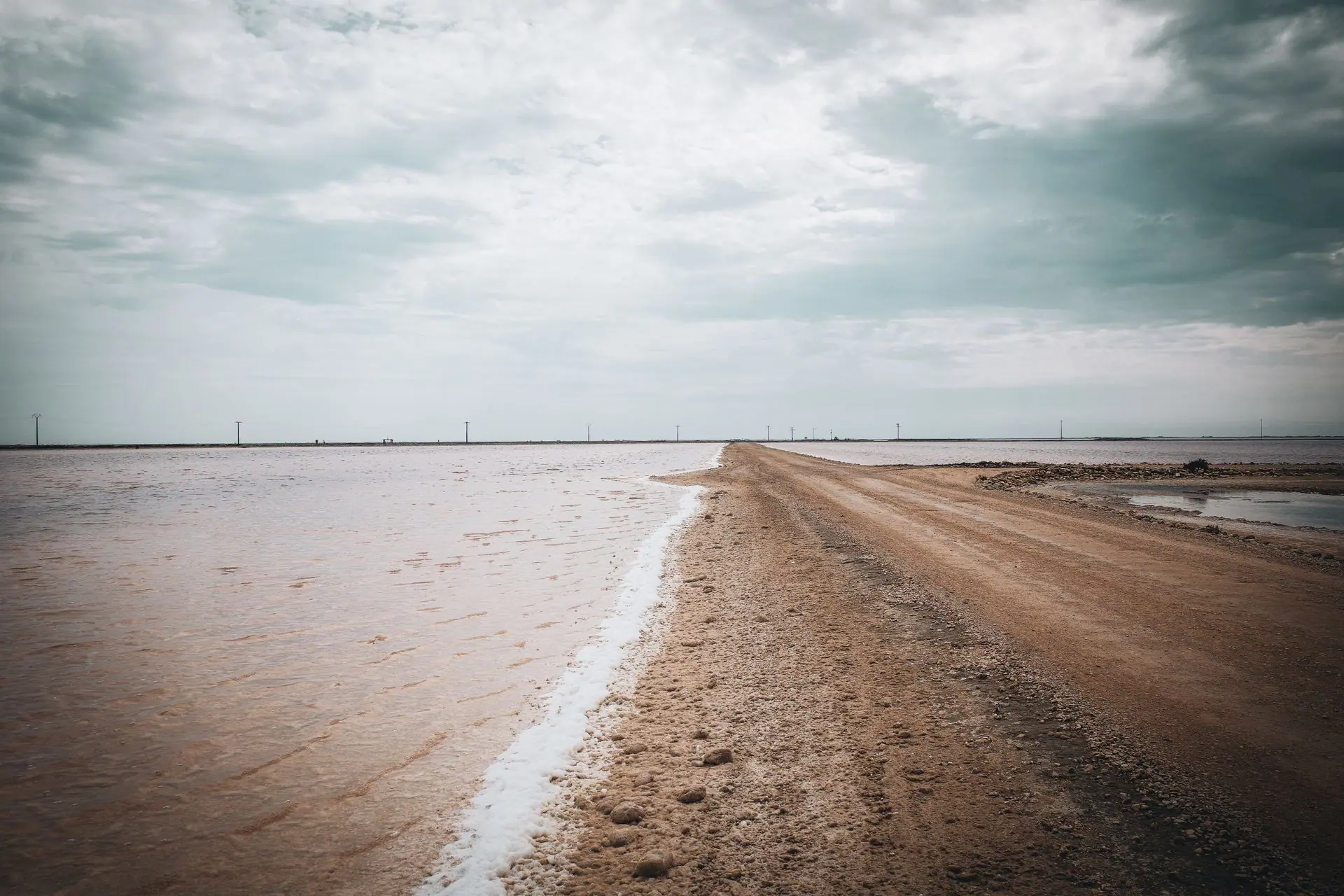
The Rann of Kutch is a seasonal salt marsh: under water in the monsoon, with a fresh crust of salt crystals as the water recedes. By winter the White Rann, at Dhordo village, is a dry white plain, and Gujarat Tourism's tent city stands there for the Rann Utsav. The White Rann and Kalo Dungar are in notified areas and need a permit. Our Rann of Kutch travel guide covers the permit, Bhuj and the craft villages.

Bhuj and Dholavira

Bhuj, the base for Kutch, has the Aina Mahal, built in 1752, the Prag Mahal, with its 45-metre bell tower that visitors climb, and the Kutch Museum, founded in 1877 and called the oldest museum in Gujarat. Dholavira, a Harappan city on the island of Khadir in the Great Rann, became a World Heritage Site in 2021. Gujarat Tourism puts it 250 km from Bhuj via Bhachau and Rapar, so give it a full day.

The Little Rann and its wild asses

The Wild Ass Sanctuary in the Little Rann covers 4,953 sq km and holds the last population of the Indian wild ass, along with blackbuck and chinkara. Gujarat Tourism lists it as open from dawn to dusk between 16 October and 15 June, 103 km from Ahmedabad, so it does not take visitors in the monsoon.

Gir National Park

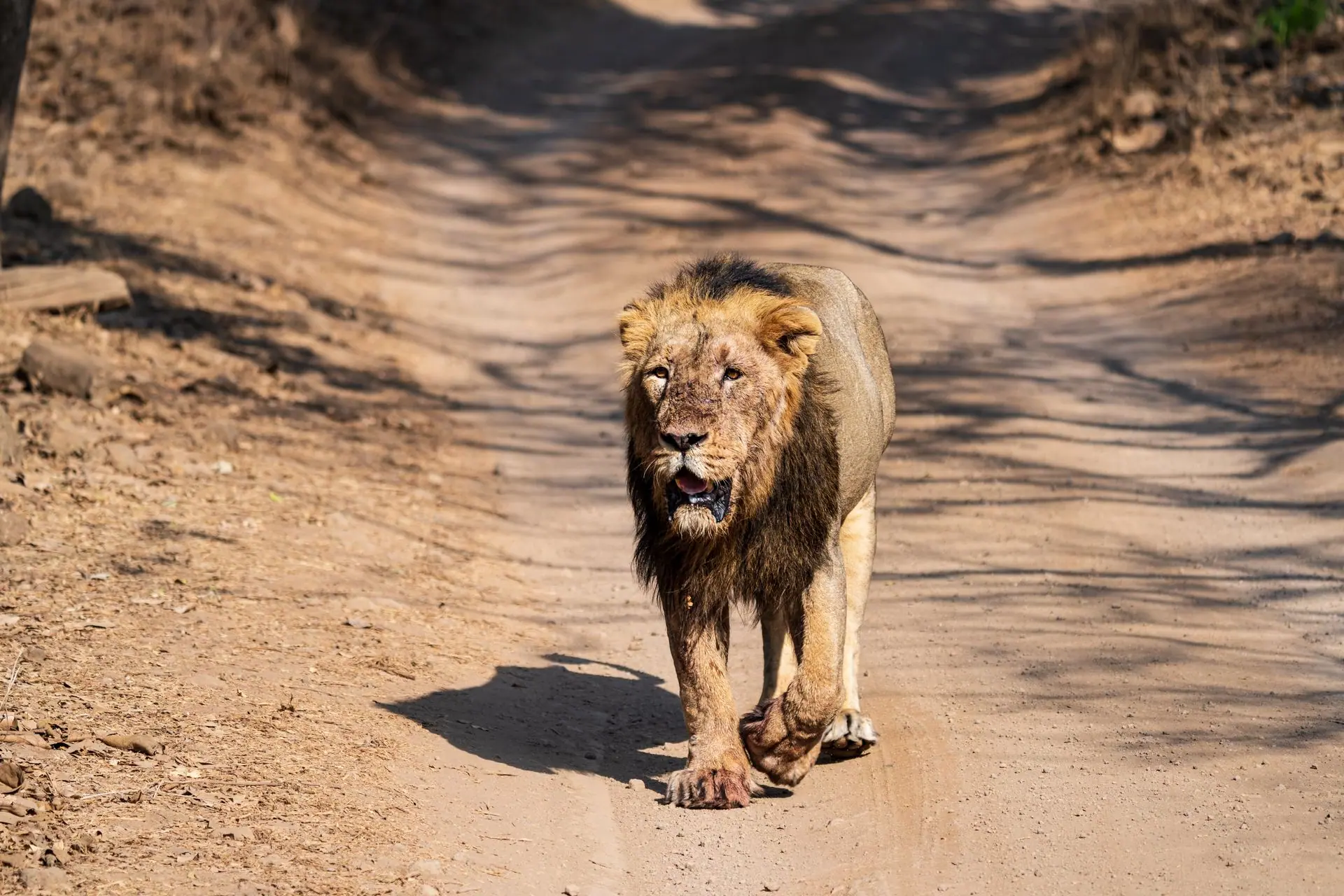
Gir, in Saurashtra, is the home of the Asiatic lion. Gujarat Tourism describes a 1,412 sq km sanctuary with a core of 259 sq km declared a national park in 1975. India's environment ministry reports that the lion population rose from 674 in 2020 to 891 in 2025, with lions now living in new areas outside the park too. Safaris are open only by e-permit booked online; our Gir National Park guide explains how.

Somnath

Gujarat Tourism says the Somnath Jyotirlinga Temple is believed to be the place where the first of the twelve jyotirlingas emerged. It stands on the shore where the Kapila, Hiran and Sarasvati rivers meet the Arabian Sea, and Sardar Vallabhbhai Patel laid its foundation stone in 1947. It is open from 6.30 am to 9 pm, with a sound-and-light show every night. Junagadh is 82 km away and Gir is listed among the nearby places.

Dwarka

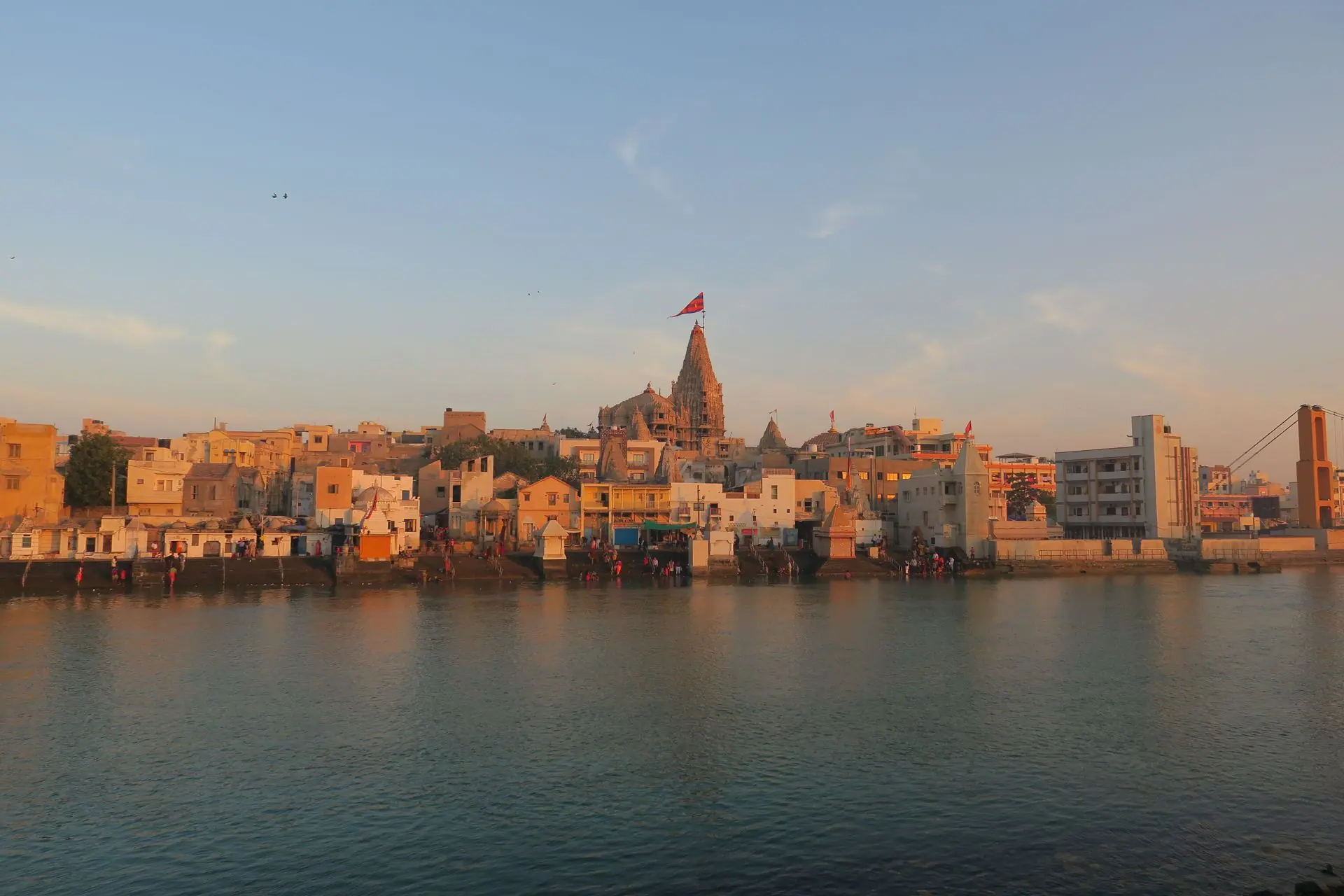
The Dwarkadhish Temple, also called the Jagat Mandir, is dedicated to Krishna as King of Dwarka. Dwarka is the western one of the four Dhams, as the Puri temple administration lists them. Gujarat Tourism lists darshan hours of 7 am to 12.30 pm and 5 to 9 pm. The closest airports are Porbandar, 95 km away, and Jamnagar, 145 km. Bet Dwarka, Nageshwar Jyotirlinga and the Rukmini Temple are among the nearby sights. See our Dwarka and Somnath guide.

Junagadh and Girnar

Uparkot Fort in Junagadh is believed to have been built in 319 BC, and Gujarat Tourism lists the 41-metre Adi Kadi Vav stepwell, the 52-metre Navghan Kuvo well and a set of Buddhist caves inside. Girnar Hill rises beyond the town, with about 10,000 stone steps; the Gorakhnath temple on Gujarat's highest peak stands at 1,117 m, and many temples close from about 11 am to 3 pm. The Girnar Parikrama is held in November.

Things to do in Gujarat

Time a visit for a festival. Navratri is nine nights beginning on the first day of the bright fortnight of Ashwin, usually at the end of the rains, with garba every night in villages and neighbourhoods; Gujarat Tourism names Vadodara and Ahmedabad the most sought-after places and advises visiting at least one village garba. Uttarayan, on 14 January, fills the sky with kites from before dawn, with kite-making in Ahmedabad from November and laddoos and undhiyu on the day; see our Makar Sankranti guide. Gujarat's other tours and experiences are on our Gujarat tours and experiences page.

Two of our experiences are in Gujarat. Our Rann Utsav experience is a stay in a tented camp near Dhordo with a private guide and vehicle, usually two to three days, with the salt flat visited at sunset or, where dates allow, on a full-moon night. Our Gir lion safari pairs Gir with the Rann of Kutch and Somnath, and no sighting is ever guaranteed.

Best time to visit Gujarat

Winter is the main season. Gujarat Tourism names November to February for Nalsarovar and November to March for Gir, and the Rann is dry by winter. IMD's figures for Ahmedabad give January days of 28.1°C and nights of 12.4°C, and for Bhuj, in Kutch, a January mean maximum of 27.4°C and a minimum of 10.0°C, so pack a warm layer for evenings in the desert.

Summer is hot. IMD puts Ahmedabad's mean maximum in May at 41.6°C and Bhuj's at 39.4°C. Ahmedabad gets about 95 per cent of its rain in the south-west monsoon; on the Saurashtra coast, IMD's table for Veraval shows July alone at 311.5 mm. Gir's jungle safari is closed from 16 June to 15 October, and the White Rann is under water. Navratri usually falls at the end of the rains, and Uttarayan on 14 January.

How to reach Gujarat

By air: Sardar Vallabhbhai Patel International Airport in Ahmedabad is the main gateway. Bhuj's airport is about 4 km from the city, Vadodara has air connections, Keshod Airport is the closest to Gir, and Porbandar and Jamnagar serve Dwarka.

By train: Vadodara lies on the Western Railway's Mumbai–Delhi main line, served by Shatabdi and Rajdhani trains. Daily express trains run from Bhuj to Ahmedabad and Mumbai, and two express trains run on the Ahmedabad–Veraval line, which serves Junagadh.

By road: Ahmedabad to Bhuj is 335 km, about seven hours, and Ahmedabad to Somnath about 410 km. Distances between regions are long, so plan the order of the trip around them.

How many days in Gujarat

Give Ahmedabad two days. Add one for Rani ki Vav and Modhera, or Champaner and Vadodara. Kutch wants two to three days because of the driving. Gir needs two days to allow more than one safari, with Somnath and Dwarka a further two to three.

A week works for two of these regions. For example, Ahmedabad and Patan for three days and Kutch for four; or Ahmedabad for two, then Gir, Somnath and Dwarka for five. Add the other region on a second trip. For onward travel, our Rajasthan travel guide covers the neighbouring state.

Tips

  • The White Rann and Kalo Dungar need a permit from the Collector's office in Kutch. The online permit is for Indian nationals only, and others can use the Bhirandiyara checkpost.
  • Gir safaris need an e-permit in each visitor's name, booked on the Forest Department's own website, and a guide is compulsory.
  • The Ahmedabad morning heritage walk reports at 7.30 to 7.45 am, so plan an early start.
  • Check weekly closed days: the Statue of Unity is closed on Mondays and Lothal's museum on Fridays, and the Laxmi Vilas Palace is listed for Tuesday to Sunday.
  • Gujarat has a prohibition law, the Gujarat Prohibition Act, 1949. Check the current rules with the state authorities before you travel.

Why book with Experience My India

  • Government-approved operator

    Approved by the Ministry of Tourism, Government of India

  • 500+ vetted local guides

    35+ destination specialists plan every trip by hand.

  • Human help, every day

    Mon–Sun, 9:00 AM – 9:00 PM IST · +91 73022 65809

  • No payment until you approve

    You receive a written quote first; nothing is charged to start planning.

Frequently asked questions

What is the best time to visit Gujarat?

November to February for most of the state, with Gir best from November to March by Gujarat Tourism's reckoning. The White Rann is dry in winter, and the Wild Ass Sanctuary is open from 16 October to 15 June. IMD puts Ahmedabad's January days at 28.1°C and its May days at 41.6°C, and most of the year's rain comes in the monsoon months.

Is Gujarat a dry state?

In law, yes: the state has a prohibition law, the Gujarat Prohibition Act, 1949. The rules for visitors have been amended over the years, so this guide does not summarise them. Check the current position with the state's Prohibition and Excise authorities or your hotel before you travel, and do not assume alcohol can be bought or carried.

Which places in Gujarat need a permit before you go?

The White Rann and Kalo Dungar are in notified areas, and the Kutch Collector's office issues the permit; the online route is for Indian nationals only. Gir's Jungle Safari, the Devalia Safari Park, Ambardi and Girnar Nature Safari all use the Forest Department's online e-permit.

Which places in Gujarat are UNESCO World Heritage Sites?

Gujarat Tourism lists four: Rani ki Vav in Patan, Champaner-Pavagadh Archaeological Park near Vadodara, Ahmedabad's walled city and Dholavira in Kutch. It says Ahmedabad, listed in 2017, was the first city in India to receive World Heritage City status. Rani ki Vav was inscribed in 2014 and Dholavira in 2021.

What is Uttarayan?

Uttarayan is Gujarat's kite festival on 14 January. People fly kites from rooftops from before dawn and compete to cut rivals' strings. Gujarat Tourism says kite-making in Ahmedabad starts in November, with Patang Bazaar selling kites, and that the International Kite Festival uses the Sabarmati Riverfront as its centrepiece. Laddoos and undhiyu are the food of the day.

Is the Statue of Unity closed on any day?

Yes, it is closed on Mondays for maintenance, according to Gujarat Tourism. It opens at 8 am and closes at 6 pm from Tuesday to Sunday. The statue is at Kevadia, about 90 km by road from Vadodara, which has the nearest airport and railway station.

Where in Gujarat can you see the Indian wild ass?

In the Wild Ass Sanctuary in the Little Rann of Kutch, 4,953 sq km, which Gujarat Tourism says holds the last population of the Indian wild ass, along with blackbuck and chinkara. It is open from dawn to dusk between 16 October and 15 June and lies 103 km from Ahmedabad. November to February is the best time.

Experiences in Gujarat

See all
Gir lion safari
Gir lion safari

Gir National Park

Gir lion safari

Private naturalist guide and vehicle throughout

Price on request
Rann Utsav, Kutch
Rann Utsav, Kutch

Rann of Kutch

Rann Utsav, Kutch

Private guide and vehicle

Price on request

From the journal: Gujarat
Customer reviews

Experience My India is rated 4.3 on Tripadvisor. We publish guest reviews after each trip.

Read our reviews

Plan a trip

Tailor-made quote from a specialist