Skip to content

Rann of Kutch Travel Guide: The White Rann, Bhuj and Beyond

Travel guideGujarat1 tour or experience

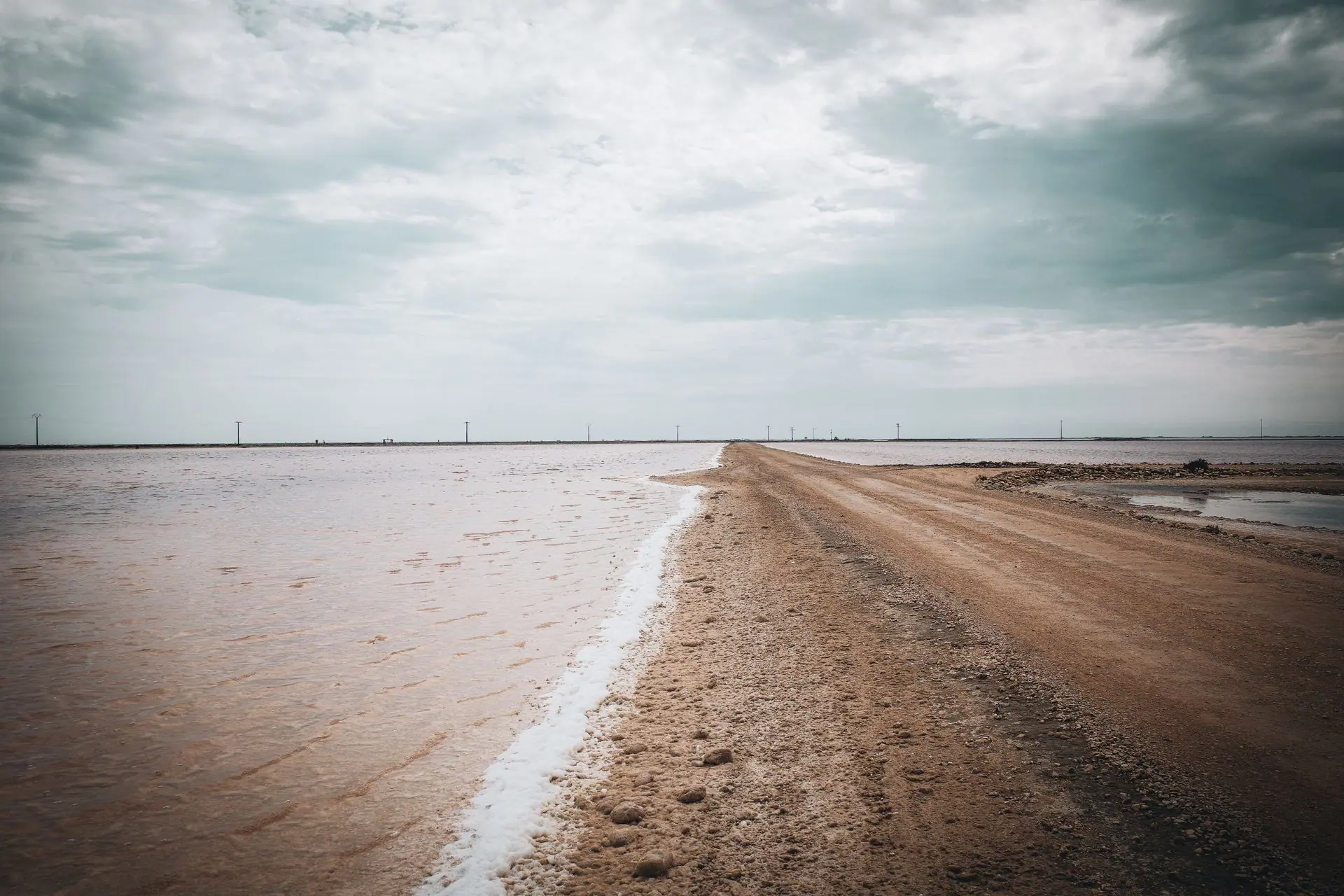
The Rann of Kutch is a seasonal salt marsh in Gujarat's Kutch district that floods in the monsoon and dries into a white salt crust after the rains. The places to visit in Kutch start with the White Rann at Dhordo and the view from Kalo Dungar, both reached with a permit, then Bhuj's palaces and museum, the Harappan city of Dholavira and the craft villages.

By Experience My India Editorial Team · Reviewed by Experience My India Editorial Team · Updated 1 Sept 2026

See all 1 tour or experience in Rann of Kutch →

Government-approved operatorApproved by the Ministry of Tourism, Government of India

Places to visit in Kutch and the Rann

Bhuj, the district headquarters, is the base for most visits. The White Rann at Dhordo is about 80–85 km from it, Kalo Dungar some 90 km to the north, and Dholavira, on an island in the Great Rann, more than 200 km away by road. Every trip we run here is on our Rann of Kutch tours and experiences page.

The White Rann at Dhordo

Dhordo, a village in the Great Rann close to the border with Pakistan, is what Incredible India calls the portal to the white sands. The salt flat is under water in the monsoon; as the water recedes, Incredible India notes, a fresh crust of salt crystals forms, and by the winter festival season the White Rann of Kutch is a dry white plain running to the horizon. Gujarat Tourism lists it as open from dawn to dusk. In the festival season a tent city stands here. Dhordo is known for its mud craft and Mutwa embroidery, and UNWTO named it one of its Best Tourism Villages of 2023.

Kalo Dungar

North of Khavda, Kalo Dungar, the Black Hill, is the highest point in Kutch at 462 m and looks out over the Great Rann. Its Dattatreya temple, about 400 years old, keeps an old custom: in the late evening the priests put out cooked rice for jackals, after a legend of the god feeding starving jackals with his own body. The hill is in a notified area, so it needs the same permit as the White Rann, and your own transport. A short drive on, the India Bridge lies in an army-controlled area where photography is not allowed.

Aina Mahal and Prag Mahal, Bhuj

Old Bhuj's walled royal compound holds two contrasting palaces. The Aina Mahal was built in the 1750s for Maharao Lakhpatji by Ram Singh Malam, a sailor who had learned European arts and crafts on his travels; it lost its upper storey in an earthquake, but the mirrored lower floor still shows blue-and-white tiles, Venetian glass and a 15.2 m scroll of a Kutch state procession. Next door, Prag Mahal, commissioned by Pragmalji in the 1860s and designed by Colonel Henry Saint Wilkins in the Italian Gothic style, has a 45 m bell tower you can climb.

Kutch Museum and Hamirsar Lake

Founded by Maharao Khengarji in 1877, the Kutch Museum is the oldest museum in Gujarat. Its collection runs from Kshatrapa inscriptions of the 1st century AD and the old Kachchhi script to coins, among them Kutch's own kori, and a section on the region's tribal cultures, besides embroidery, arms and musical instruments. It is one of a cluster of sights on the eastern side of Hamirsar Lake, with the two palaces close by, and Gujarat Tourism suggests the lakeside as the walking route between them.

Smritivan Earthquake Memorial

On Bhujiyo hill above the town, Smritivan remembers the people who died in the 2001 Kutch earthquake. Fifty check dams carry plaques with the names of 12,932 victims, among the trees of a planted forest, and the museum, opened in 2022, tells the story in seven blocks, from the Earth's evolution and Gujarat's landscape to the disaster and the rebuilding, with an earthquake simulator.

Dholavira

On Khadir island in the Great Rann, Dholavira was a Harappan city and became a UNESCO World Heritage Site in 2021. Its citadel and its middle and lower towns were each fortified separately, and Gujarat Tourism points to its system for storing rainwater and to ten large inscriptions in the Indus script, which it calls perhaps the world's earliest signboard. The site is more than 200 km from Bhuj by road, via Bhachau and Rapar, so allow a long day.

Nirona and the craft villages

The crafts of Kutch are made in its villages. At Nirona, 40 km north-west of Bhuj, one extended family, the Khatris, keeps rogan painting alive, tracing designs on cloth with a thick paste made from heated castor oil; the village also makes lacquerwork and bells. Around the Rann, Gujarat Tourism describes hamlets of round mud houses, bhungas, as centres of embroidery, tie-dye, leatherwork and pottery, and Gandhi Nu Gaam, near the festival site, is a village of artisans restored after the earthquake.

Mandvi

Mandvi, 58 km south-west of Bhuj, grew up as the Maharao's port where the Rukmavati river meets the Gulf of Kutch, and its Kharva families were known for building wooden ships. Parts of the old fort wall survive, the beach is lively with snack sellers at sunset, and Gujarat Tourism gives November to February as the best months. The Vijay Vilas Palace, 7 km west of the town, was built between 1920 and 1929 as a summer palace for the heir of Maharao Khengarji III.

Chhari Dhand

On the edge of the Banni grasslands, about 80 km north-west of Bhuj, Chhari Dhand is a seasonal wetland reserve that fills in the monsoon. The district lists around 370 bird species there, and Gujarat Tourism names thousands of flamingos, common cranes, painted storks and spoonbills, with endangered Dalmatian pelicans and Indian skimmers, among the birds of the monsoon and winter.

The Little Rann

The Little Rann, about 200 km east of the Great Rann, is a separate trip. Its Wild Ass Sanctuary, 4,953 sq km of salt flat and scrub, protects the last population of the Indian wild ass, along with blackbuck and chinkara and, in winter, flamingos and cranes. Gujarat Tourism lists it as open from dawn to dusk between 16 October and 15 June, and it lies closer to Ahmedabad, about 103 km away, than to Bhuj, about 196 km.

Things to do in the Rann of Kutch

The Rann Utsav, held each winter since 2006, centres on the tent city at Dhordo, organised by the Gujarat Tourism Board, with folk music and dance, craft stalls, adventure activities such as ATV rides and paramotoring, and evenings on the salt that Incredible India singles out around the full moon. Our Rann Utsav trip arranges the tented camp and a private guide and vehicle from Bhuj, and times your visit to the salt flat for sunset or, where dates allow, a full-moon night. The festival itself is covered on our festival page, and other festival trips here are under festivals and events in Kutch.

Kutchi embroidery, mirror-work and bandhani are sold at the festival's craft stalls and in Bhuj, which Incredible India recommends for its shops, and leather goods at Gandhi Nu Gaam. For birds, go to Chhari Dhand or the Little Rann in winter; Gujarat Tourism also mentions flamingos and wild asses around the small water bodies of the Great Rann. On the road from Bhuj to Dhordo, Incredible India suggests stopping for dabeli, a bun filled with spiced potato, pomegranate and peanuts, sold at stalls along the way.

Best time to visit the Rann of Kutch

Plan for November to February. The Rann is under water in the monsoon and dries out after it, and the salt is at its whitest in the winter festival season. Official listings have opened that season in October, November or December and closed it in February or March, and Gujarat Tourism announces each season's dates, so check them before fixing travel. IMD's 1981–2010 averages for Bhuj show why winter works: January days average about 27°C and nights about 10°C, so the open salt is cold after dark, while October still reaches about 37°C by day and April and May about 39°C. Nearly all of Bhuj's 323 mm of yearly rain falls from June to September, most of it in July and August. Full-moon nights in the season are especially popular, so book early if you want one.

How to reach the Rann of Kutch

  • By air: Bhuj Airport (BHJ) is 4 km from the town, with flights from Mumbai; Kandla is the district's other airport.
  • By train: Bhuj station (BHUJ) has daily trains to and from Ahmedabad and Mumbai, and the district lists trains to Delhi via Ahmedabad. Gandhidham, about 80 km from Bhuj, has trains to more cities, among them Pune and Bengaluru.
  • By road: Ahmedabad to Bhuj is 335 km, about seven hours by car. From Bhuj, Dhordo is about 80–85 km, roughly an hour and 20 minutes, and permits are checked at Bhirandiyara on the way.

On our festival trip, you are met at Bhuj and driven on to the tent city.

How many days in the Rann of Kutch

Two to three days is the usual length of our festival trip, and it covers the essentials. A good plan: the first day in Bhuj for the Aina Mahal, Prag Mahal, the Kutch Museum and Smritivan; the second north to Dhordo by way of the craft villages, reaching the White Rann for sunset; the third at Kalo Dungar in the morning before heading back. Add a full day for Dholavira and another for Mandvi, and leave the Little Rann for a separate stop from Ahmedabad. Our festival page suggests pairing Kutch with Ahmedabad or Gir rather than treating it as a quick add-on: see our Ahmedabad travel guide, our Gir National Park travel guide and, for the whole state, our Gujarat travel guide.

Permits and tips

  • Permits: the Collector's office in Bhuj says the White Rann and Kalo Dungar are notified areas that need a permit. Indian nationals can get one online on its permit portal, where the main traveller uploads an ID, or at the Bhirandiyara checkpost. The online form is for Indian nationals only, so if you hold another passport, ask us or the Collector's office before you travel.
  • Border rules: Dhordo is close to the border with Pakistan, and the India Bridge beyond Kalo Dungar is an army-controlled area where photography is banned; keep to the places your permit covers.

Why book with Experience My India

  • Government-approved operator

    Approved by the Ministry of Tourism, Government of India

  • 500+ vetted local guides

    35+ destination specialists plan every trip by hand.

  • Human help, every day

    Mon–Sun, 9:00 AM – 9:00 PM IST · +91 73022 65809

  • No payment until you approve

    You receive a written quote first; nothing is charged to start planning.

Frequently asked questions

Can you visit the Rann of Kutch without booking?

You do not need a tour or a tent to see the White Rann, but you do need a permit, because the White Rann and Kalo Dungar are notified areas. Indian nationals can get it online through the Kutch Collector's permit portal, uploading the main traveller's ID, or at the Bhirandiyara checkpost on the way to Dhordo. In the festival season, book your bed early, whether a tent at Dhordo or a hotel in Bhuj.

Is the Rann of Kutch safe to visit?

The main things to know are the local rules and the climate. Dhordo and Kalo Dungar are close to the border with Pakistan, they are notified areas you enter with a permit, and the India Bridge area is under the army, with photography banned. Keep to the places your permit covers and follow the checkpoints. For the weather, carry water for hot days and a warm layer for winter nights, when Bhuj averages about 10°C.

How was the Rann of Kutch formed?

Gujarat Tourism says the area was once a shallow part of the Arabian Sea until geological shifts closed off its link to the sea, leaving a seasonal salt marsh. Each monsoon the marsh fills with water, in a wetland that Gujarat Tourism traces from the Gulf of Kutch in the west to the Gulf of Cambay in the east; as it dries, the salt is left behind as the white crust visitors come to see.

What is the difference between the Great Rann and the Little Rann of Kutch?

The Great Rann is the salt flat that stretches towards Sindh in Pakistan, where you find the White Rann at Dhordo, Kalo Dungar and Dholavira, with Bhuj as the base. The Little Rann lies about 200 km to the east, closer to Ahmedabad, and is known for its Wild Ass Sanctuary, the last home of the Indian wild ass, open from mid-October to mid-June. Most trips focus on one or the other.

Where can you see flamingos in Kutch?

Gujarat Tourism notes pink flamingos around the small water bodies of the Great Rann, and counts thousands of them, with common cranes and painted storks, at the Chhari Dhand wetland, about 80 km north-west of Bhuj, through the monsoon and winter. Greater flamingos also winter in the Little Rann's Wild Ass Sanctuary, where Gujarat Tourism gives November to February as the best months for birds.

Where do you stay to see the White Rann?

In the festival season, the tent city organised by the Gujarat Tourism Board puts you in Dhordo itself; our festival trip arranges a tent there, with proper beds and bathrooms. Outside the festival, or if you would rather stay in a town, Bhuj is the usual base, about 80–85 km from Dhordo, which Incredible India puts at roughly an hour and 20 minutes by road.

How many days do you need for the Rann of Kutch?

Two to three days covers Bhuj, a sunset on the White Rann and Kalo Dungar, which is also the usual length of our festival trip. Dholavira, more than 200 km from Bhuj, needs a long extra day, and so does Mandvi with its beach and palace. Leave the Little Rann for a separate trip from the Ahmedabad side, where the sanctuary is about 103 km away.

Experiences in Rann of Kutch

See all
Rann Utsav, Kutch
Rann Utsav, Kutch

Rann of Kutch

Rann Utsav, Kutch

Private guide and vehicle

Price on request

From the journal: Rann of Kutch

Customer reviews

Experience My India is rated 4.3 on Tripadvisor. We publish guest reviews after each trip.

Read our reviews

Plan a trip

Tailor-made quote from a specialist