Skip to content

Dwarka & Somnath Travel Guide: Temples, Bet Dwarka and the Saurashtra Coast

Travel guideGujarat

The places to visit in Dwarka, Gujarat, start with the Dwarkadhish Temple, one of the Char Dham, then Bet Dwarka island, the Rukmini Temple and the Nageshwar Jyotirlinga. About 230 km along the coast, Somnath holds the first of the twelve jyotirlingas. This guide is about Dwarka in Gujarat, not the Delhi suburb of the same name. Two to three days covers both towns.

By Experience My India Editorial Team · Reviewed by Experience My India Editorial Team

Government-approved operatorApproved by the Ministry of Tourism, Government of India

Places to visit in Dwarka and Somnath

Dwarka and Somnath are 230 km apart on Gujarat's Saurashtra coast, according to the Shree Somnath Trust, and most pilgrims see them together. Dwarka stands on the western tip of the Kathiawar peninsula. Somnath sits on the shore of the Arabian Sea, near Veraval.

Dwarkadhish Temple (Jagat Mandir)

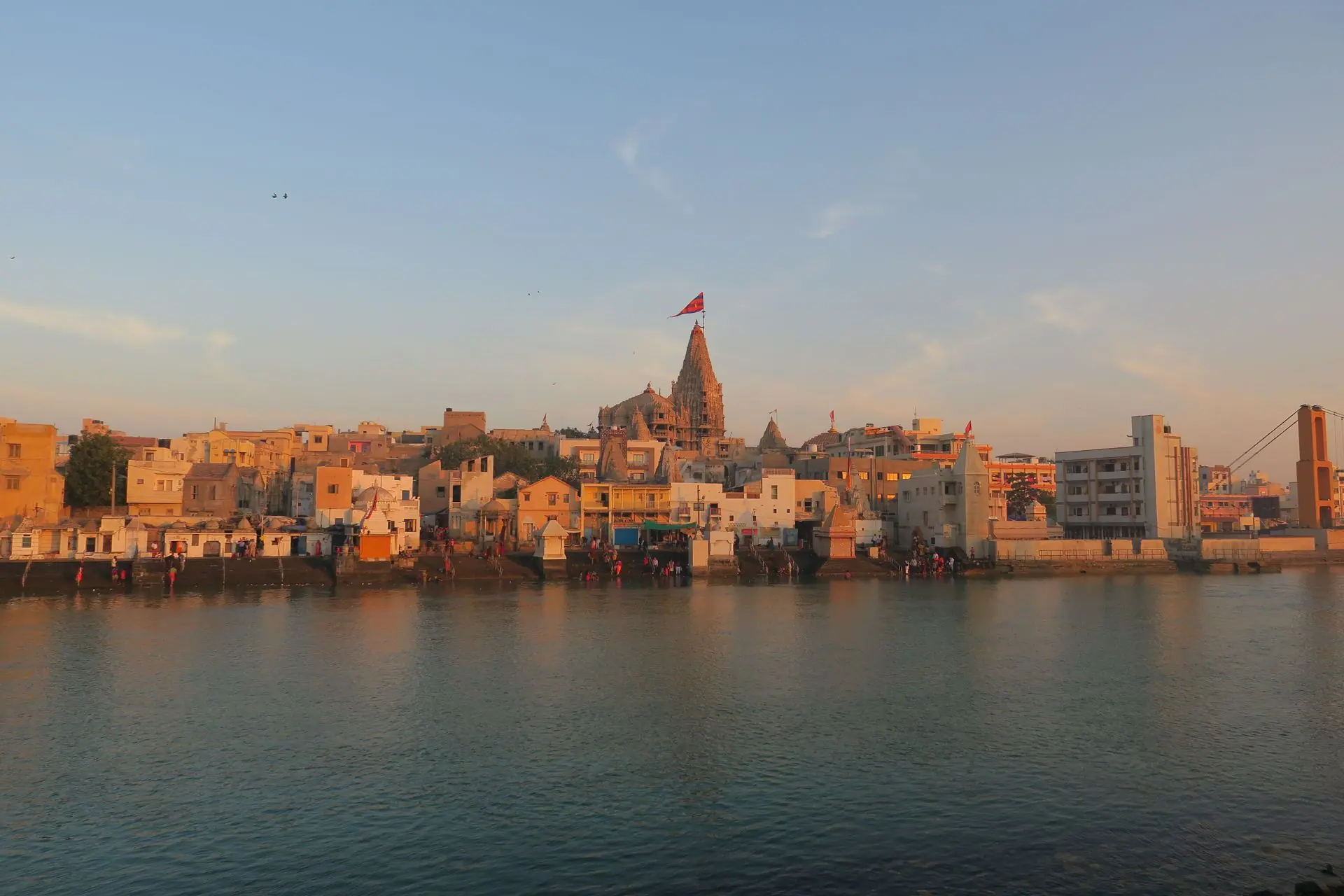
The main reason to visit Dwarka is the Dwarkadhish Temple, also called the Jagat Mandir, where the Gomti creek meets the Arabian Sea. Gujarat Tourism says it is believed to be more than 2,500 years old and has been renovated several times, notably in the 16th and 19th centuries. More than 50 steps lead up to the carved sanctum under a 43 m spire. Visitors go in by the "swarg" door and out by the "moksh" door. The temple committee gives darshan in a morning and an evening session, with the temple closed in the afternoon.

Gomti Ghat and the town

Below the temple, a bridge called the Sudama Setu crosses the Gomti creek towards the beach; Gujarat Tourism lists it as open from 7 am to 1 pm and from 4 to 7.30 pm. The temple committee's own list of sights in Dwarka also names Gomti Ghat, the Sharda Peeth, the Gayatri and Geeta temples, a lighthouse and a sunset point, so there is plenty to see around the darshan sessions.

Rukmini Devi Temple

On the outskirts, the temple to Krishna's queen Rukmini is more modest than Dwarkadhish but draws the same devotion. Gujarat Tourism says the present building belongs to the 12th century and lists it as open from 7.30 am to 8 pm. A local legend explains why the queen has her own shrine apart from her husband's: after she drank without offering the sage Durvasa any water, he cursed her to live apart from Krishna.

Nageshwar Jyotirlinga and Gopi Talav

Nageshwar, 18 km from Dwarka, is listed by Gujarat Tourism as one of India's twelve jyotirlingas, a self-manifested Shiva lingam in a red temple at the end of a large hall, open from dawn to dusk. Close by is Gopi Talav Tirth, a lake tied to the legend of the gopis who came to Krishna. Gujarat Tourism gives November to February as the best months, with Shivratri celebrated here with fervour.

Bet Dwarka

Bet Dwarka is a small island off the coast, reached from Okha, where tradition places Krishna's home. Gujarat Tourism credits Vallabhacharya with founding its main temple, whose complex also has shrines to Hanuman, Vishnu, Shiva and Lakshmi Narayan, and lists it as open from 7.30 am to 12 pm and from 4.30 to 6 pm. The district administration lists the Dandi Hanuman temple, 5 km east of the main one, and a gurdwara honouring Bhai Mohkam Singh, one of Guru Gobind Singh's five beloved ones.

The Sudarshan Setu and the ferry

The Sudarshan Setu, which links the Okha mainland to Bet Dwarka, was opened on 25 February 2024. PIB describes it as the country's longest cable-stayed bridge, about 2.32 km, and says pilgrims had to rely on boats before it. Gujarat Tourism's page for the island still describes a public ferry from Okha that takes about 15 minutes, so ask locally which way is running on your day, and allow time for the crossing.

Shivrajpur Beach

Twelve kilometres from Dwarka on the Dwarka–Okha highway, Shivrajpur Beach has Blue Flag accreditation, according to Gujarat Tourism, which lists it as open from 8 am to 7 pm, with snorkelling, scuba diving and island tours among its activities. Gujarat Tourism recommends it as a family outing, and it suits the late afternoon between the temple sessions.

Somnath Temple

The Shree Somnath Trust calls Somnath the first of the twelve Aadi Jyotirlings. The temple stands on the shore of the Arabian Sea, and Gujarat Tourism places it at the meeting of the Kapila, Hiran and Sarasvati rivers. The Trust records that it was attacked and rebuilt several times between the 11th and 18th centuries. The present temple was rebuilt after independence at Sardar Vallabhbhai Patel's resolve, and Dr Rajendra Prasad, then President of India, performed its pran-pratistha, or consecration, on 11 May 1951.

Triveni Sangam, Bhalka Tirth and Ahalyabai Temple

Within about 20 km of Somnath the Trust lists the Triveni Sangam Ghat, Bhalka Tirth, the Ahalyabai Temple and Prachi Tirth, among others. At the Triveni Sangam the Hiran, Kapila and Saraswati meet the sea. Bhalka Tirth is where, in the story Gujarat Tourism tells, a hunter named Jara mistook Krishna for a deer and shot him. Queen Ahalyabai Holkar built the Ahalyabai Temple in 1782.

Things to do in Dwarka and Somnath

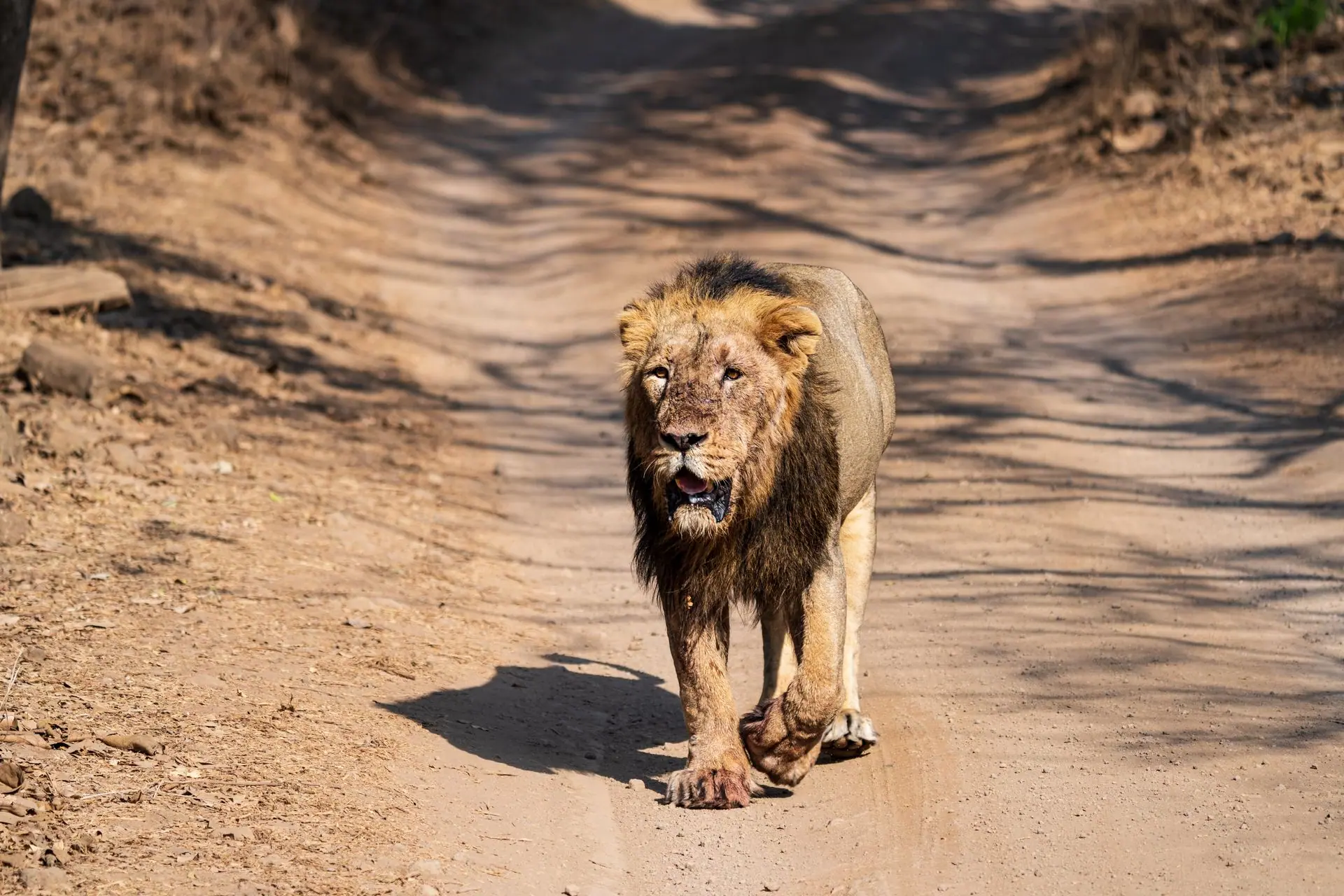
Take the morning darshan at Dwarkadhish, walk the Gomti ghat at sunset and cross to Bet Dwarka. In Somnath, the Trust gives aarti at 7 am, 12 noon and 7 pm, runs a nightly sound-and-light show except in the monsoon, and operates a Tirth Darshan bus from the temple's main gate to nearby shrines at 8.30 am and 3.30 pm. Gir is about 65 km from Somnath by the Trust's reckoning; our Gir National Park travel guide and Gir lion safari page cover it. Tours and experiences elsewhere in the state are on our Gujarat destination page.

Best time to visit Dwarka and Somnath

Gujarat Tourism gives November to February as the best months for Dwarka, Nageshwar and Bet Dwarka, and October to February for Somnath, which it says is open all year. IMD's 1981–2010 means show why: Dwarka's daytime highs run from 26°C in January to 32°C in June, but its nights stay above 27°C from May to July. Veraval, close to Somnath, reaches 34°C by day in October. Rain is concentrated from June to September, with July the wettest month, about 170 mm at Dwarka and 310 mm at Veraval, and the Trust says the sound-and-light show is not held in the monsoon. Festival crowds follow the lunar calendar: Janmashtami at Dwarka, Shivratri and Kartik Purnima at Somnath.

How to reach Dwarka and Somnath

  • Dwarka by air: there is no airport at Dwarka, and the district administration says no regular flights run there from other major cities. Porbandar Airport is about 95 km away; Jamnagar is further, and official pages give figures from 110 to 145 km.
  • Dwarka by train and road: Dwarka station (DWK) has regular trains from major cities, and the National Highway 151 route serves road traffic.
  • Somnath: the Trust gives the nearest airport as Diu, 85 km, then Rajkot at 200 km and Ahmedabad at about 390 km. Somnath station is half a kilometre from the temple, and Veraval is 7 km away.
  • Between the two: the road is about 230 km. Porbandar is roughly 130 km from Somnath and 95 km from Dwarka, so it breaks the journey; our Somnath to Dwarka distance guide covers the road and rail options.

How many days in Dwarka and Somnath

Two to three days. A workable shape: the first day for the Dwarkadhish darshan, the Gomti ghat and the Rukmini Temple; the second for Nageshwar and Bet Dwarka in the morning, then the long drive along the coast to Somnath; the third for early darshan at Somnath, the Triveni Sangam and Bhalka Tirth. The coast also joins naturally to Ahmedabad, the Gir forest and the Rann of Kutch, and our Gujarat travel guide shows how a longer route fits together. Pilgrims can also read our guide to Gujarat's temples and Girnar and Junagadh article.

Rules and tips

  • Somnath Temple: the Trust's FAQ says entry is free, footwear comes off (a free shoe house is provided), and mobile phones, cameras, smartwatches, laptops, tablets and calculators are not allowed inside; a free cloakroom has lockers. Photography is prohibited. Mini skirts and disrespectful dress are not permitted, and smoking is not allowed near the temple. Wheelchairs and golf carts are available at the main gate, with a lift inside.
  • Who may pray: the Trust says a person with faith in Hinduism can offer prayer at Somnath. If you follow another religion and want to be sure, ask the Trust before you travel.
  • Rooms and offerings: the Trust says online room bookings and puja and donation registrations are accepted only through somnath.org, or offline at its Ahmedabad office or its booking office in Somnath, and warns of fraud through chats, WhatsApp, private phone numbers and UPI accounts.
  • Dwarkadhish Temple: the committee says its timings may change on special days and festivals, so check its website on the day.

Why book with Experience My India

  • Government-approved operator

    Approved by the Ministry of Tourism, Government of India

  • 500+ vetted local guides

    35+ destination specialists plan every trip by hand.

  • Human help, every day

    Mon–Sun, 9:00 AM – 9:00 PM IST · +91 73022 65809

  • No payment until you approve

    You receive a written quote first; nothing is charged to start planning.

Frequently asked questions

What is the Char Dham, and is Dwarka one of them?

Gujarat Tourism lists Dwarka among the Char Dham pilgrimage sites, with Badrinath, Puri and Rameswaram; see our Puri travel guide and Rameswaram travel guide. Uttarakhand's Char Dham Yatra, through Yamunotri, Gangotri, Kedarnath and Badrinath, is a different circuit, covered in our Char Dham guide.

What is a Jyotirlinga?

One of twelve Shiva shrines revered as lingams of light. The Somnath Trust calls Somnath the first of them and quotes the Shiva Purana: Shiva is present everywhere, but especially in twelve forms and places. Gujarat Tourism also lists Nageshwar, near Dwarka, among the twelve.

Can I combine Dwarka and Somnath with Gir National Park?

Yes. The Somnath Trust puts Sasan Gir 65 km from Somnath, so the lion forest is a natural third stop. The Forest Department's permit site says Gir Jungle Safari is closed from 16 June to 15 October each year, so plan the combination outside those dates.

How many days do you need for Dwarka and Somnath?

Two to three days covers both towns, counting the road between them. Allow a day for the 230 km transfer rather than squeezing both sets of darshan into one morning, and add a night at Porbandar if you would rather split the journey.

Which is better to visit, Dwarka or Somnath?

They are different pilgrimages, so neither is better. Dwarka is a Krishna site and one of the Char Dham; Somnath is a Shiva shrine, the first of the twelve jyotirlingas, on the sea. Most travellers go to both. Choose the order by the festival you want to catch, such as Janmashtami at Dwarka or Shivratri at Somnath, and by the season.

Is Bet Dwarka worth visiting, and how do you get there?

Many pilgrims add it, because it is where tradition places Krishna's home. The island lies off Okha, which is the starting point. The Sudarshan Setu bridge, about 2.32 km long, now links the mainland to the island, and Gujarat Tourism's page also mentions a 15-minute ferry. The temple has a morning and a late-afternoon session.

What are the rules for visiting Somnath Temple?

Entry is free, but you leave your footwear, mobile phone, camera, smartwatch and other electronics at the free shoe house and cloakroom. Photography is prohibited, and the Trust says mini skirts and disrespectful dress are not permitted. The Trust's FAQ gives darshan as 6 am to 10 pm.

When is the Dwarkadhish Temple open?

The temple committee's timetable gives darshan from 6.30 am to 1 pm and from 5 to 9.30 pm, with short gaps for rituals, and the temple is closed in the afternoon. It says timings can change on special days and festivals, so check the committee's website before a festival visit.

From the journal: Dwarka & Somnath

Customer reviews

Experience My India is rated 4.3 on Tripadvisor. We publish guest reviews after each trip.

Read our reviews

Plan a trip

Tailor-made quote from a specialist