Skip to content

Ahmedabad Travel Guide: Places to Visit, the Old City and Food

Travel guideGujarat

The places to visit in Ahmedabad start with the walled old city, inscribed by UNESCO in 2017 as India's first World Heritage City, with its pols, mosques and Jain temples. Add Sabarmati Ashram, the carved windows of the Sidi Saiyyed Mosque, the stepwells at Adalaj and Bai Harir, and the food at Manek Chowk. One to two days covers the main sights.

By Experience My India Editorial Team · Reviewed by Experience My India Editorial Team · Updated 1 Sept 2026

Government-approved operatorApproved by the Ministry of Tourism, Government of India

Places to visit in Ahmedabad

Ahmed Shah founded Ahmedabad in 1411, and Gujarat Tourism points to its Indo-Islamic monuments of the 15th to 17th centuries. The sights below begin in the walled old city, then move to the river, the museums and three places beyond the centre.

The old city and its pols

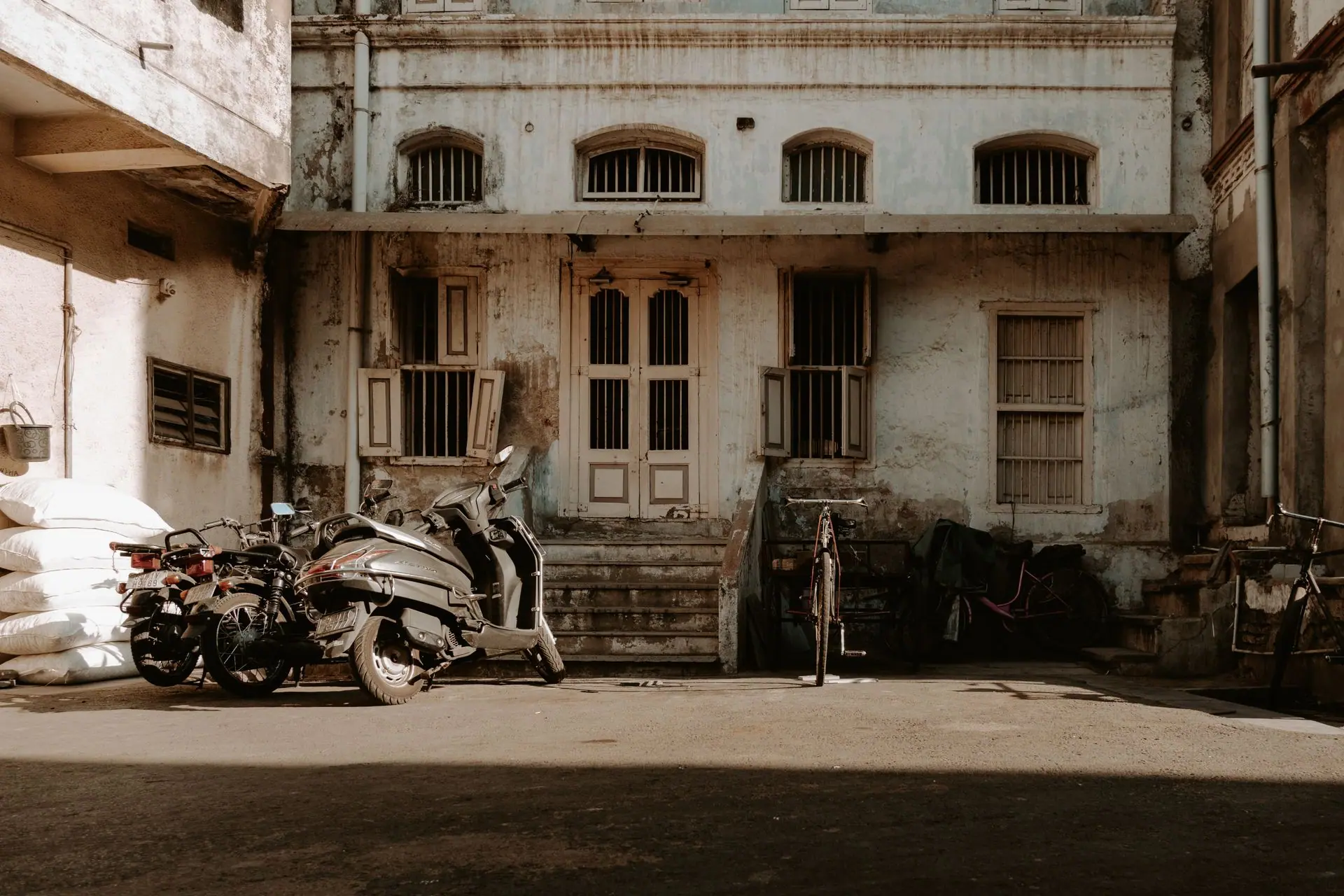
The historic walled city is the reason for the World Heritage listing. Gujarat Tourism describes its pols as self-contained neighbourhoods, some like small villages, with narrow streets that end in a square holding a community well and a chabutra, a platform for feeding birds. They also have gates, cul-de-sacs and secret passages. The lanes are narrow, so the pols are explored on foot. The Ahmedabad Municipal Corporation's heritage walk leaves the Swaminarayan Temple in Kalupur in the morning and ends at the Jama Masjid; there is also an evening walk.

Swaminarayan Temple, Kalupur

Built in 1822 as the first temple of the Swaminarayan sect, the temple has multi-coloured, wood-carved façades, and Gujarat Tourism says the panelling is Burma teak. The morning heritage walk starts here, usually while worship is under way and devotees fill the courtyard. It is a working place of worship, so treat the visit as one.

Jama Masjid

Ahmed Shah built the Jama Masjid in 1423, and Gujarat Tourism ranks it among India's most beautiful mosques, with a large, peaceful courtyard. The prayer hall's 260 columns support 15 main domes at different heights, and some carving, such as the lotus-like domes, echoes Jain temples. Two "shaking" minarets lost half their height in the 1819 earthquake. Ahmed Shah's tomb, and those of his son and grandson, lie west of the mosque, and the queens' tombs at Rani no Hajiro are a short walk away.

Sidi Saiyyed Mosque

The mosque is famed for its jali windows, stone latticework carved as the intertwined branches of a tree of life, best seen from the road behind it. Sidi Sayed, an Abyssinian saint of African descent, built it in 1572–73, the year the Mughals conquered Gujarat. The central arch is left plain, which draws the eye to the carved back wall. The mosque is still used for prayer, and the evening heritage walk starts beside it.

Bhadra Fort

Ahmed Shah built Bhadra Fort in 1411, soon after founding the city, and its gate was the eastern entrance of the citadel, which stretched west to the river. It now holds government offices and a Kali temple. The British captured it in 1817 and used it as a prison until independence, and it was renovated in 2014. Gujarat Tourism lists it as open from 8 am to 6 pm, with a view over the old city from the roof.

Sabarmati Ashram

Gandhi's home and base on the Sabarmati River, north of the centre, and the place he started the Dandi March from. The ashram began in May 1915 at the Kochrab Bungalow, about 10 km away, and moved to this 36-acre riverside site on 17 June 1917, because Gandhi needed room for farming and animal husbandry. The museum shows his letters and photographs. Gujarat Tourism says it is open every day of the year but gives two sets of hours, so check before you go.

Calico Museum of Textiles

The Sarabhai family's museum, founded in 1949 by Gautam Sarabhai and his sister Gira and opened by Prime Minister Jawaharlal Nehru, holds what Gujarat Tourism calls one of the world's finest collections of antique and modern Indian textiles. Visits are by advance booking only; Gujarat Tourism lists Thursday to Tuesday, in a morning and an afternoon session, booked by email. Confirm the current rules with the museum before you plan around it.

Hutheesing Jain Temple

Built in white marble in 1848 by the merchant Sheth Hutheesing and dedicated to Dharmanatha, the 15th Jain Tirthankara, the temple stands outside the Delhi Gate. A domed hall on 12 ornate pillars leads to the main shrine, which has three carved spires and is ringed by 52 small shrines to other Tirthankaras. Gujarat Tourism lists it as open from 8 am to 5 pm every day.

Sardar Vallabhbhai Patel National Museum and the Kite Museum

The Patel museum stands in the Moti Shahi Mahal, a palace Shah Jahan built between 1618 and 1622, later the Governor's residence and made a memorial in 1980. Gujarat Tourism lists it from 9.30 am to 5 pm, with a 3D show in the evening, and closed on Mondays. The Kite Museum, part of Sanskar Kendra in a building designed by Le Corbusier in 1954, is also closed on Mondays and opens in two sessions, morning and late afternoon.

Kankaria Lake and the Sabarmati Riverfront

Kankaria Lake was completed in 1451 as the Hauz-e-Qutub and is now a recreation space, open from 9 am to 11 pm. The Sabarmati Riverfront is a planned promenade along the river, open from sunrise to sunset, with eleven bridges linking the old and new parts of the city; the oldest, Ellis Bridge, dates from 1873. Both suit an unhurried hour at the end of a sightseeing day.

Adalaj Stepwell

Just beyond the city in Gandhinagar district, this 15th-century stepwell drops five storeys through carved pillars, with three entrances and an octagonal well open to the sky. Gujarat Tourism says sunlight reaches the steps only around noon, that the carvings show mythological and village scenes, and that the air inside is said to be six degrees cooler than outside. It lists the stepwell as open from 8 am to 6 pm.

Bai Harir ni Vav and Sarkhej Roza

Bai Harir ni Vav, 15 km from the centre, was built in 1499 under the supervision of Sultan Begada's harem; five levels of carved columns lead down to two small wells, now often dry, with the Dai Halima Mosque behind. Sarkhej Roza, 8 km south-west of the old centre, is a mosque, tomb and palace complex around a tank built by Mahmud Begada in the mid-15th century. It holds Ganj Baksh's tomb, the largest in Gujarat. Gujarat Tourism lists both as open from dawn to dusk.

Things to do in Ahmedabad

Walk the old city early or after dark, and eat where Ahmedabad eats. Gujarat Tourism says Manek Chowk is a vegetable market in the morning, a bullion market at noon and a street-food market from dusk to midnight. A Gujarati thali, the best way into the cuisine, is vegetarian and balances sweet, salty and spicy dishes; our list of Gujarat's must-try foods names more of them.

Time a visit around a festival if you can. Navratri's nine nights of garba dancing begin on the first day of the Hindu month of Ashwin, and Uttarayan, the kite festival, falls on 14 January; kite-making fills the old city from November, with a kite market, Patang Bazaar, opening there before the festival. For tours and experiences across the state, see our Gujarat destination page.

Best time to visit Ahmedabad

Plan for November to February. IMD's 1981–2010 averages show daytime highs of about 33°C in November, 29.5°C in December, 28°C in January and 31°C in February, with nights of roughly 12°C to 17°C. March reaches 36°C, April 40°C and May 42°C, and IMD records the city's highest temperature at 47.8°C, in May 1916. About 95 per cent of the year's rain falls in the south-west monsoon, mostly in July and August, and the air is humid then. Fog is occasional in winter. Navratri and Uttarayan are the busy festival weeks, so book rooms early if you come for either.

How to reach Ahmedabad

  • By air: Sardar Vallabhbhai Patel Airport connects the major Indian cities and key cities abroad, according to Gujarat Tourism.
  • By train: the main railway station is in the Kalupur area, on the Western Railway network, with connections to the major cities. Our Mumbai to Ahmedabad distance guide compares the ways of making that journey.
  • By road: state and private buses serve the city and the towns of Gujarat, with bus stops at Gitamandir near Kalupur and at Paldi. By road, Bhuj is 335 km, about seven hours, and the Little Rann's Wild Ass Sanctuary is 103 km.

How many days in Ahmedabad

A day and a half covers the old city, Sabarmati Ashram, a museum and a stepwell. A sensible shape: the morning heritage walk and the Jama Masjid, Sidi Saiyyed Mosque and Bhadra Fort before the afternoon heat; dinner at Manek Chowk. On the second day add Sabarmati Ashram, a museum chosen around its closing day, and Adalaj Stepwell late in the afternoon. Add a third day for the Calico Museum, if you have booked it, and Sarkhej Roza. Ahmedabad also works as the start or end of a longer Gujarat route, joined to the Rann of Kutch, Gir National Park and the Dwarka and Somnath coast; our Gujarat travel guide shows how they fit together.

Day trips from Ahmedabad

  • Lothal, 80 km away, was a port city of the Indus Valley civilisation about 4,500 years ago. Gujarat Tourism says excavations by the Archaeological Survey of India found the world's oldest known artificial dock, and the site museum is closed on Fridays.
  • Nalsarovar Bird Sanctuary, an hour's drive away, covers 120.82 sq km and has more than 250 bird species, among them pelicans and flamingos. It became a Ramsar site in 2012, and the best months are November to February.
  • The Little Rann of Kutch, 103 km away, protects the Indian wild ass and is open from 16 October to 15 June, according to Gujarat Tourism. The Great Rann and its white salt flat at Dhordo are a separate trip from Bhuj, far too distant for a day from here, and the White Rann needs a permit: the Kutch Collector's online portal issues it to Indian nationals only, and permits are also given at the Bhirandiyara checkpost.

Getting around and where to stay

The old city's lanes are for walking, and Adalaj, Sarkhej Roza and the day trips below need a vehicle. Gujarat Tourism lists heritage hotels and homestays on its accommodation pages. Staying near Kalupur or Lal Darwaja shortens the early start for the morning walk and the evening return from the night walk.

Why book with Experience My India

  • Government-approved operator

    Approved by the Ministry of Tourism, Government of India

  • 500+ vetted local guides

    35+ destination specialists plan every trip by hand.

  • Human help, every day

    Mon–Sun, 9:00 AM – 9:00 PM IST · +91 73022 65809

  • No payment until you approve

    You receive a written quote first; nothing is charged to start planning.

Frequently asked questions

Is Ahmedabad worth visiting on its own?

Yes, as a heritage-and-food stop of a day or two. UNESCO inscribed its walled city in 2017, and the old city, Sabarmati Ashram, the mosques and the stepwells are all in or just outside the city. It is also the usual gateway for the Rann of Kutch, the Little Rann and Gujarat's coast and forests.

What is Ahmedabad famous for?

Its walled old city and pols, 15th-century Indo-Islamic mosques, Jain temples, and its link with Mahatma Gandhi, who ran his ashram beside the Sabarmati. Visitors also come for its textile heritage, shown in the Calico Museum, the kites of Uttarayan in January and vegetarian Gujarati food.

What can you see in Ahmedabad in one day?

Start with the morning heritage walk through the pols to the Jama Masjid, then see the Sidi Saiyyed Mosque and Bhadra Fort. Spend the afternoon at Sabarmati Ashram and one museum, checking its closing day first. End with dinner at Manek Chowk, which Gujarat Tourism says is a street-food market from dusk to midnight.

Is there anything to do in Ahmedabad at night?

Yes. The evening heritage walk starts at the Sidi Saiyyed Mosque, with a reporting time of 8.30 to 8.45 pm, and Manek Chowk's food stalls run from dusk to midnight. Kankaria Lake is open until 11 pm, and the Patel museum has an evening 3D show, though it is closed on Mondays.

What is a stepwell?

A stepped well built to reach groundwater, often richly carved. Gujarat Tourism describes Adalaj as a 15th-century stepwell of five storeys with three entrances, and Bai Harir ni Vav, built in 1499, as having five levels of carved columns above two small wells. In the heat, the depths feel noticeably cooler.

Which Ahmedabad sights close on certain days?

Gujarat Tourism lists the Sardar Vallabhbhai Patel National Museum and the Kite Museum as closed on Mondays, and Lothal's site museum as closed on Fridays. The Calico Museum takes visitors by advance booking, Thursday to Tuesday. Sabarmati Ashram and the Hutheesing Jain Temple are listed as open every day.

What are the best day trips from Ahmedabad?

Lothal, 80 km away, for the Indus Valley dock; Nalsarovar, an hour's drive, for birds from November to February; and the Little Rann's Wild Ass Sanctuary, 103 km away, open from 16 October to 15 June. Bhuj and the Great Rann are 335 km away, which is too far for one day.

Is Gujarati food very different from other Indian cuisine?

Yes. Gujarat Tourism says the people of Gujarat have perfected vegetarian cooking, and many dishes are sweet, salty and spicy at once. The thali brings together snacks, a vegetable shaak, pulses, kadhi, rice or khichdi, dal and sweets such as shrikhand, so a single meal covers most of the range.

How many days do you need in Ahmedabad?

A day and a half is the minimum for the old city, Sabarmati Ashram, a museum and a stepwell. Two days is comfortable, and three if you want the Calico Museum, Sarkhej Roza and a day trip. Most visitors combine the city with a wider Gujarat route rather than staying only in Ahmedabad.

From the journal: Ahmedabad

Customer reviews

Experience My India is rated 4.3 on Tripadvisor. We publish guest reviews after each trip.

Read our reviews

Plan a trip

Tailor-made quote from a specialist