Skip to content

Chennai Travel Guide: Beaches, Temples, Museums and Day Trips

Chennai, Tamil Nadu's capital and originally called Madras, stretches along the Bay of Bengal and is where most trips through the state begin. The main places to visit in Chennai are the Marina, Fort St George, the Government Museum, the Kapaleeshwarar Temple in Mylapore and San Thome Basilica, with Mahabalipuram and Kanchipuram as day trips. January to March is the driest, most comfortable time.

By Experience My India Editorial Team · Reviewed by Experience My India Editorial Team

See all 0 tours and experiences in Chennai →

Government-approved operatorApproved by the Ministry of Tourism, Government of India

Places to visit in Chennai

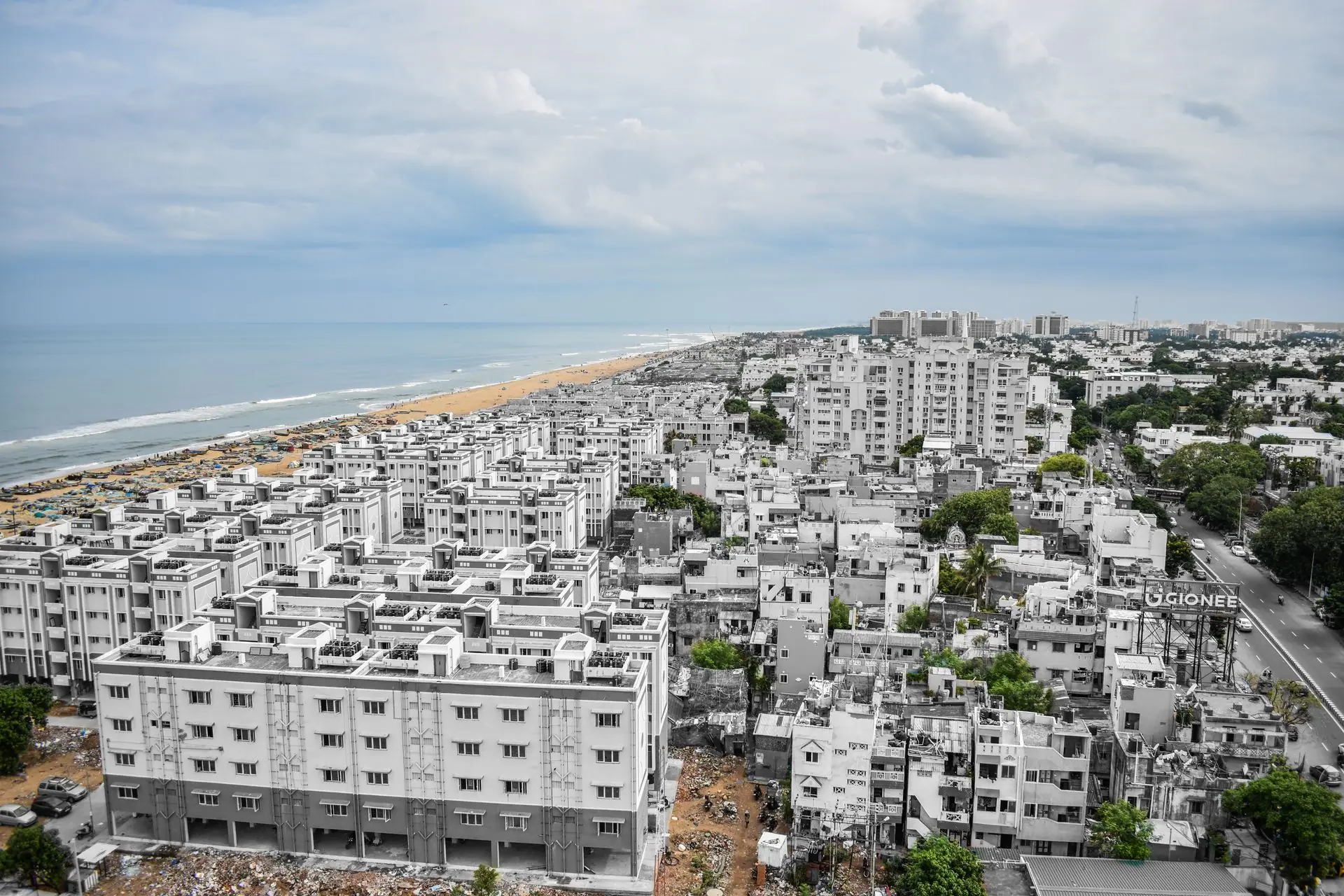
Chennai's older sights lie close to the shore, along the Marina, which runs 13 km from Fort St George south to Besant Nagar, and in the temple quarters of Triplicane and Mylapore just inland. Two of our South India routes begin here; our Chennai tour packages page lists them.

Marina Beach and the lighthouse

In the evening the Marina fills with families, kite flyers, fortune tellers, corn roasters and games of beach cricket; the state tourism department suggests coming early in the morning or late in the afternoon to see the city at play. Do not swim here: the same department warns that the turbulent undercurrent makes it unsafe. For the view along the shore, take the lift to the top of the lighthouse, which stands within the city limits; late afternoon gives the best light for photographs.

Fort St George

The East India Company's fort was completed on 23 April 1644, St George's Day, and the settlement that grew beside it eventually became Madras. Its white colonial buildings now house Tamil Nadu's state government. The Fort Museum displays 3,661 objects, from portraits of governors to uniforms, medals and coins, across three floors and ten galleries, and St Mary's Church, consecrated in 1680, is believed to be the oldest British building in India. The fort and museum are open from 9 am to 5 pm every day except Friday.

Government Museum

Started in 1851, the Government Museum, or Madras Museum, is the second oldest museum in India after the Indian Museum in Kolkata, and the tourism department calls its South Indian bronzes, among them several icons of Nataraja, the best such collection in the country. Its six buildings hold archaeology from the Chola, Vijayanagara, Hoysala and Chalukya periods, arms and puppets, the paintings of the National Art Gallery and an interactive Children's Museum, and the Connemara Public Library shares the grounds. It is about 3 km from Chennai Central; give it at least half a day.

Kapaleeshwarar Temple and Mylapore

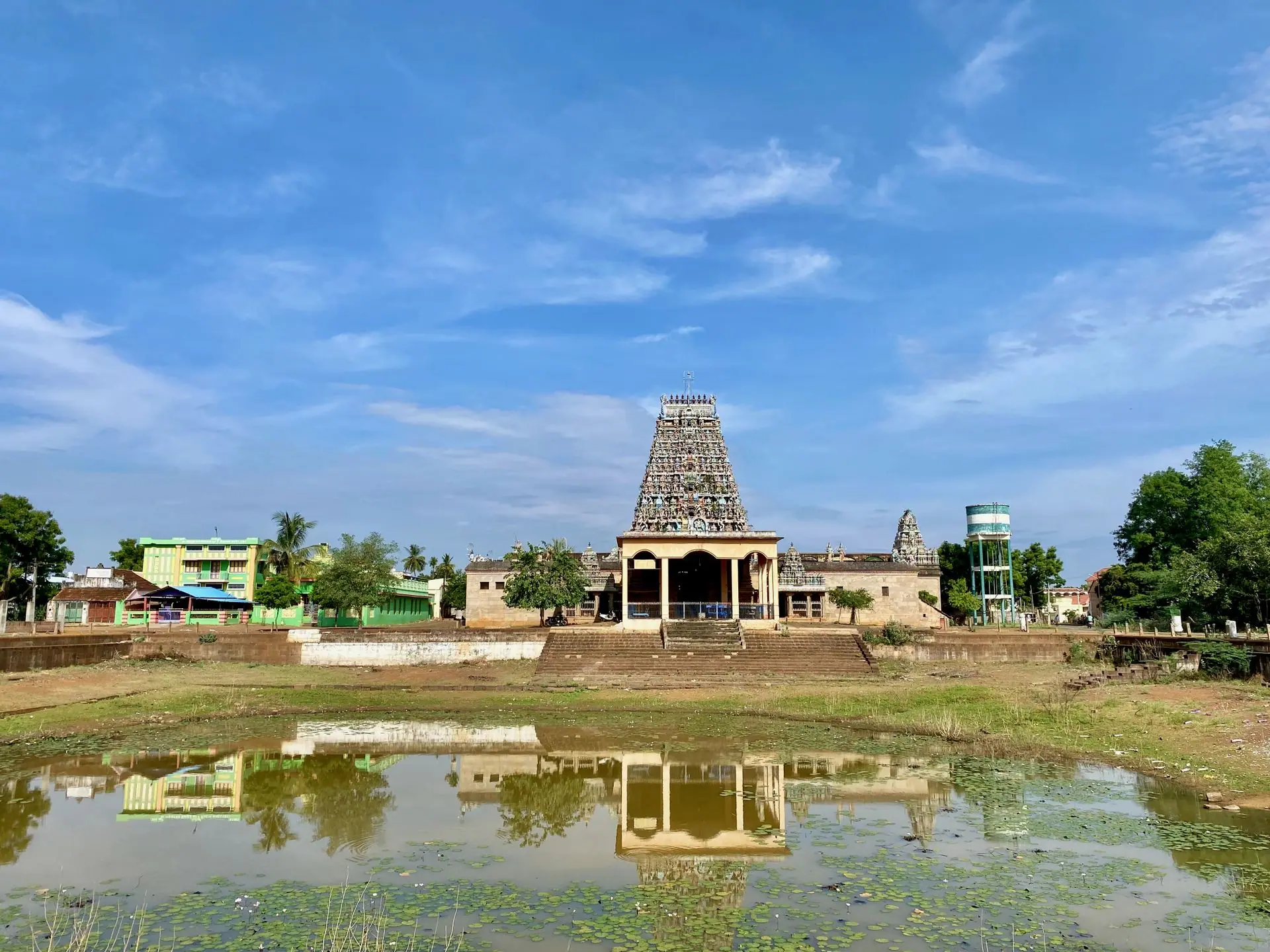
Mylapore's Shiva temple is entered through a towering, painted gopuram, and among its treasures are bronze images of the 63 Nayanmars, the Saivite poet-saints, two of whom praised the temple in their Thevaram hymns. Behind it lies a large ceremonial tank. Entry is free, though donations are welcome, and if you come in March or April you may see the Brahmotsavam festival, when the deities are paraded through the streets. Nearby, the Sri Ramakrishna Math welcomes visitors of all faiths to its Universal Temple.

San Thome Basilica

The Portuguese built the first church over the tomb of St Thomas the Apostle in the 16th century; the present neo-Gothic basilica is the British rebuilding of 1893. The tomb lies in an underground chapel, the museum displays relics associated with the saint, and a small theatre screens a short film on his life. The tourism department counts it among only three churches in the world built over the tomb of an apostle. Inland, St Thomas Mount, where tradition places his martyrdom, has a hilltop church and wide views over the city.

Parthasarathy Temple, Triplicane

In Triplicane (Thiruvallikeni), this temple to Vishnu as Parthasarathy, Arjuna's charioteer in the Mahabharata, is one of the 108 Divya Desams praised by the Alvar poet-saints; the deity here has a moustache and holds no weapon. Its gopurams were added under the Vijayanagara rulers in the 16th century, and its sakkarai pongal, a sweet rice offering made with ghee and cashews, is well known. Vaikunta Ekadashi brings the biggest crowds. A short ride away, at the junction of Mount Road and Peters Road, the multi-domed Thousand Lights Mosque is an important place of prayer for the city's Shia Muslims.

Elliot's Beach and the Theosophical Society

At the southern end of the Marina shore, Elliot's Beach in Besant Nagar, named after a British-era magistrate, Edward Francis Elliot, is quieter on most days, with horse rides, food stalls and the Karl Schmidt Memorial to a Dutch sailor who died trying to save a girl from drowning. In neighbouring Adyar, the Theosophical Society's tree-shaded grounds, free to visit, hold a church, a mosque, a Hindu temple, a Buddhist shrine and a Zoroastrian fire altar, as well as the Adyar Library.

Vivekananda House

Vivekanandar Illam, a pink building first put up to store ice shipped from America, is where Swami Vivekananda stayed for nine days in 1897, on his return from the West. The Ramakrishna Math's Chennai branch worked from here until 1906, and the Math now runs it as the Experience Vivekananda Museum, with picture galleries, a 4D virtual-reality film and two 3D films, and the second-floor room where he meditated. A small entry fee is charged.

Guindy and the Vandalur zoo

In the middle of the city, Guindy Nature Park includes the Guindy Children's Park, a recognised zoo of about 50 species, among them blackbuck, spotted deer and porcupines, as well as pelicans, painted storks and owls. For a longer outing, the Arignar Anna Zoological Park at Vandalur covers 602 hectares and is about 2 km from Vandalur railway station; the tourism department suggests visiting between 9 and 11 am or between 3 and 6 pm, when it is cooler.

T. Nagar, Pondy Bazaar and the silk shops

The streets of T. Nagar are packed with shoppers buying silk saris, slippers, glass bangles and gold jewellery. Pondy Bazaar is the centre for clothes and accessories, and the area around Panagal Park is, in the tourism department's words, famous across India for its silks; Chennai is known for its handlooms, especially Kanchipuram silk. For government shops, the state's Co-optex showrooms sell cottons and silks, and the Central Cottage Industries Emporium at Nandanam sells handicrafts.

Day trips from Chennai

  • Mahabalipuram: the Pallava monuments, a UNESCO World Heritage Site, are about 57 km south by the East Coast Road. On the way are Covelong, about 40 km out, where you can learn to surf; DakshinaChitra at Muttukadu, a museum of traditional South Indian houses with craftsmen at work; and the Crocodile Bank, founded in 1976. See our Mahabalipuram travel guide.
  • Kanchipuram: about 75 km from Chennai Central, the temple town of the Kailasanathar and Ekambareswarar temples and of Kancheepuram silk saris.
  • Tirumala and Tirupati: the temple trust notes that pilgrims can fly into Chennai and drive on, about three hours; see our Tirupati travel guide for darshan bookings.
  • Puducherry: about 135 km from Chennai airport, best with a night there; see our Pondicherry travel guide.
  • Vedanthangal: a bird sanctuary since 1936, where egrets, herons, ibises, painted storks and spoonbills gather in winter.

Things to do in Chennai

Time a winter visit for Margazhi, Chennai's music and dance season from mid-December to mid-January, when concerts fill temples, heritage bungalows and auditoriums and the sabha canteens serve four meals a day. Watch the city's evening on the Marina, take a surfing lesson at Covelong, or join a Bharatanatyam recital. Our Chennai tours and experiences page gathers what we run here.

Best time to visit Chennai

Chennai's rain comes with the north-east monsoon, from October to December. On the India Meteorological Department's 1991–2020 averages, November is the wettest month, at about 374 mm over eleven rainy days, with about 300 mm in October and 182 mm in December, and October to December is also the cyclone season on this coast. January to March are the driest months, with about 16, 6 and 2 mm of rain and average highs of 30 to 33°C, which makes them the most comfortable for sightseeing. The tourism department's suggested season starts in November, but come in December only for the music season, and expect rain. April to June are hot, with average highs of 35 to 37°C, and July to September bring 100 to 146 mm a month in thunderstorms. Our guide to the best time to visit Tamil Nadu has every month.

How to reach Chennai

  • By air: Chennai International Airport, at Meenambakkam, has two terminals, Kamaraj Domestic and Anna International. The Marina is about 19 km away, and the airport has its own metro station on the Blue Line into the city.
  • By train: Chennai is the headquarters of the Southern Railway and has four main terminals: Puratchi Thalaivar Dr M.G. Ramachandran Central (Chennai Central), Chennai Egmore, Chennai Beach and Tambaram.
  • By road: national highways link Chennai with the rest of India; long-distance buses use the Chennai Mofussil Bus Terminus at Koyambedu and the Madhavaram terminus, and the East Coast Road leads south to Mahabalipuram and Puducherry.
  • On our routes: the South India Temple Trail and the 10 Days South India Tour Package both begin with a meeting on arrival in Chennai and an afternoon at the Marina and the Kapaleeshwarar Temple.

How many days in Chennai

Two days cover the city. On the first, see Fort St George and its museum (not on a Friday), then the Government Museum, and end on the Marina at dusk. On the second, go to Mylapore for the Kapaleeshwarar Temple and the Ramakrishna Math, then San Thome, the Theosophical Society's grounds and Elliot's Beach. A third day allows Kanchipuram or the drive down the coast. Our two packages spend one night in Chennai before a morning drive of about an hour and a half to Mahabalipuram; see our Tamil Nadu travel guide for the rest of the route.

Getting around and where to stay

Chennai Metro's Blue Line runs from the airport through Guindy, Saidapet, Teynampet, Thousand Lights and Government Estate to Chennai Central and on to Wimco Nagar, and the Green Line from Chennai Central through Egmore and Koyambedu, by the bus terminus, to St Thomas Mount. The suburban railway runs from Chennai Beach to Chengalpattu and from Chennai Central to Arakkonam and Gummidipoondi. For Mylapore, Besant Nagar and the beaches, auto-rickshaws and taxis are simplest. Staying near a Blue Line station makes the airport easy, while Egmore and Central suit an early train. Our packages include a private car and driver from arrival.

Why book with Experience My India

  • Government-approved operator

    Approved by the Ministry of Tourism, Government of India

  • 500+ vetted local guides

    35+ destination specialists plan every trip by hand.

  • Human help, every day

    Mon–Sun, 9:00 AM – 9:00 PM IST · +91 73022 65809

  • No payment until you approve

    You receive a written quote first; nothing is charged to start planning.

Frequently asked questions

Is Chennai worth visiting?

Yes, for a day or two at the start or end of a trip south. Fort St George, completed in 1644, the Government Museum's bronzes, the temples of Mylapore and Triplicane and San Thome Basilica cover four centuries of the city's history, and the Marina shows Chennai at leisure in the evening. In December and January the Margazhi season adds hundreds of concerts and dance recitals.

What is Chennai famous for?

Carnatic music and dance, above all in the Margazhi season, which the tourism department says features over 300 concerts; its handlooms, especially Kanchipuram silk, sold in T. Nagar; the Marina; the Tamil film industry, which is based here; and a car industry that has earned it the name "the Detroit of India". For food, try temple dishes such as the Parthasarathy temple's sakkarai pongal.

Which places in Chennai are free to visit?

The tourism department's list of free things to do in Chennai includes walking the Marina, the Theosophical Society's grounds in Adyar, the Kapaleeshwarar Temple (donations are welcome), the Ramakrishna Math in Mylapore, the hilltop church on St Thomas Mount, the Armenian Church in George Town, whose caretakers open it most mornings, and the Madras High Court, seen from outside. The lighthouse lift, Vivekananda House and the Fort Museum charge an entry fee.

Which sights can you reach on the Chennai Metro?

The Blue Line links the airport with Guindy, for Guindy Nature Park, and with Chennai Central, and the Green Line runs from Chennai Central to Egmore and Koyambedu. The Government Museum is about 3 km from Chennai Central by the tourism department's figure. The Marina, Mylapore, San Thome and Besant Nagar are easier by auto-rickshaw or taxi, and the suburban railway reaches Vandalur, for the zoo.

What can you see in Chennai apart from temples?

Fort St George and its museum, the Government Museum, San Thome Basilica, the Thousand Lights Mosque, the Theosophical Society's grounds, Vivekananda House, the Marina and Elliot's Beach, Guindy Nature Park and the Vandalur zoo. Outside the city, DakshinaChitra's traditional houses and the Crocodile Bank lie on the East Coast Road towards Mahabalipuram.

Where should you shop in Chennai?

T. Nagar is the main shopping district, with Pondy Bazaar for clothes and accessories and the area around Panagal Park for silk saris. For fixed prices, the state's Co-optex showrooms sell handloom cottons and silks, and the Central Cottage Industries Emporium at Nandanam sells handicrafts. Kanchipuram itself, about 75 km away, is where its silk saris are woven, each taking 20 to 40 days.

Can you visit Chennai and Pondicherry on one trip?

Yes. Puducherry, a separate Union Territory, is about 135 km from Chennai airport, and the East Coast Road from Chennai passes Mahabalipuram on the way. Spend a night in Mahabalipuram and one or two in Puducherry rather than doing it in a day. Our Pondicherry travel guide covers the town.

Is Chennai the same as Madras?

Yes. Chennai was originally called Madras, and the old name lives on in institutions such as the Madras High Court and the Madras Museum, as the Government Museum is also known. The city grew from Fort St George, completed in 1644, and the settlement beside it, later George Town, which in the tourism department's account eventually became Madras.

From the journal: Chennai

Customer reviews

Experience My India is rated 4.3 on Tripadvisor. We publish guest reviews after each trip.

Read our reviews

Plan a trip

Tailor-made quote from a specialist