Skip to content

Sundarbans Travel Guide: Permits, Boat Routes and Watchtowers

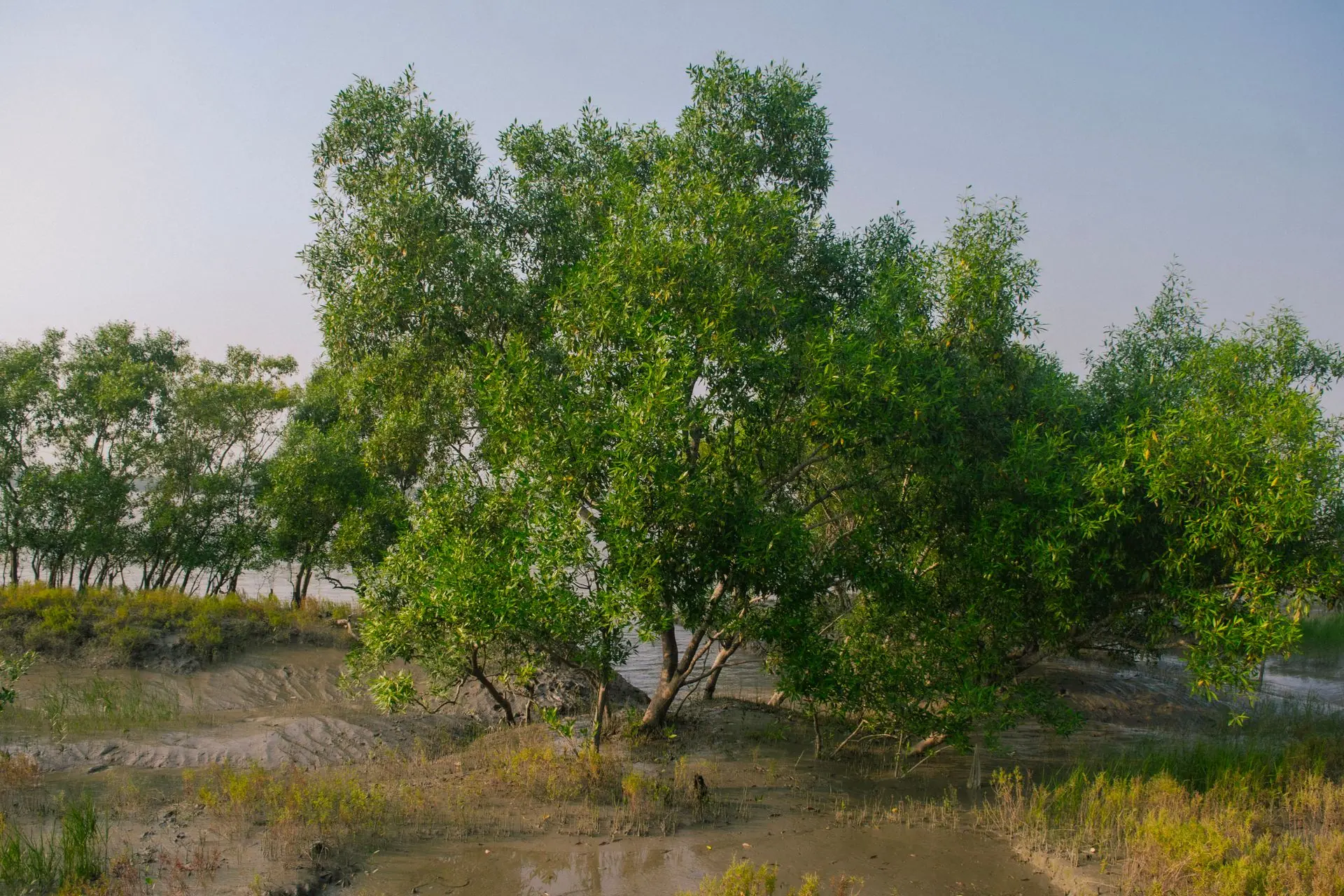
The Sundarbans is the mangrove delta on West Bengal's coast that India shares with Bangladesh. Sundarban National Park, the core of Sundarban Tiger Reserve, is a UNESCO World Heritage Site where tigers live among tidal creeks. Inside, you travel only by boat: visitors enter on a registered tourist boat with an eco-guide and a permit, from jetties such as Godkhali, reached from Kolkata by road or rail via Canning.

By Experience My India Editorial Team · Reviewed by Experience My India Editorial Team

See all 1 tour or experience in Sundarbans →

Government-approved operatorApproved by the Ministry of Tourism, Government of India

Places to visit in Sundarbans

You see the reserve from the water and from forest camps where tourist boats may tie up, most with a watchtower. Boats keep to the routes the Forest Department publishes, among them the Sudhanyakhali, Bagna, Jhilla and Raimongal routes.

Sajnekhali

The camp of Sajnekhali Wildlife Sanctuary has a Mangrove Interpretation Centre, a pond of estuarine crocodiles, breeding enclosures for the critically endangered northern river terrapin (Batagur baska) and a watchtower that holds about 20 people. More than 200 bird species have been recorded here, and UNESCO lists the Sajnekhali area as an Important Bird Area. It is also one of the offices that issue visitor permits, and ferries run to it from the Godkhali and Dhamakhali jetties.

Sudhanyakhali

Close to Sajnekhali, Sudhanyakhali has a watchtower for about 25 people that looks over a sweet-water pond where animals come to drink, with grassland behind it. Crocodiles, wild boar and spotted deer are seen here, but the reserve says only a lucky few see a tiger. Its Mangrove Park is planted with the delta's main mangrove species, a useful place to learn them before you head into the creeks.

Dobanki canopy walk

Dobanki, in the southern part of Sajnekhali Wildlife Sanctuary, is about two hours by boat from Sajnekhali. Its canopy walk, about 400 metres long, runs above the mangroves and ends at a watchtower over the forest, and the cruise there is itself a good look at the creeks and their wildlife. Plan it as part of a full day on the water.

Netidhopani

At the far south-western tip of the tourist zone, Netidhopani has the ruins of a Shiva temple about 400 years old, a sweet-water pond and a watchtower. The camp is named after Neti, the washerwoman who washed the gods' clothes at a ghat nearby in the Manasamangal tradition, which also tells the legend of Behula and Lakhindar. Lying at the far end of the tourist routes, it suits a trip with a night in the delta.

Burirdabri

Burirdabri, the eastern-most camp of the Indian Sundarbans, has a mud walk where you can watch the snails, crabs and molluscs of the forest floor, a trail through a mangrove cage and a watchtower for about ten people. From the tower you look across the Raimangal river, the international boundary, to the Bangladesh Sundarbans. The camp opened as an ecotourism complex in 2003.

Jhingakhali and Harikhali

Jhingakhali (also spelt Jhingekhali) has a watchtower with observation lines over a sweet-water pond and is one of the offices that issue visitor permits. Harikhali, on the Harinbhanga river in the Basirhat range, has a watchtower used by visitors and forest staff and a conservation programme for the river terrapin, the Batagur baska.

Bhagabatpur crocodile project

West Bengal's only crocodile project, at Bhagabatpur on the Saptamukhi estuary beside Lothian Island, runs a hatchery for estuarine crocodiles and Batagur baska terrapins, with crocodiles of all ages, in dense mangrove. Lothian Island Wildlife Sanctuary next door has spotted deer, estuarine crocodiles, olive ridley turtles, jungle cats and rhesus macaques. The project is easiest to reach from Namkhana, though it can also be visited from Sajnekhali.

Things to do in Sundarbans

The whole visit happens on the water. Boats move with the tides, which flood the forest floor twice a day, and stop at the camps above, where you climb the watchtowers, walk the Dobanki canopy or the Burirdabri mud trail, and see the crocodile and terrapin programmes. Look for estuarine crocodiles, spotted deer, wild boar and rhesus macaques, and in the rivers for Gangetic and Irrawaddy dolphins. The reserve records 10 of India's 12 kingfisher species, and UNESCO notes nesting grounds for olive ridley, green and hawksbill turtles and two species of horseshoe crab. Tigers are present, but seeing one is a matter of luck.

Our Sundarbans safari is entirely boat-based, with a private guide, a boat chartered for your itinerary and the forest permit arranged for you, and its route is planned around the tide tables for your dates. Everything we run here is on our Sundarbans tours and experiences page and under wildlife safaris in Sundarbans. For tiger parks explored by jeep, compare India's tiger parks.

Best time to visit Sundarbans

The cool, dry months suit long hours on deck. IMD's figures for Kolkata (Alipore), filed under South 24 Parganas, the district that holds most of the reserve, give January days of about 26°C and nights of about 14°C, with under 30 mm of rain a month from November to February. March to May turn hot, May averaging 35°C by day, and the reserve notes that the Bay of Bengal's cyclones form in the pre-monsoon season. The monsoon, June to September, brings about three-quarters of the year's 1,778 mm of rain, July being the wettest month at about 377 mm, and thunderstorms are frequent from April to October. Our Sundarbans safari page gives roughly October to March as the main season, which matches these figures.

How to reach Sundarbans

Kolkata is the gateway; our Kolkata travel guide covers the city. Fly into Netaji Subhash Chandra Bose International Airport at Dum Dum, or arrive by train at Howrah or Sealdah. From Sealdah, local (EMU) trains run to Canning, the nearest railhead, about every hour, and shared vans continue from Canning to Godkhali jetty. Buses go from Esplanade to Sonakhali and Godkhali, and to Dhamakhali from Sealdah, Babughat, Barasat and Science City; there is private parking at Godkhali for anyone driving. Tourist boats board at Godkhali or Dhamakhali, and inside the delta boats and launches are the only transport. West Bengal Tourism Development Corporation also runs guided tours from Kolkata, and on our safari the trip begins in Kolkata with a road transfer to the boat.

Permits and rules in the tiger reserve

Every visitor needs permission from the reserve, issued at the Field Director's office in Canning or at Sonakhali, Bagna, Sajnekhali and Jhingakhali, on payment of entry fees for the boat and for each visitor. You may enter only on a registered tourist boat, and every boat must carry one of the reserve's eco-guides for the whole cruise. Foreign nationals follow the same rules; the reserve requires them to carry their visa and the necessary documents and states that no special permit is needed. Inside, boats must keep to the department's routes and you may step ashore only at camps open to tourists. Swimming, diving and fishing are prohibited, and so are alcohol, smoking, drones, loud music and single-use plastic, including plastic bottles. Silence is expected in the forest, and forest officials may check permits on the water.

How many days in Sundarbans

Give it at least one night. A single day from Kolkata leaves time only for the camps around Sajnekhali, such as Sudhanyakhali. Dobanki is about two hours further by boat, Netidhopani lies at the far south-west of the tourist zone and Burirdabri at its eastern edge, so two days cover the Sajnekhali camps with Dobanki and Netidhopani, and a third reaches Burirdabri. Our Sundarbans safari usually runs two to three days, with nights aboard or at a riverside lodge. For the rest of the state, see our West Bengal travel guide.

Why book with Experience My India

  • Government-approved operator

    Approved by the Ministry of Tourism, Government of India

  • 500+ vetted local guides

    35+ destination specialists plan every trip by hand.

  • Human help, every day

    Mon–Sun, 9:00 AM – 9:00 PM IST · +91 73022 65809

  • No payment until you approve

    You receive a written quote first; nothing is charged to start planning.

Frequently asked questions

Where is the Sundarbans?

On West Bengal's coast, mainly in South 24 Parganas district, at the southern end of the delta of the Ganges and the Brahmaputra where they meet the Bay of Bengal. The Indian Sundarbans borders Bangladesh along the Kalindi, Raimangal and Harinbhanga rivers, and the national park lies within the tiger reserve. Kolkata is the nearest city.

What is the Sundarbans famous for?

Mangroves and tigers. UNESCO calls the Sundarbans the largest area of mangrove forest in the world and the only one inhabited by the tiger. The name is believed to come from the sundari, a mangrove tree (Heritiera fomes), and the Indian part holds more than 60 per cent of India's mangrove forest. The tiger reserve was one of the first nine created under Project Tiger in 1973.

What do foreign nationals need to visit the Sundarbans?

The same permit, registered boat and eco-guide as Indian visitors, plus their travel papers. The reserve requires foreigners to carry their visa and the necessary documents, and states that no special permit is needed for them. Keep the documents with you on the boat, as forest officials can check permits on the water.

Is a guide compulsory in the Sundarban Tiger Reserve?

Yes. Every tourist boat entering the reserve must carry an eco-guide for the whole cruise, whoever else is on board. Guides wear a prescribed uniform and ID card, explain the rules and the ecology, bring visitors back to the boat on time at each camp, and are not allowed to promote any boat, operator or resort. Feedback on a guide can be emailed to the reserve.

Can you get off the boat in the Sundarbans?

Only at the forest camps open to tourists, such as Sajnekhali, Sudhanyakhali, Dobanki, Netidhopani and Burirdabri, where watchtowers, walkways and trails have been built. Everywhere else you stay aboard: the reserve prohibits swimming, diving and fishing, and boats may not leave the department's prescribed routes.

How much of the Sundarbans is in India?

About a third of its mangrove forest, by UNESCO's estimate: 34 per cent lies in India and 66 per cent in Bangladesh. The two countries' parts are protected and listed as World Heritage Sites separately, so a trip from Kolkata covers the Indian side only, up to the Raimangal river on the border.

What is the difference between the Sundarbans, the tiger reserve and the national park?

The Sundarbans is the whole delta. In India, Sundarban Tiger Reserve, set up in 1973, covers about 2,585 sq km of forest and water; its core, the national park of about 1,330 sq km notified in 1984, is the part UNESCO listed in 1987, and Sajnekhali Wildlife Sanctuary lies inside the reserve too. The Sundarban Biosphere Reserve, declared in 1989, contains the tiger reserve.

Experiences in Sundarbans

See all
Customer reviews

Experience My India is rated 4.3 on Tripadvisor. We publish guest reviews after each trip.

Read our reviews

Plan a trip

Tailor-made quote from a specialist