
1 experience in Sundarbans
Sundarbans safari, West Bengal 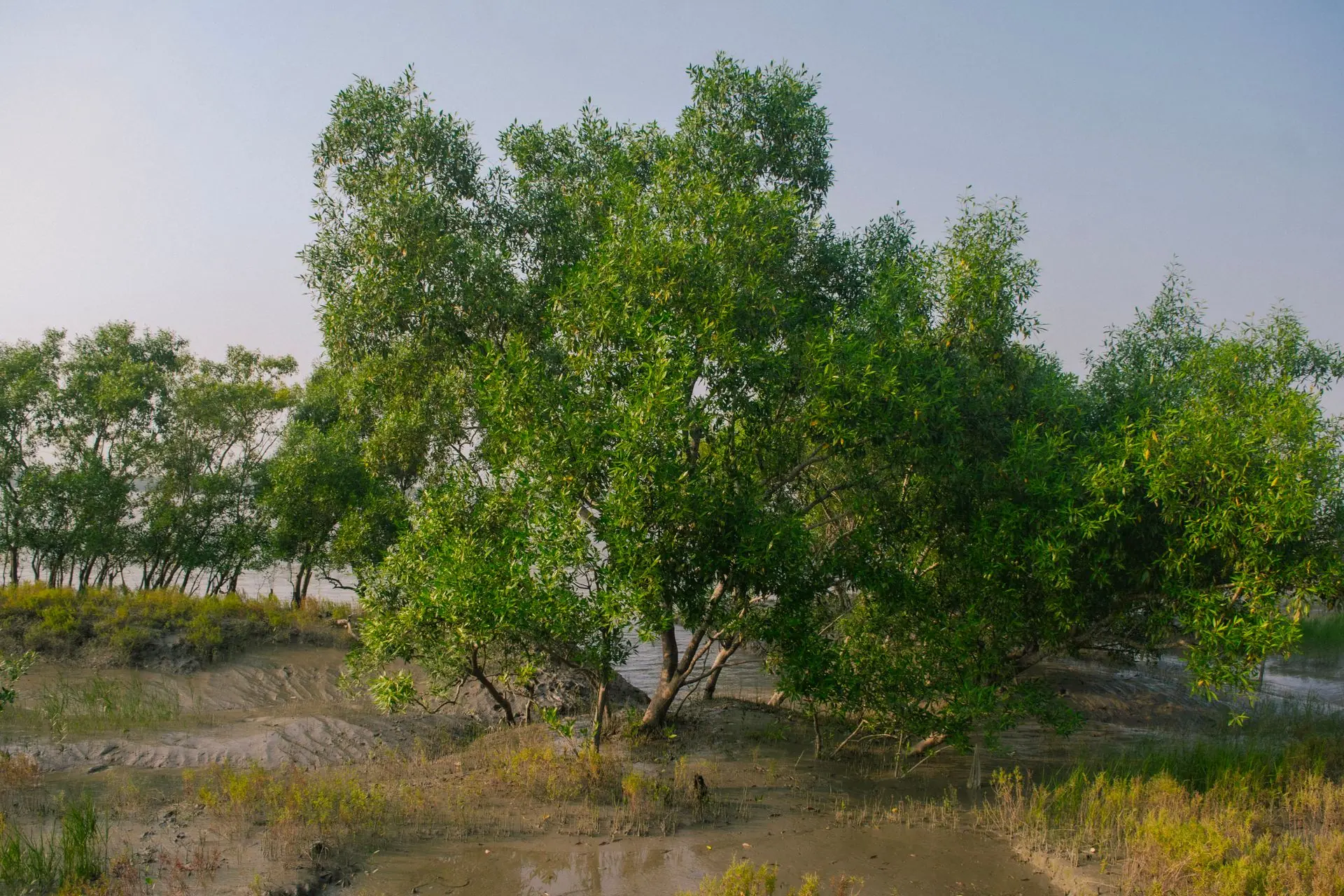
Sundarbans Tiger Reserve
Sundarbans safari, West Bengal
Free cancellation
Price on request
View details
Sundarbans travel guides
Sundarbans Travel Guide: Permits, Boat Routes and Watchtowers Travel guide · Destinations
Sundarbans Travel Guide: Permits, Boat Routes and Watchtowers
The Sundarbans is the mangrove delta on West Bengal's coast that India shares with Bangladesh. Sundarban National Park, the core of Sundarban Tiger Reserve, is a UNESCO World Heritage Site where tigers live among tidal creeks. Inside, you travel only by boat: visitors enter on a registered tourist boat with an eco-guide and a permit, from jetties such as Godkhali, reached from Kolkata by road or rail via Canning.
Read the guide
More places in West Bengal
All of West Bengal
Frequently asked questions
Can you visit the Sundarbans on a day trip from Kolkata?
After the drive to Godkhali jetty, a day leaves time only for the nearest camps, Sajnekhali and Sudhanyakhali. The Dobanki canopy walk and the remote camps at Netidhopani and Burirdabri need nights in the delta; our safari usually allows two to three days.
Is the Sundarbans worth it if you do not see a tiger?
For most visitors, yes. By the reserve's own account a tiger shows itself to a lucky few, so judge the trip on the rest: hours among the mangroves, crocodiles on the mudbanks, deer at the watchtower ponds, kingfishers along the creeks and, with luck, river dolphins.
What is not allowed on a Sundarbans boat trip?
Inside the reserve you may not swim, dive or fish, drink alcohol, smoke, fly a drone, play loud music or bring plastic bottles or other single-use plastic, and nothing may be thrown into the forest or the water.
Is the Sundarbans good for birdwatching?
Very. Sajnekhali's list runs past 200 species, among them white-bellied sea eagles, lapwings, curlews and sandpipers, and UNESCO notes its listing as an Important Bird Area. Kingfishers alone account for 10 species across the reserve, out of the 12 found in India.
About Sundarbans Tours & Experiences
The things to do in Sundarbans all start from a boat: cruising tidal creeks on the reserve's set routes, climbing watchtowers above freshwater ponds, walking the Dobanki canopy and the Burirdabri mud trail, and watching for crocodiles, dolphins and more than 200 bird species. Our Sundarbans safari charters the boat and arranges the forest permit; seeing a tiger takes luck.
Reviewed by Experience My India Editorial Team · Updated 21 Oct 2026
Things to do in Sundarbans
Everything happens on the water or at camps open to visitors; our Sundarbans travel guide describes each.
Cruise the creeks on the tide
The delta floods and drains twice daily, so the tide decides which creeks a boat can enter. The routes are fixed by the reserve, from the Bagna and Jhilla runs to the Raimongal along the Bangladesh border. Our Sundarbans safari fits each day's route to the tides, with a private guide aboard.
Climb the watchtowers
At several camps a tower overlooks a freshwater pond where spotted deer, wild boar and crocodiles drink and, rarely, a tiger. Netidhopani adds the ruins of a temple about 400 years old.
Walk the canopy and the mud trail
At Dobanki, about two hours' boating beyond Sajnekhali, a raised walkway of about 400 metres crosses the mangrove canopy to a lookout tower. Burirdabri, the camp furthest east, has a mud walk among crabs and snails, a caged trail and a tower facing Bangladesh across the Raimangal.
Watch for wildlife from the deck
Scan the mudbanks for estuarine crocodiles and water monitors, and the wider channels for Gangetic and Irrawaddy dolphins. Keep quiet: the reserve asks for silence in the forest, and our safari for no flash near the watchtowers.
See crocodiles and terrapins being bred
Sajnekhali keeps a crocodile pond and breeds the critically endangered northern river terrapin beside its Mangrove Interpretation Centre. Bhagabatpur, the state's one crocodile project, hatches young crocodiles and terrapins; it is reached most easily from Namkhana.
Choosing between our tours and experiences
Ours is one experience, the boat safari, listed under wildlife safaris in Sundarbans, and slow travel: usually two to three days, with nights on board or at a riverside lodge, after a road transfer from Kolkata. Choose it for the mangroves and birds; for a likelier tiger, see the jeep-safari parks in our tiger park comparison.
When to go for these
Our safari's main season is roughly October to March, when January nights in Kolkata average about 14 °C by IMD's figures. Before the monsoon, the reserve notes, cyclones build over the Bay of Bengal, and from June to September heavy rain roughens the water, and some routes and lodges cut back or shut.
Rules in the tiger reserve
Three rules bind every visitor. Permission to enter comes from the reserve, whose Field Director's office in Canning and offices at Sonakhali, Bagna and Sajnekhali issue it; our safari arranges it. Only registered tourist boats are admitted, and each must carry one of the reserve's eco-guides, arranged by the boat, who explains the rules.
Plan a trip
Tailor-made quote from a specialist