Skip to content

Satpura Travel Guide: Zones, Boats, Walking and Planning Your Visit

Travel guideMadhya Pradesh

Satpura Tiger Reserve covers 2,133 square km of the Satpura hills in Narmadapuram district, Madhya Pradesh, and includes the hill station of Pachmarhi. Jeep drives enter by the Madhai, Churna and Pachmarhi gates, and the forest department also lists boating, canoeing, walking and cycling. A licensed park guide is compulsory in every vehicle, permits are booked on forest.mponline.gov.in, and the core closes from 1 July to 30 September.

By Experience My India Editorial Team · Reviewed by Experience My India Editorial Team · Updated 24 Oct 2026

Government-approved operatorApproved by the Ministry of Tourism, Government of India

Places to visit in Satpura

Satpura is a rugged reserve of sandstone hills, gorges, waterfalls and reservoirs, and the forest department offers it by jeep, by boat and canoe, and on foot with a guide. Its core and buffer zones have separate gates, so read the zones before you book a room.

Madhai and the Tawa reservoir

Madhai is the best known core zone, with a small daily limit that the forest department's brochure puts at 30 vehicles across the morning and afternoon drives. Besides jeep drives, the brochure lists boat rides, canoeing and trekking here. The Tawa reservoir, which has more than 220 sq km inside the protected area, gives the reserve a large wetland with resident and wintering waterfowl, mugger crocodiles and a small population of otters. The reserve names a third entrance on the Tawa dam, close to Narmadapuram town.

Churna and the Bheemkund gate

The reserve lists Bheemkund (Churna) as another core zone, with Mallupura and Panarpani (Pachmarhi). The brochure says visitors to Churna can bring their own four-wheeled vehicle, provided it can handle rough forest ground and is pollution-free, and it names two forest rest houses there. Churna is 65 km from Itarsi and 106 km from Bhopal. The reserve says the Madhai, Churna and Bori areas hold fairly good tiger populations.

Jamani Dev and Parsapani

These are the buffer zones near Madhai, open to private-vehicle safaris with 14 vehicles in the morning and 14 in the afternoon, by the brochure. The reserve's profile lists two more buffer zones, Burgodi (Pipariya) and Tamia Delakhari. Its fee schedule lists walking and cycling, watching from hides at identified sites in the buffer, and pre-marked camping in the buffer.

Pachmarhi and its viewpoints

Pachmarhi, the "Satpura ki Rani" (Queen of Satpura), lies inside the reserve and is the only designated hill station of Madhya Pradesh, by the reserve's account. It stays open to visitors all year. Watch the sunset from Dhoopgarh, which MP Tourism calls the highest point of the Satpura range at 1,350 m, and ask the reserve for its list of more than thirty viewpoints and pools, with names such as Duchess Fall and Piccadilly Circus. The reserve's fee schedule adds a registered-guide charge for touring Pachmarhi's tourist areas, so expect a guide here too.

Falls, caves and Bison Lodge

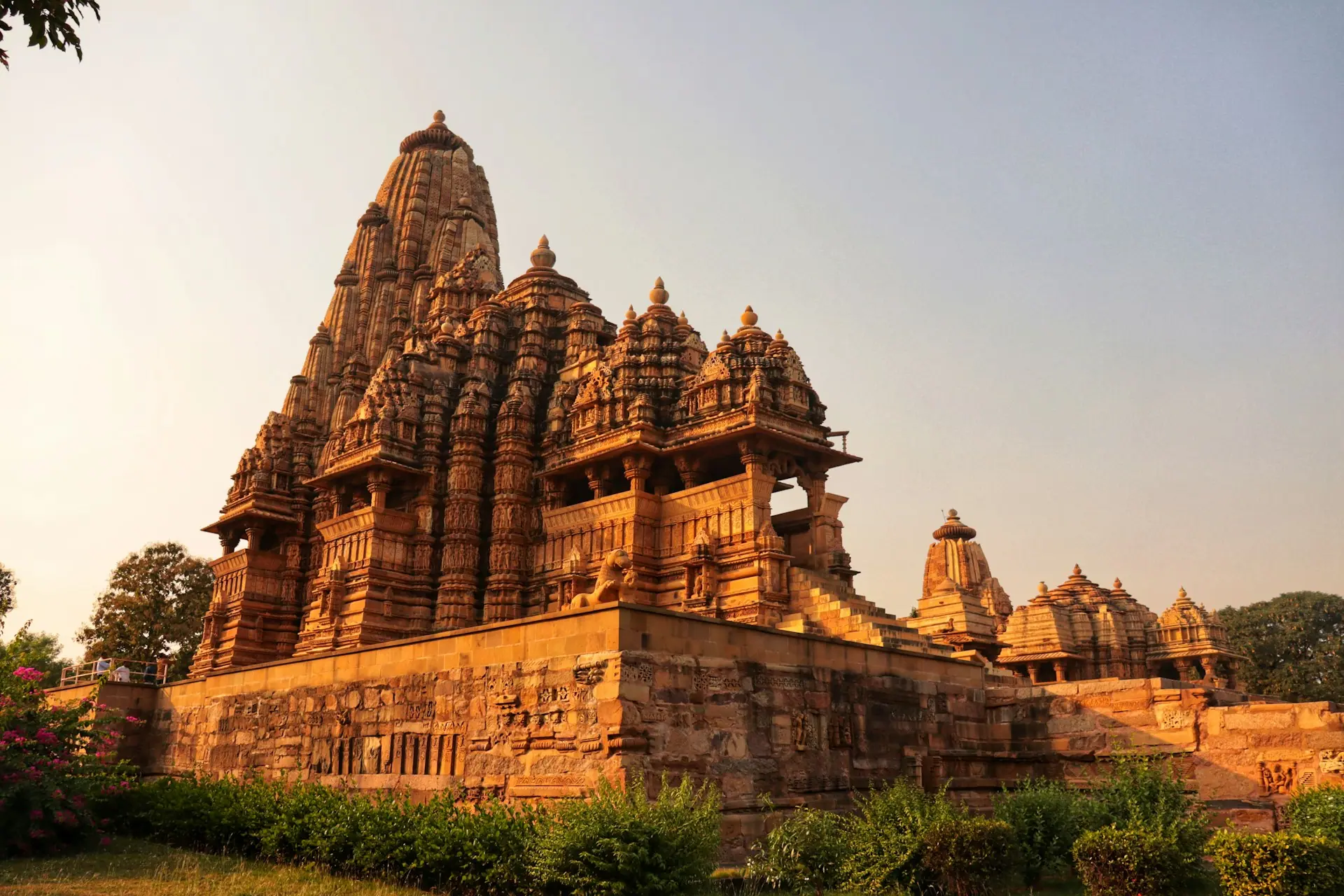
Bee Falls (Jamuna Prapat) is about 5 km from the Pachmarhi bus stand. Apsara Vihar is a ten-minute walk downhill, and the reserve says Rajat Prapat, the Silver Falls, drops more than 350 feet, though little water runs there outside the rains. The five Pandav Caves give the town its name, although archaeologists date them to a Buddhist monastery of the sixth to seventh century. Bison Lodge, built in 1862 by Captain James Forsyth, is now a wildlife museum and the reserve's ticketing centre.

Mahadeo and Chauragarh

Ten km from Pachmarhi, the Mahadeo and Chauragarh hills are the second and third highest peaks of the range, at 1,328 and 1,308 m, and hold three shrines: Bada Mahadeo, Gupt Mahadeo and Chauragarh. The reserve says a very big fair is held here every year on Mahashivratri, and Jatashankar, a cave shrine of Shiva, lies half a kilometre from the town.

Rock shelters

The reserve calls Satpura very important for archaeology and for the study of how people lived here: it holds more than 50 rock shelters with paintings that are between 1,500 and 10,000 years old, some of them with rare depictions. The reserve also lists heritage sites in its Kamti range, among them rock paintings, rock figures of Durga and Shankar, a building called Jhinjhini Mahal and the gate of Raja Bhabhut Singh's fort. Ask the reserve before you go which sites can be visited.

The Satpura hills

The name comes from Sanskrit and means seven folds or seven hills. The reserve describes the range as a watershed between the Narmada and Tapti rivers, running from eastern Gujarat through the Maharashtra and Madhya Pradesh border towards Chhattisgarh, and as the range that separates the Indo-Gangetic plain from the Deccan plateau, alongside the Vindhyas to its north. In these hills sal forest grows on Gondwana sandstone on the Pachmarhi plateau and teak on basalt on the lower plain.

Wildlife

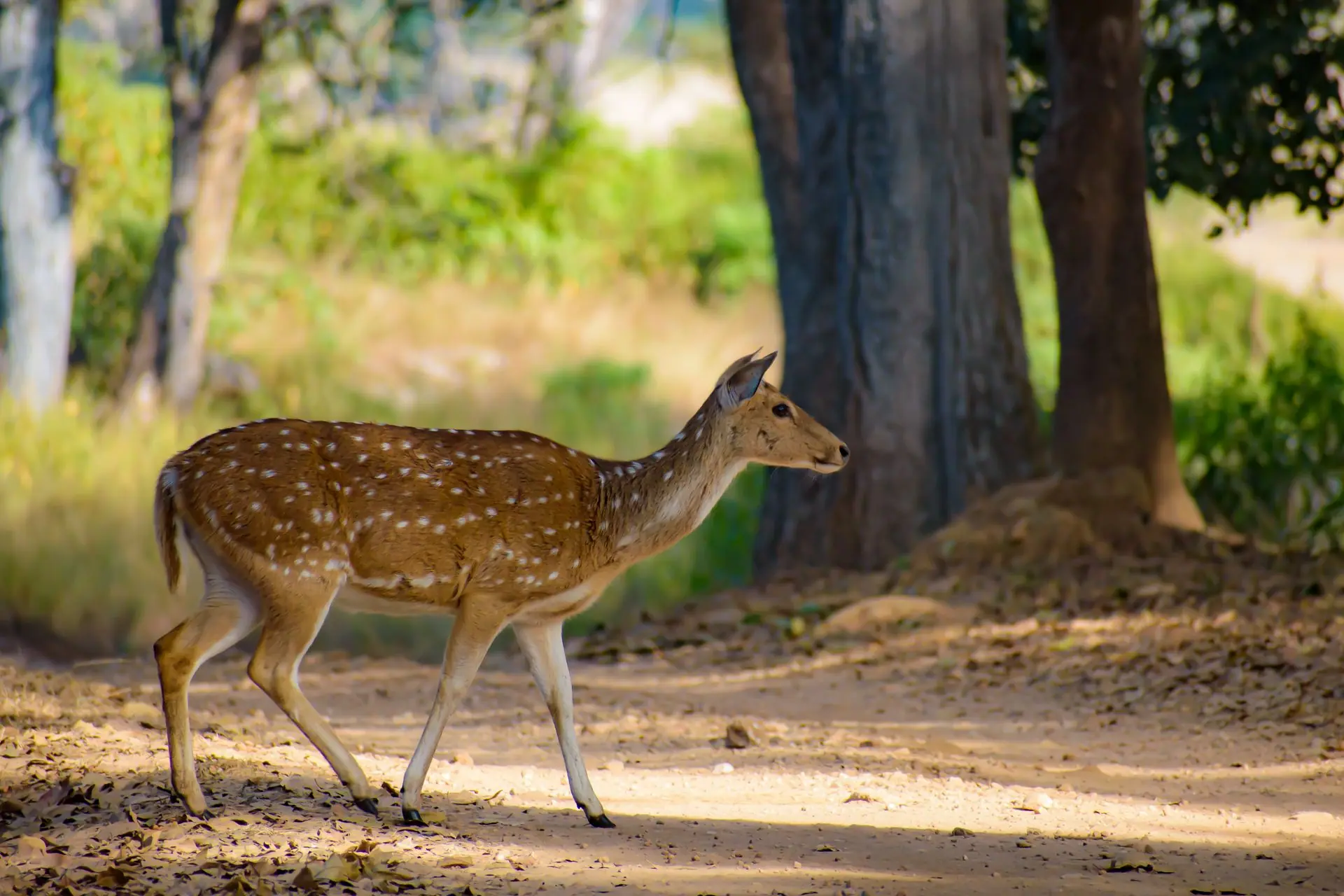
The forest department counts 52 mammal species, 31 reptiles and over 300 birds here. The Indian giant squirrel, flying squirrel and leaf-nosed bats live in the trees, and the reserve counts 26 Himalayan and 42 Nilgiri species, which has earned it the label of the northern extremity of the Western Ghats. Among the birds are the Malabar pied hornbill, Malabar whistling thrush and Madhya Pradesh's state bird, the paradise flycatcher. Tigers are present, but the reserve also names birds and other mammals as its draw.

Things to do in Satpura

Take jeep drives in the core and buffer zones, paddle a canoe or ride a boat on the Tawa and Denwa waters, walk with a guide, and cycle or camp where the reserve allows. For sightseeing, add Pachmarhi's viewpoints, falls and caves. Our other Madhya Pradesh safaris are listed under wildlife safaris in Madhya Pradesh, and the state's tours and experiences page gathers the rest.

Best time to visit Satpura

The reserve says the park is officially open to tourism from 16 October to 30 June and is usually open from 15 October, with October to June the best time. State wildlife rules allow some limited areas to reopen between 1 and 15 October.

  • November to February: winter. The reserve says Pachmarhi is 5 to 6 degrees cooler than the plains and has recorded as low as 1°C, and frost is frequent in the river valleys. Incredible India, the Ministry of Tourism's site, calls December to February the most comfortable for walking.
  • March to June: summer, intensely dry and hot; Narmadapuram has reached 45°C. The Ministry's page adds that April to June is often best for seeing wildlife near water. Pachmarhi stays moderate.
  • July to September: the monsoon, which the reserve says arrives around the end of June and brings about 1,300 mm to Narmadapuram district and about 1,700 mm to Pachmarhi. The core gates stay shut from 1 July until 30 September.

Only the core closes: the state's rules keep buffer areas of tiger reserves open all year, and Pachmarhi's tourist spots have no closed period, so Pachmarhi stays open to tourists through the rains. Which buffer gates take bookings on a given monsoon date is shown on the booking site.

How to reach Satpura

  • By air: the reserve names Bhopal, Jabalpur and Nagpur. Bhopal is nearest: its road distance to the Madhai gate is 140 km, to Churna 106 km and to the Pachmarhi gate 210 km, by the reserve's figures (MP Tourism gives about 222 km from Bhopal airport to Pachmarhi).
  • By train: the reserve lists Itarsi, Pipariya, Sohagpur and Narmadapuram. Pachmarhi is 54 km by road from Pipariya, the usual station for the hill station, and Churna is 65 km from Itarsi.
  • By road: the Madhai gate is about 19 km off the Pipariya to Narmadapuram road, with the turn near Sohagpur. From Nagpur, Madhai is 300 km and Pachmarhi 259 km. From Jabalpur, Pachmarhi is 241 km. The reserve advises a car with good ground clearance, because the approach roads are rough and muddy in the rains and poorly signposted.

For the rest of the state, see our Madhya Pradesh travel guide. Our guide to domestic flights covers the air route.

How many days in Satpura

Two nights at the Madhai side give you jeep drives, a boat or canoe outing and, where the reserve offers it, a guided walk. Add one or two nights at Pachmarhi for Dhoopgarh at sunset, the falls and the caves; the reserve puts Pachmarhi 90 to 100 km from Madhai.

For more than one reserve, the reserve's own site puts Pench National Park 250 km away and Kanha 400 km. Read our Kanha and Bandhavgarh guides, or compare the parks in our guide to India's best tiger parks.

Permits, guides and rules

  • Book on the official site: the Madhya Pradesh Forest Department's booking portal, forest.mponline.gov.in, sells Satpura safari permits. The reserve's home page mentions a 120-day booking window opening at 11 am; both can change, so check the notice when you book.
  • A park guide is compulsory: the reserve says it is compulsory to take an official guide with every vehicle, and the state's rules require all visitors to be accompanied by a licensed local guide. Obey the guide: the reserve says it is for your safety. A full-vehicle permit covers up to six tourists, with drivers and guides not counted among them.
  • A naturalist is an extra: a naturalist registered with the park may ride as an affiliate if a seat is free. The park guide rides along regardless.
  • Rules on the road: keep to 20 km/h, do not blow the horn or play music, stay in the vehicle unless the guide tells you to get down, and leave animals the right of way. Do not smoke, light a fire or litter, and take your rubbish out. Use a phone only for photographs, with the sound off.
  • What to wear and carry: light-coloured clothes that blend with the forest, no strong perfume, and drinking water. Carry a valid permit and photo ID.
  • Children: under the state's rules, children under five share a parent's seat, and children from five to twelve take their own seat at half the single-seat fee.
  • Where to stay: the park runs forest rest houses, three at Pachmarhi, two at Churna and one at Madhai, booked through the reserve's office. Private lodges stand near the gates. See our page on wildlife lodges.

Why book with Experience My India

  • Government-approved operator

    Approved by the Ministry of Tourism, Government of India

  • 500+ vetted local guides

    35+ destination specialists plan every trip by hand.

  • Human help, every day

    Mon–Sun, 9:00 AM – 9:00 PM IST · +91 73022 65809

  • No payment until you approve

    You receive a written quote first; nothing is charged to start planning.

Frequently asked questions

What does Satpura Tiger Reserve cover?

A national park, two sanctuaries and a buffer. Satpura Tiger Reserve covers 2,133.3 sq km. Its 1,339.3 sq km core joins Satpura National Park, Bori Sanctuary and Pachmarhi Sanctuary, and a buffer of 794 sq km surrounds it. The national park was notified in 1981, the biosphere reserve in 1999, and the tiger reserve in 2000.

Is Satpura National Park open in July and August?

The core zones are closed from 1 July to 30 September under the state's wildlife rules. Buffer areas of tiger reserves stay open all year, and Pachmarhi's tourist spots have no closed period, but the gates on sale change with conditions, so look at the booking site for your dates. Limited core areas can reopen between 1 and 15 October.

Does Satpura National Park have tigers?

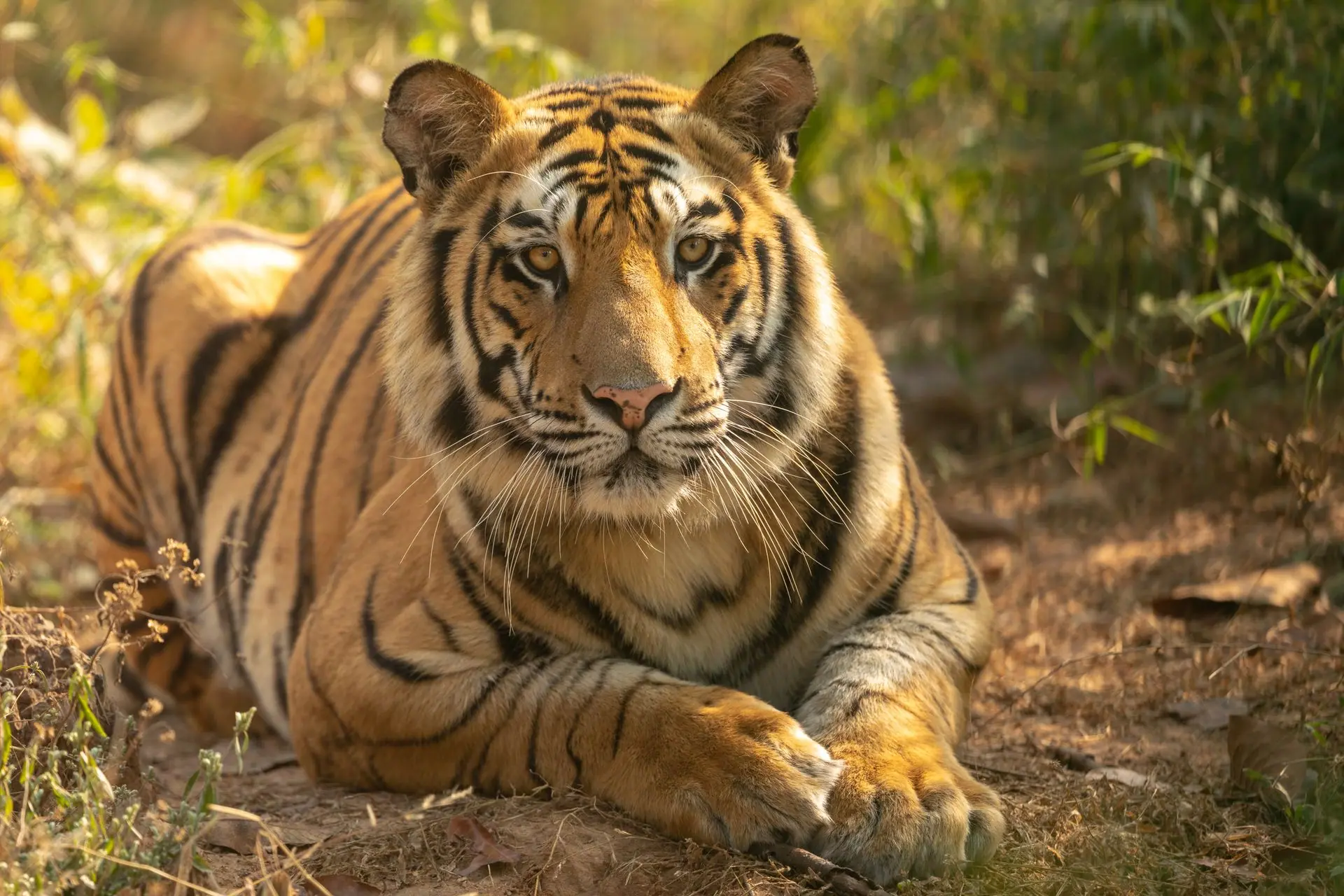
Yes; it is a tiger reserve, and the reserve says the Madhai, Churna and Bori areas have fairly good tiger populations. No drive can promise a sighting. The reserve itself points visitors to its birds and other mammals, and Incredible India lists gaur, sloth bears, dholes and the Indian giant squirrel, so plan several drives rather than one.

Can you go on a walking safari in Satpura?

The reserve lists walking and trekking, cycling and camping among its activities, and its fee schedule has guide charges for them. Incredible India describes a guided walk of about two hours through core forest, reached by a boat crossing of the Denwa river. Routes and availability vary, so ask the reserve office before you book.

How far is Satpura from Bhopal?

By the reserve's figures, 140 km by road to the Madhai gate, 106 km to Churna and 210 km to the Pachmarhi gate. The reserve's own how-to-reach page also gives 170 km from Bhopal to the reserve in general. Choose your gate first, then work out the drive, which can take longer on the rough approach roads.

How do the Madhai, Churna and Pachmarhi gates differ?

Madhai is the best known core gate, with a daily limit of 30 vehicles and boat, canoe and trekking options. Churna, at the Bheemkund gate, is a core zone 65 km from Itarsi. The Pachmarhi (Panarpani) gate is by the hill station. The buffer gates, Jamani Dev and Parsapani, sit near Madhai. The reserve ranks none above another.

Is Satpura on UNESCO's World Heritage list?

Not yet. MP Tourism says that in 2021 the Satpura Tiger Reserve and the marble rocks of Bhedaghat-Lametaghat were added to India's tentative list of natural world heritage sites, which is the shortlist from which a country chooses sites to nominate. The reserve calls itself the first biosphere reserve of Madhya Pradesh.

Should I choose Satpura or Pench?

The reserves are about 250 km apart. Satpura is the larger, at 2,133 sq km against 1,180 sq km for Pench, and its forest department lists boating, canoeing, walking and cycling beside jeep drives. Pench offers jeep drives and boating, and is known as the setting of the Jungle Book. The drive between the two is long, so most plans pick one or give each its own stay.

Is Pachmarhi open in the monsoon?

Yes. The state's rules list Pachmarhi's tourist spots among the areas with no closed period, and the reserve says Pachmarhi is open to tourists throughout the year. Rainfall there averages about 1,700 mm. The reserve says Rajat Prapat carries little water except in the rains, and MP Tourism says Dhoopgarh is wrapped in monsoon cloud. Safari drives in the core are closed 1 July to 30 September.

Customer reviews

Experience My India is rated 4.3 on Tripadvisor. We publish guest reviews after each trip.

Read our reviews

Plan a trip

Tailor-made quote from a specialist