
Haridwar Travel Guide: Har Ki Pauri, the Hill Temples and Planning
Haridwar is the pilgrim city where the Ganga enters the plains, at the foot of the Himalayas in Uttarakhand, and one of the four cities that host the Kumbh Mela. The main places to visit in Haridwar are Har Ki Pauri and its evening Ganga aarti, the hilltop temples of Mansa Devi and Chandi Devi, Maya Devi and Kankhal. One or two days is enough.
By Experience My India Editorial Team · Reviewed by Experience My India Editorial Team
Government-approved operatorApproved by the Ministry of Tourism, Government of India
Places to visit in Haridwar
Things to do in Haridwar
Watch the aarti at Har Ki Pauri, ride the ropeways to Mansa Devi and Chandi Devi, and shop in Bara Bazaar for religious goods and in Moti Bazaar for bangles, beads, sweets and Ayurvedic medicine; Haridwar is known for its brass and copperware. Many ashrams run yoga, meditation and Ayurveda sessions. Our Haridwar evening and the yatras that begin here are on our Uttarakhand tour packages page.
Best time to visit Haridwar
Haridwar can be visited all year. Incredible India suggests spring (March to May) or autumn (October and November) for a calmer visit. Its festival calendar decides the crowds more than the weather does. The Kumbh Mela comes to Haridwar every 12 years and the Ardh Kumbh every six; see our Kumbh Mela guide for how the cycle works. The Kanwar Mela fills the city every year in Shravan (July and August), during the monsoon, and bathing days such as Ganga Dussehra, Kartik Purnima and Somvati Amavasya bring large crowds to the ghats. The monsoon reaches Uttarakhand in the second half of June and normally withdraws by the end of September, with July and August the wettest months.
How to reach Haridwar
- By air: Dehradun's Jolly Grant Airport is 37 km away, with daily flights from Delhi; the nearest international airport is Indira Gandhi International in New Delhi.
- By train: Haridwar station, on the Northern Railway, has direct trains to Delhi, Mumbai, Kolkata, Chennai, Jaipur, Ahmedabad and other cities.
- By road: Delhi is 200 km away, and buses run from Delhi's ISBT Kashmiri Gate and from Meerut. Rishikesh is about 25 km upriver; see our Rishikesh travel guide.
How many days in Haridwar
One full day covers the main sights: Mansa Devi and Chandi Devi by ropeway in the morning, Maya Devi and Bhimgoda before lunch, Kankhal in the afternoon and the aarti at Har Ki Pauri at dusk. A second day leaves time for the ashrams, a morning in Rajaji or Piran Kaliyar, or the drive to Rishikesh. Our 8 Days Mathura Vrindavan Kedarnath Haridwar Rishikesh Tour spends two nights here, with seats booked for the aarti at Har Ki Pauri, and the Char Dham Yatra — 11 days can begin with a night in Haridwar and the evening aarti.
Rules and tips
Liquor is banned in the religious places within Haridwar's municipal limits, and vegetarian food is the norm, though some places serve meat. Dress modestly at the ghats and temples. The ghats get crowded around aarti time, especially at weekends and during festivals, so arrive early. Pilgrims bound for the Himalayan temples can register for the yatra at the counter in Haridwar's Rahi Hotel; our Char Dham travel guide explains how it works, and the Uttarakhand travel guide covers the rest of the state.
Why book with Experience My India
Government-approved operator
Approved by the Ministry of Tourism, Government of India
500+ vetted local guides
35+ destination specialists plan every trip by hand.
Human help, every day
Mon–Sun, 9:00 AM – 9:00 PM IST · +91 73022 65809
No payment until you approve
You receive a written quote first; nothing is charged to start planning.
Frequently asked questions
What is Har Ki Pauri?
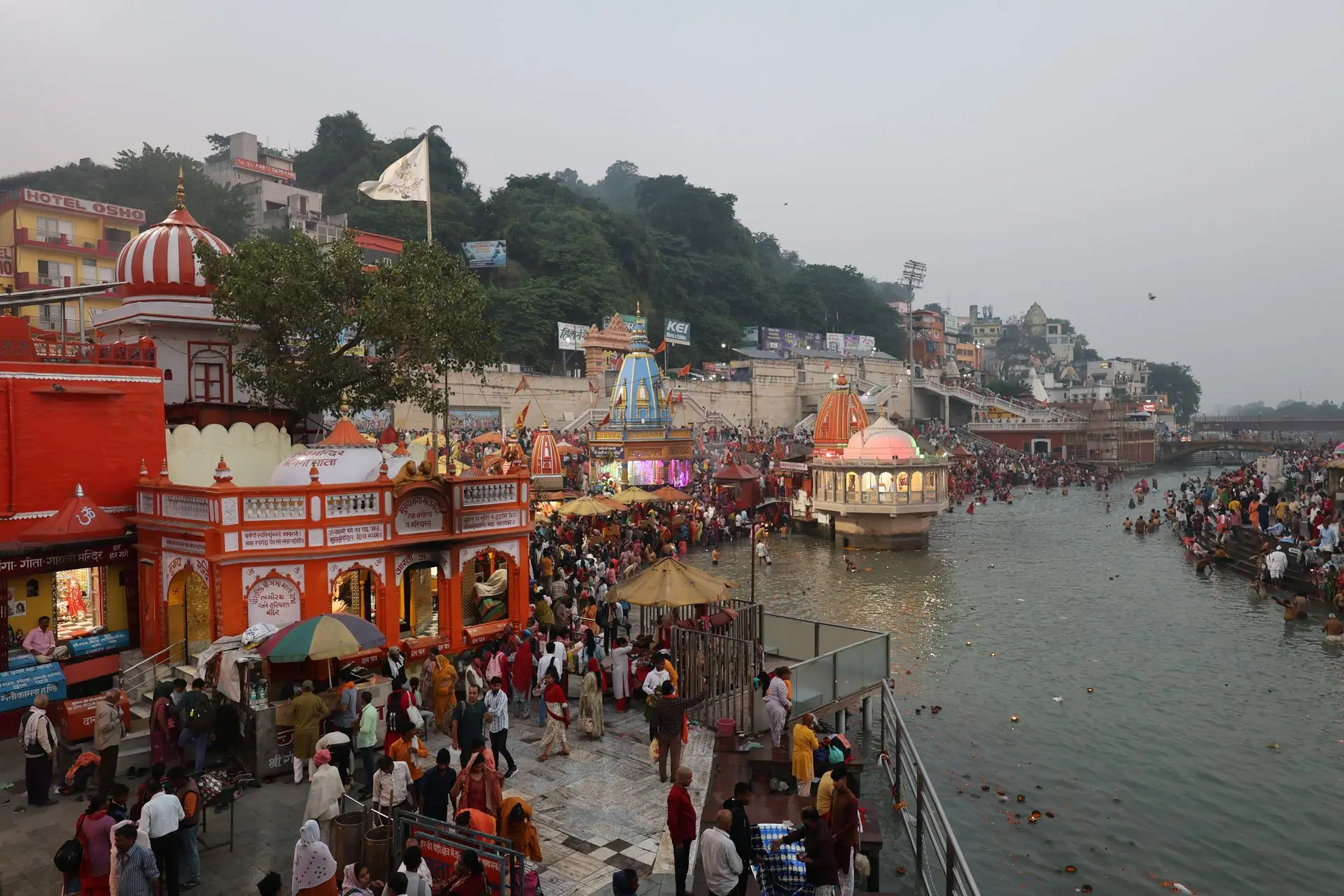
Haridwar's most important ghat, on the Ganga in the old city; its name means "the footsteps of the gods". Within it is Brahma Kund, where drops of amrit are believed to have fallen, which makes it the centre of the Kumbh Mela. The Ganga aarti is performed here every day at dusk, with towering lamps, bells and conch shells, and there is a morning aarti too.
What is Haridwar famous for?
For Har Ki Pauri and its evening aarti, and for the Kumbh Mela: Haridwar is one of the four cities where it is held, every 12 years, with an Ardh Kumbh every six. Uttarakhand Tourism calls it the gateway to the Char Dham, and the city is also known for its ashrams, Ayurvedic clinics and the yearly Kanwar Mela, when Shiva's devotees carry Ganga water home.
What are the Panch Tirth of Haridwar?
The five pilgrimages within the city, as Uttarakhand Tourism lists them: Gangadwara, which is Har Ki Pauri; Kushavarta Ghat; Kankhal, with the Daksha Mahadev temple; Bilwa Tirtha, the Mansa Devi temple on Bilwa Parvat; and Neel Parvat, the Chandi Devi temple. All five can be visited in a day, using the ropeways for the two hill temples.
How do you reach the Mansa Devi and Chandi Devi temples?
Both hill temples have a ropeway, known locally as the Udan Khatola, and a footpath. The walk to Mansa Devi on Bilwa Parvat is about 3 km; the path to Chandi Devi starts at Chandighat and also runs about 3 km, fairly steep in places. The ropeways take a few minutes and spare older pilgrims the climb. Both temples look out over the city and the Ganga.
What is there to see in Haridwar apart from temples?
Rajaji National Park, about 8 km away, with elephants, leopards and more than 300 kinds of birds; the Neel Dhara Pakshi Vihar, where migratory birds gather in winter; the bazaars, Bara Bazaar for religious goods and Moti Bazaar for bangles, sweets and Ayurvedic medicine; the ashrams, several of which offer yoga and Ayurveda; and the dargah at Piran Kaliyar near Roorkee.
When is Haridwar most crowded?
During the Kumbh Mela, every 12 years, and the Ardh Kumbh, every six; during the Kanwar Mela in Shravan (July and August); and on bathing days such as Ganga Dussehra, Kartik Purnima and Somvati Amavasya. The evening aarti at Har Ki Pauri is busy every day, and more so at weekends. For a quieter visit, Incredible India suggests March to May or October and November.
How many days do you need in Haridwar?
One full day covers Har Ki Pauri, the three Siddhpeeth temples, Kankhal and the evening aarti. Add a second day for the ashrams, Rajaji National Park or Piran Kaliyar. Many travellers stay in Rishikesh, about 25 km away, and come for the aarti on an evening trip, which our day trip from Rishikesh does in four to five hours.
Can I get to Haridwar directly from Delhi?
Yes. Delhi is 200 km away by road, with buses from ISBT Kashmiri Gate, and Haridwar station has direct trains from Delhi and other major cities. The nearest airport, Dehradun's Jolly Grant, is 37 km from Haridwar and has daily flights from Delhi. Haridwar is also where many pilgrims start the Char Dham Yatra.
More places in Uttarakhand
See all
From the journal: Haridwar
Journal
Haridwar Tour and Travel Package – A Gateway to Divine Tranquility
Journal
Haridwar Holiday Packages – A Spiritual Journey to the Sacred City
Journal
A Fascinating Haridwar Tourist Spot
Customer reviews
Experience My India is rated 4.3 on Tripadvisor. We publish guest reviews after each trip.
Plan a trip
Tailor-made quote from a specialist