Skip to content

Coorg Travel Guide: Coffee Estates, Waterfalls and the Kodava Hills

Travel guideKarnataka

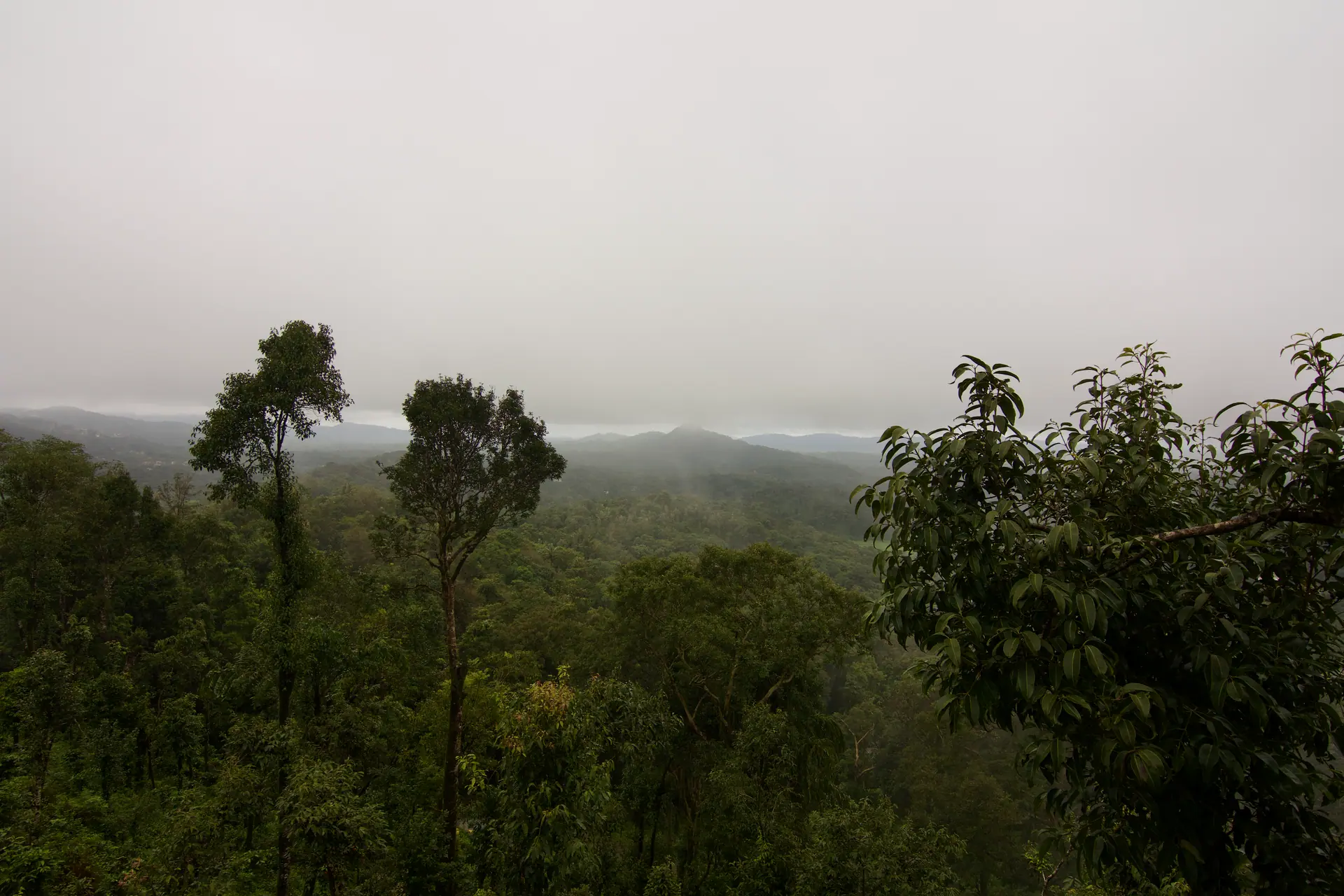
Coorg, officially Kodagu, is the Western Ghats district of Karnataka known for coffee estates, waterfalls and the Kodava community. The main places to visit in Coorg are Madikeri with Raja's Seat and the Omkareshwara temple, Abbey Falls, Talakaveri and Bhagamandala, Tadiandamol, Iruppu Falls and the Golden Temple at Bylakuppe. Rain is heavy from June to November, and three days suits the district.

By Experience My India Editorial Team · Reviewed by Experience My India Editorial Team

Government-approved operatorApproved by the Ministry of Tourism, Government of India

Places to visit in Coorg

Kodagu, known to visitors as Coorg, covers 4,102 sq km of the Western Ghats in southwest Karnataka, and its headquarters is Madikeri. The district administration notes three wildlife sanctuaries, Brahmagiri, Talakaveri and Pushpagiri, and the Nagarhole National Park, and a landscape of paddy in the valleys and coffee and pepper on the hills. Karnataka Tourism calls the Kodavas a warrior community that gave India Field Marshal K. M. Cariappa and General K. S. Thimayya. Sights are spread across the district, so group them by distance from Madikeri: the district puts Abbey Falls at about 6 km, Mandalpatti 18 km, Bhagamandala 39 km and Talakaveri 46 km.

Madikeri, Raja's Seat and the Omkareshwara Temple

Raja's Seat, a park a short way from Madikeri's bus stand, is where Kodava kings and their consorts are said to have spent their evenings, the district says; it looks over green mountains and valleys and is the town's sunset point. The Omkareshwara Temple, built in 1820 by Lingarajendra II, mixes Kerala tiled roofs with Islamic domes in an Indo-Saracenic style, close to the bus stand and, Karnataka Tourism notes, a stone's throw from Madikeri Fort.

Abbey Falls

Karnataka Tourism says the water drops about 70 feet over wide rocks here, about 6 km from Madikeri. You reach it through private coffee plantations, and a hanging bridge gives a view from above. Bathing and swimming are not allowed, and parking is limited. It is wide rather than tall.

Mandalpatti viewpoint

About 18 km from Madikeri on the way to Abbey Falls, Mandalpatti looks over the grasslands of the Pushpagiri forests, and its local name, Muguli-peth, means market of clouds. The district says the Forest Department encourages visitors to take the 4x4 jeep ride up, and that the viewpoint is known for sunrise and sunset, so go early or late in the day.

Talakaveri and Bhagamandala

Talakaveri, about 46 km from Madikeri by the district's count, is the birthplace of the Kaveri: a small shrine with a silver Shiva linga marks the spring, and Brahmagiri peak rises beside it. On Tula Sankramana, which usually falls on 17 October, thousands come to see the sudden rise of water in the spring, so expect crowds then. Bhagamandala, about 39 km from Madikeri, is the sangama of the Cauvery, Kannike and Sujyoti rivers, with the Bhagandeshwara temple, built in the Kerala style with red tiled roofs.

Iruppu Falls and Brahmagiri

Iruppu Falls, also called Lakshmana Tirtha Falls, drops about 170 feet in the Brahmagiri hills, Karnataka Tourism says. A narrow forest trail of about 1 km each way leads past the Rameshwara temple, which draws pilgrims at Shivaratri. Swimming is not recommended because of strong currents and sudden drop-offs, and the falls are least impressive from December to February. The longer Brahmagiri trek, about 15 km and of moderate difficulty, needs an entry permit from the Forest Department, and guides are available at the local forest offices.

Tadiandamol and Nalaknad Palace

Tadiandamol is the highest peak in Kodagu and the second highest in Karnataka, at about 1,750 metres. Karnataka Tourism describes a trail of about 7 km each way from Nalaknad Palace, rated easy and done in a day. Camping is not allowed on the peak, so trekkers must come back before sunset. Nalaknad Palace, built in the late 1790s as a refuge for the Kodava ruler Chikka Veera Rajendra, is the starting point, and the Padi Igguthappa temple, to the deity the Kodavas worship as giver of grain, is a main attraction on the hill.

Dubare and Harangi elephant camps

Dubare is the Forest Department's elephant camp in Kodagu, and the district says a newer camp opened at Harangi, in the reservoir backwaters, to which 15 elephants were moved from Dubare; Harangi also has a tree park and pedal boats. After a visitor died during a bathing session at Dubare, the Karnataka Forest Department issued rules for its elephant camps that ban visitors from touching, feeding or bathing the elephants and require a distance of at least 10 metres. Confirm with the Forest Department what a camp allows before you plan around it.

Namdroling Monastery, the Golden Temple at Bylakuppe

Karnataka Tourism describes the Namdroling Monastery, popularly the Golden Temple, as one of the largest Tibetan settlements in India, at Bylakuppe, about 5 km from Kushalnagar. Statues of the Buddha, Amitayus and Padmasambhava stand inside, visitors may turn the prayer drums, and it is a working monastery, so keep voices low and ask before photographing monks.

Coffee estates and the Coffee Board

Coorg is one of the Coffee Board of India's named coffee regions. The Board gives its estates an elevation of 750 to 1,100 metres, growing both arabica and robusta, with pepper, cardamom, orange, banana and arecanut grown alongside, and its production table puts Kodagu ahead of every other district, most of it robusta. Ask an estate or homestay whether visits and tastings are open.

How Coorg coffee is grown

The Board says India grows all its coffee under shade, in a two-tier canopy of about 50 kinds of shade tree, so the estates are wooded rather than open. Its table of growing conditions lists blossom showers of 25 to 40 mm, in March and April for arabica and February and March for robusta. The Board's Mysore Nuggets Extra Bold grade is washed arabica from regions that include Coorg, and its Robusta Kaapi Royale grade is robusta from regions that include Coorg.

Things to do in Coorg## Things to do in Coorg

Walk through a coffee estate, drive to Abbey Falls and Raja's Seat in a morning, and spend a day on the roads to Bhagamandala and Talakaveri. The district also lists white-water rafting on the Barapole river, about 78 km from Madikeri, so check the operator and the river level first. Nagarhole National Park, shared with Mysuru district, lies about 90 km from Madikeri by the district's count. Every tour and experience we run in the state is on our Karnataka tours and experiences page, and our Karnataka tour packages show how the routes run.

Best time to visit Coorg

The district administration says rainfall is intense in July and August, with showers often into November, and that some areas can see more than 4,000 mm in a year. It gives an average temperature of 15 °C, ranging from 11 to 28 °C, with the highest temperatures in April and May. Karnataka Tourism calls Coorg a favourite travel spot throughout the year, and gives three days as the ideal stay.

The rains change what you see. Karnataka Tourism says the sight and sound of Iruppu Falls is most invigorating in the monsoon and that it is least impressive from December to February, and mist can hide the viewpoints. Talakaveri is crowded around 17 October for Kaveri Sankramana. The Coffee Board lists the blossom showers that start the coffee flowering in February to April. For the other hill station people compare it with, see our Coorg or Ooty article.

How to reach Coorg

  • By air: Kodagu has no airport. The district administration names Mangalore, about 137 km from the district, Mysuru, about 121 km from Madikeri, and Kannur in Kerala as the nearest.
  • By train: there is no railway station in the district. The nearest are Mysuru, Hassan and Mangaluru in Karnataka and Thalassery and Kannur in Kerala.
  • By road: Madikeri is about 250 km from Bengaluru and about 140 km from Mangaluru, Karnataka Tourism says, with regular buses from Bengaluru, Mysuru and Mangaluru; taxis can be hired in Madikeri for the sights. Our Bengaluru and Mysuru guides cover the starting points, and our Wayanad guide covers the neighbouring Kerala district to the south.

How many days in Coorg

Three days is Karnataka Tourism's ideal stay, and two nights is the least that makes the drive worthwhile. Spend one day around Madikeri (Raja's Seat, the Omkareshwara temple, Abbey Falls and Mandalpatti), one on the road to Bhagamandala and Talakaveri, and one at Bylakuppe and the elephant camps, or on the Tadiandamol trek. Add a fourth day for Iruppu Falls and Brahmagiri.

Where to stay and getting around

Karnataka Tourism says Madikeri and the rest of the district have numerous homestays, budget hotels and luxury resorts. Madikeri suits a first night, because most of the sights are a drive from it, while an estate stay gives the coffee and the quiet. Without a railway, the practical way around is a hired car.

  • Brahmagiri needs a Forest Department entry permit; camping is not allowed on Tadiandamol; bathing is not allowed at Abbey Falls.
  • Swimming is not recommended at Iruppu Falls, for its strong currents and sudden drop-offs, and Karnataka Tourism calls Chelavara Falls unsafe for bathing.
  • Check IMD's district warning before long drives in July and August.
  • Elephant camps change their rules; follow the Forest Department's instructions.

Why book with Experience My India

  • Government-approved operator

    Approved by the Ministry of Tourism, Government of India

  • 500+ vetted local guides

    35+ destination specialists plan every trip by hand.

  • Human help, every day

    Mon–Sun, 9:00 AM – 9:00 PM IST · +91 73022 65809

  • No payment until you approve

    You receive a written quote first; nothing is charged to start planning.

Frequently asked questions

How far is Coorg from Bengaluru?

Karnataka Tourism puts Madikeri, the district headquarters, about 250 km from Bengaluru and about 140 km from Mangaluru. Coorg has no railway station or airport of its own, so most visitors drive or take a bus from Bengaluru, Mysuru or Mangaluru. Karnataka Tourism lists three days as the ideal stay, so a short weekend means seeing only the sights around Madikeri.

Is Coorg good to visit during the monsoon?

Yes, with limits. The district says rain is intense in July and August and that showers often run into November. Karnataka Tourism says Iruppu Falls is most invigorating in the monsoon, but mist can hide viewpoints, rivers rise and some activities stop. Pick a stay near Madikeri rather than a distant estate, keep dates flexible and follow IMD's district warnings.

How many days do you need in Coorg?

Three days, Karnataka Tourism says, and two nights at the least. Allow a day around Madikeri, a day on the road to Bhagamandala and Talakaveri and a day for Bylakuppe and the elephant camps or the Tadiandamol trek. The sights are spread over the district, so each day is mostly driving between them.

Is Coorg the same as Kodagu?

Yes. Kodagu is the district's name and Coorg the anglicised form that visitors use; the district administration writes "Kodagu (Coorg)". Madikeri is the headquarters, also spelt Mercara. The district has three taluks: Madikeri, Virajpet and Somwarpet.

Is there an airport or railway station in Coorg?

No. The district administration says Kodagu has neither. The nearest airports are Mangalore, about 137 km from the district, Mysuru, about 121 km from Madikeri, and Kannur in Kerala. The nearest stations are Mysuru, Hassan and Mangaluru in Karnataka and Thalassery and Kannur in Kerala, and Madikeri has bus links to Bengaluru, Mysuru and Mangaluru.

Can you swim at Abbey Falls?

No. Karnataka Tourism says bathing or swimming at Abbey Falls is not allowed. You reach the falls through private coffee plantations and view them from a hanging bridge, and parking is limited. Swimming is also not recommended at Iruppu Falls because of currents and sudden drop-offs, and Chelavara Falls is described as unsafe for bathing.

What is special about Coorg's coffee?

The Coffee Board lists Coorg among India's coffee regions, with estates between 750 and 1,100 metres growing arabica and robusta, and its production table puts Kodagu first among districts, mostly robusta. Coffee is grown under shade, among pepper, cardamom, orange, banana and arecanut. The Board names Coorg arabica among the origins of its Mysore Nuggets Extra Bold.

Can you bathe the elephants at Dubare?

No longer. After a visitor died during a bathing session at Dubare, the Karnataka Forest Department issued rules for its elephant camps that ban touching, feeding and bathing the elephants and require visitors to stay at least 10 metres away. Camp rules and opening times can change, so confirm with the Forest Department before you plan a visit.

What is the weather in Coorg?

Cool for most of the year. The district puts the average temperature at 15 °C, ranging from 11 to 28 °C, with the highest temperatures in April and May. Rain is intense in July and August, with showers often into November. Pack a light jacket for the evenings and rain cover for the monsoon.

From the journal: Coorg

Customer reviews

Experience My India is rated 4.3 on Tripadvisor. We publish guest reviews after each trip.

Read our reviews

Plan a trip

Tailor-made quote from a specialist