
Tso Moriri Travel Guide: Korzok, Birds and the Road from Leh
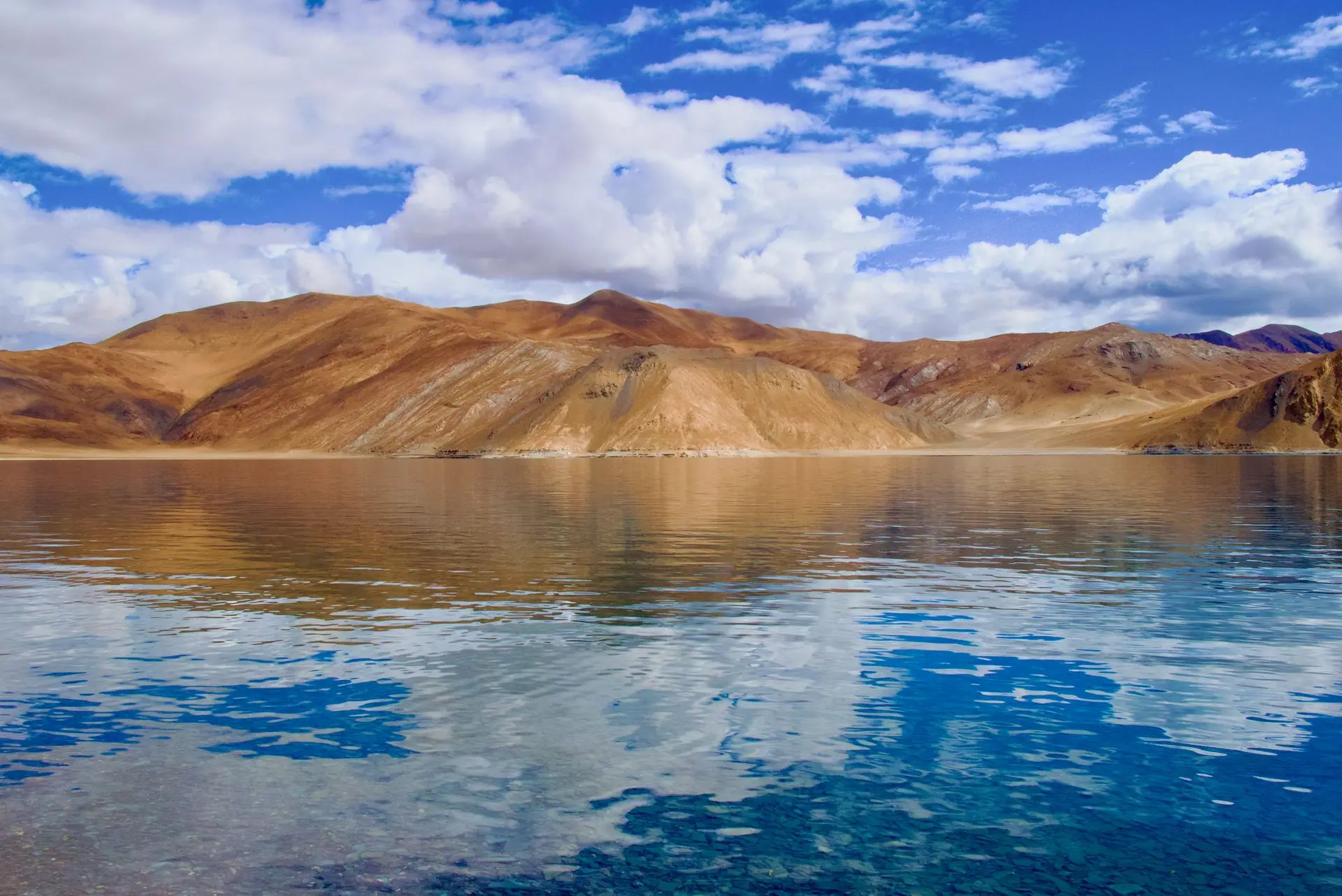
Tso Moriri is a high-altitude lake on the Changthang plateau in eastern Ladakh, 240 km from Leh by road. Its Ramsar record puts it at 4,595 metres, and the wetland reserve is a breeding ground for black-necked cranes and bar-headed geese. It is quieter than Pangong. Go between May and September, after 48 hours in Leh; Indian citizens need no Inner Line Permit.
By Experience My India Editorial Team · Reviewed by Experience My India Editorial Team
Government-approved operatorApproved by the Ministry of Tourism, Government of India
Places to visit at Tso Moriri
Things to do at Tso Moriri
Walk along the shore, watch the birds in the breeding season, visit Korzok and spend a night under the stars: Incredible India notes the minimal light pollution and the lake's value for stargazing. Camping is limited by rule, because Incredible India says tents and other structures are not allowed close to the lake's edge, so expect camps set back from the water. For more of the region, see our Ladakh tours and experiences page.
Best time to visit Tso Moriri
Permits and the 48-hour rule
How to reach Tso Moriri
The Leh district gives the road as Leh, Karu (36 km), Upshi (13 km), Kumdok (19 km), Kere (53 km), Chumathang (34 km), Mahe (22 km), Sumdo (10 km) and Korzok (53 km): 240 km, six to seven hours depending on stops. Incredible India says there are no scheduled bus services to the two big lakes, so most visitors hire a car and driver. Leh has the nearest airport and Jammu Tawi the nearest railway station, by the district. The road shares the stretch from Upshi through Chumathang and Mahe with the portal's circuit towards Hanle; our Ladakh guide covers Hanle.
How many days at Tso Moriri
Six to seven hours each way means one night at the lake at the very least. Our eight-day Ladakh tour spends one night at Tso Moriri after Pangong, between two nights in Leh at the start and two at the end; its fifth day heads "further into the remote Changthang plateau", to a lake it calls quieter than Pangong. Stays are confirmed at enquiry, and the tour suits fit, patient travellers. If you add Tso Kar or Hanle, plan extra nights.
Altitude and health
At about 4,500 metres and above, Tso Moriri is around 1,100 metres higher than Leh. Ladakh Tourism's advisory lists Tso Moriri among the places where the risk of high-altitude pulmonary oedema is critical for travellers who ascend quickly, and says remote areas such as Changthang have minimal medical infrastructure. Take the Leh health advisory seriously: danger signs are headache, nausea, coughing, breathlessness, loss of appetite and disturbed sleep, and HAPE and HACE can be fatal. Any preventive medicine is a matter for your own doctor, before you leave home.
Why book with Experience My India
Government-approved operator
Approved by the Ministry of Tourism, Government of India
500+ vetted local guides
35+ destination specialists plan every trip by hand.
Human help, every day
Mon–Sun, 9:00 AM – 9:00 PM IST · +91 73022 65809
No payment until you approve
You receive a written quote first; nothing is charged to start planning.
Frequently asked questions
What makes Tso Moriri different from Pangong?
It is further, quieter and a protected wetland. The Leh district calls it lesser known than Pangong and so less crowded, and the Ramsar record singles out its breeding cranes and geese. Pangong is the more famous lake and shifts colour through the day; Tso Moriri rewards a longer drive and a night in the open plateau.
Do I need a permit for Tso Moriri?
Indian citizens need no Inner Line Permit; they pay the environment fee online on the Leh district's permit portal. Foreign nationals need a Protected Area Permit, valid only for the route and entry and exit points it names. The 48-hour acclimatisation rule applies to everyone before the drive.
How far is Tso Moriri from Leh?
The Leh district gives 240 km by Karu, Upshi, Chumathang, Mahe and Sumdo, six to seven hours depending on breaks. Ladakh Tourism's fact box also says 240 km, and Incredible India says less than 250 km. Allow a full day each way once you add stops and weather.
How high is Tso Moriri?
Official sources differ. The Ramsar record gives 4,595 metres, Ladakh Tourism 4,522 metres and the Leh district about 4,000 metres. Take it as roughly 4,500 metres or a little more: well over 1,000 metres above Leh, which is why the 48-hour rest matters.
Is Tso Moriri a freshwater lake?
The Ramsar record calls it a freshwater to brackish lake, with no outflow, so evaporation in the dry plateau raises the salinity in places. That is different from Pangong, which the Leh district calls brackish and saline.
Can you camp on the shore of Tso Moriri?
Not at the water's edge: Incredible India says tents and other structures are not allowed close to the lake's edge. Camps are set back from the shore. The Ramsar record notes that local Buddhists consider the wetland sacred, so also keep litter and noise away from the lake.
Which birds breed at Tso Moriri?
The Ramsar record says the site is possibly the only breeding ground outside China for the black-necked crane and the only breeding ground in India for bar-headed geese. The Leh district also lists the brown-headed gull and the great crested grebe. Summer is the season, and binoculars help more than a long lens.
Can I visit Tso Moriri and Hanle on one trip?
Yes, but plan extra days. The Leh district's road to Tso Moriri and the permit portal's circuit "Upshi, Chumathang, Mahe, Loma Bend", which leads towards Hanle, share the stretch from Upshi through Chumathang and Mahe. Hanle is about 260 to 270 km from Leh by the district and the Indian Institute of Astrophysics, and has its own line on the portal.
More places in Ladakh
See all
Customer reviews
Experience My India is rated 4.3 on Tripadvisor. We publish guest reviews after each trip.
Plan a trip
Tailor-made quote from a specialist