
New Delhi Travel Guide: The Planned Capital, Its Sights and Planning Your Day
New Delhi is the planned capital that Edwin Lutyens and Herbert Baker laid out on Raisina Hill after 1911. The places to visit in New Delhi are Rashtrapati Bhavan, Kartavya Path, India Gate and the National War Memorial, with Humayun's Tomb, the National Museum and Jantar Mantar close by. One day covers the main sights, and October to March is the season.
By Experience My India Editorial Team · Reviewed by Experience My India Editorial Team
Government-approved operatorApproved by the Ministry of Tourism, Government of India
Places to visit in New Delhi
Things to do in New Delhi
Walk Kartavya Path in the late afternoon and stay for India Gate when it is lit. Book Rashtrapati Bhavan in advance, and on a Saturday add the Change of Guard. Eat around Connaught Place, then shop at Janpath or the state emporiums on Baba Kharak Singh Marg. For guided walks, food trails and day trips from the capital, see our Delhi tours and experiences and Delhi tour packages.
Best time to visit New Delhi
Delhi Tourism recommends October to March. On the IMD's 1991–2020 normals for Safdarjung, January days average 20.1°C and May days 39.9°C, and the city has about 19 foggy days in December and 22 in January. Winter is also when the air is worst: on the Central Pollution Control Board (CPCB) bulletins we sampled from November to January, the city's index was Poor or worse every time. Our best time to visit Delhi guide takes the year month by month, and our air quality guide explains the categories.
How to reach New Delhi
- By air: Indira Gandhi International Airport is served by the Airport Express line, which links Terminal 3 with New Delhi Railway Station in about 25 minutes, according to the airport operator. Terminal 1 has its own station on the Magenta Line.
- By train: the main stations are New Delhi, Old Delhi, Hazrat Nizamuddin and Anand Vihar Terminal, according to PIB. Train bookings from abroad are covered in the IRCTC guide for foreigners.
- By metro in the capital: Delhi Tourism's metro itinerary names Central Secretariat for India Gate, Rashtrapati Bhavan, Parliament House, the National Museum and the NGMA, and Rajiv Chowk for Connaught Place. For the network, see our metro guide.
How many days in New Delhi
One day covers the main sights if you start early. Spend the morning on the Rashtrapati Bhavan circuit you have booked and a walk down Kartavya Path, the middle of the day at the National Museum or the NGMA (not on a Monday), and the afternoon at Humayun's Tomb. Return for India Gate at dusk and the War Memorial before it closes. A second day adds Lodhi Garden and Safdarjung's Tomb, Purana Qila, and Jantar Mantar with Connaught Place and Bangla Sahib. If you are adding Agra and Jaipur, our Agra travel guide and Jaipur travel guide cover the rest of the classic route.
Getting around New Delhi
The government quarter is wide: Delhi Tourism's own itinerary puts the National Museum and the NGMA about 2 km apart and Teen Murti, once the prime minister's residence, about 4 km from India Gate. Metro stations are the easiest way to link the groups of sights above, and a private car saves time on the longer legs, such as the run from India Gate to Humayun's Tomb. Stay near Connaught Place if you want the metro on your doorstep; we have not verified specific hotels for this guide.
Why book with Experience My India
Government-approved operator
Approved by the Ministry of Tourism, Government of India
500+ vetted local guides
35+ destination specialists plan every trip by hand.
Human help, every day
Mon–Sun, 9:00 AM – 9:00 PM IST · +91 73022 65809
No payment until you approve
You receive a written quote first; nothing is charged to start planning.
Frequently asked questions
What is the difference between Delhi and New Delhi?
New Delhi is the planned capital built after 1911 on Raisina Hill, and Delhi is the wider city around it. The New Delhi Municipal Council, which grew out of the committee formed in 1913 to build the capital, still administers the planned area. Visitors use the two names loosely, and the sights of both are described in our Delhi and New Delhi guides.
Who planned New Delhi, and when was it opened?
Edwin Lutyens and Herbert Baker led the English town planners, according to the NDMC, and Lutyens went on to design Rashtrapati Bhavan and India Gate. The shift of the capital from Calcutta to Delhi was announced at the Delhi Durbar on 12 December 1911, and the new capital was officially opened on 15 February 1931, according to the NDMC.
Can I visit Rashtrapati Bhavan?
Yes, by booking online. The official visit site offers circuits for the main building, the museum and Amrit Udyan, and a Change of Guard ceremony. The museum is open Tuesday to Sunday from 9.30 am to 5 pm with last entry at 4 pm, and the gardens open only for announced periods. Mandatory booking for the gardens closes at 10:00 the day before.
When did Rajpath become Kartavya Path?
On 8 September 2022, when the Prime Minister inaugurated the redeveloped avenue and unveiled the statue of Netaji Subhas Chandra Bose near India Gate. It runs from the National War Memorial to Rashtrapati Bhavan. Older maps, guidebooks and some websites still use the name Rajpath.
Why is the eternal flame at the National War Memorial, not under India Gate?
The Amar Jawan Jyoti was installed under the arch in January 1972 for the war of 1971. On 21 January 2022 its flame was merged with the eternal flame at the National War Memorial, which names the soldiers who have died since 1947. India Gate's own names are those of men who died in the First World War and the Third Anglo-Afghan War.
Can you go inside Parliament House?
Delhi Tourism says visitors can move inside the building only with special permission, so most travellers see it from the avenue outside. If you want a visit, ask well before you travel and do not rely on turning up. The sights that are open to visitors on a booked basis in the same area are Rashtrapati Bhavan and its museum.
How are Humayun's Tomb and the Taj Mahal related?
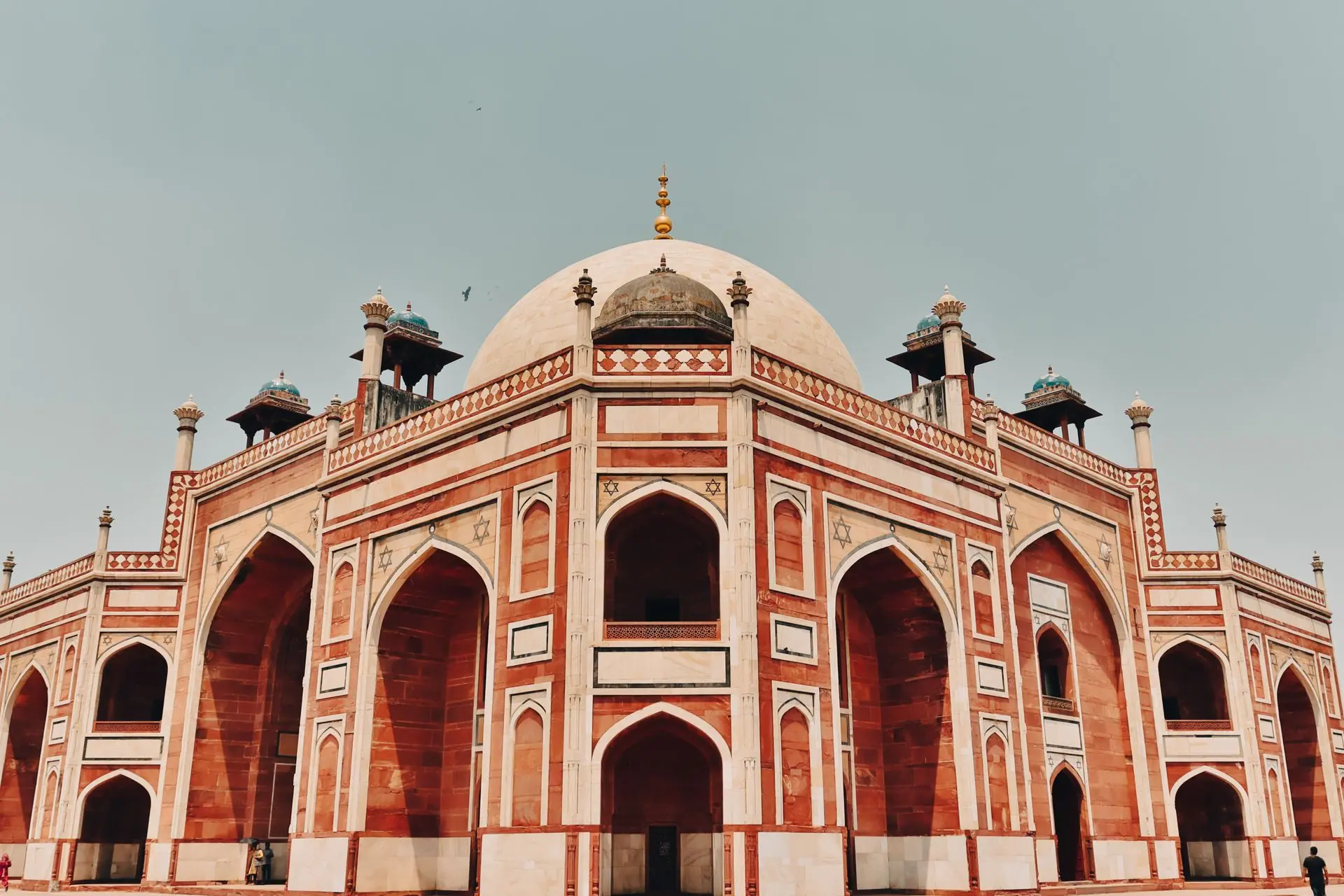
The ASI says Humayun's Tomb "set up a new vogue, the crowning achievement of which is the Taj at Agra". Both are Mughal tombs, one built by a wife for her husband and the other by a husband for his wife, and Humayun's tomb, begun in 1569, stands in a square charbagh garden.
How much time do you need for New Delhi's sights?
A day covers the core: Rashtrapati Bhavan, Kartavya Path, India Gate, the National War Memorial and Humayun's Tomb, with a museum if you choose one. A second day adds Lodhi Garden, Safdarjung's Tomb, Purana Qila and Jantar Mantar. Remember that the National Museum is closed on Mondays and the National War Memorial closes in the evening.
Is New Delhi walkable?
Parts of it are. Kartavya Path and India Gate are a pleasant walk with lawns and canals, and Delhi Tourism describes walking between the National Museum and the NGMA, about 2 km apart. The government quarter is spread over a large area, though, so use the metro or a car between the groups of sights, and keep the walking for each site.
More places in Delhi
See all
Related guides
Destinations
Best Time to Visit Delhi: Month by Month
Customer reviews
Experience My India is rated 4.3 on Tripadvisor. We publish guest reviews after each trip.
Plan a trip
Tailor-made quote from a specialist