Skip to content

Munnar Travel Guide: Tea Hills, Eravikulam and the Viewpoints

Munnar is a tea-growing hill station at about 1,600 metres in Kerala's Idukki district, where three mountain streams meet. The main places to visit in Munnar are the Tea Museum and the estates, Eravikulam National Park for the Nilgiri tahr, Mattupetty's lake, Echo Point, Kundala and Top Station. December to March is dry, but Eravikulam closes from 1 February to 1 April. Allow two nights.

By Gurudutt Kaushal · Reviewed by Gurudutt Kaushal

See all 0 tours and experiences in Munnar →

Government-approved operatorApproved by the Ministry of Tourism, Government of India

Places to visit in Munnar

The name means three rivers in Malayalam: the Mudrapuzha, Nallathanni and Kundala meet here. Most sights lie along three roads out of town: north to Eravikulam, Marayoor and Chinnar; east past Mattupetty, Echo Point and Kundala to Top Station; and south-east towards Chinnakanal and Anayirangal.

Tea Museum and the estates

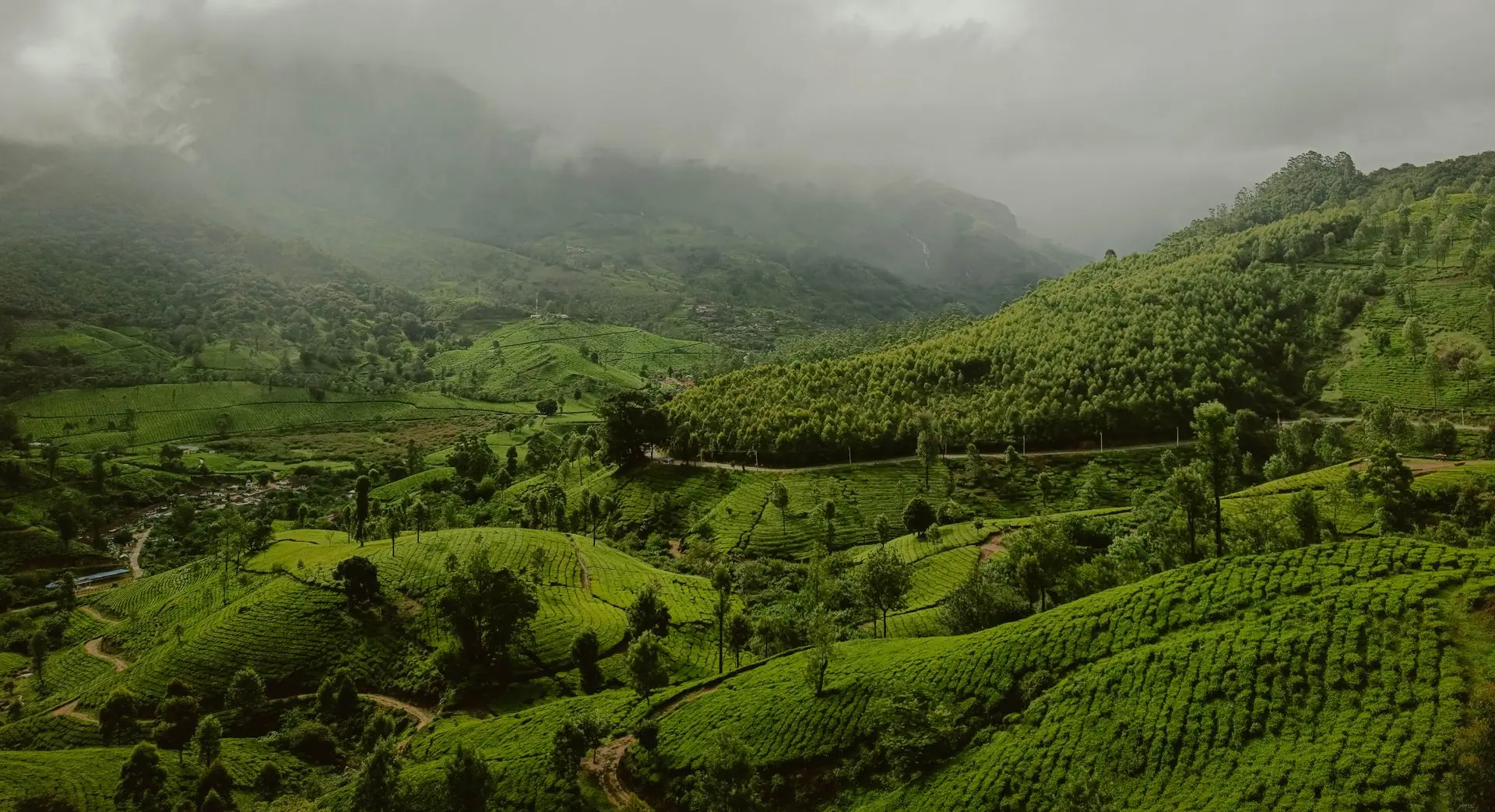
Tea came to Munnar in 1880, when the planter A. H. Sharp put about 50 acres under tea, Kerala Tourism records; today the plantations cover the slopes all around the town. The Tea Museum on the Nallathanni estate of Tata Tea tells that story through artefacts, photographs and old machinery. On our Kerala Backwaters Tour — 7 days, a local guide spends the morning with you at a working tea estate and the museum.

Eravikulam National Park and Rajamala

Eravikulam, 13 km from Munnar, protects 97 sq km of grassland and forest and the endangered Nilgiri tahr. The park is divided into core, buffer and tourism zones, and visitors may go only into the tourism zone at Rajamala, the one place in the park where you can expect to see the tahr. Buy tickets on the park's own website or at the counter at the Information Centre in Munnar. The park closes every year from 1 February to 1 April for the tahr's calving season.

Anamudi

Inside Eravikulam rises Anamudi, at 2,695 metres the highest peak in South India; Kerala Tourism calls it the highest point in India outside the Himalaya. You see it from the Rajamala side of the park. Treks to the summit are allowed only with permission from the forest and wildlife authorities at Eravikulam, and the park penalises unauthorised trekking.

Mattupetty Dam and lake

About 13 km from town and at about 1,700 metres, Mattupetty has a dam and a lake where you can hire pedal boats and speed boats, with the hills and tea gardens around you. Beside it, the dairy farm of the Indo-Swiss Livestock Project, set up with the Swiss government, breeds high-yielding cattle. It is the first stop on the road to Top Station.

Echo Point and Kundala

Further along the same road, about 15 km from Munnar, Echo Point is named for the way voices carry back across the water and the valley. Beyond it, Kundala has a lake, a dam, vast tea plantations and a golf course run by Tata Tea, a good place to stop on the climb. The Idukki District Tourism Promotion Council runs a Tea Valley Tour that covers Mattupetty, Echo Point, Kundala, Top Station and Rajamala in one trip.

Top Station

About 32 km from Munnar and at about 1,700 metres, Top Station is the highest point on the Munnar–Kodaikanal road, and its viewpoint looks out over the plains of the neighbouring state of Tamil Nadu. It is also one of the places where the neelakurinji turns the slopes blue when it flowers in a mass, once every twelve years. Go early: on monsoon days mist can hide the view.

Power House Waterfalls and Anayirangal

Near the town, at Chinnakanal, the Power House Waterfalls, also called the Chinnakanal falls, drop down a steep rock face beside the road towards Thekkady, about 18 km from Munnar, with a small pool at the foot. About seven kilometres further on, Anayirangal, 22 km from Munnar, has a reservoir among tea plantations and evergreen forest; the boat trip on it is one of the quieter things to do near Munnar.

Pallivasal and Attukad

Pallivasal, about 8 km from Munnar near Chithirapuram, was the site of Kerala's first hydro-electric project, inaugurated in 1940 by the Travancore Diwan, and its slopes make a pleasant picnic stop. Between Munnar and Pallivasal, the Attukad waterfalls lie on a long trekking route, at their fullest in the monsoon and the cool months, with food stalls and toilets near the falls.

Devikulam

Less than 10 kilometres from Munnar and at about 1,800 metres, Devikulam, the 'lake of the goddess', takes its name from the legend that Sita bathed in its lake, and Hindu pilgrims visit through the year. Kerala Tourism notes that visiting the lake or fishing for trout needs prior permission from Tata Tea, and that the estates offer guided tours on how tea is grown.

Marayoor, Kanthalloor and Chinnar

About 40 km from Munnar, Marayoor is an important prehistoric site, with dolmens called muniyaras, burial chambers of four upright stones under a capstone, and ancient rock paintings. It is also the only place in Kerala where sandalwood grows naturally, and its jaggery, Marayoor sarkara, is well known. Neighbouring Kanthalloor is the only place in Kerala where apples are grown commercially. Beyond, the Chinnar Wildlife Sanctuary, about 90 sq km in the rain shadow of the Ghats, shelters the grizzled giant squirrel and the Thoovanam waterfalls.

Things to do in Munnar

Spend a morning on a working tea estate, look for the Nilgiri tahr at Rajamala, take a boat on Mattupetty's lake and drive out to Top Station for the view. Our routes give Munnar two nights for these, and every tour and experience we run here is on our Munnar tours and experiences page.

Best time to visit Munnar

Munnar shares Kerala's dry season, December to March, when IMD's state normals fall to between 8 and 35 mm of rain a month. But Eravikulam National Park closes from 1 February to 1 April, so for dry weather with the park open, come in December or January; February and March suit the tea estates, lakes and viewpoints. April and May are warmer and wetter, with about 105 and 224 mm across Kerala.

The monsoon reaches Kerala around 1 June, and June and July are the state's wettest months, at 643 and 720 mm, when mist and rain can hide the viewpoints. October is wet too: in its first three weeks, Idukki district, which includes Munnar, has the highest normal rainfall of any Kerala district. At about 1,600 metres, evenings are cooler than on the coast all year, so pack a warm layer. The neelakurinji flowers in a mass only once every twelve years; Munnar's last great flowering was in 2018, and Kerala Tourism expects the next in 2030. Our best time to visit Kerala guide has the whole state month by month.

How to reach Munnar

  • By air: Cochin International Airport is the nearest, about 108 km away by the Aluva–Munnar road.
  • By train: Munnar has no railway. The nearest stations are Aluva, about 108 km away, and Angamaly, about 109 km.
  • By road from Kochi: about 130 km, which the Idukki district administration puts at about four and a half hours; our itineraries allow about four, climbing through spice plantations and past waterfalls.
  • By road from Tamil Nadu: about 153 km from Madurai, five to six hours over the Western Ghats on our South India route, and about 160 km from Coimbatore, up to four hours by the district's reckoning. See our Madurai travel guide for the Tamil Nadu side.
  • From Thekkady: Kumily, the town at Thekkady, is 110 km south; our Thekkady travel guide covers the Periyar side.

How many days in Munnar

Two nights cover the main sights, and every route we run gives Munnar two. Arrive in the afternoon from Kochi or Madurai and spend the evening among the tea gardens. Give the next morning to a working estate and the Tea Museum, and the afternoon to a viewpoint over the plantations and, outside its closure, Eravikulam. A third night leaves time for Mattupetty, Echo Point and Top Station, or for the drive north to Marayoor and Kanthalloor.

Our Kerala Ayurveda Retreat — 10 days spends its two Munnar nights before treatment at Thekkady, and the 10 Days South India Tour Package climbs to Munnar from Madurai. Every route with nights here is on our Munnar tour packages page.

Where to stay and getting around

Our advice from running trips here is to sleep among the tea estates rather than in Munnar town, which puts the walks and viewpoints outside your door instead of a drive away. Most sights are spread along the roads out of town, so a car and driver, or the DTPC's Tea Valley Tour, make sense; our routes include a private car with a driver throughout. The winding road up from the plains makes some travellers, children especially, carsick, so we allow for stops.

  • Book Eravikulam tickets ahead on the park's website in the busy months, and check the closure dates before you plan a February or March visit.
  • Keep to marked paths: the park penalises unauthorised trekking, and Anamudi needs the forest authorities' permission.
  • Ask before you fish or visit Devikulam's lake: Tata Tea's permission is needed.
  • From Munnar, the backwaters are the usual next stop; our Alleppey travel guide and Kerala travel guide cover the route.

Why book with Experience My India

  • Government-approved operator

    Approved by the Ministry of Tourism, Government of India

  • 500+ vetted local guides

    35+ destination specialists plan every trip by hand.

  • Human help, every day

    Mon–Sun, 9:00 AM – 9:00 PM IST · +91 73022 65809

  • No payment until you approve

    You receive a written quote first; nothing is charged to start planning.

Frequently asked questions

Is Munnar worth visiting?

Yes, for tea country and cool air. Munnar sits at about 1,600 metres among tea estates that are still worked, with a museum on the history of the plantations, the Nilgiri tahr at Eravikulam and viewpoints such as Top Station looking down into Tamil Nadu. It is a place for slow days rather than monuments: give it two nights, and avoid February and March if the tahr matters to you.

What can you see in Munnar in one day?

Choose one road. On the Top Station road, start at Mattupetty's lake and dairy farm, stop at Echo Point and Kundala, and end at Top Station for the view, the route the district's Tea Valley Tour follows. Or stay closer: the Tea Museum and a tea estate in the morning, then Rajamala in Eravikulam in the afternoon, outside the February and March closure.

Where can you see the Nilgiri tahr near Munnar?

At Rajamala, the tourism zone of Eravikulam National Park, 13 km from Munnar. Kerala Tourism says it is the only part of the park where visitors may see the tahr; the core and buffer areas are closed to tourists. The park shuts from 1 February to 1 April for the calving season, and tickets are sold online and at the Information Centre in Munnar.

Can you go boating in Munnar?

Yes. At Mattupetty, about 13 km from town, pedal boats and speed boats can be hired on the lake behind the dam. At Anayirangal, 22 km out, a boat trip on the reservoir runs between tea plantations and evergreen forest, and Kerala Tourism mentions boating at Devikulam too, though its lake needs Tata Tea's permission. On the backwaters, Alleppey is the next stop on most of our routes.

Which waterfalls can you see near Munnar?

The Power House Waterfalls at Chinnakanal, about 18 km from Munnar on the road towards Thekkady, are the easiest to reach and have a small pool at their foot. The Attukad waterfalls, between Munnar and Pallivasal, lie on a trekking route and are fullest in the monsoon and the cool months. North of Marayoor, the Thoovanam waterfalls are inside the Chinnar Wildlife Sanctuary. Our routes pass waterfalls on the climb from Kochi.

How far is Marayoor from Munnar, and what is there?

About 40 km. Marayoor is an important prehistoric site, with dolmens called muniyaras and rock paintings at places such as Attala, and it is the only place in Kerala where sandalwood grows naturally. Its jaggery, Marayoor sarkara, is sold across Kerala, and next door Kanthalloor grows apples, the only place in Kerala that does so commercially. The Chinnar Wildlife Sanctuary lies beyond.

From the journal: Munnar

Customer reviews

Experience My India is rated 4.3 on Tripadvisor. We publish guest reviews after each trip.

Read our reviews

Plan a trip

Tailor-made quote from a specialist