Skip to content

Prayagraj Travel Guide: the Sangam, Allahabad Fort and Anand Bhawan

Travel guideUttar Pradesh

Prayagraj, once called Allahabad, stands where the Ganga and Yamuna meet the mythical Saraswati. The main places to visit in Prayagraj are the Triveni Sangam, Allahabad Fort, the reclining Hanuman temple at Daraganj, Anand Bhawan, Khusro Bagh and the Allahabad Museum. One day covers them. Come from November to February, when the Magh Mela fills the riverbank.

By Experience My India Editorial Team · Reviewed by Experience My India Editorial Team

Government-approved operatorApproved by the Ministry of Tourism, Government of India

Places to visit in Prayagraj

UP Tourism says the city is known in the scriptures as Prayag and Tirtharaj, the king of pilgrimage places. The sights fall into three groups: the river end of town, with the Sangam, the fort and the Daraganj temples; the Civil Lines quarter, with the museum, Anand Bhawan and the cathedral; and a few older sites further out.

Triveni Sangam

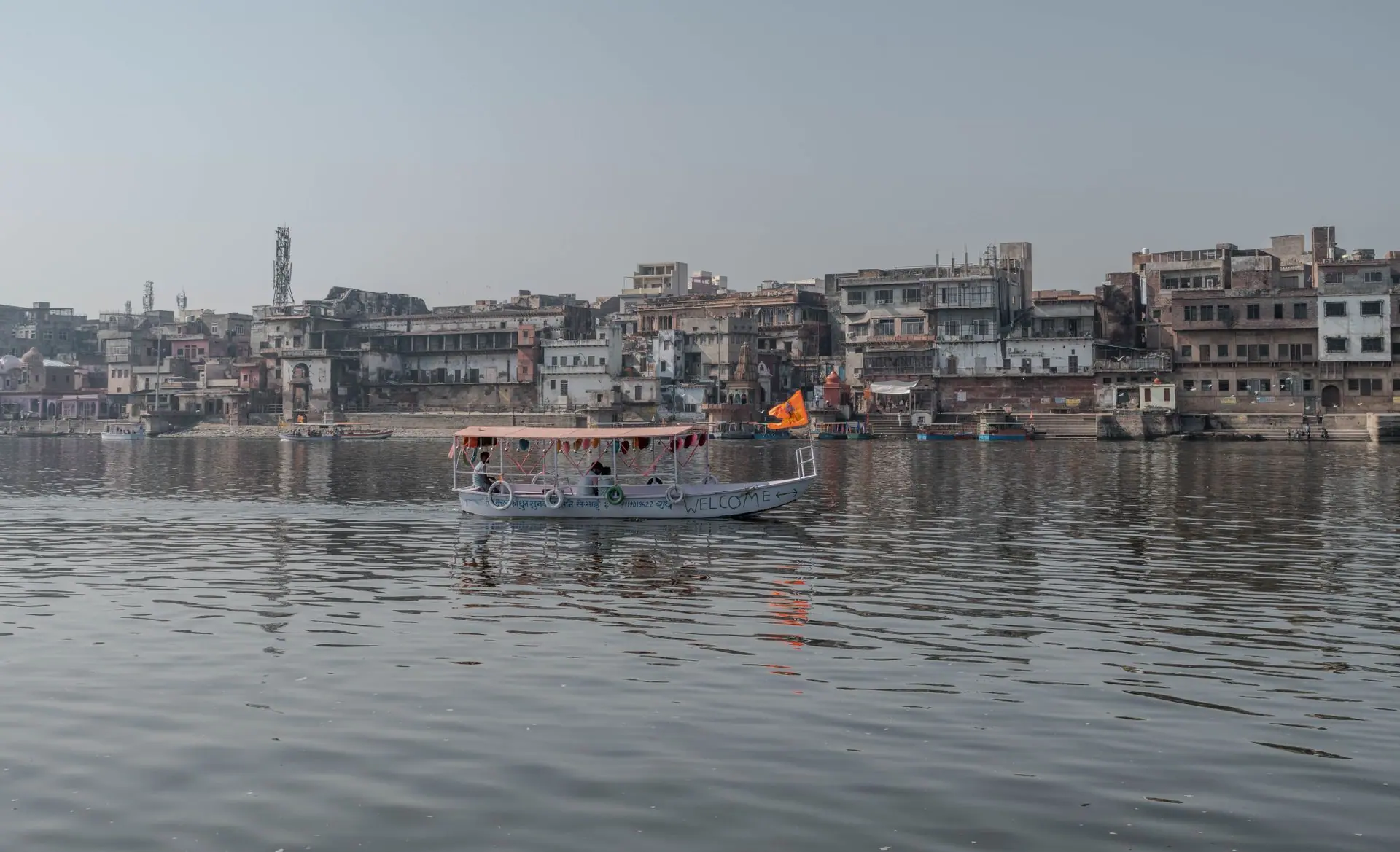
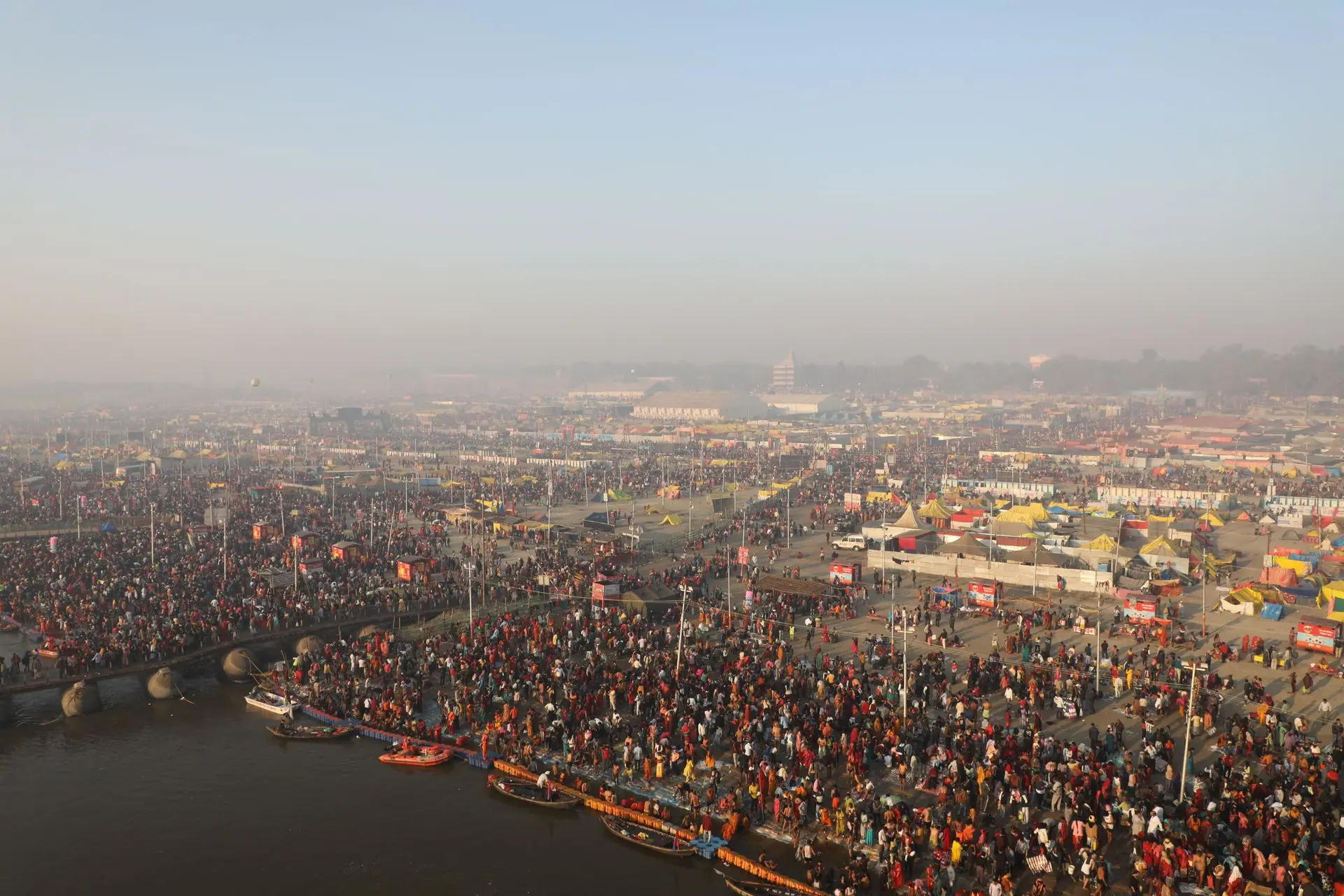
The Sangam is where the brown water of the Ganga meets the green water of the Yamuna, with the mythical Saraswati believed to flow unseen underground. The district puts it about 7 km from Civil Lines, overlooked by the eastern ramparts of Akbar's fort. Priests sit on small platforms in mid-river to perform puja and help pilgrims bathe in the shallow water, and boats to the Sangam can be rented by pilgrims and tourists alike at the ghat near the fort. The Kumbh is held here once in twelve years and the Magh Mela every January and February.

Allahabad Fort and the Akshaya Vat

Emperor Akbar built the fort in 1583 on the bank of the Yamuna, close to the confluence. The army uses it today, and the district says only a limited area is open to visitors, listing the Ashokan Pillar, the Saraswati Koop, a well said to be the source of the Saraswati, and Jodhabai's palace. The Patalpuri temple and the Akshaya Vat, an ancient banyan tree said to be eternal, lie inside the fort, and the district adds that permission has to be sought from Army officials to visit the tree. Confirm access before you plan a day around it.

Bade Hanuman Temple (Lete Hue Hanumanji)

On the bank of the Ganga in Daraganj, this temple holds a reclining Hanuman that the district describes as south-facing and about 20 feet long, known locally as Bade Hanuman. The district records the belief that the temple is at least 600 to 700 years old and a story that Hanuman lay down here, at Sita's request, on his way back from Lanka. Shrines to Shiva and Parvati, Ganesh, Durga and Kali stand in the compound, and the Ram-Janki and Harit Madhava temples are close by.

Anand Bhawan and Swaraj Bhawan

Anand Bhawan is a house museum of the Nehru family, built by Motilal Nehru in the 1930s. It became the family home when their earlier mansion, Swaraj Bhawan, was given to the Indian National Congress, which the district dates to the 1920s; Swaraj Bhawan then became a launch point for independence movements. The district says the Jawahar Planetarium is part of the Anand Bhawan complex. It gives no opening hours for either building, so check the day's timings before you set out.

Khusro Bagh

Khusro Bagh is a large walled garden in the Lukarganj area, holding Mughal tombs of the 17th century. One is the tomb of Prince Khusro, the eldest son of Emperor Jahangir, who the district says was held here after rebelling against his father. Another is an elaborate mausoleum built for his sister that stands empty. The district says its arches, domes and chhatris are worth the time, and the garden is open to wander after a morning at the Sangam.

Allahabad Museum and Chandra Shekhar Azad Park

The Allahabad Museum stands in Chandra Shekhar Azad Park, the former Alfred Park, in Civil Lines, about 3 km from the railway junction according to the district. The Ministry of Culture declared it a museum of national importance in 1986. Its sixteen galleries hold paintings, sculpture, coins, manuscripts, arms and armour, textiles and natural history, together with personal collections tied to Gandhi, Nehru and Allahabad's writers. The district describes the park as 133 acres, with a statue of the freedom fighter Chandra Shekhar Azad outside the museum.

All Saints Cathedral

Known as Patthar Girja, the Stone Church, All Saints Cathedral is an Anglican church in Civil Lines, designed in Gothic style by the architect Sir William Emerson in 1870. The district singles out its marble altar, stained glass, pulpit and pale sandstone arches. It adds that the church is open only on Sundays, from dawn to dusk, so a visit has to be planned around that day.

Bharadwaj Ashram

The district describes the ashram, in the Colonelganj area near Anand Bhawan, as the place where the sage Bharadwaj set up a Shiva linga, now among hundreds of images that include Ram and Lakshman, Surya and Mahishasuramardini. In the Ramayana tradition Ram visited the sage here to seek his blessing, though the district notes that the ashram's original site is a matter of research. A Shiva temple stands in the compound alongside statues of Bharadwaj, Yajnavalkya and other sages.

Alopi Devi Temple

This old temple stands in the Alopibagh locality, west of Daraganj. In the sanctum, devotees pay their respects at a round platform on which a coloured cloth covers a small cot. The district says it is counted as one of the Shaktipeeths and that a big fair is held during Navratri; a Shiva image and a Shiva linga are also enshrined there. It lies just west of Daraganj, so it combines easily with the Hanuman temple.

Shringverpur

Shringverpur lies about 45 km from Prayagraj on the Lucknow road. Local folklore says Ram, Sita and Lakshman crossed the Ganga here on their way into exile, and the district describes it as the capital of Nishadraj, the king of the fishermen, mentioned at length in the Ramayana. Excavations have uncovered a temple of the sage Shringi Rishi. The district calls it an otherwise sleepy village that is gaining prominence, and it suits travellers following the Ramayana trail beyond the city.

Things to do in Prayagraj

Take a boat to the Sangam from the ghat near the fort, walk Civil Lines for the museum, Anand Bhawan and the cathedral, and eat locally: UP Tourism lists chaat, kachori-sabji, dum aloo, churmura and samosa, with motichur laddoo, rabri and kulfi to follow, and UP Tourism says the city is known for namkeen, sweets and red guavas. The main markets are Civil Lines, Chowk and Katra. For a trip that includes the Sangam, see our six-day Varanasi, Ayodhya, Prayagraj and Chitrakoot tour, and for all routes in the state our Uttar Pradesh tour packages.

The Kumbh Mela and the Magh Mela

According to the legend the district gives, drops of nectar fell at four tirthas, Prayag, Haridwar, Nasik and Ujjain, and the Kumbh is held at each in turn. At the Sangam it comes once in twelve years, and the district calls the Maha Kumbh there the largest religious congregation in India, a month-long fair raised on a tented township, where the Naga sadhus are the first to bathe once the astrologers fix the auspicious hour. Between Kumbhs, the Magh Mela is held at the Sangam every year in January and February, UP Tourism says.

The bathing days follow the lunar calendar, so take the dates from the fair's official notices, not from a guide. Crowds, transport and rooms all need booking well ahead during a mela. Our pages on the Kumbh Mela and on Kumbh pilgrimage experiences explain what a visit involves.

Best time to visit Prayagraj

UP Tourism gives November to February as the best season; pack light cottons for summer and woollens for winter. That season also holds the Magh Mela. Late December brings fog: India's meteorological department has warned that dense fog over Uttar Pradesh can affect airports, highways and railway routes, so leave a margin around flights and trains. The normal monsoon dates for Uttar Pradesh are 20 June for onset and 10 October for withdrawal, per its Lucknow office. Prayagraj's Dussehra, UP Tourism adds, is known for its Chowki procession and Ramleela.

How to reach Prayagraj

  • By air: the airport at Bamrauli is on the city's edge, 12 to 14 km out according to the district and UP Tourism, with regular flights to Delhi; the district says it serves a limited number of cities. Varanasi and Lucknow airports are the alternatives.
  • By train: Prayagraj is the headquarters of the North Central Railway zone and the district counts eight stations within the city. The district lists four main ones: the junction, which it still calls Allahabad Junction, then Rambagh, Prayag and Naini. The train booking guide covers how visitors from abroad reserve seats.
  • By road: Varanasi is roughly 120 km away, Ayodhya roughly 160 km, Lucknow roughly 190 km and Delhi more than 580 km. The district names three bus stands and local taxis, cabs, auto-rickshaws, e-rickshaws and city buses for getting around.

How many days in Prayagraj

One day covers the Sangam, the fort, the Daraganj Hanuman temple, and either Anand Bhawan or the museum. A second day adds Khusro Bagh, Bharadwaj Ashram, Alopi Devi and, by road, Shringverpur. Most travellers treat Prayagraj as a stop on a longer route: our six-day circuit visits the Sangam on day four, between a morning at the Ram Mandir in Ayodhya and the onward journey to Chitrakoot, and spends a night in each of the three. Read next: our guides to Varanasi, Ayodhya, Lucknow and Uttar Pradesh.

Why book with Experience My India

  • Government-approved operator

    Approved by the Ministry of Tourism, Government of India

  • 500+ vetted local guides

    35+ destination specialists plan every trip by hand.

  • Human help, every day

    Mon–Sun, 9:00 AM – 9:00 PM IST · +91 73022 65809

  • No payment until you approve

    You receive a written quote first; nothing is charged to start planning.

Frequently asked questions

What is the Triveni Sangam?

It is the confluence at Prayagraj of the Ganga, the Yamuna and the mythical Saraswati, which is believed to flow unseen underground. The district describes the brown water of the Ganga meeting the green water of the Yamuna, and a dip at the Sangam is held to be the holiest of pilgrimages for Hindus. Boats from the ghat near the fort take visitors out to the meeting point.

Is Prayagraj the same place as Allahabad?

Yes. Prayagraj is the city's old name, restored in place of Allahabad, and the two refer to the same place. Older maps, books, signs and some official pages, including the district's list of railway stations, still say Allahabad. The place is also called Prayag and, in the scriptures, Tirtharaj, the king of pilgrimage places.

Can tourists take a boat to the Sangam?

Yes. The district says boats to the Sangam can be rented by pilgrims and tourists alike at the ghat near the fort. The ghat is near the fort, and out in the river priests on small platforms perform puja and help pilgrims bathe in the shallow water. The Sangam is about 7 km from Civil Lines.

How often is the Kumbh Mela held at Prayagraj?

Once in twelve years at the Sangam, according to the district administration, which calls this the greatest and holiest of the Kumbhs. The Magh Mela, a smaller fair, is held at the Sangam every year in January and February. Bathing dates are fixed by the lunar calendar and announced officially, so check them close to your travel date.

Can I visit the Akshaya Vat inside Allahabad Fort?

Not freely. The army uses the fort and the district says only a limited area is open to visitors. It also states that permission has to be sought from Army officials to visit the Akshaya Vat. Visitors are allowed to see the Ashokan Pillar, the Saraswati Koop and Jodhabai's palace. Ask locally or a guide before relying on access.

How many days do you need in Prayagraj?

One day covers the Sangam, the fort, the reclining Hanuman temple and either Anand Bhawan or the Allahabad Museum. A second day adds Khusro Bagh, Bharadwaj Ashram, Alopi Devi and Shringverpur. During the Magh Mela or a Kumbh, allow longer, because crossing the city and reaching the Sangam takes far more time than usual.

Which months suit Prayagraj best?

November to February, according to UP Tourism, with light cottons for summer and woollens for winter. That is also the Magh Mela season, so expect crowds in January and February. Fog can slow travel in late December, and the normal monsoon runs from 20 June to 10 October in Uttar Pradesh, per IMD.

How far is Prayagraj from Varanasi and Ayodhya?

Roughly 120 km from Varanasi and roughly 160 km from Ayodhya by road. Official figures differ by several kilometres from page to page, which is why we give them as approximations. The three cities link naturally on one route: our six-day circuit goes Varanasi, Ayodhya, Prayagraj and Chitrakoot by road.

What food is Prayagraj known for?

UP Tourism lists chaat, kachori-sabji, dum aloo, dum bhindi, churmura and samosa among the vegetarian dishes, with motichur laddoo, rabri and kulfi as sweets, and kebab, kofta and biryani for meat-eaters. The city is also known for lal amrood, its red guavas, and for namkeen and sweets sold in Civil Lines, Chowk and Katra.

From the journal: Prayagraj

Customer reviews

Experience My India is rated 4.3 on Tripadvisor. We publish guest reviews after each trip.

Read our reviews

Plan a trip

Tailor-made quote from a specialist