
Bhubaneswar Travel Guide: Temples, Caves and Museums
Bhubaneswar, Odisha's capital, is called the Temple City. The places to visit in Bhubaneswar start with the Lingaraj, Mukteswara and Rajarani temples, then the Udayagiri and Khandagiri caves and Dhauli, with Nandankanan zoo on the outskirts. Odisha Tourism suggests two days and names October to March as the best season; Puri is 60 km away.
By Experience My India Editorial Team · Reviewed by Experience My India Editorial Team
Government-approved operatorApproved by the Ministry of Tourism, Government of India
Places to visit in Bhubaneswar
Things to do in Bhubaneswar
Eat what Odisha Tourism lists for the city: pakhala, the fermented rice meal, dalama, a lentil and vegetable dish, abhada at the Ananta Basudeva Temple, and rasagola. Winter brings the Toshali crafts mela, with artisans from across the country, and an Adivasi mela. Odisha Tourism lists the Mukteswar Dance Festival and the Rajarani Music Festival in January and the Dhauli Kalinga Mahotsav in February; the dates are set each year.
Guided trips on this coast are on our Odisha tour packages page and the Puri tour packages page, and our Odisha tours and experiences page lists the rest.
Best time to visit Bhubaneswar
Odisha Tourism gives October to March, with a suggested stay of two days. In winter the days are cool, dry and low in humidity, at about 10°C to 27°C across the state. March to June is hot: IMD puts the mean maximum of the hottest month, May, at 37.2°C, and calls the climate humid throughout the year, so visit the temples early in the morning in summer.
About 75 per cent of the year's rain falls in the south-west monsoon season, and IMD's record 24-hour fall for Bhubaneswar is 42.6 cm. IMD also notes that Bay of Bengal cyclones strike the Odisha–West Bengal coast most often in October, so check the forecast for an autumn trip.
How to reach Bhubaneswar
By air: Biju Patnaik International Airport (BBI) is about 6 km from the city centre, with regular flights to cities such as Delhi, Mumbai, Kolkata, Chennai, Bengaluru, Hyderabad and Raipur.
By train: Bhubaneswar is one of Odisha's major railheads, with express and superfast trains to cities including Delhi, Kolkata, Mumbai, Chennai, Hyderabad, Bengaluru, Guwahati and Tirupati.
By road: National Highway 16 links Odisha with Kolkata, Visakhapatnam and Chennai, and buses, taxis and rental vehicles run from the city. Puri is 60 km away.
How many days in Bhubaneswar
Two days is enough, as Odisha Tourism suggests.
- Day 1: the old-town temples in the morning (Lingaraj from outside if you are not a Hindu, then Ananta Basudeva, Mukteswara and Rajarani), the Udayagiri and Khandagiri caves and Kalabhoomi in the afternoon, not on a Monday.
- Day 2: Nandankanan in the morning, not on a Monday, then Dhauli before it closes at 6 pm.
For a third day, Puri and Konark are day trips; see our Puri travel guide, and the Odisha travel guide for Chilika, Cuttack and the national parks. Pipili's appliqué shops lie on the road to Puri.
Tips
- Check the day: Nandankanan and Kalabhoomi are closed on Mondays.
- The Rajarani, the Udayagiri and Khandagiri caves and other Archaeological Survey of India sites charge a ticket; buy it at the gate.
- Lingaraj's midday closure (12.30 to 3.30 pm) is worth planning around if you can enter.
- Wear sturdy shoes for the cave hills; Odisha Tourism lists hill trails at Udayagiri and Khandagiri.
Why book with Experience My India
Government-approved operator
Approved by the Ministry of Tourism, Government of India
500+ vetted local guides
35+ destination specialists plan every trip by hand.
Human help, every day
Mon–Sun, 9:00 AM – 9:00 PM IST · +91 73022 65809
No payment until you approve
You receive a written quote first; nothing is charged to start planning.
Frequently asked questions
Why is Bhubaneswar called the Temple City?
Odisha Tourism uses the name for the city, whose old town holds temples from about the 10th to the 13th centuries within a couple of kilometres of each other: the Mukteswara around the 10th century, the Lingaraj and Rajarani in the 11th and the Ananta Basudeva in the 13th. The listed distances between them run from 0.2 km to 2 km.
Can non-Hindus enter the Lingaraj Temple?
No. Odisha Tourism says only Hindus are permitted inside the Lingaraj Temple, in line with strict religious traditions. A dedicated viewing platform has been built outside the complex, so other visitors can see the temple's architecture from there. Smaller temples nearby, such as the Mukteswara and Rajarani, are listed with ticket or free-entry information and no such rule.
Does the Rajarani Temple have a presiding deity?
No. Odisha Tourism notes that, unlike most temples, the Rajarani has no presiding deity. Its carvings suggest a Shaivite origin, and it was once believed to be known as Indreswara. The temple is from the 11th century, and the page does not explain how it got its name.
Which Bhubaneswar sights are closed on Mondays?
Odisha Tourism lists Nandankanan Zoological Park and the Kalabhoomi Odisha Craft Museum as closed on Mondays. Opening hours are 7.30 am to 5.30 pm (April to September) and 8 am to 5 pm (October to March) at Nandankanan, and 10 am to 5.30 pm at Kalabhoomi. Its pages do not name a closed day for the Rajarani, Mukteswara or Dhauli.
What are the Udayagiri and Khandagiri caves?
They are caves on two hills in Bhubaneswar, cut in the 2nd century BCE in the reign of King Kharavela. Odisha Tourism describes Rani Gumpha at Udayagiri as intricately sculpted, with scenes of royal life and mythology, and lists the Hathigumpha edict among the inscriptions. Allow two to three hours and expect to walk on hill trails.
Which festivals are held at Bhubaneswar's temples?
Odisha Tourism lists the Mukteswar Dance Festival at the Mukteswara Temple and the Rajarani Music Festival in the Rajarani's grounds, both in the evening in January, and the Dhauli Kalinga Mahotsav at the foot of the Dhauli hills in February. At the Lingaraj, Shivaratri and the Rukuna Ratha Jatra are the notable festivals. Dates are set each year.
How far is the airport from the city centre?
Odisha Tourism puts Biju Patnaik International Airport about 6 km from the city centre. Taxi, cab and bus services run from the airport, and it is the nearest airport for Puri too, 60 km away by Odisha Tourism's figure. The airport is a main gateway for Odisha, with flights to cities such as Delhi, Mumbai and Kolkata.
More places in Odisha
See all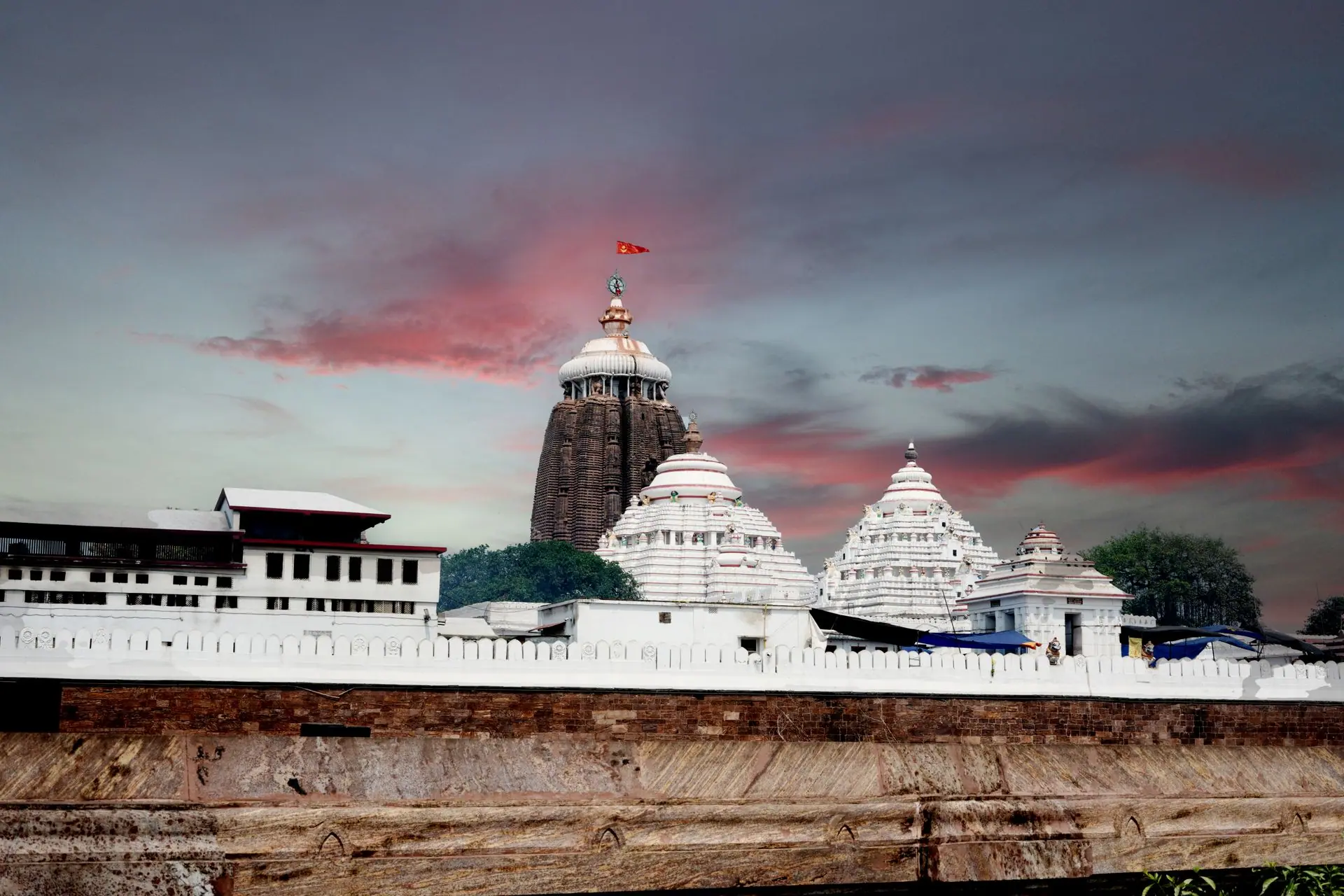
Customer reviews
Experience My India is rated 4.3 on Tripadvisor. We publish guest reviews after each trip.
Plan a trip
Tailor-made quote from a specialist