
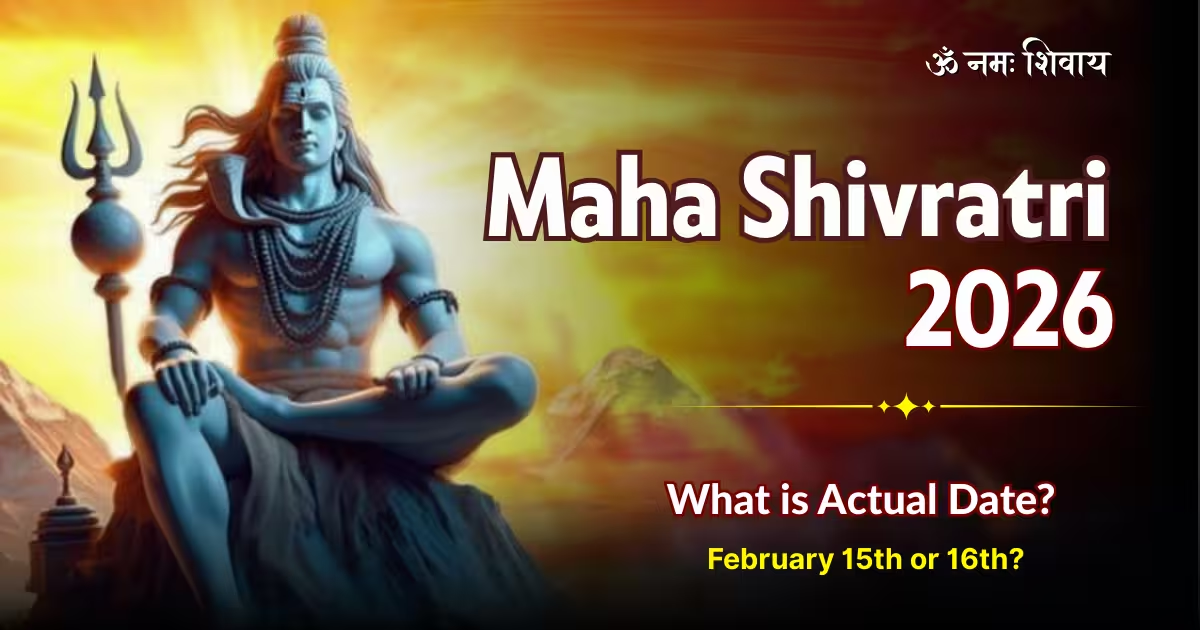
Every year, the same confusion appears. Some calendars say one date. Others show another. Families argue quietly over dinner. So what is the actual date of Mahashivratri in 2026 — February 15th or 16th? The answer isn’t complicated, but it does require understanding how Hindu tithi works. Mahashivratri follows the lunar calendar, not the standard midnight-to-midnight system. That’s exactly why the date looks different on different platforms.
The Actual Date of Mahashivratri in 2026
Let’s clear it first.
Maha Shivaratri in 2026 will be observed on:
- Sunday, February 15, 2026
That is the official festival date followed across India because the Chaturdashi tithi prevails during the night of February 15.
However, the confusion happens because the tithi continues into February 16 as well. And since Mahashivratri is based on Chaturdashi during night time, not sunrise, the observance aligns with the night of February 15.
So, the actual date of Mahashivratri for fasting and night worship in 2026 is February 15.
Understanding Mahashivratri Tithi Timing 2026
To remove all confusion, here is the exact Panchang timing.
Mahashivratri 2026 Tithi & Puja Timing Table
| Ritual Detail | Date & Time |
| Chaturdashi Tithi Begins | February 15, 2026 – 05:04 PM |
| Chaturdashi Tithi Ends | February 16, 2026 – 05:34 PM |
| Ratri First Prahar Puja | Feb 15, 06:11 PM – 09:23 PM |
| Ratri Second Prahar Puja | Feb 15, 09:23 PM – 12:35 AM |
| Ratri Third Prahar Puja | Feb 16, 12:35 AM – 03:47 AM |
| Ratri Fourth Prahar Puja | Feb 16, 03:47 AM – 06:59 AM |
| Nishita Kaal Puja | Feb 16, 12:09 AM – 01:01 AM |
| Shivaratri Parana Time | Feb 16, 06:59 AM – 03:24 PM |
Now look closely.
Chaturdashi begins at 5:04 PM on February 15. Since Mahashivratri is observed during the night when Chaturdashi is active, the main celebration naturally falls on the evening of February 15.
That’s why February 15 is correct.
Why People See February 16 in Some Calendars
The confusion usually comes from sunrise-based date systems.
Some people assume that since midnight rituals extend into February 16, the festival might fall on the 16th. However, Hindu festival rules don’t depend on midnight change. They depend on tithi presence during Nishita Kaal (midnight period).
Because the Chaturdashi tithi is active during the night of February 15, that day is chosen.
In simple words:
- If Chaturdashi prevails at night → that night is Mahashivratri
- It does not matter if the Gregorian date changes after midnight
That small difference causes large confusion every year.
What Makes Mahashivratri So Special?
Mahashivratri, also called the “Great Night of Shiva,” is not like other Hindu festivals.
It is not about daytime celebration. It is about night-long devotion.
- Devotees observe fasting
- Temples remain open late
- Rudrabhishek is performed
- Four Prahar pujas happen during the night
- Chanting of “Om Namah Shivaya” continues
The energy of this festival feels different. It’s quieter, more inward.
Ratri Puja Breakdown – What Happens During the Night?
Mahashivratri night is divided into four Prahars.
Each Prahar holds importance.
- First Prahar (Evening) – Beginning of night worship
- Second Prahar (Late Evening) – Continuation of abhishek rituals
- Third Prahar (Midnight) – Most powerful spiritual window
- Fourth Prahar (Early Morning) – Completion of night vigil
The Nishita Kaal, which falls from 12:09 AM to 1:01 AM on February 16, is considered especially sacred.
Even though that time falls technically on February 16 by clock, the festival is still counted as February 15 because the night began under Chaturdashi.
That’s the logic.
How Many Days Until Mahashivratri 2026?
Mahashivratri in 2026 falls on day number 46 of the calendar year.
It will be celebrated on Sunday, February 15, 2026.
For those planning temple visits or travel, knowing the exact actual date of Mahashivratri helps avoid last-minute confusion.
Fasting Rules and Parana Time
Breaking the fast matters just as much as observing it.
Parana time for 2026 is:
- February 16, 06:59 AM to 03:24 PM
Breaking the fast after sunrise on February 16 is considered correct.
Many devotees mistakenly break it too early. However, Parana should only happen after the night vigil completes and during the allowed time window.
Temple Crowd Reality on Mahashivratri
Mahashivratri attracts massive temple footfall.
Here’s what usually happens:
- Evening hours see increasing crowd after 6 PM
- Midnight hours remain packed in major Jyotirlinga temples
- Early morning around 4 AM becomes comparatively manageable
- Waiting time in large temples may exceed 2–3 hours
Smaller local temples usually allow smoother darshan.
If planning to visit major Shiva temples like Kashi Vishwanath, Ujjain Mahakaleshwar, or Kedarnath (when open seasonally), advance planning becomes essential.
Local Guide Tip:
If you prefer peaceful worship, attend early evening aarti instead of midnight. The spiritual atmosphere remains strong, but physical crowd pressure reduces slightly.
Government Holiday Status
For 2026:
- February 15, 2026 (Sunday) – Festival Day
- Since it falls on Sunday, most offices are already closed
Regional holiday notifications may vary slightly depending on state.
However, the religious observance remains consistent nationwide.
Why Tithi-Based Festivals Confuse Modern Calendars
Most global calendars follow solar dates strictly. Hindu festivals, however, depend on lunar calculations.
Because lunar days do not align exactly with sunrise-to-sunrise cycles, overlapping into next Gregorian dates is common.
This is not a mistake.
It’s simply a different timekeeping system.
Understanding this removes doubt completely.
FAQs – Actual Date of Mahashivratri 2026
The actual date of Mahashivratri in 2026 is Sunday, February 15, 2026. The night of February 15 is when the main fasting and puja are observed.
Chaturdashi tithi continues until February 16, 2026 at 05:34 PM, which creates confusion. However, since the night of February 15 falls under Chaturdashi, the festival is celebrated on February 15.
Chaturdashi tithi begins on February 15, 2026 at 05:04 PM and ends on February 16, 2026 at 05:34 PM.
Nishita Kaal Puja time is from 12:09 AM to 01:01 AM on February 16, 2026. This is considered the most sacred time for worship.
The night puja timings are:
First Prahar: February 15, 06:11 PM – 09:23 PM
Second Prahar: February 15, 09:23 PM – 12:35 AM
Third Prahar: February 16, 12:35 AM – 03:47 AM
Fourth Prahar: February 16, 03:47 AM – 06:59 AM
The Parana (fast breaking) time is on February 16, 2026 from 06:59 AM to 03:24 PM.
Devotees usually begin fasting from sunrise on February 15, 2026, and continue until the Parana time on February 16.
The main temple worship begins on the evening of February 15, 2026, especially after 6:00 PM, when night puja rituals start.
The most spiritually significant period is Nishita Kaal, from 12:09 AM to 01:01 AM on February 16, 2026.
Mahashivratri 2026 falls on Sunday, February 15, 2026, which is the 46th day of the year. The exact countdown depends on the current date you are checking.
Conclusion
So, what is the actual date of Mahashivratri in 2026?
It is Sunday, February 15, 2026.
Although the Chaturdashi tithi continues until February 16 evening, the night of February 15 holds the required lunar position. That’s why the observance happens then.
Once you understand how tithi works, the confusion disappears.
Mahashivratri is less about date debate and more about devotion through the night. Whether you fast, chant, visit temple, or meditate quietly — what matters is intention.
But yes, mark your calendar correctly.
February 15, 2026.
Contact Experience My India Today:
Call Us:+91 7037550028
WhatsApp Us:+91 7037550028
Visit Our Website: Experience My India
Experience My India trip advisor review