
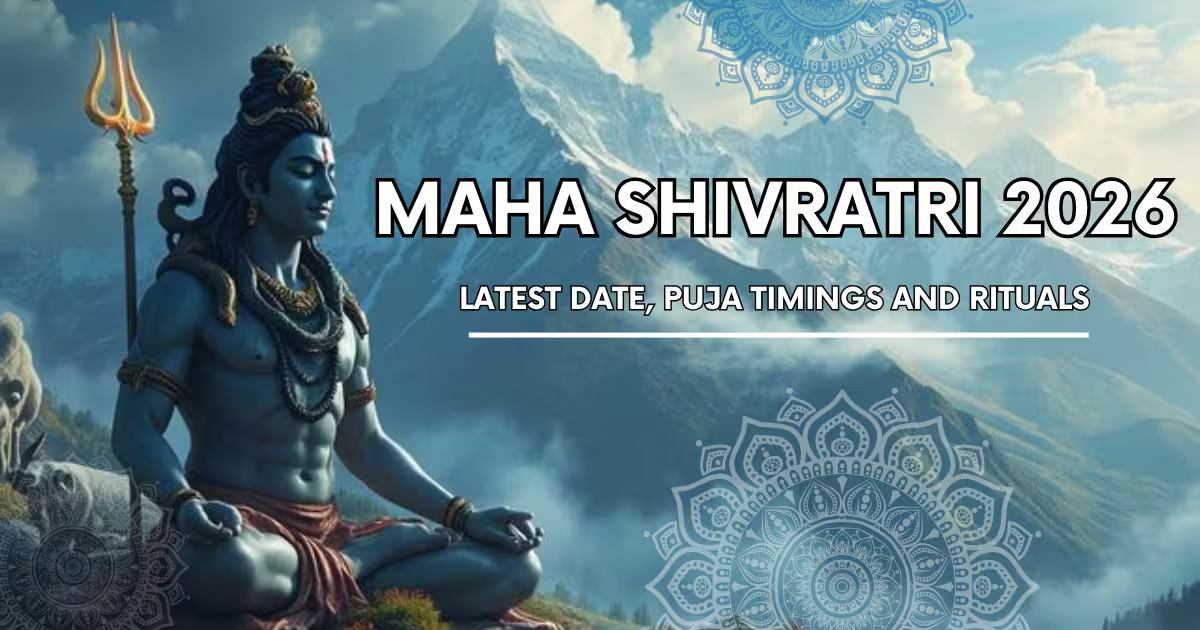
There’s a moment every year when even people who aren’t regular temple-goers feel a quiet pull toward Lord Shiva. You might notice it in small ways. A friend casually mentioning an all-night vigil. Someone asking about fasting rules. Or that sudden urge to wake up before sunrise and sit silently for a few minutes. In 2026, Maha Shivratri 2026 brings that same pause again. A night that isn’t about celebration in the usual sense, but about stillness, discipline, and staying awake with purpose.
In my experience, Maha Shivratri never feels rushed. Even when temples are crowded, the energy is inward. People walk slower. Speak softer. And somehow, despite the long hours, the night feels shorter than expected. This Guide contains all of the required information regarding Maha Shivratri 2026, including when to perform puja, what types of rituals to perform and why they are important, in a very simple manner.
About Maha Shivratri 2026
Maha Shivaratri refers to The Great Night of Shiv and occurs every year on the night of Chaturdashi (fourteenth day), the last day of the waning moon, in Phalguna (February-March). In 2026, this sacred night falls on Sunday, 15 February 2026.
The tone of Maha Shivratri sets it apart from all other Hindu festivals. Instead of bright mornings with a loud procession open to the public during the daytime, this festival can only be experienced during the night. It develops very slowly, over time. The emphasis is on self-awareness, self-restraint, and devotion rather than on having a large celebration that’s seen by many.
For some devotees, this night is important because it is believed that Lord Shiva entered into deep meditation during this time. Others also consider it a time for prayers of unification of Lord Shiva and Goddess Parvati. In both instances of understanding, the same acts of worship and behaviour apply; to remain awake and offer simple rituals, allowing the mind to settle.
Maha Shivratri 2026 Date and Time (Confirmed)
Maha Shivratri 2026 Official Date
- Maha Shivratri (Shiv Chaturdashi): Sunday, 15 February 2026
Chaturdashi Tithi
- Begins: 05:04 PM on 15 February 2026
- Ends: 05:34 PM on 16 February 2026
The presence of Chaturdashi throughout the night makes this date ideal for observing the vrat and night-long puja.
Maha Shivratri 2026 Puja Timings (Prahar-wise)
Unlike regular pujas, Maha Shivratri worship is divided into four Prahars, each carrying its own significance.
1. Ratri First Prahar Puja
- Time: 06:11 PM to 09:23 PM
2. Ratri Second Prahar Puja
- Time: 09:23 PM to 12:35 AM (16 February)
3. Ratri Third Prahar Puja
- Time: 12:35 AM to 03:47 AM (16 February)
4. Ratri Fourth Prahar Puja
- Time: 03:47 AM to 06:59 AM (16 February)
Nishita Kaal Puja (Most Auspicious)
- Time: 12:09 AM to 01:01 AM
- Duration: 51 minutes
This Nishita Kaal puja is often considered the spiritual peak of Maha Shivratri. Many devotees choose to perform their most focused prayers during this window
Shivratri Parana Time (Breaking the Fast)
Parana Timing on 16 February 2026
- Time: 06:59 AM to 03:24 PM
Parana should have be done only after completing morning rituals and offering prayers. Breaking the fast too early has generally avoided.
Maha Shivratri Vrat and Puja Vidhi 2026 (Simple and Practical)
People often overthink the vrat rules. Honestly, it doesn’t need to be rigid.
Some devotees observe a nirjala fast (without water). Others take fruits and milk. Both have accepted. What matters more is awareness and intention.
Common Puja Elements
- Abhishek of Shivling with water, milk, or Gangajal
- Offering bilva leaves, dhatura, fruits, and white flowers
- Chanting Om Namah Shivaya
- Reading or listening to Shiv Purana stories
In my experience, fewer items and more attention works better than elaborate arrangements.
Maha Shivratri Rituals Observed Across India
Temple Abhishekam and Night Aarti
Most major Shiva temples conduct abhishekam every Prahar. Lines grow longer after midnight, especially at Jyotirlingas.
Jagran (Night Vigil)
Devotees stay awake through bhajans, meditation, or silent chanting. Surprisingly, even tired bodies cooperate when the mind stays focused.
Rudra Abhishek
Performed either individually or in groups, often with Vedic chanting. It’s consider highly auspicious on Maha Shivratri.
Maha Shivratri Celebrations in India 2026
Popular Shiva Temples During Shivratri
- Kashi Vishwanath, Varanasi
- Mahakaleshwar, Ujjain
- Somnath, Gujarat
- Kedarnath (symbolic observance, weather-dependent)
- Baidyanath Dham, Jharkhand
Crowd Reality
- Peak crowd: Evening till midnight
- Calmer hours: Early morning after 4 AM
- Best for elderly: Early evening Prahar
Things to Do on Maha Shivratri 2026
At Home
- Light a diya and sit quietly for 10–15 minutes
- Chant softly rather than loudly
- Read a short Shiva story instead of scrolling endlessly
At Temples
- Choose one temple and stay there rather than hopping between places
- Participate in one full Prahar instead of rushing through all four
For First-Time Observers
- Don’t force yourself to stay awake all night
- Even sincere prayer for one Prahar is consider meaningful
Not everything is black and white with Shivratri. Intention often outweighs duration.
Why Maha Shivratri Feels Different Every Year
Every year, people arrive with different reasons. Some seek peace. Some clarity. And some simply tradition. Yet the night meets everyone halfway. That’s the quiet strength of Maha Shivratri 2026. It doesn’t demand. It invites.
In my experience, even people who feel disconnected from rituals find something grounding in this night. Maybe it’s the silence. Or the shared stillness. Or just the permission to slow down.
Planning Support Partner
For travellers planning temple visits, night darshan, or multi-city spiritual journeys around Maha Shivratri 2026, Experience My India often helps with realistic scheduling, temple timing awareness, and route planning. Especially during festivals, having local insight makes the experience calmer and more meaningful, rather than hurried.
FAQs – Maha Shivratri 2026
Maha Shivratri 2026 will be observed on Sunday, 15 February 2026. The festival is celebrated on Chaturdashi Tithi of Krishna Paksha in the month of Phalguna, which remains present throughout the night.
Chaturdashi Tithi begins at 05:04 PM on 15 February 2026 and ends at 05:34 PM on 16 February 2026. Since the Tithi covers the full night, the Shivratri vrat is observed on 15 February.
The Nishita Kaal Puja Muhurat on Maha Shivratri 2026 is from 12:09 AM to 01:01 AM on 16 February. This 51-minute window is considered the most powerful time for Shiva worship.
The four Prahars are divided across the night:
First Prahar: 06:11 PM – 09:23 PM
Second Prahar: 09:23 PM – 12:35 AM
Third Prahar: 12:35 AM – 03:47 AM
Fourth Prahar: 03:47 AM – 06:59 AM Devotees may perform puja in one or more Prahars based on capacity.
Shivratri Parana should be done on 16 February 2026, after sunrise. The correct Parana window is from 06:59 AM to 03:24 PM, once morning rituals are completed.
No, it is not compulsory. Many devotees choose one Prahar, often Nishita Kaal, for focused worship. Even a single sincere puja is considered spiritually meaningful.
Yes. Some people observe a full nirjala fast, while others take fruits, milk, or water. According to tradition, intention and discipline matter more than strict rules.
Maha Shivratri is primarily a night-based festival. Most rituals, abhishekam, and chanting take place after sunset and continue till early morning.
Major Shiva temples like Kashi Vishwanath, Mahakaleshwar, Somnath, and Baidyanath Dham see very heavy crowds, especially between 9 PM and 1 AM on Maha Shivratri night.
Early evening during the First Prahar (6:11 PM – 9:23 PM) or early morning after 4:00 AM is usually calmer. These timings are more comfortable than the midnight rush.
Conclusion
Maha Shivratri 2026 isn’t about doing more. It’s about doing less, but with attention. One night. A few chants. Some restraint. And a willingness to stay present.
Whether you observe a full fast or simply offer a quiet prayer, the night holds space for everyone. Lord Shiva doesn’t measure effort. He responds to sincerity.
Contact Experience My India Today:
Call Us:+91 7037550028
WhatsApp Us:+91 7037550028
Visit Our Website: Experience My India
Experience My India trip advisor review - Click Here
If you let the night pass without rushing it, you’ll notice something subtle the next morning. A quieter mind. A steadier breath. And maybe, a sense that staying awake was never about the body at all.