
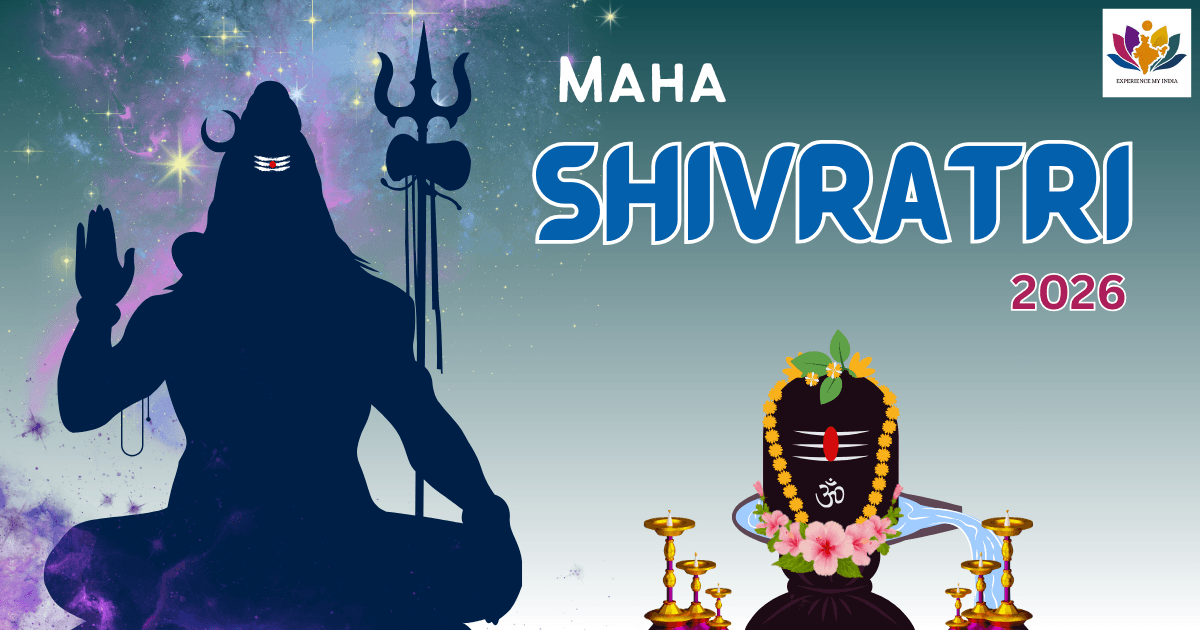
Maha Shivratri 2026 will be observe on Sunday, 15 February 2026, and for many devotees, it won’t feel like just another festival date on the calendar. It’s a long night. A quiet one. A night where time feels slower, temples stay awake, and people choose stillness over celebration. Across India, devotees will fast, chant, and sit through the night in devotion to Lord Shiva. This guide walks you through the exact Maha Shivratri 2026 date, puja timings, ritual flow, and why this night matters, without rushing or overcomplicating things.
Maha Shivratri 2026 Date and Core Timings
Before meanings, stories, or symbolism, most people first want clarity. So let’s start there.
Maha Shivratri in 2026 falls on Sunday, 15 February 2026. The observance continues through the night and ends after sunrise on Monday, 16 February 2026, when devotees break their fast.
Maha Shivratri Tithi Details
- Chaturdashi Tithi Begins: 05:04 PM on 15 February 2026
- Chaturdashi Tithi Ends: 05:34 PM on 16 February 2026
This is important because Maha Shivratri is observe when Chaturdashi prevails during the night, not just during the day.
Maha Shivratri 2026 Date and Time Table
| Event | Date | Day | Time |
| Maha Shivratri | 15 February 2026 | Sunday | Evening onward |
| Nishita Kaal Puja | 16 February 2026 | Monday | 12:02 AM – 12:56 AM |
| Parana (Fast Breaking) | 16 February 2026 | Monday | After sunrise |
The night-long nature of this festival is not symbolic. It’s practical. Shiva has worshipped in stillness , not daylight noise.
Prahar-Wise Puja Timings for Maha Shivratri 2026
Many temples and traditional households follow four Prahar pujas, spread across the night.
| Prahar | Puja Time |
| First Prahar | 06:11 PM – 09:23 PM |
| Second Prahar | 09:23 PM – 12:35 AM (16 Feb) |
| Third Prahar | 12:35 AM – 03:47 AM (16 Feb) |
| Fourth Prahar | 03:47 AM – 06:59 AM (16 Feb) |
If you can’t stay awake all night, that’s okay. In my experience, even attending one focused Prahar with attention matters more than ticking off all four mechanically.
Maha Shivratri 2026 in the Indian Calendar Context
Maha Shivratri follows the lunar Panchang system, which is why confusion often arises. The Gregorian date remains the same across India, but puja timings can shift slightly depending on sunrise and moonrise in different regions.
Northern and central India temples usually align closely. Coastal or eastern regions may adjust Nishita Kaal by a few minutes. That’s normal. It doesn’t change the observance.
Why Maha Shivratri Often Confuses People
This question comes up every year, and honestly, it’s understandable.
- Some people look at calendar dates, others look at tithi timing.
- Some temples announce puja schedules early, others wait for local Panchang confirmation.
- Fasting rules differ by household tradition.
Because Maha Shivratri is about the night, not the day, people often assume the wrong date if they don’t look beyond the calendar headline. The safest approach is always this:
Observe on the night when Chaturdashi prevails, which in 2026 is the night of 15 February.
Spiritual Significance of Maha Shivratri
Maha Shivratri isn’t festive in the usual sense. No colours. No fireworks. And no loud joy.
It’s about restraint.
According to tradition, this is the night when Shiva enters deep meditation, when cosmic balance pauses. Devotees stay awake to mirror that stillness. Fasting is not punishment here. It’s discipline. Silence isn’t emptiness. It’s awareness.
Some worship Shiva as the destroyer. Others as the yogi. Some see him as formless energy. Others as a family man. All are accept.
That openness is rare.
Maha Shivratri Fasting Rules in Real Life
Here’s where things get practical.
- Some people do nirjala fast (no food, no water).
- Others consume fruits, milk, or water.
- Elderly devotees often adapt the fast gently.
There’s no single correct method. I’ve found that intention matters more than severity. If fasting makes you irritated, distracted, or unwell, it defeats the purpose.
Local Guide Tip:
If you’re fasting for the first time, don’t copy extremes. Start light. Focus on awareness, not endurance.
Temple Rituals on Maha Shivratri Night
Across India, Shiva temples follow a similar rhythm:
- Continuous Abhishekam with water, milk, honey, and bilva leaves
- Repetitive chanting of “Om Namah Shivaya”
- Long darshan lines, especially after midnight
- Bell sounds at intervals, not constantly
Crowds peak between 11:30 PM and 2:00 AM. Early evening darshan is calmer but less intense emotionally.
Maha Shivratri and Regional Observances
While the core date remains the same, the mood changes regionally.
- In North India, night-long temple visits dominate
- In South India, elaborate Abhishekams are central
- In rural areas, all-night bhajans replace formal rituals
None is more correct than the other. Shiva doesn’t demand uniformity.
Preparing for Maha Shivratri 2026 Without Stress
Here’s what helps:
- Sleep a little during the afternoon
- Eat light the previous day
- Keep expectations realistic
- Choose one temple or one ritual, not everything
This night isn’t mean to exhaust you. It’s mean to empty you.
FAQs – Maha Shivratri 2026
Maha Shivratri 2026 will be observed on Sunday, 15 February 2026 across India. The main worship happens during the night of 15 February and continues into the early morning of Monday, 16 February 2026. Devotees usually plan their fasting and temple visits according to this night-long observance.
The most important puja time, called Nishita Kaal, falls between 12:02 AM and 12:56 AM on 16 February 2026. This midnight period is considered the most spiritually powerful time for Shiva worship. Many devotees try to be awake and focused during this window.
Chaturdashi Tithi begins at 05:04 PM on 15 February 2026 and ends at 05:34 PM on 16 February 2026. Maha Shivratri is observed because Chaturdashi prevails during the night of 15 February. This tithi timing is the main reason the festival date is fixed on this day.
The fast for Maha Shivratri 2026 is observed on Sunday, 15 February 2026, starting from sunrise. The fast is broken after sunrise on Monday, 16 February 2026, following the completion of night worship. Most households follow this sunrise-to-sunrise fasting pattern.
The four Prahar pujas are spread through the night of 15–16 February 2026. They begin from 06:11 PM on 15 February and continue till 06:59 AM on 16 February. Each Prahar represents a different phase of night worship and has its own spiritual importance.
Confusion happens because people often look only at the calendar date and ignore tithi and night timings. Since Maha Shivratri is a night-based festival, the observance depends on Chaturdashi during nighttime, not daytime hours. In 2026, this clearly places Maha Shivratri on the night of 15 February.
Temple visits usually start from the evening of 15 February 2026, with peak crowds between 11:30 PM and 2:00 AM. Early evening darshan is calmer, while midnight hours are spiritually intense but crowded. Morning darshan on 16 February is usually quieter again.
Parana should be done after sunrise on Monday, 16 February 2026. Breaking the fast before sunrise is generally avoided in most traditions. Devotees usually wait until morning prayers are completed before eating.
Maha Shivratri on 15 February 2026 (Sunday) is expected to be a public or restricted holiday in many Indian states. Since it falls on a Sunday, government offices may already be closed, but local holiday status can vary. Schools and offices may follow state-level notifications.
Yes, Maha Shivratri rituals can performed at home, especially during Nishita Kaal (12:02 AM – 12:56 AM on 16 February 2026). Even simple abhishekam, chanting, or silent meditation during this time is consider meaningful. Temple visits are optional, not mandatory.
Conclusion
Maha Shivratri 2026 falls on 15 February, but its impact stretches beyond a date. It’s a pause. A night where silence becomes meaningful and devotion becomes internal rather than visible. Whether you observe all four Prahars or sit quietly for an hour, the essence stays the same. This festival doesn’t reward performance. It responds to presence. And sometimes, that’s exactly what we need.
Contact Experience My India Today:
Call Us:+91 7037550028
WhatsApp Us:+91 7037550028
Visit Our Website: Experience My India
Experience My India trip advisor review