
Some festivals arrive with noise. Lights. Preparation lists.
Maha Shivratri never does that.
It arrives quietly, almost like it doesn’t want to disturb you. And yet, once it comes, it stays in your mind much longer than most celebrations. Not because of what you do on that night, but because of what you stop doing.
People often ask about Maha Shivratri as if it’s an event to attend. In reality, it’s more like a pause you step into.
Maha Shivratri 2026 carries that same stillness. Maybe even more, because the world feels louder these days, and silence feels rare.
This guide is written for people who want to understand Shivratri without feeling lectured, rushed, or overwhelmed by rules.
So, What Is Maha Shivratri, Actually?
On paper, Maha Shivratri means “the great night of Lord Shiva.”
In real life, it feels like a night when things slow down on their own.
Shiva isn’t a god of decoration or performance. He sits. He observes. And he absorbs. Maha Shivratri reflects that nature. There’s no pressure to celebrate loudly. No compulsion to prove devotion. You’re allowed to just be.
Some believe this is the night Shiva performed the Tandava. Others say it marks the marriage of Shiva and Parvati. Many spiritual traditions say it’s the night when energies align naturally toward inner awareness.
All of these explanations exist. And none of them cancel the others. That openness is what makes Maha Shivratri different.
Maha Shivratri 2026 Date and Timing (Clear and Simple)
If you’re planning puja, fasting, or travel, here are the details that matter.
Maha Shivratri 2026 Date:
Sunday, 15 February 2026 – Monday, 16 February 2026
Tithi Timing:
From Sunday, 15 Feb 2026, 5:04 pm
To Monday, 16 Feb 2026, 5:34 pm
This period covers the Chaturdashi Tithi, which is considered the most auspicious time for maha shivratri 2026 observance.
For most people, the night of 15 February is when Shivratri is primarily observed — especially the late evening and midnight hours.
A Short Look at the History (Without Heavy Words)
Maha Shivratri is older than temples as we know them today.
Long before structured rituals, people associated this night with stillness and restraint. Ancient stories describe Shiva consuming poison during the churning of the ocean, holding destruction within himself to protect the universe.
That image matters more than it seems.
Shiva didn’t destroy the poison. He contained it.
In a world where we’re constantly reacting, expressing, releasing — Shivratri reminds us that sometimes strength lies in holding things calmly.
That’s probably why this night still resonates with people who don’t actively follow rituals.
Why Maha Shivratri Feels Heavier Than Other Festivals
Most festivals encourage activity. Cooking. Decorating. Visiting. Talking.
Maha Shivratri does the opposite.
It asks for:
- Less sleep
- Less food
- Less distraction
Not as punishment. As clarity.
That’s why maha shivratri 2026 fasting rules aren’t meant to weaken you. They’re meant to simplify the day so your attention isn’t scattered.
Even people who don’t fast often report feeling unusually focused on Shivratri. There’s a reason for that.
Maha Shivratri 2026 Puja Vidhi – Don’t Complicate It
If you search online for maha shivratri 2026 puja vidhi, you’ll find long lists and exact steps.
Here’s what experience quietly teaches:
Shiva doesn’t respond to perfection. He responds to sincerity.
A simple puja is enough.
A practical, traditional approach:
- Wake up early and bathe
- Clean the puja space
- Offer water or milk to the Shivling
- Place Bilva leaves
- Light a diya
- Chant “Om Namah Shivaya” slowly
That’s all.
Some people perform four abhisheks through the night, symbolizing different stages of awareness. If that feels meaningful to you, do it. If not, don’t force it.
Shivratri is not about checking boxes.
Puja Timing on Maha Shivratri Night
The night is divided into four prahars, and traditionally, worship can be done in each.
The most sacred time is Nishita Kaal, 12:09 AM to 12:59 AM midnight.
Temples remain open late, bells ring softly, and the atmosphere changes. Even busy temples feel calmer at odd hours.
If staying awake all night feels difficult, don’t fight your body. Even one moment of focused attention holds value on this night.
Maha Shivratri 2026 Fasting Rules – What People Often Miss
Fasting is common on Shivratri, but it’s deeply personal.
Typical fasting includes:
- Fruits
- Milk
- Water
- Simple satvik food
Some observe nirjala vrat, but it’s not mandatory. Health always comes first.
What’s rarely talked about is mental fasting.
- Less anger.
- Less scrolling.
- Less unnecessary talking.
That inner fasting is often more powerful than skipping meals.
Where Maha Shivratri Is Celebrated Most Deeply
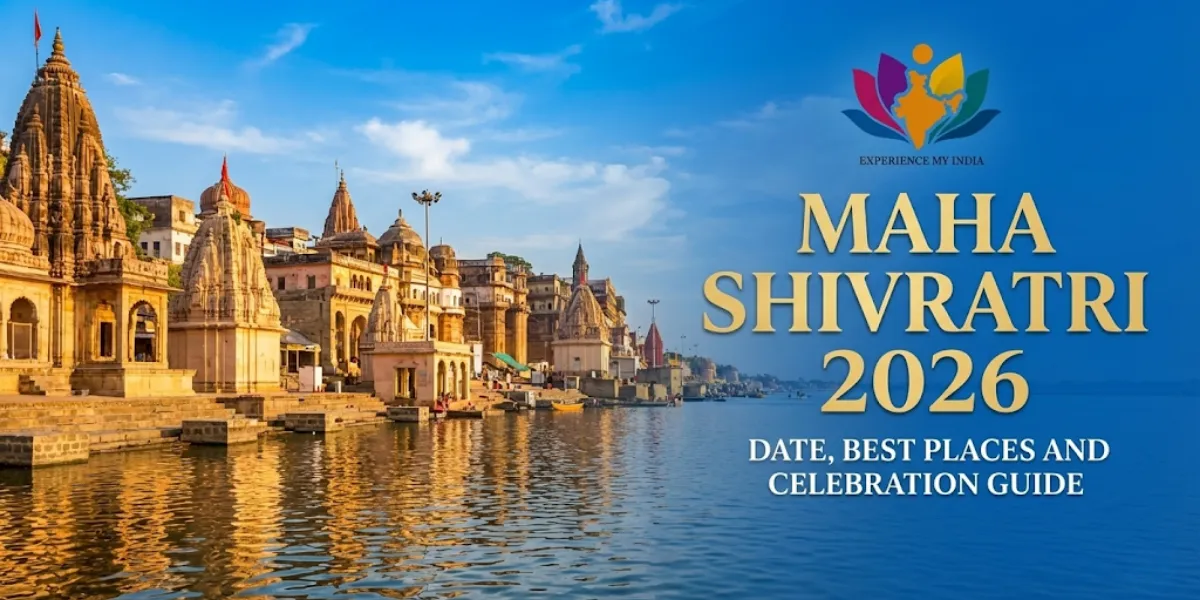
Maha Shivratri is observed everywhere, but some places feel especially alive on this night.
Varanasi
Shiva’s city never sleeps on Shivratri. Ghats glow quietly, temples echo with chants, and the Ganga flows witness to it all.
Ujjain (Mahakaleshwar)
The Bhasma Aarti during Shivratri is deeply symbolic and emotionally intense.
Somnath
Steady, grounded devotion near the sea.
Kedarnath
For those who can travel, Shivratri here feels raw and elemental.
Rishikesh and Haridwar
Ideal for those seeking meditation and inward focus.
Experience My India often helps travelers plan Shivratri journeys in a way that respects the mood of the night, rather than turning it into rushed temple-hopping.
How People Celebrate Maha Shivratri at Home
Not everyone travels. And that’s perfectly fine.
Many homes observe Shivratri quietly:
- A diya lit all night
- Soft chanting
- Simple offerings
- Long silences
Children often ask fewer questions that night. Elders speak less. Something settles.
That’s celebration too.
Who Should Observe Maha Shivratri?
You don’t need a reason. But people often come to Shivratri during:
- Confusing phases
- Emotional exhaustion
- Personal loss
- Spiritual curiosity
Shiva doesn’t ask for explanations. That’s his appeal.
Why Travel With Experience My India for Shivratri
Sacred travel requires sensitivity.
Experience My India focuses on:
- Understanding temple timings
- Crowd-aware planning
- Comfortable travel
- Respect for personal space
So the journey supports the experience, instead of distracting from it.
A Quiet Moment to Remember
One Shivratri, sitting outside a temple after midnight, I noticed something strange.
The city was still awake. But not restless.
No urgency. No rushing. Just presence.
Nothing extraordinary happened. And yet, the mind felt lighter by morning.
That’s the gift of Shivratri. Subtle. Unannounced.
FAQs – Maha Shivratri 2026
1. When is Maha Shivratri 2026 exactly observed?
From the evening of 15 February 2026 to the evening of 16 February 2026.
2. Is it compulsory to fast on Maha Shivratri?
No. Fasting is optional and should suit your health.
3. Can beginners perform Shivratri puja?
Yes. Simple puja is perfectly acceptable.
4. What is the best time to do Shivratri puja?
Midnight, known as Nishita Kaal.
5. Can women observe Maha Shivratri vrat?
Yes, without restriction.
6. Is night-long awakening mandatory?
No. Awareness matters more than sleeplessness.
7. Which mantra is most commonly chanted?
“Om Namah Shivaya.”
8. Are temples open all night on Shivratri?
Most major temples remain open late.
9. Is Maha Shivratri suitable for children?
Yes, with gentle participation.
10. Can Experience My India help plan a Shivratri trip?
Yes, with thoughtful and respectful arrangements.
One Last Thought
Maha Shivratri 2026 doesn’t demand transformation.
It offers stillness.
Contact Experience My India Today:
📞Call Us:+91 7037550028
📲WhatsApp Us:+91 7037550028
🌐Visit Our Website: Experience My India
And sometimes, sitting quietly with yourself for one night is the most powerful prayer of all.