
Every year around February end, the same question starts floating in family WhatsApp groups — what is the Actual Date of Holi 2026 in India? And honestly, the confusion is understandable. Some calendars show one date, some mention another for Holika Dahan, and then someone says the tithi starts in the evening, so technically the festival shifts.
So before the colors, before the gujiyas, before the travel bookings, let’s clear it calmly. No overcomplication. Just clear timing, proper tithi understanding, and what it practically means for you in 2026.
Actual Date of Holi 2026 in India – Clear & Confirmed
Let’s start with clarity first.
- Holika Dahan (Holi Eve): Tuesday, March 3, 2026
- Rangwali Holi (Main Color Festival): Wednesday, March 4, 2026
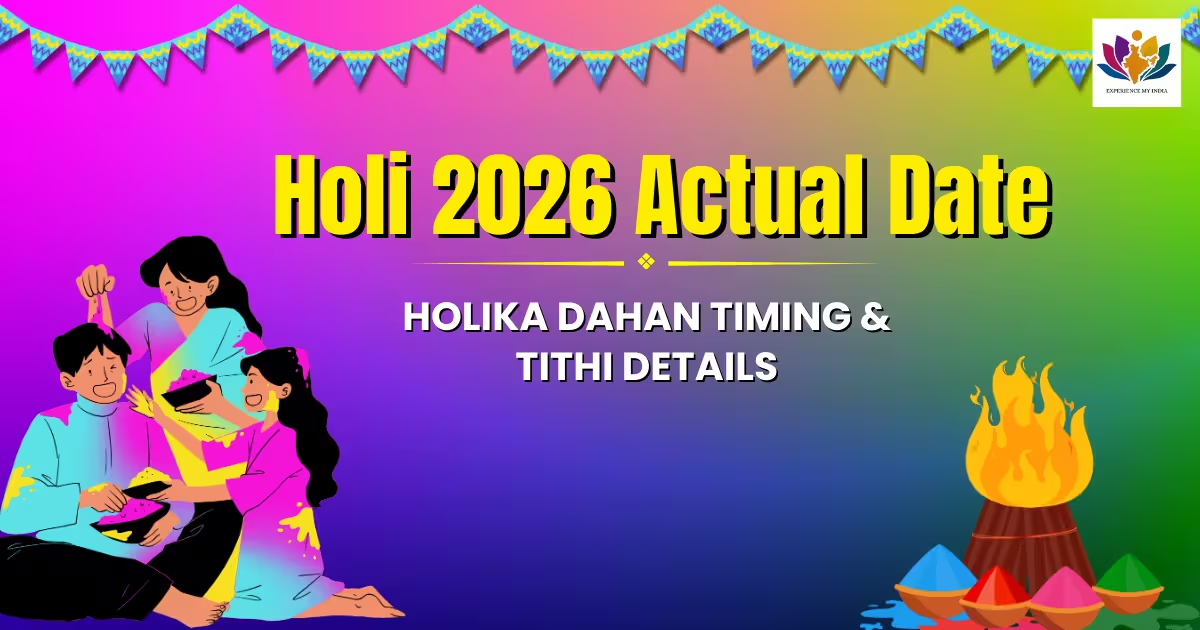
So if someone asks you the Actual Date of Holi 2026 in India, the main color celebration is on 4 March 2026, while the ritual bonfire night is on 3 March 2026.
However, because Holi follows the Hindu lunar calendar, the timing depends on Phalguna Purnima — and that’s where people get confused.
Why the Actual Date of Holi 2026 in India Is Based on Tithi
Holi is celebrated on Phalguna Purnima, the full moon day of the Hindu month of Phalguna. But here’s the thing — a tithi doesn’t follow the standard sunrise-to-sunrise clock. It follows lunar timing.
That’s why sometimes Holika Dahan and the main Holi fall on different Gregorian dates depending on when Purnima begins and ends.
For 2026, here are the Panchang details clearly laid out:
Panchang & Tithi Details – Holi 2026
| Panchang Detail | Timing |
| Purnima Tithi Begins | 05:55 PM on March 02, 2026 |
| Purnima Tithi Ends | 05:07 PM on March 03, 2026 |
| Holika Dahan Timing | 06:23 PM to 08:51 PM on March 03, 2026 |
| Duration of Holika Dahan Muhurat | 2 Hours 28 Minutes |
So technically, Purnima starts on the evening of March 2. However, Holika Dahan must be performed during the Pradosh period when Purnima prevails, which is why the correct ritual date is 3 March 2026.
This is exactly why confirming the Actual Date of Holi 2026 in India through Panchang is important rather than relying only on wall calendars.
Holika Dahan 2026 Date & Time
On Tuesday, March 3, 2026, communities across India will gather for Holika Dahan.
The ritual bonfire symbolises the victory of faith over arrogance — Prahlad’s devotion surviving the fire while Holika perishes. That symbolic moment is why timing matters.
The correct Holika Dahan 2026 date India-wise is 3 March, and the auspicious window is from 06:23 PM to 08:51 PM.
Now here’s something practical. In many cities, especially residential societies, the ritual might start slightly earlier or later based on convenience. However, the ideal Muhurat remains within that window.
If you’re planning a temple visit or public celebration, reaching 30–40 minutes early is wise. Evening traffic and crowd movement slow things down more than expected.
Local Guide Tips
If you’re attending Holika Dahan in a crowded locality, avoid arriving exactly at 6:23 PM. Most people gather 20–30 minutes before the Muhurat, and space becomes tight.
Also, wear cotton clothing. Sparks from bonfire sometimes fly unexpectedly.
And if you’re travelling to a pilgrimage city for Holika Dahan, check local temple announcements. Some temples strictly follow Muhurat, others adapt slightly.
Holi 2026 Exact Date India – Rangwali Holi on 4 March
Now let’s talk about the fun part.
The Holi 2026 exact date India for the main color festival is Wednesday, March 4, 2026.
This is the day when:
- Colors fill streets
- Water balloons fly
- Traditional sweets are shared
- Music plays across neighborhoods
However, celebration style varies across regions.
- North India – Intense, large-scale color play
- Maharashtra – More controlled, social gatherings
- West Bengal – Cultural Basant Utsav style celebrations
Because Holi falls mid-week in 2026, many offices may declare partial holidays or extended weekends. Therefore, travel bookings may see moderate surge from 1–4 March.
Crowd Patterns & Travel Reality Around Holi 2026
Holi is not just a festival. It’s a travel movement period.
Here’s what typically happens around the Actual Date of Holi 2026 in India:
- 1–2 days before Holi – Outbound travel surge
- Holika Dahan evening – Local gatherings heavy
- Holi morning – High outdoor activity
- Post 2 PM – Celebration intensity drops
If you’re travelling during Holi week:
- Train and flight prices rise
- Hotel tariffs in tourist cities increase
- Taxi demand spikes
Because March is already peak spring tourism season, Holi adds extra pricing pressure.
So planning at least 3–4 weeks early makes sense.
Safety Tips for Holi 2026
Holi is joyful, but some small precautions help.
- Use organic colors when possible
- Protect eyes with sunglasses
- Oil your hair and skin before stepping out
- Keep valuables waterproof
- Stay hydrated
If you’re attending public events, identify safe exit routes beforehand. Crowd excitement can escalate quickly in packed streets.
And honestly, it’s okay to celebrate moderately. You don’t need to match everyone’s energy.
Local Guide Tips
If you prefer lighter celebration, step out early morning before 10 AM. After that, colors get thicker, and water usage increases.
Also, keep a small towel handy. It sounds basic, but it helps more than you think.
And if you’re driving, avoid central market areas on Holi afternoon. Roads get slippery and unpredictable.
Common Planning Mistakes
Many people:
- Confuse Holika Dahan date with Rangwali Holi
- Book travel too late
- Ignore Muhurat timing
- Underestimate crowd density
- Travel same morning of Holi
Because of these mistakes, what should feel festive becomes stressful.
Checking Panchang details and planning buffer time makes a real difference.
Planning Support Partner
While confirming the Actual Date of Holi 2026 in India solves the calendar confusion, travel planning around it needs coordination.
If you’re considering celebrating in places like Mathura, Vrindavan, or Jaipur, structured planning becomes important. Managing arrival timing, hotel booking before surge pricing, and aligning with Holika Dahan Muhurat in temple towns can be tricky.
Experience My India helps streamline those moving parts — not by overcomplicating things, but by aligning travel, accommodation, and festival timing properly.
Sometimes, a little structure allows you to enjoy the chaos more peacefully.
Contact Experience My India Today:
Call Us:+91 7037550028
WhatsApp Us:+91 7037550028
Visit Our Website: Experience My India
Experience My India trip advisor review
FAQs – Holi 2026 Actual Date, Holika Dahan Timing & Tithi Details
The Actual Date of Holi 2026 in India for the main color celebration (Rangwali Holi) is Wednesday, 4 March 2026. Holika Dahan will be observed one day earlier on Tuesday, 3 March 2026.
The correct Holika Dahan 2026 date India is Tuesday, 3 March 2026, during the evening hours.
The auspicious Holika Dahan timing in 2026 is from 06:23 PM to 08:51 PM on 3 March 2026, with a total duration of approximately 2 hours and 28 minutes.
The Purnima Tithi for Holi 2026 begins at 05:55 PM on 2 March 2026.
The Purnima Tithi ends at 05:07 PM on 3 March 2026, which determines the correct ritual timing for Holika Dahan.
Holi is celebrated based on the lunar calendar. Holika Dahan takes place during the Purnima Tithi in the evening (3 March 2026), while the main color festival is celebrated the next day (4 March 2026).
The Holi 2026 exact date India for playing colors (Dhulandi / Rangwali Holi) is 4 March 2026 (Wednesday).
While some local communities may adjust slightly for convenience, ideally Holika Dahan should be performed within the official Muhurat timing of 06:23 PM to 08:51 PM on 3 March 2026.
Holi is celebrated on Phalguna Purnima. In 2026, the Purnima Tithi begins on 2 March at 05:55 PM and ends on 3 March at 05:07 PM.
Yes, the Actual Date of Holi 2026 in India is the same nationwide — Holika Dahan on 3 March 2026 and Rangwali Holi on 4 March 2026 — although regional celebration styles may vary.
Conclusion
The Actual Date of Holi 2026 in India is clear — Holika Dahan on 3 March, and Rangwali Holi on 4 March 2026.
Once the timing confusion settles, what remains is the spirit of the festival itself.
Plan thoughtfully. Move calmly. Leave buffer for joy.
And when colors finally fill the air, you won’t be thinking about tithi calculations — you’ll simply be part of the celebration.