
Every year, Makar Sankranti arrives quietly. There is no fixed mythology announcing its arrival with dramatic stories. No fast-changing dates that confuse people. And yet, across India, people pause on this day in a way they don’t on many other festivals. They wake up earlier. They bathe with intention. And they offer something away before keeping anything for themselves.
When people search for Makar Sankranti 2026, they usually want clarity—date, muhurat, rituals. But behind that search is often something else. A wish to understand why this day still matters. Why it has survived centuries of change. Why elders speak about it with calm certainty, not excitement.
This blog is written to explain Makar Sankranti the way it has always been lived—not rushed, not decorative, but thoughtful and grounded.
Makar Sankranti 2026 Date and Muhurat – Explained Simply
In 2026, Makar Sankranti falls on Wednesday, January 14, 2026.
Unlike many Hindu festivals that follow the lunar calendar, Makar Sankranti is based on the solar calendar. That’s why its date remains almost constant every year. This itself tells you something important—this festival is connected more to nature and cosmic movement than to stories or legends.
Important Muhurat for Makar Sankranti 2026
- Makara Sankranti Punya Kala:
03:13 PM to 05:45 PM
Duration: 02 Hours 32 Minutes - Makara Sankranti Maha Punya Kala:
03:13 PM to 04:58 PM
Duration: 01 Hour 45 Minutes
These timings matter because Makar Sankranti is not about performing rituals all day. It is about doing the right things at the right moment. Charity, bathing, prayers, and offerings performed during Punya Kala are believed to carry deeper spiritual value.
What many people don’t notice is that these timings often fall in the afternoon. This reminds us that devotion does not always belong to early mornings. Sometimes, it asks you to stay mindful through the day.
What Actually Happens on Makar Sankranti
At a surface level, Makar Sankranti marks the Sun’s movement into Capricorn (Makara). Astronomically, it signals the beginning of Uttarayan—the Sun’s northward journey.
But culturally, this shift means something more personal.
People see it as a turning point. A moment when nature begins to soften. When longer days return slowly. When harsh winter starts loosening its grip. This is why Makar Sankranti is not celebrated with noise or urgency. It is celebrated with steadiness.
This is also why the festival exists in almost every part of India—though under different names and customs.
Why Makar Sankranti Is Celebrated Across India
Most festivals belong to a region or a story. Makar Sankranti belongs to the land itself.
Farmers see it as a harvest marker. Spiritual seekers see it as a time of inner discipline. Families see it as a moment of togetherness without obligation.
In a way, Makar Sankranti festival celebrations in India reflect how people relate to nature rather than religion alone.
- In North India, people talk about charity and bathing.
- In South India, the focus shifts to gratitude and harvest.
- In Maharashtra, sweetness becomes symbolic.
- In Gujarat, the sky fills with kites.
Different actions, same emotion—acknowledging a shift.
Makar Sankranti 2026 Rituals and Significance – Beyond the Checklist
Many people reduce rituals to steps. But Makar Sankranti rituals work only when intention is present.
Sacred Bathing
Bathing in rivers or at home is not about purification in the literal sense. It is about starting the day consciously. About touching water and remembering that life depends on cycles beyond human control.
On Makar Sankranti 2026, bathing during the Punya Kala is considered especially meaningful. Even if someone cannot visit a river, a simple bath at home, done mindfully, holds value.
Charity and Giving
Giving on Makar Sankranti is not about abundance. It is about balance.
People donate:
- Food grains
- Warm clothes
- Sesame seeds
- Jaggery
- Money, according to ability
The idea is simple—before you celebrate change, share what you have.
Sesame and Jaggery
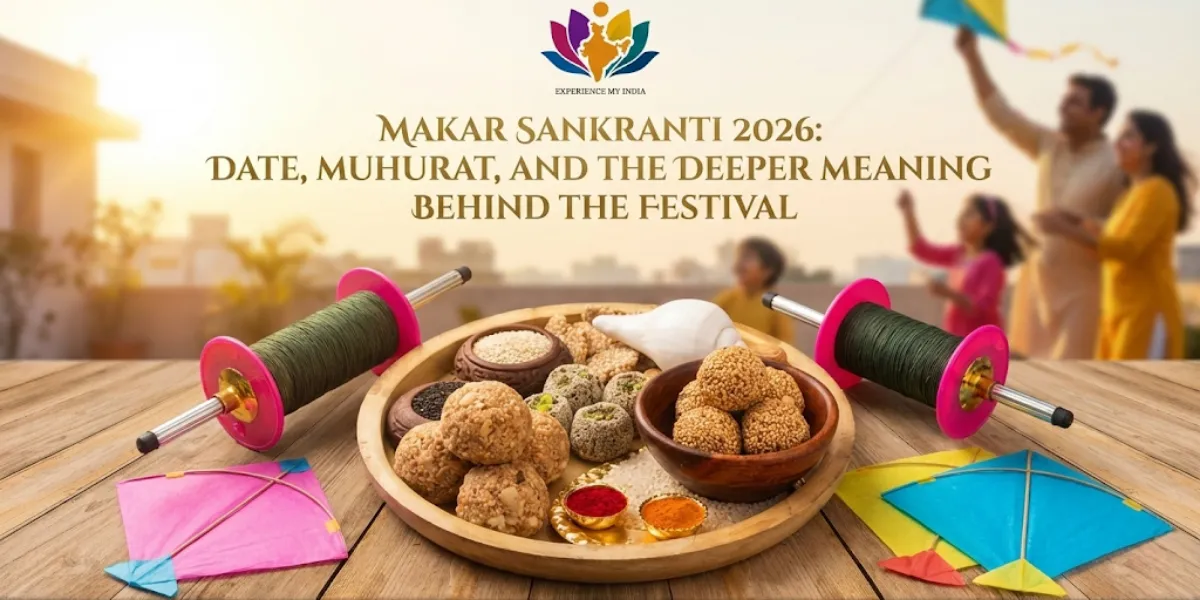
Across India, sesame (til) and jaggery appear in some form. These ingredients warm the body during winter. Symbolically, they represent harmony—bitterness and sweetness held together.
This is not coincidence. Ancient customs were often practical before they became symbolic.
Old and Ancient Meaning of Makar Sankranti
One of the oldest references to Makar Sankranti appears in texts that speak about time, not gods.
Ancient thinkers observed the Sun carefully. They noticed how seasons shifted, how crops responded, how human energy changed. Makar Sankranti became a marker—a reminder that nature moves steadily, regardless of human drama.
That is why this festival has no fasting rules imposed universally. No strict worship style. No single narrative. It allows people to participate in their own way.
In a world that often pushes uniformity, this quiet flexibility is powerful.
Things People Traditionally Do on Makar Sankranti
Beyond rituals, the day is filled with small actions that carry meaning.
Sharing Food
Families prepare simple seasonal dishes and share them. Not feasts. Not excess. Just enough.
Cleaning and Resetting
Homes are cleaned not for guests, but for freshness. Old items are discarded. This physical act mirrors an inner reset.
Quiet Reflection
Many elders prefer silence on this day. They sit in sunlight. They speak less. And they observe more.
This is something younger generations often overlook—Makar Sankranti is not meant to be busy.
How Makar Sankranti Is Celebrated Differently Across India
Understanding this diversity helps appreciate the festival more deeply.
- Tamil Nadu: Celebrated as Pongal, focusing on gratitude to nature.
- Andhra Pradesh & Telangana: Marked by harvest rituals and family gatherings.
- Maharashtra: Til-gud exchanged with the words “til-gud ghya, god-god bola.”
- Gujarat: Kite flying becomes a symbol of joy and movement.
- Punjab: Lohri marks the eve, focusing on fire and community.
Despite these variations, the core idea remains unchanged—transition with awareness.
Makar Sankranti 2026 and the Idea of Uttarayan
Uttarayan is often spoken of as an auspicious period. But its deeper meaning lies in direction.
The Sun begins moving northward. Days grow longer. Light increases slowly.
Symbolically, this represents movement toward clarity. Not sudden change. Gradual improvement.
This is why many spiritual traditions consider this period favourable for discipline, learning, and steady effort rather than dramatic beginnings.
Why Makar Sankranti Still Matters Today
In modern life, dates change quickly. Deadlines shift. Everything feels urgent.
Makar Sankranti does not rush you.
It reminds you that real change happens quietly. That seasons shift even if you are distracted. That balance matters more than intensity.
For many travellers and cultural explorers connected through Experience My India, this festival becomes a lens to understand how India thinks about time—not as something to conquer, but something to move with.
FAQs – Makar Sankranti 2026
Q1. On which date is Makar Sankranti 2026 celebrated?
Makar Sankranti 2026 falls on Wednesday, January 14, 2026.
Q2. What is the Punya Kala timing for Makar Sankranti 2026?
Punya Kala is from 03:13 PM to 05:45 PM.
Q3. What is Maha Punya Kala on Makar Sankranti 2026?
Maha Punya Kala is from 03:13 PM to 04:58 PM.
Q4. Why is Makar Sankranti based on the solar calendar?
Because it marks the Sun’s transition into Capricorn, a solar event.
Q5. Is bathing necessary on Makar Sankranti?
Bathing is symbolic and meaningful, but intention matters more than location.
Q6. Why are sesame and jaggery used in rituals?
They represent warmth, balance, and harmony during winter.
Q7. Does Makar Sankranti have fasting rules?
There are no universal fasting rules for this festival.
Q8. Why is charity important on Makar Sankranti?
It symbolises balance—giving before receiving.
Q9. Is Makar Sankranti celebrated across India?
Yes, under different names and customs, but with the same core meaning.
Q10. What makes Makar Sankranti different from other festivals?
Its focus on nature, transition, and quiet reflection rather than mythology.
Makar Sankranti does not ask for celebration in loud ways.
It asks for awareness.
Contact Experience My India Today:
Call Us:+91 7037550028
WhatsApp Us:+91 7037550028
Visit Our Website: Experience My India
And once a year, when the Sun shifts direction, it gently reminds us that moving forward does not always mean moving fast.