
There’s a question I hear every year, especially from travellers planning Rajasthan in spring.
“Is Pushkar Holi actually worth it, or is it just hype?”
Honestly, the confusion makes sense. Pushkar Holi looks chaotic on social media. Loud music. Crowds. Colours everywhere. But what those clips don’t show is the balance. The mix of sacred and messy. The way spirituality and celebration somehow sit in the same narrow lane without arguing.
Pushkar Holi 2026 isn’t just another colour festival. It’s a mood. And if you understand what to expect before you arrive, it can be unforgettable instead of overwhelming.
This guide walks you through dates, ground reality, celebrations, safety, and travel planning in a way that feels real, not promotional.
About Pushkar Holi 2026
Pushkar is small. Really small. A sacred lake, a ring of temples, cafés tucked into old houses, and streets that feel like they’ve barely changed in decades.
During Holi, that quiet scale works both for and against you.
On one hand, everything is close. You can walk everywhere. On the other, when crowds arrive, there’s no escape route. Pushkar Holi 2026 will draw backpackers, spiritual seekers, Indian travellers, and first-timers all into the same compact space.
That’s what gives Pushkar its strange magic. You’re not attending an event. You’re standing inside it.
In my experience, people who enjoy Pushkar Holi are the ones who stop trying to control it.
A Short History Behind Holi in Pushkar
Pushkar’s identity has always been spiritual first. It’s one of the few places associated directly with Lord Brahma, and the town follows strict traditions throughout the year. Meat and alcohol are officially restricted. Temple rhythms define daily life.
Holi fits into that structure differently here.
Traditionally, Holi in Pushkar marked the arrival of spring and the symbolic victory of good over evil. Locals still observe rituals quietly. Temple prayers. Holika Dahan fires. Family gatherings.
What’s changed over the last decade is the addition of global travellers and music-led celebrations. Events like HoliPurim brought electronic music into the mix, creating a cultural crossover that’s unusual for such a sacred town.
Some locals love it. Some tolerate it. And some step back for a few days. All reactions exist at once. That tension is part of the Pushkar Holi story now.
Pushkar Holi 2026 Dates and What They Mean
Here’s the basic timeline you should actually plan around.
Holika Dahan
Tuesday, March 3, 2026
Small bonfires appear across town after sunset. Locals gather quietly. It’s reflective, not loud. If you want to see the spiritual side of Pushkar Holi, this evening matters.
Main Holi Celebration
Wednesday, March 4, 2026
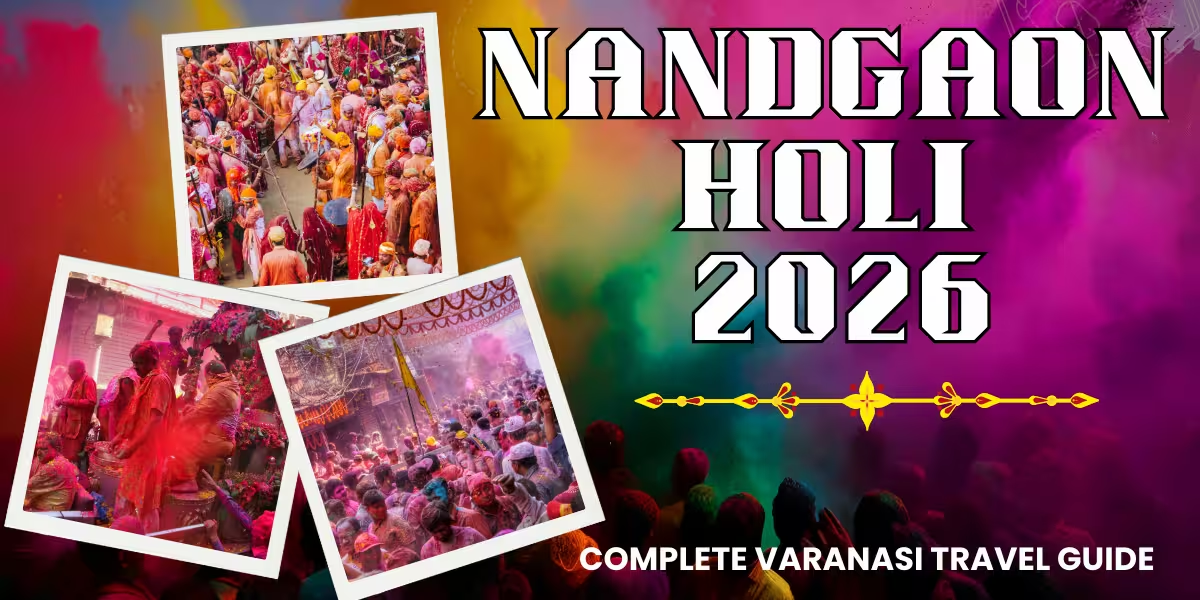
This is the colour explosion day. By mid-morning, the main square and connecting streets turn into a moving cloud of gulal, music, shouting, laughter, and complete sensory overload.
Extended Celebrations
Thursday, March 5, 2026
Crowds thin slightly. Parties continue. Cafés stay busy. It’s a softer version of the main day, often more enjoyable for travellers who skipped the peak chaos.
HoliPurim Festival
March 3–5, 2026
This runs parallel to traditional Holi. Psytrance music, international DJs, cultural fusion events. It attracts a very specific crowd. Not spiritual. Not quiet. But energetic.
Here’s the thing. You don’t have to choose one version. You’ll see both, whether you plan for it or not.
What Pushkar Holi Actually Feels Like
Let’s be honest. Pushkar Holi is not gentle.
By late morning on March 4, the town square becomes a dense, pulsing mass of people. Colours hit your face before you see them. Music overlaps from every direction. Someone will grab your shoulders and shout “Happy Holi” whether you’re ready or not.
Surprisingly, despite the chaos, aggression is rare. Most people are laughing. Dancing. Completely present.
That said, not everything is perfect.
Crowds can feel intense. Personal space disappears. If you’re uncomfortable with physical closeness, this might test you.
The spiritual contrast is what makes it special. One lane might be full of chanting. The next is blasting electronic beats. And somehow, neither cancels the other out.
Temples and Spiritual Corners During Holi
Pushkar doesn’t shut down spiritually during Holi. It shifts.
Early mornings remain calm. Temples open as usual. The lake ghats are peaceful before the crowd wakes up.
Brahma Temple, Varaha Temple, and smaller shrines continue rituals, though access can get limited by late morning on Holi day.
In my experience, the best temple time during Pushkar Holi is sunrise. After that, let the town celebrate in its own way.
Local Guide Tip:
If temples matter to you, plan darshan before 8:00 AM on March 4. After that, movement becomes unpredictable.
Festival Celebrations Worth Knowing About
Pushkar Holi isn’t one single event. It unfolds in layers.
• Traditional Holi rituals near local homes and smaller temples
• Street colour play around the main square and bazaar lanes
• Music-led gatherings that form organically, not always officially
• HoliPurim events with ticketed entry and controlled zones
Some travellers love the party energy. Others prefer standing near the ghats watching colours float across the water.
Neither approach is better. It depends on what you came for.
Best Time to Visit Pushkar for Holi
If your goal is full immersion, arrive by March 2, 2026. This gives you time to settle before chaos hits.
If you want a lighter experience, arriving on March 4 afternoon or March 5 can be surprisingly pleasant. Colours remain. Energy softens.
Avoid arriving on the morning of Holi day. Roads clog. Accommodation gets tense. First impressions matter, and that arrival can feel stressful.
Safety Tips That Actually Matter
Pushkar Holi is mostly safe, but only if you’re practical.
• Wear clothes you’re ready to lose
• Use waterproof phone pouches
• Avoid carrying valuables
• Stick to daylight hours if you’re alone
• Respect locals who step away from celebrations
Local Guide Tip:
If you feel overwhelmed, step toward the ghats. Crowds thin naturally there.
Women travellers should ideally move in pairs or groups during peak hours. Not because it’s unsafe, but because crowds can feel intense.
How to Reach Pushkar for Holi 2026
By Car
Pushkar is about 15 km from Ajmer. Roads are good, but parking inside town becomes restricted during Holi. Expect to walk the last stretch.
By Train
Ajmer Junction is the nearest major station. From there, taxis and shared jeeps run regularly. During Holi week, confirm return transport in advance.
By Air
Jaipur Airport is the nearest option, roughly 150 km away. From Jaipur, road travel takes 3–4 hours depending on traffic.
Honestly, road travel from Jaipur a day early is the least stressful option.
Why Experience My India Fits Well for Pushkar Holi Travel
Pushkar trips fail when travellers expect structure during chaos.
Experience My India focuses on pacing rather than control. Knowing when to arrive. When to step back. When to move with the crowd instead of against it.
As a planning support partner, the role isn’t to sanitize Pushkar Holi. It’s to help travellers experience it without burning out or feeling lost. That balance matters more here than in most destinations.
Contact Experience My India Today:
Call Us:+91 7037550028
WhatsApp Us:+91 7037550028
Visit Our Website: Experience My India
Experience My India trip advisor review - Click Here
FAQs – Pushkar Holi 2026
Pushkar Holi 2026 will be celebrated mainly on Wednesday, March 4, 2026, which is the day of Rangwali Holi when colours are played across the town. The festival begins a day earlier with Holika Dahan on Tuesday, March 3, 2026, usually after sunset. Celebrations often continue in a lighter form on March 5, especially around cafés and music events.
Holika Dahan in Pushkar generally takes place after sunset on March 3, 2026, most commonly between 6:30 PM and 8:30 PM, depending on local panchang timings. Small bonfires are lit in different neighbourhoods rather than one large central event. It’s a quieter, devotional evening compared to the next day’s colour celebrations.
On March 4, 2026, colour play usually begins around 9:00 AM, though some lanes start earlier. The peak intensity is between 10:30 AM and 2:00 PM, when the main square and market streets are completely packed. By late afternoon, the crowd slowly disperses, and the town starts calming down.
Ideally, plan 3 days for Pushkar Holi. Arrive by March 2, experience Holika Dahan on March 3, enjoy the main Holi on March 4, and leave on March 5. This pacing helps you settle in before crowds peak and gives you recovery time after the most intense celebrations.
Pushkar Holi is generally safe, but crowd density can be overwhelming during peak hours. If you prefer a calmer experience, avoid the 10:30 AM to 1:30 PM window on March 4. Early morning and late afternoon are more manageable, especially for first-time visitors, families, and women travellers.
HoliPurim Festival runs from March 3 to March 5, 2026, overlapping with traditional Holi dates. These are ticketed music events featuring electronic and psytrance music, mostly held at specific venues outside the main temple areas. They operate independently of religious celebrations and usually start in the evening hours.
Yes, temples in Pushkar remain open during Holi, but access becomes limited as crowds increase. The best time for temple visits is early morning between 6:00 AM and 8:00 AM on March 4. After that, movement around temples can become difficult due to colour play and crowd control measures.
The best arrival day is Monday, March 2, 2026. Reaching Pushkar at least one day before Holika Dahan allows you to check in calmly, understand the layout, and avoid last-minute transport issues. Arriving on the morning of March 4 is not recommended due to heavy congestion.
The most intense celebrations usually slow down by 3:00–4:00 PM on March 4. By evening, most colour play stops, and people shift towards cafés, rooftop gatherings, or music events. Pushkar becomes noticeably quieter at night compared to the afternoon chaos.
The pattern remains similar, but exact dates change every year based on the Hindu calendar. For 2026 specifically, Holika Dahan is on March 3 and Rangwali Holi on March 4. Timings for colour play and rituals stay roughly the same each year, though crowd size may vary.
Conclusion
Pushkar Holi 2026 won’t ask if you’re ready. It will just happen around you.
Some moments will feel too loud. Others strangely peaceful. You might love the madness at noon and crave silence by evening. That contradiction is normal.
If you arrive curious, patient, and open to unpredictability, Pushkar Holi can be one of those rare travel memories that stays vivid long after the colours fade.