
I reached Prayagraj once during Magh month when the winter fog hadn’t fully lifted. The river was barely visible, but the movement was already there. Not hurried. Not dramatic. Just steady. People walked toward the Sangam as if they had done this many times before, even if it was their first visit.
That’s the nature of Magh Mela. It doesn’t announce itself. It settles into the city and asks you to slow down enough to notice what’s happening around you. Magh Mela 2026 in Prayagraj will follow the same rhythm. Long days, early mornings, quiet discipline, and a sense that time is being used differently here.
This guide is written for pilgrims and travellers who want clarity without noise and understanding without exaggeration.
About Magh Mela 2026 in Prayagraj
Magh Mela is often compared to Kumbh, but the comparison only works on the surface. Kumbh surges. Magh Mela sustains.
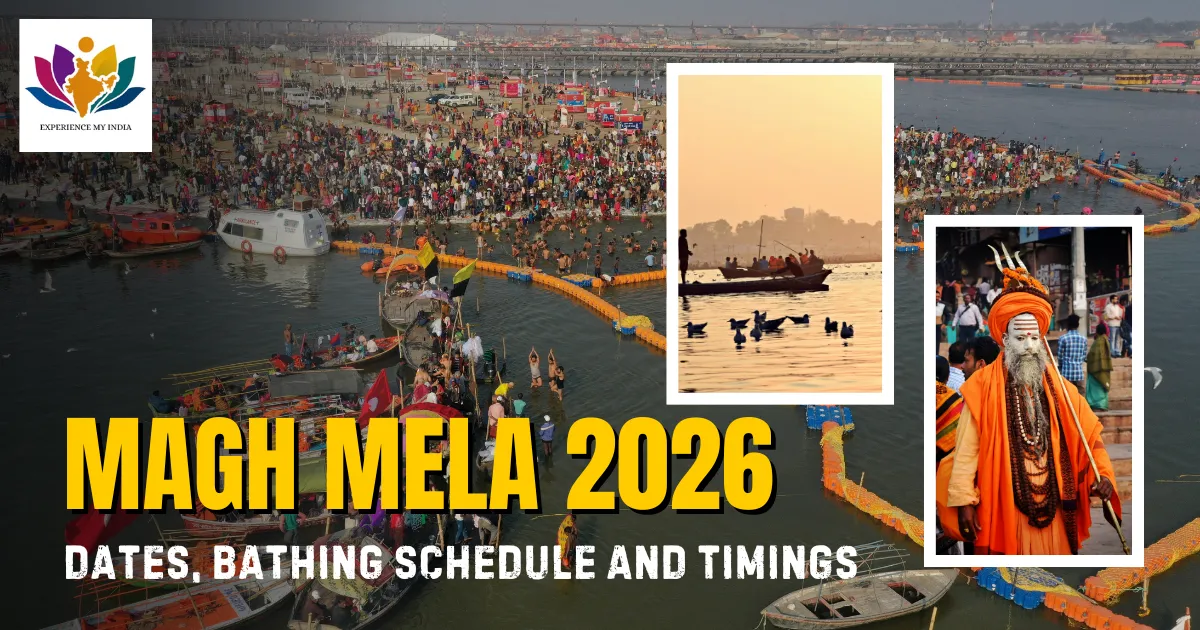
Held every year during the Hindu month of Magh, this pilgrimage takes place at the Triveni Sangam, the confluence of the Ganga, Yamuna, and the unseen Saraswati. What makes Magh Mela different is its duration. It doesn’t peak for a few days. It unfolds slowly, allowing people to stay, observe, and adjust their daily life around spiritual routine.
Maha Magh Mela 2026 – Official Dates and Duration
- Fair begins: Saturday, 3 January 2026
- Fair closes: Sunday, 15 February 2026
- Total duration: 44 days
- Main location: Triveni Sangam, Prayagraj
- Major attractions: Sangam bath, Kalpvas, Akharas, charity services
Many pilgrims don’t come just to bathe and leave. They come to live differently for a while.
History of Magh Mela – Why This Tradition Continues
Magh Mela has been part of Prayagraj’s spiritual life for centuries. Long before organised tents and mapped routes, sages and householders gathered here during Magh month to follow a disciplined way of living. Bathing before sunrise, limited meals, simple clothing, reduced speech.
That practice continues today through Kalpvas, where pilgrims stay near the river for weeks, living with restraint and routine. Even visitors who don’t practice Kalpvas feel the influence of this discipline. The Mela doesn’t encourage indulgence. It encourages steadiness.
This historical continuity explains why Magh Mela feels quieter than people expect. The focus is inward, not outward.
Rituals and Celebration During Magh Mela
Every day during Magh Mela follows a pattern that rarely changes.
Before dawn, pilgrims head toward the river. Bathing is done calmly, even on busy days. After sunrise, prayers, discourses, and visits to nearby temples take place. Afternoons are slower. Evenings settle early, especially in winter.
Akharas arrive on selected days. Charity kitchens operate continuously. Spiritual discussions happen without stages or announcements.
Local Guide Tip:
If you arrive after 9 AM, you’ll see the Mela. If you arrive before sunrise, you’ll understand it.
Most Important Bathing Dates of Maha Magh Mela 2026
Bathing dates determine crowd flow, security arrangements, and travel planning. Anyone visiting Magh Mela 2026 in Prayagraj should plan around these dates carefully.
Sacred Bathing Schedule 2026
| Bathing Festival | Date (2026) | Importance |
| Paush Purnima | 3 January | Official beginning of Magh Mela |
| Makar Sankranti | 14–15 January | Sun’s northward movement |
| Mauni Amavasya | 18 January | Most sacred bathing day |
| Basant Panchami | 23 January | Knowledge and wisdom |
| Maghi Purnima | 1 February | Completion of Kalpvas |
| Mahashivratri | 15 February | Closing day of the Mela |
Crowd Reality on Bathing Days
- Extremely high crowd: Mauni Amavasya
- High but organised: Makar Sankranti, Maghi Purnima
- Moderate and calm: Paush Purnima, Basant Panchami
Guide Tip:
First-time visitors should avoid Mauni Amavasya unless they can arrive very early and stay patient for long hours.
Triveni Sangam – Centre of the Mela
Triveni Sangam
- Crowd level: Moderate on regular days, very high on major bathing dates
- Best time: Before sunrise
- Suitable for: Pilgrims, elderly travellers with assistance, serious spiritual seekers
The Sangam is not chaotic, even when crowded. Boats line up in order. Police and volunteers guide movement quietly. After bathing, many pilgrims sit silently by the river. No rush. No announcements. Just presence.
Temples to Visit During Magh Mela
Bade Hanuman Ji Temple
- Crowd level: Steady throughout the day
- Best time: Morning hours
- Known for: Reclining Hanuman idol
Akshayavat Corridor
- Crowd level: Controlled entry
- Best time: Late morning
- Associated with ancient spiritual legends
Shankar Viman Mandapam
- Crowd level: Moderate
- Best time: Afternoon
- Good stop after Sangam visit
Local Guide Tip:
Most pilgrims bathe first and visit temples later. Following this order feels more natural.
Best Time to Visit Magh Mela 2026
Planning by Duration
- One-day visit: Choose a non-bathing weekday
- Two-day visit: One bathing date plus one regular day
- Long stay: January Kalpvas period
Daily Timing
- Early morning: Most spiritual and meaningful
- Afternoon: Easier movement
- Evening: Calm but very cold
Travellers who arrive late morning often miss the heart of the experience.
Nearest Places to See Around Prayagraj
Anand Bhavan
- Historical significance
- Calm and structured visit
- Good contrast to Mela environment
Allahabad Fort Area
- Restricted zones
- Viewpoints near the Sangam
Khusro Bagh
- Quiet and uncrowded
- Suitable for reflective walks
Magh Mela Safety and Spiritual Benefits
- Have only what you really need when visiting Mela
- Stay on Police Approved Routes to Enter and Exit Mela
- Use Appropriate Clothing for Temperature in Early Morning Hours
- Do not Push or Shove While Trying to Get to Bathing Waters
- Keep Emergency Contact Numbers Easily Accessible
Spiritual and Personal Benefits of Magh Mela
- Creating a Quiet Mind by Following Simple Routines:
The practice of waking early, sitting in silence, and living by simple daily routines will help reduce mental chaos. People will notice that even being exposed to a routine for a short period of time makes them feel less 'all over the place'.
- Creating Discipline Rather Than Pressure:
Unlike most large festivals where you have to discipline your body and mind with pressure, discipline at Magh Mela happens more naturally. You are required to eat lighter foods, speak less, and move slowly - without anyone telling you to do so.
- Resetting Your Body's Clock During the Winter Season:
By taking cold baths in the morning and rising early, your sleep cycles and appetites are reset, and your mental clarity and feelings of being exhausted are improved after just a few days for many pilgrims.
- Emotional Balance Through Repetitive, Simple Actions:
By performing the same repetitive actions each day without entertainment and urgency, your emotions are balanced, which is why many people come back to Magh Mela year after year.
- Spiritual clarity without excess stimulation:
Magh Mela allows reflection without overload. There are no stages demanding attention. You choose where to pause, listen, or remain silent.
How to Reach Magh Mela 2026 in Prayagraj
🚗 By Car
- Well-connected from Lucknow, Varanasi, Kanpur
- Parking outside Mela zones
- Shuttle arrangements inside
🚆 By Train
- Prayagraj Junction and Prayagraj Rambagh
- Heavy rush on bathing dates
- Advance booking strongly advised
✈️ By Air
- Prayagraj Airport
- Limited flights during peak days
- Road transfer required
Local Guide Tip:
Arrive at least one day before important bathing dates. Same-day arrivals often face delays and fatigue.
Planning Support Partner
Magh Mela requires patience more than luxury. Route clarity, bathing-day timing, and understanding river access matter more than hotel distance. Experience My India often helps travellers plan arrival windows, bathing strategies, and movement routes in a calm, practical way. This kind of support doesn’t interfere with the pilgrimage. It helps you experience it without unnecessary strain.
Contact Experience My India Today:
Call Us:+91 7037550028
WhatsApp Us:+91 7037550028
Visit Our Website: Experience My India
FAQs – Magh Mela 2026 in Prayagraj
Q1. Is Magh Mela less crowded than Kumbh?
Yes, except on major bathing days.
Q2. Is it suitable for elderly pilgrims?
Yes, with early arrival and assistance.
Q3. Can families visit safely?
Yes, avoid peak bathing dates with children.
Q4. Is Kalpvas mandatory?
No, short visits are equally meaningful.
Q5. What clothing is best?
Warm, simple, quick-dry clothing.
Q6. Are boats safe for Sangam snan?
Yes, government-regulated boats operate.
Q7. How cold does it get?
Very cold before sunrise.
Q8. Can temples be visited on bathing days?
Yes, but plan slowly.
Q9. Is photography allowed?
Yes, if it doesn’t disturb rituals.
Q10. What is the biggest mistake visitors make?
Arriving late on important bathing dates.
Conclusion
Magh Mela doesn’t impress you with scale.
It steadies you with repetition.
You come expecting a gathering and leave having experienced a rhythm that asks nothing except patience. Mornings arrive quietly. Days stretch without urgency. The river flows without pause.And somewhere in that steady movement, you realise the Mela wasn’t meant to change your beliefs.
It was meant to slow your breathing.