
If you’ve ever tried planning Holi 2026 in India, you’ve probably noticed how messy the information gets. Dates don’t match. Blogs contradict each other. Someone tells you Holi is one day, someone else says it lasts two weeks. Honestly, it’s frustrating. And that confusion is exactly why people land in Mathura or Vrindavan, only to realise the main celebration already happened yesterday. Or worse, it’s happening tomorrow and they’re standing in the wrong town.
Here’s the thing. Holi in India isn’t one festival. It’s many. And nowhere is that more true than in Braj. So instead of throwing random dates at you, this guide walks you through how Holi actually unfolds in 2026, why Mathura–Vrindavan still matter the most, and how to plan without regret.
I’ll keep this practical. Calm. Human. Like we’re talking it through over coffee.
About Holi 2026 in India (What Most People Get Wrong)
Most travellers assume Holi means one wild colour day and that’s it. That assumption quietly ruins trips.
In reality, Holi celebrations and traditions in India change by region. In Rajasthan, it’s different. And in Punjab, different again. But in Braj, Holi stretches across days, villages, rituals, and emotions. It starts gently, builds intensity, then slows down again.
In my experience, travellers who understand this rhythm enjoy Holi more. Those who chase only colour often feel exhausted and disconnected.
That’s why Holi 2026 in India should be planned as a journey, not a single date.
Top 10 Places to Celebrate Holi in India 2026
Official Holi 2026 Dates in India (Correct and Verified)
Let’s clear the basics first, because misinformation spreads fast.
- Holika Dahan (Holi Eve): Tuesday, 3 March 2026
- Rangwali Holi (Main Colour Holi): Wednesday, 4 March 2026
These are the official pan-India Holi dates. However, and this is important, the real Braj celebrations begin well before this.
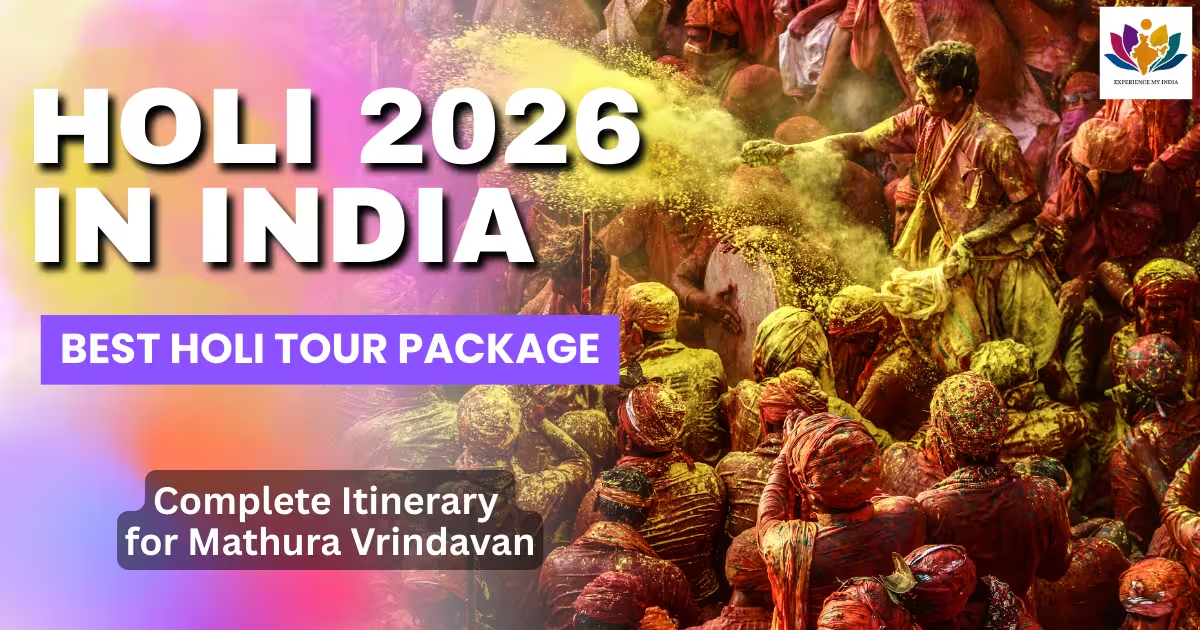
Key Holi Events in 2026 You Should Actually Plan Around
Before jumping into Mathura and Vrindavan, it helps to understand how the sequence builds.
- Rangbharni Ekadashi – Late February 2026
This marks the emotional beginning of Holi in Vrindavan temples. Colours appear lightly. Songs take over. - Lathmar Holi (Barsana & Nandgaon) – 7–8 days before Holi
Loud. Intense. Deeply traditional. Not for casual sightseeing. - Phoolon Ki Holi – 3–4 days before Holi
Flower petals instead of colour. Surprisingly calm. - Main Holi – 4 March 2026
Colour everywhere. Movement slows. Energy peaks.
If you only arrive on 4 March, you miss most of the story.
Mathura Vrindavan Holi Festival 2026 – Date-Wise Table
| Date | Event | Location |
| 23 January 2026 | Basant Panchami Utsav | Banke Bihari Temple, Vrindavan |
| 24 February 2026 | Phag Invitation | Nandgaon |
| 24 February 2026 | Laddu Holi | Barsana |
| 25 February 2026 | Lathmar Holi | Barsana |
| 26 February 2026 | Lathmar Holi | Nandgaon |
| 27 February 2026 | Phoolon Wali Holi | Vrindavan |
| 27 February 2026 | Janmabhoomi Huranga | Mathura |
| 1 March 2026 | Chhadimar Holi | Gokul |
| 4 March 2026 | Main Colour Holi | Mathura & Vrindavan |
| 5 March 2026 | Dauji Huranga | Baldev |
Following this Mathura Vrindavan Braj Holi calendar 2026 correctly is the difference between “I saw Holi” and “I understood Holi.”
Wrong Dates Circulating Online (Avoid These Mistakes)
Many blogs still show:
- Barsana Laddu Holi on 25 February
- Phoolon Wali Holi on 28 February
- Lathmar Holi shifted by a day
These are incorrect for 2026. And yes, this is exactly why travellers regret poorly planned Holi tour packages in India. One wrong date, and an entire experience disappears.
Why Mathura Vrindavan Are Still the Best Places to Celebrate Holi in India 2026
There are many best places to celebrate Holi in India 2026. Jaipur is festive. Pushkar is fun. Delhi is loud. But Mathura–Vrindavan remain unmatched for one reason.
Continuity.
Holi here isn’t performed. It’s lived. Every day connects to the next village, the next story, the next ritual. You don’t just watch Holi. You walk through it.
Surprisingly, people who aren’t even deeply religious often find these celebrations more meaningful than expected.
Why Starting from Delhi Makes Sense (Practically)
Delhi gives you breathing room.
- Early starts before crowds lock roads
- Easier hotel availability
- Ability to return to Vrindavan each night
- Less chaos than staying inside Barsana or Nandgaon
Most well-planned Holi 2026 in India itineraries work best when Delhi is the starting point, not the destination itself.
5-Day Itinerary for Holi 2026 (Based on Actual Dates)
Day 1 – 24 February 2026
Laddu Holi at Barsana
Early morning pickup from Delhi / Agra / Mathura. Drive to Barsana before entry points close. Visit Radha Rani Temple. Experience Laddu Holi, where sweets replace colour. Bhajans, chanting, controlled movement. Evening transfer to Vrindavan.
Local guide tip: Reach Barsana before 7:00 AM. After 9:00 AM, access becomes unpredictable.
Day 2 – 25 February 2026
Early departure again. Non-negotiable. This is the most intense day. Women of Barsana lead the ritual. Men from Nandgaon arrive. Crowd density peaks between 10:30 AM and 2:00 PM. Viewing only from safe zones. Return to Vrindavan by evening.
This day is loud, exhausting, unforgettable.
Day 3 – 26 February 2026
Similar ritual, different energy. Slightly more open spaces. Better for photographers and repeat visitors. Evening return to Vrindavan.
Local guide tip: Nandgaon is often easier to manage than Barsana for elderly travellers.
Day 4 – 27 February 2026
Phoolon Wali Holi – Vrindavan
Early morning darshan at Banke Bihari Temple. Flower petals replace gulal. Calm, emotional atmosphere. Evening visit to Krishna Janmabhoomi, Mathura for Huranga. This day balances the intensity of previous days.
Day 5 – 28 February 2026
Mathura & Vrindavan Sightseeing
Vishram Ghat. Yamuna ghats. Prem Mandir in the evening. Temple circuits. Rest and recovery before the main colour day approaches elsewhere.
Mathura Vrindavan Holi 2026 – Complete Itinerary Covering All the Holi Places
Best Time to Visit Holi 2026 in India
- Late February: Ritual-focused, manageable crowds
- Early March: High energy, high fatigue
- Early mornings: Always better than afternoons
In my experience, Holi feels kinder to those who wake up early.
Festival Celebrations Worth Knowing About
- Laddu Holi: Festive but disciplined, family-friendly
- Lathmar Holi: Intense, crowded, physically demanding
- Phoolon Ki Holi: Calm, devotional, emotionally rich
- Main Colour Holi: Peak chaos, peak celebration
Each serves a different type of traveller.
Nearest Places to See (How Destinations Connect)
- Delhi → Vrindavan → Mathura: Smooth, logical flow
- Vrindavan → Barsana → Nandgaon: Early starts essential
- Mathura → Gokul: Calm contrast after intense days
Trying to mix these randomly usually backfires.
Safety Tips for Holi 2026 in India
- Wear full-sleeve cotton clothes
- Protect phones with waterproof covers
- Avoid open pockets
- Stay hydrated
- Don’t move solo during peak hours
Most problems come from exhaustion, not aggression.
How to Reach Mathura Vrindavan for Holi 2026
By Car
Flexible but slow during festival days. Best before sunrise.
By Train
Mathura Junction is well connected. Advance booking is essential.
And By Air
Nearest airports are Delhi and Agra. Road travel is unavoidable afterward.
Why Experience My India Fits Well for Holi 2026 Travel
Holi trips fail when they’re rushed. Villages close access. Temples change routines. Roads slow down. Experience My India focuses on realistic pacing, early movement, and understanding which days need patience and which allow rest. That approach suits Braj better than rigid schedules ever could.
FAQs – Holi 2026 in India (Dates, Places & Planning)
Holi 2026 in India will be celebrated over two main days. Holika Dahan falls on Tuesday, 3 March 2026, which is observed in the evening across most parts of the country. The next day, Wednesday, 4 March 2026, is Rangwali Holi, when people play with colours. However, in places like Mathura and Vrindavan, celebrations begin much earlier and stretch across several days.
The Braj region—covering Mathura, Vrindavan, Barsana, Nandgaon, and Gokul—has the longest and most layered Holi celebrations in India. Here, Holi starts in late February 2026 and continues until 4–5 March 2026. Each town follows a different ritual on a different date, which is why understanding the full schedule is essential.
In 2026, Barsana Laddu Holi will take place on 24 February, followed by Barsana Lathmar Holi on 25 February 2026. Nandgaon Lathmar Holi will be celebrated on 26 February 2026. These events happen only on these specific days and do not repeat, so arriving on the wrong date means missing them entirely.
Phoolon Ki Holi in Vrindavan will be celebrated on 27 February 2026 at the Banke Bihari Temple. Instead of colours, flower petals are showered on devotees. This celebration is calmer, deeply devotional, and lasts for a short duration in the morning, so early arrival is very important.
Yes, the main colour Holi (Dhulandi) in both Mathura and Vrindavan will be celebrated on Wednesday, 4 March 2026. However, the experience differs slightly. Mathura focuses more on temple-centric celebrations like Dwarkadhish Temple, while Vrindavan sees intense crowd movement around Banke Bihari and nearby areas.
For first-time visitors, Phoolon Ki Holi in Vrindavan (27 February 2026) and temple Holi in Mathura are more comfortable and meaningful. Events like Lathmar Holi in Barsana are culturally rich but physically demanding and crowded, which can feel overwhelming if you are new to Braj Holi.
The main Holi dates—3 March (Holika Dahan) and 4 March (Rangwali Holi)—are the same across India. However, special regional celebrations like Braj Holi, Dauji Huranga (5 March 2026), and Chhadimar Holi in Gokul (1 March 2026) follow local traditions and happen on different days.
Ideally, you should plan 5–7 days if you want to experience Holi beyond just colour play. This allows time for Barsana, Nandgaon, Vrindavan, Mathura, and Gokul without rushing. Short trips of 1–2 days often feel chaotic and leave travellers physically exhausted.
No, many online sources still show incorrect dates, such as shifting Lathmar Holi or showing Phoolon Ki Holi on 28 February, which is wrong for 2026. Relying on incorrect dates is the biggest reason travellers miss key events, especially in Barsana and Nandgaon.
Vrindavan is the most practical base during Holi 2026. From here, travel to Barsana, Nandgaon, Mathura, and Gokul is manageable with early starts. Staying inside Barsana or Nandgaon during peak Holi days is not recommended due to limited accommodation and restricted movement.
Conclusion
Holi 2026 in India isn’t about chasing colour. It’s about following a rhythm that’s older than any itinerary. When you respect the dates, the villages, and the pace, Holi stops feeling chaotic and starts feeling meaningful. Plan carefully, arrive early, and let Braj do what it has always done.
Contact Experience My India Today:
Call Us:+91 7037550028
WhatsApp Us:+91 7037550028
Visit Our Website: Experience My India
Experience My India trip advisor review – Click Here