
There’s a moment every year, usually around January, when people sitting in Delhi, Mumbai, Bangalore, or even abroad start asking the same question quietly: “If I do Holi in Mathura–Vrindavan just once, how do I do it properly?”
Not rushed. Not half-understood. And not hopping between temples without knowing why people are gathering there in the first place.
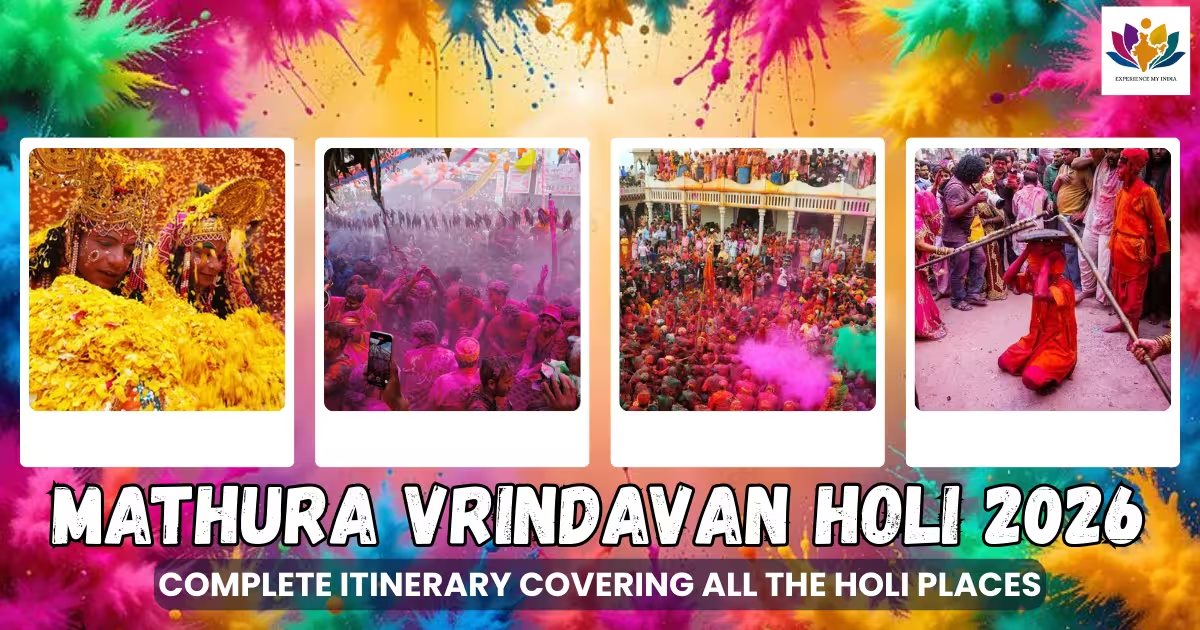
That’s the thing with Mathura Vrindavan Holi 2026. It isn’t one festival day. It’s a long, emotional stretch of devotion, village traditions, temple rituals, and raw crowd energy that unfolds slowly across Braj Bhoomi. Miss the sequence, and you miss the meaning.
This guide is written the way a local would explain it to a friend over tea. Calmly. Honestly. With space for reality. And yes, with places where you’ll need patience more than excitement.
About Mathura Vrindavan Holi 2026
Holi in Braj doesn’t start with colour.
It starts with anticipation.
Weeks before the main day, temples change their rhythm. Bhajans get louder. Streets wake up earlier. Villages like Barsana and Nandgaon start preparing in ways outsiders don’t always notice.
Mathura Vrindavan Holi celebration 2026 isn’t staged for tourists. That’s important to understand early. You step into something that already exists. You adjust yourself to it, not the other way around.
In my experience, travellers who accept this enjoy Holi deeply. Those who try to “cover everything quickly” usually leave tired and confused.
Official Holi 2026 Dates You Should Lock First
Before anything else, keep these two dates fixed in your head:
- Holika Dahan (Holi Eve): Tuesday, 3 March 2026
- Rangwali Holi (Main Color Festival): Wednesday, 4 March 2026
Everything else in Braj builds up to these two days or flows out of them.
Mathura Vrindavan Holi Festival 2026 – Date & Event Table
| Date | Event | Location |
| 23 January 2026 | Basant Panchami Utsav | Banke Bihari Temple, Vrindavan |
| 24 February 2026 | Phag Invitation | Nandgaon |
| 24 February 2026 | Laddu mar Holi | Barsana Dham |
| 25 February 2026 | Lathmar Holi | Barsana Dham |
| 26 February 2026 | Lathmar Holi | Nandgaon |
| 27 February 2026 | Phool wali Holi | Vrindavan |
| 27 February 2026 | Janmabhoomi Huranga | Mathura |
| 1 March 2026 | Chhadimar Holi | Gokul |
| 4 March 2026 | Mian Holi (Color) | Mathura Vrindavan |
| 5 March 2026 | Dauji Huranga | Baldev |
This table matters. Braj Holi does not adjust for late arrivals.
10 Days Mathura Vrindavan Holi 2026 – Complete Local Itinerary
Day 1 – 24 February 2026
Phag Invitation (Nandgaon) + Laddamar Holi (Barsana)
The first day sets the emotional tone. Nandgaon’s Phag invitation feels gentle, musical, almost conversational. Barsana’s Laddamar Holi that same day introduces controlled chaos. Laddus fly. Smiles follow. No aggression.
Local Guide Tip: Don’t expect colour yet. This day is about rhythm, not gulal.
Day 2 – 25 February 2026
Barsana Lathmar Holi
This is the day people see on videos and think they understand. They don’t.
The lanes are narrow. The crowd moves in waves. Women of Barsana playfully chase men with sticks, but everything is ritual-bound.
In my experience, arriving before 6:00 AM changes everything. Late arrivals mostly watch backs, not rituals.
Day 3 – 26 February 2026
Nandgaon Lathmar Holi
Quieter than Barsana. More balanced. Songs last longer. Movements feel less rushed.
If Barsana is intensity, Nandgaon is continuity.
Day 4 – 27 February 2026
Phoolon wali Holi (Vrindavan) + Janmabhoomi Huranga (Mathura)
This is a heavy day emotionally. Vrindavan temples turn deeply devotional. Gulal is soft, flower-based, respectful.
Mathura Janmabhoomi Huranga later adds structured celebration inside temple boundaries.
Day 5 – 28 February 2026
Govardhan & Radha Kund Sightseeing
After days of crowds, this day feels like a breath. Govardhan Parikrama (short stretch) and Radha Kund bring quiet reflection back into the journey.
Day 6 – 1 March 2026
Chhadimar Holi (Gokul & Raman Reti)
Children. Music. Dust. Playfulness.
Gokul’s Holi feels youthful, almost innocent compared to Barsana. Raman Reti adds spiritual calm.
Day 7 – 2 March 2026
Vrindavan Temple Holi & Sightseeing
Banke Bihari Temple. Radha Vallabh. ISKCON.
Expect crowd control. Expect brief darshan. Accept it. This day isn’t about duration. It’s about presence.
Day 8 – 3 March 2026
Dwarkadhish Temple Holi + Holika Dahan (Mathura)
Morning temple energy. Evening bonfires. Fire rituals across Braj symbolise inner cleansing more than spectacle.
Day 9 – 4 March 2026
Main Holi – Mathura & Vrindavan
This is colour. Real colour. Streets dissolve into people.
Surprisingly, some travellers feel overwhelmed here. That’s normal. Take breaks. Step back when needed.
Day 10 – 5 March 2026
Dauji Huranga (Baldev)
Raw. Traditional. Non-touristy.
Dauji Huranga ends the journey the way Braj prefers. Loud. Physical. Honest.
Festival Celebrations Worth Knowing About
- Barsana & Nandgaon Holi focus on Radha–Krishna leela, not colour play
- Vrindavan Temple Holi is devotional, flower-based, time-restricted
- Mathura Holi blends devotion with open street celebration
- Dauji Huranga is the most physical and traditional form of Braj Holi
Safety Tips for Mathura Vrindavan Holi 2026
- Wear full-sleeve cotton clothes only
- Waterproof your phone properly
- Avoid carrying wallets in open pockets
- Respect temple restrictions strictly
- Women travellers should stay in groups or guided arrangements
Local Guide Tip: Choose one main event per day. Overcrowding your plan causes exhaustion, not memories.
How to Reach Mathura Vrindavan from Delhi
🚗 By Car
- Delhi to Mathura: ~180 km
- Best flexibility during Holi
- Expect parking outside towns
🚆 By Train
- Frequent trains to Mathura Junction
- Crowded during Holi week
- Pre-book only
✈️ By Air
- Nearest airport: Delhi
- Road transfer unavoidable
For Holi, road + local driver familiarity works best.
Why Experience My India Fits Well for Mathura Vrindavan Holi 2026
Braj Holi fails when people try to compress it.
Experience My India approaches this region slowly. Pacing matters here. Temple timings change. Roads close without notice. Villages don’t rush for visitors.
As a planning support partner, the focus stays on realistic movement, rest gaps, and cultural flow rather than ticking locations.
Contact Experience My India Today:
Call Us:+91 7037550028
WhatsApp Us:+91 7037550028
Visit Our Website: Experience My India
Experience My India trip advisor review – Click Here
FAQs – Mathura Vrindavan Holi 2026
Not mandatory, but it changes depth. Short trips show highlights, while longer stays reveal emotional continuity. In my experience, even 6–7 days done calmly feel more complete than rushed 3-day plans.
Yes, if expectations are grounded. Crowds are heavy, but structured. Problems arise when travellers ignore local advice or push personal comfort limits unnecessarily.
They can, selectively. Temple Holi and Gokul celebrations suit them better than Barsana or Dauji Huranga. Timing and assistance make all the difference.
Yes, but only in calmer zones. Vrindavan temple Holi and Gokul are safer. Barsana and Dauji are physically demanding and noisy.
No. Temples restrict cameras strictly. Open village areas allow limited photography, but safety zones must be respected.
Mathura or Vrindavan town hotels. Staying inside Barsana or Nandgaon is not recommended due to movement restrictions.
At least 2–3 months in advance. Hotels and transport fill early because dates are fixed.
It can look intense, but rituals are regulated. Understanding context reduces fear significantly.
Yes, very much. They’re common in Barsana, Vrindavan, and Gokul, especially with guided support.
Natural gulal dominates in temples, but street colours vary. Use oil before stepping out and wash promptly.
Conclusion
Mathura Vrindavan Holi 2026 isn’t about colour alone.
It’s about learning when to step forward and when to pause.
When you follow the rhythm of Braj instead of forcing your own, Holi stops feeling chaotic and starts feeling meaningful.