
Holi never announces itself loudly.
It arrives in small ways first. The winter sun softens. Evenings feel less rushed. Someone brings gujiya home earlier than usual. Someone else casually asks, “Is saal Holi kab hai?” And suddenly, without effort, the season begins to turn.
Holi 2026 will come like this too. Not as a sudden burst of colour, but as a slow emotional shift. A feeling that grows quietly, sits with you for a while, and then opens into celebration.
This guide is written to help you understand Holi 2026 not as a single festival day, but as a lived experience—shaped by belief, carried by memory, and expressed differently across India.
About Holi – Why This Festival Still Feels Personal
Holi is often described as the festival of colours, but anyone who has lived through it knows that colours are only the surface.
At its core, Holi is about release.
It marks the end of a long emotional season. Winter passes. Silence breaks. People allow themselves to be less guarded. Old tensions soften. Routine loosens its grip, even if just for a day.
In many homes, Holi is the one time when formality disappears. Elders laugh more easily. Children take charge of the streets. Neighbours who barely speak through the year exchange colours and sweets.
That quiet emotional permission is why Holi still matters, even now.
The History of Holi – Why Fire Comes Before Colour
The story most closely tied to Holi is that of Prahlad and Holika.
Prahlad’s faith survived the fire meant to destroy him. Holika’s power did not. The story is simple, but its meaning carries weight. It reminds people that ego eventually burns away, and belief endures.
This is why Holi does not begin with colour. It begins with Holika Dahan.
Fire first. Reflection first. Celebration later.
Even today, this order shapes how Holi is observed across India. Colour feels incomplete without that quiet evening by the fire.
Official Holi 2026 Dates – Clear and Confirmed
Planning Holi becomes easier when dates are understood clearly.
Holi 2026 Key Dates
- Holika Dahan (Holi Eve): Tuesday, March 3, 2026
- Rangwali Holi (Main Colour Festival): Wednesday, March 4, 2026
These dates are followed across India, though local customs may slightly shape how each day unfolds.
Holika Dahan 2026 – Date, Time, and Meaning
Holika Dahan Timings (IST)
- Date: Tuesday, March 3, 2026
- Auspicious Muhurat: Approximately 06:22 PM to 08:50 PM
- Duration: Around 2 hours and 28 minutes
This window is not chosen randomly. It aligns with traditional belief, lunar positioning, and ritual discipline.
In most places, Holika Dahan is a simple gathering. A small fire. A few prayers. Quiet conversation. Children listening to the story again. Elders standing a little apart.
It is not dramatic. It is grounding.
Many people feel this evening carries more emotional weight than the next day’s colours.
Why Purnima and Bhadra Matter in Holi 2026
Holi follows the Purnima Tithi, the full moon of the Phalguna month. This lunar phase decides when rituals are considered meaningful and safe.
For Holi 2026, Holika Dahan falls on Phalguna Purnima night. The timing is carefully chosen to avoid the inauspicious Bhadra period, which is traditionally avoided for important rituals.
That is why the muhurat falls during Pradosh Kaal, just after sunset.
For many families, this alignment still matters deeply. Even those who celebrate Holi in modern ways pause for this ritual moment.
Rangwali Holi 2026 – The Day Colour Takes Over
Rangwali Holi Date
- Wednesday, March 4, 2026
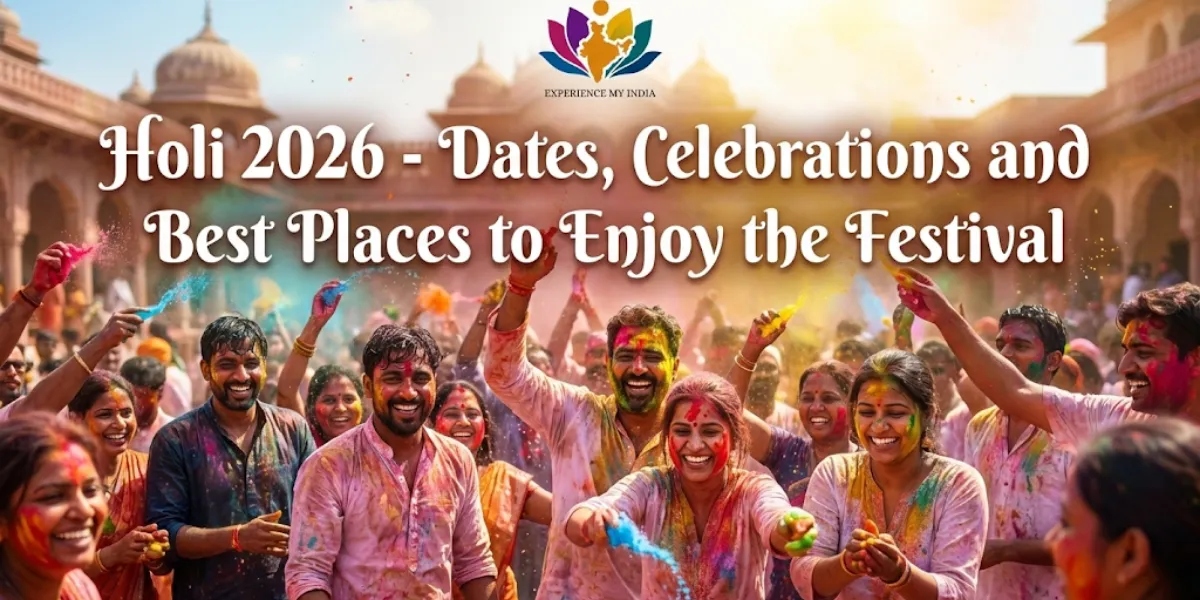
This is the day most people imagine when they think of Holi.
Morning arrives early. Colours appear before breakfast. Streets fill with laughter, shouting, music, and movement. In some places, it feels chaotic. In others, surprisingly gentle.
By afternoon, the city slows down. People wash off colours. Homes smell of fried snacks and sweets. Conversations replace noise. Bodies ask for rest.
Rangwali Holi is joyful, exhausting, messy, and unforgettable—all at once.
How Holi Is Celebrated in India 2026 – One Festival, Many Forms
Holi celebrations in India 2026 will not look the same everywhere, and that is its strength.
In North India, Holi is loud and community-driven. Streets become shared spaces. In western regions, it feels social and organised. In parts of the South, it is quieter but still symbolic. And in eastern India, Holi blends with temple rituals and local customs.
Some regions stretch Holi over several days. Others keep it contained.
What connects all of them is intention. Holi gives people permission to reset.
Things to Do During Holi 2026 – Beyond Playing With Colour
Holi does not demand one kind of participation.
You can:
- Take part in Holika Dahan rituals
- Play with colours among people you trust
- Share festive food with neighbours
- Visit temples that observe special Holi prayers
- Travel to regions known for traditional Holi
- Or simply take the day to pause and reflect
There is no correct version of Holi. There is only what feels right to you.
Food and Holi – Where the Festival Slows Down
Food is the quiet centre of Holi.
Gujiya appears days before the festival. Thandai is prepared carefully. Plates move between homes. Recipes are exchanged more than colours.
After the chaos of Rangwali Holi, food brings people back together. It grounds the body. It softens conversations. And it signals that celebration is slowly settling.
For many families, this shared meal matters more than the colours themselves.
Holi as a Travel Experience in 2026
More people are choosing to travel during Holi, drawn to regions known for traditional celebrations.
But Holi travel requires patience. Roads slow down. Public transport runs irregularly. Crowds are unavoidable.
Travellers who approach Holi with flexibility enjoy it far more than those chasing strict schedules. Gentle, experience-based planning through Experience My India often helps travellers move with the festival rather than against it.
Things to Keep in Mind for Holi 2026
- Holi builds before it peaks and settles slowly after
- Public transport may be unpredictable on Rangwali Holi
- Not everyone wants to play with colour—respect that
- Natural colours are kinder to skin and surroundings
- Rest and hydration matter more than people realise
Holi gives joy, but it also asks for awareness.
FAQs – Holi 2026
Q1. When is Holi in 2026?
Holi will be celebrated on March 4, 2026, with Holika Dahan on March 3.
Q2. What is the Holi festival date 2026 for Holika Dahan?
Holika Dahan falls on Tuesday, March 3, 2026.
Q3. What is the auspicious time for Holika Dahan 2026?
Approximately from 06:22 PM to 08:50 PM.
Q4. Why is Holika Dahan celebrated before Rangwali Holi?
It symbolises reflection and the victory of belief before celebration.
Q5. Is Holi celebrated the same way everywhere in India?
No, each region celebrates differently while sharing the same spirit.
Q6. What is Purnima Tithi and why is it important?
It is the full moon phase that determines Holi’s ritual timing.
Q7. What is Bhadra and why is it avoided?
Bhadra is considered unsuitable for major rituals, so timings avoid it.
Q8. Is Rangwali Holi a public holiday in India?
Yes, it is a public holiday in most states.
Q9. Can Holi be celebrated without playing with colours?
Yes, through rituals, food, and gatherings.
Q10. Is travelling during Holi 2026 a good idea?
Yes, if you travel with flexibility and cultural understanding.
Holi does not ask you to celebrate loudly.
It asks you to pause first.
To stand quietly by the fire.
To let go of what has grown heavy.
Contact Experience My India Today:
Call Us:+91 7037550028
WhatsApp Us:+91 7037550028
Visit Our Website: Experience My India
Only then does it invite you into colour.
That is what Holi 2026 offers—not just celebration, but a moment of balance between ending and beginning again.