The first time I attended the Ganga Aarti in Rishikesh, I wasn’t sure what I was supposed to feel. I had heard people call it “powerful,” “divine,” even “life-changing.” Big words. I arrived a little skeptical, stood at the edge of the ghat, and waited.
What happened instead was quieter.
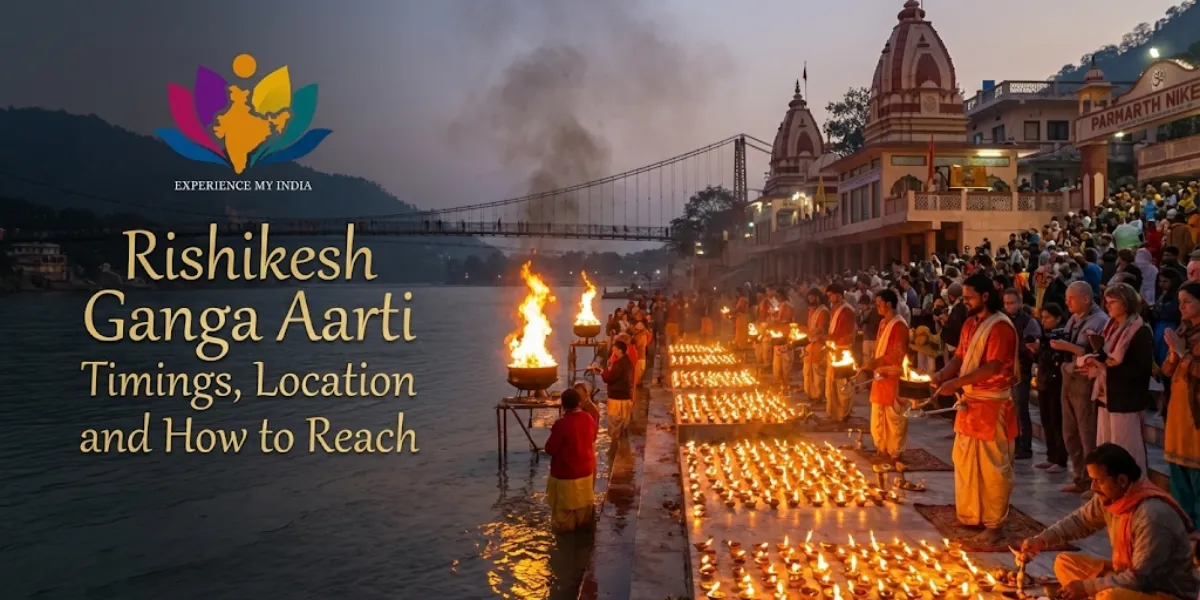
As the sky began to dim, the river reflected the last light of the day. Bells rang, not loudly, but steadily. Priests moved with a rhythm that didn’t feel rehearsed. And somewhere between the chanting and the sound of flowing water, my breathing slowed without effort. That’s when I understood something important.
Rishikesh Ganga Aarti Timings matter, yes.
But the experience depends just as much on how and when you arrive.
This guide is written to explain that—not just the clock, but the feeling behind it.
Rishikesh Before the Aarti – Why the Place Shapes the Ritual
Rishikesh is not loud in the way cities usually are. It has energy, but it’s layered. Yoga classes end quietly. Ashrams close their gates softly. The Ganga flows through all of it, unchanged.
By the time evening approaches, the town naturally slows. That slowdown prepares you for the Evening Ganga Aarti in Rishikesh in a way no instruction ever could.
You don’t step into a ceremony here.
You ease into it.
A Short Look at History – How Aarti Became Central to Rishikesh
The Ganga has always been central to Rishikesh’s identity. Long before it became known globally for yoga, this was a place where sages lived, meditated, and stayed close to the river.
Ganga Aarti evolved here not as a performance, but as a daily act of gratitude. Over time, it became communal. Visitors joined. Locals continued. The form remained, but the intention stayed simple—offering light, sound, and attention to the river that sustains everything.
That simplicity is still visible today.
Rishikesh Ganga Aarti Timings – Clear, Practical, and Seasonal
People often miss the aarti not because they’re late, but because they misunderstand timing. Unlike fixed temple schedules, Ganga Aarti time in Rishikesh moves with the sun.
Evening Ganga Aarti Timings (Seasonal)
Summer (March to September):
- Around 6:00 PM – 7:00 PM
- Often closer to 6:30 PM, depending on sunset
Winter (October to February):
- Around 5:00 PM – 6:00 PM
- Commonly near 5:30 PM
A good rule:
Arrive 30–45 minutes before sunset, not before the clock time.
Early Morning Ganga Aarti – Less Known, Deeply Personal
Most visitors only attend the evening ceremony. But there is also an early morning aarti that feels completely different.
Morning Aarti at Triveni Ghat
- Time: Around 5:45 AM – 6:30 AM
There are fewer people. Fewer cameras. More silence. If evenings feel communal, mornings feel personal.
For those who like quiet reflection, this version often leaves a stronger impression.
Popular Locations for Ganga Aarti in Rishikesh
Not all aartis feel the same. The place changes the experience.
Parmarth Niketan
This is the most structured and widely known aarti.
- Large gathering
- Vedic chants and bhajans
- Organised seating
It feels expansive and inclusive. Many first-time visitors prefer starting here.
Triveni Ghat
This is the main public hub.
- Lively atmosphere
- Vendors selling diyas
- Strong local presence
The Triveni Ghat Ganga Aarti schedule is closely tied to sunset. It feels raw and real, less choreographed.
Shatrughan Ghat
A quieter alternative.
- Fewer people
- Softer chanting
- Easier to sit quietly
Best for those who prefer space over scale.
What Actually Happens During the Aarti
This is not a show. And that’s important to understand.
Priests face the river, not the crowd. Lamps are raised. Bells ring. Chants repeat. The river keeps flowing, uninterested in applause.
People stand. Some pray. Some just watch. And some float diyas silently. No one tells you what to feel.
And that’s why it works.
Rituals During Ganga Aarti – Like Small Places You Step Into
Floating a Diya
You’ll see vendors selling small leaf lamps. Lighting one and letting it drift away is simple, but meaningful. It’s less about wish-making and more about release.
Folding Hands, Closing Eyes
Many people do nothing outwardly. They just stand and breathe. That, too, is participation.
Silence After the Aarti
This is the part people overlook. The few minutes after the ceremony ends, when most people stay quiet, matter just as much.
Best Time to Visit Rishikesh for Ganga Aarti
October to March
- Pleasant weather
- Comfortable evenings
- Clear views
April to June
- Warmer days
- Busy evenings
- Still manageable
July to September
- Monsoon atmosphere
- Fewer crowds
- River looks powerful
Each season changes the mood. None ruin the experience.
Festivals and Special Days – When the Rhythm Changes
Ganga Dussehra
Large crowds. Strong devotional energy. Expect delays and tight spaces.
Kartik Purnima
Early evening lamps everywhere. The river glows.
Maha Shivratri Period
More visitors. Aarti feels more intense.
Festivals amplify everything. Time stretches. Patience becomes essential.
Places to See Around Ganga Aarti Locations
Laxman Jhula Area
Good for walks, cafes, and viewpoints.
Ram Jhula
Quieter than Laxman Jhula. Nice after evening aarti.
Ashrams Nearby
Some allow silent sitting. No lectures. Just space.
Things to Do Before or After Aarti
- Walk along the ghats
- Sit by the river without a phone
- Eat simple local food
- Watch the river at night
Rishikesh doesn’t reward rushing.
How to Reach Rishikesh
From Delhi
By Car or Taxi
- Distance: ~260 km via Delhi – Multan Rd/Delhi – Panipat Expy, NH 709AD and NH 334
- Time: 4.5 to 5 hours
By Train
- Haridwar is the nearest major station
- Rishikesh is 25 km away
And By Air
- Nearest airport: Dehradun (Jolly Grant)
Local transport in Rishikesh is easy and affordable.
Quiet planning support from Experience My India often helps travellers keep this journey gentle instead of packed.
FAQs – Rishikesh Ganga Aarti Timings
Q1. What are the exact Rishikesh Ganga Aarti timings?
They vary with sunset—around 6:30 PM in summer and 5:30 PM in winter.
Q2. Which is the best ghat for first-time visitors?
Parmarth Niketan is a good start.
Q3. Is the morning aarti worth attending?
Yes, especially for those who prefer silence.
Q4. Is there any entry fee?
No, all aartis are free.
Q5. How early should I arrive?
At least 30–45 minutes early.
Q6. Can children attend comfortably?
Yes, but crowds require care.
Q7. Is photography allowed?
Yes, but avoid disrupting rituals.
Q8. Does rain affect the aarti?
Light rain usually doesn’t stop it.
Q9. Are festivals very crowded?
Yes, significantly.
Q10. Is one visit enough?
Most people feel drawn to return.
Some evenings give you memories.
Contact Experience My India Today:
Call Us:+91 7037550028
WhatsApp Us:+91 7037550028
Visit Our Website: Experience My India
The Ganga Aarti in Rishikesh gives you something quieter—
a pause that stays with you long after the lamps disappear into the river.