
There’s a very specific kind of winter afternoon in India when Makar Sankranti arrives.
The sun feels warmer than it did yesterday. Not dramatically, not suddenly—but enough that you notice it on your skin when you step outside. Someone somewhere is flying a kite. Someone else is roasting sesame seeds. And even if you don’t follow calendars closely, you sense that something has shifted.
That quiet shift is what Makar Sankranti has always been about.
Not noise. Not spectacle. But movement. The slow, almost invisible turning of the sun, and with it, a turning inside people too.
In 2026, Makar Sankranti carries that same feeling—old, familiar, steady—and yet, every year, it arrives as if for the first time.
When Is Makar Sankranti 2026 Celebrated?
Makar Sankranti 2026 falls on Wednesday, January 14, 2026.
Unlike many Hindu festivals that depend on the lunar calendar, Makar Sankranti follows the solar cycle. That’s why its date remains mostly fixed each year. It marks the moment when the sun enters Makara Rashi (Capricorn) and begins its northward journey, known as Uttarayan.
This movement is considered deeply auspicious—not because something magical happens in the sky that we can see, but because ancient observers noticed how life itself responds to this shift. Longer days. Gentler cold. Subtle renewal.
Makar Sankranti 2026 Date and Time (Important Details)
These timings matter especially for people who observe rituals, charity, and sacred baths.
- Makara Sankranti on: Wednesday, January 14, 2026
- Makara Sankranti Punya Kala:
03:13 PM to 05:45 PM
(Duration: 02 Hours 32 Minutes) - Makara Sankranti Maha Punya Kala:
03:13 PM to 04:58 PM
(Duration: 01 Hour 45 Minutes)
If you’ve ever wondered why elders insist on specific time windows, this is why. These periods are believed to carry heightened spiritual merit, especially for donations, bathing rituals, and prayers.
A Brief History That Explains Why This Festival Endures
Makar Sankranti is older than written history in India.
Long before temples, scriptures, or formal rituals, people watched the sun. Farmers depended on it. Seasons were understood through it. Life aligned itself quietly around its movement.
Over time, this solar transition became sacred.
Texts like the Mahabharata mention Uttarayan as a spiritually favorable period. Bhishma Pitamah, it is said, waited for this phase to leave his body. Not out of fear of death—but because timing mattered.
That idea still lingers. Makar Sankranti isn’t about celebrating gods alone. It’s about honoring time itself.
Why Makar Sankranti Is Considered So Important
Ask people why they celebrate Makar Sankranti, and you’ll get different answers.
- Some will talk about harvests.
- Some about charity.
- Some about bathing in rivers.
- Some will simply say, “It feels right.”
All of them are correct.
The importance of Makar Sankranti 2026 lies in three quiet truths:
- The sun begins moving north, symbolizing progress
- The harshness of winter slowly softens
- Nature prepares for renewal
This is why the festival is associated with positivity, generosity, and letting go.
Why Do We Celebrate Makar Sankranti at All?
There’s a belief that on Makar Sankranti, the gods awaken.
But if you look closer, it’s people who awaken first.
This is the day when people:
- Donate food, clothes, and money
- Feed cows and birds
- Take holy dips in rivers
- Share sweets made of sesame and jaggery
Sesame and jaggery aren’t random choices. Sesame generates heat. Jaggery cleanses the body. Ancient nutrition wrapped in ritual.
Celebration here isn’t indulgence. It’s balance.
Makar Sankranti 2026 Rituals and Significance
Rituals vary across regions, but the intention remains the same.
Sacred Bathing
Bathing in rivers like the Ganga, Yamuna, Godavari, and Shipra is considered especially purifying during Punya Kala.
People wake early, travel long distances, and stand patiently in cold water—not because it’s easy, but because it feels meaningful.
Charity and Daana
Donating food, blankets, grains, and essentials is central to Makar Sankranti.
There’s an old saying:
“What you give on Sankranti returns multiplied.”
Whether one believes that literally or not, generosity does have a way of softening the heart.
Eating Til-Gud
In many regions, people exchange sesame and jaggery sweets, saying:
“Til-gud ghya, god god bola.”
(Eat sweetness, speak sweetness.)
It’s not advice. It’s a reminder.
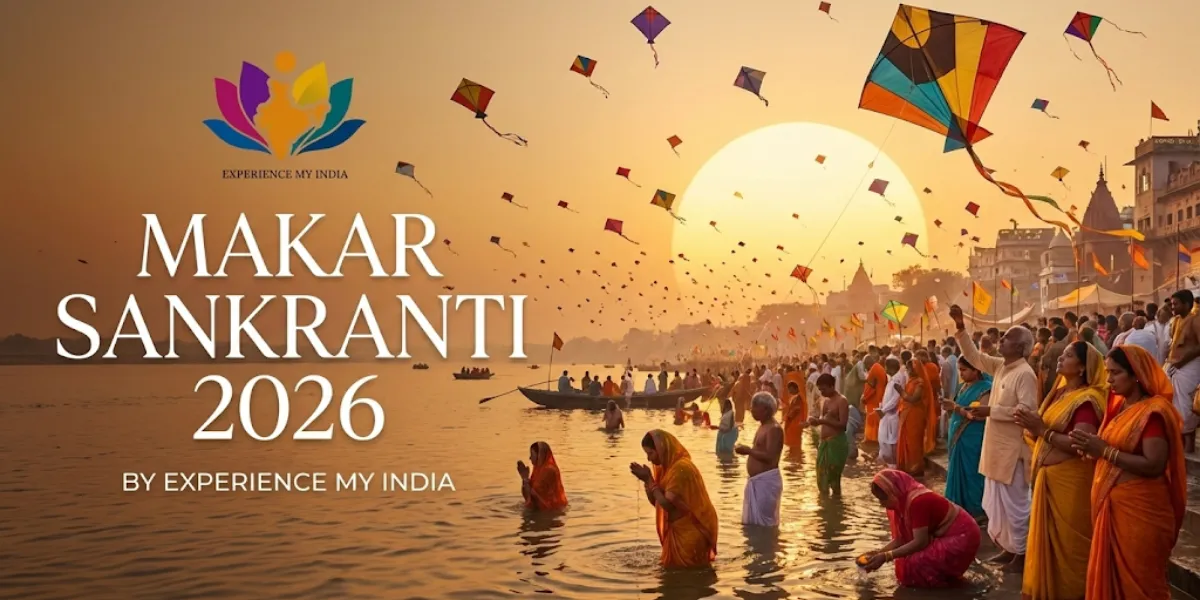
Makar Sankranti Festival Celebrations in India
One of the most beautiful things about this festival is how differently it’s celebrated—without losing its core.
Uttarayan in Gujarat
Kite-filled skies. Rooftops full of laughter. Friendly rivalries between strangers.
Pongal in Tamil Nadu
A four-day harvest festival honoring the sun, cattle, and earth.
Lohri in Punjab
Bonfires, folk songs, gratitude for crops, and warmth against winter’s edge.
Khichdi in Uttar Pradesh
Pilgrims gather in Prayagraj for ritual bathing and charity.
Magh Bihu in Assam
Feasting, community gatherings, and quiet joy.
Different names. Different customs. Same turning of the sun.
Where Is Makar Sankranti Most Powerfully Felt?
Certain places feel especially alive on this day.
- Prayagraj: Sacred bathing at Triveni Sangam
- Varanasi: Ganga snan and daan
- Haridwar: Spiritual gatherings along the Ganga
- Ujjain: Shipra river rituals
- Sabarimala: Devotees conclude their pilgrimage
Travelers planning these journeys often prefer guidance that respects both logistics and spiritual timing. This is where Experience My India quietly steps in—not to sell celebrations, but to help people reach them with clarity and calm.
When Exactly Should You Perform Rituals on Makar Sankranti 2026?
The most auspicious period is the Maha Punya Kala, followed by the Punya Kala.
If you must choose:
- Perform charity and bathing during 03:13 PM – 04:58 PM for maximum spiritual merit
- Continue rituals until 05:45 PM if needed
What matters most, though, is intention. Timing refines it. It doesn’t replace it.
A Quiet Observation Most People Miss
Makar Sankranti is one of the few festivals that doesn’t demand emotion.
There’s no pressure to feel ecstatic or dramatic. No requirement to celebrate loudly.
It allows stillness.
Contact Experience My India Today:
📞Call Us:+91 7037550028
📲WhatsApp Us:+91 7037550028
🌐Visit Our Website: Experience My India
And maybe that’s why it endures.
10 Informative FAQs About Makar Sankranti 2026
1. Is Makar Sankranti 2026 on the same date across India?
Yes, it is observed on January 14, 2026, nationwide.
2. Why doesn’t the date change every year?
Because it follows the solar calendar, not the lunar one.
3. What is the significance of Punya Kala?
It’s considered the most auspicious time for rituals and charity.
4. Can rituals be done at home?
Yes. Intention matters more than location.
5. Is fasting mandatory on Makar Sankranti?
No, but many choose light or sattvic meals.
6. Why is sesame used so widely?
It provides warmth and balance during winter.
7. Is river bathing compulsory?
Not compulsory, but considered spiritually beneficial.
8. Do all regions celebrate it the same way?
No. Customs differ, meaning remains similar.
9. Is travel advisable on Makar Sankranti?
Yes, but expect crowds at major pilgrimage centers.
10. How can Experience My India help during festivals?
By assisting travelers in reaching key destinations smoothly and respectfully.